Wise Woman Travel

Exploring the world from a female perspective

The black and white photo at the entrance of the the Himeyuri Peace Museum in Naha, Okinawa, shows the graduating class of 1944.

The 50 or so young women, aged 15-19, are grouped around their principal, smiling brightly into the camera and their own futures. They are the most promising female students in the Okinawa Prefecture, chosen to attend the schools collectively known as Himeyuri, a teacher preparation college and a girls’ high school.

As WW II raged on, the girls had become aware of the militarization of their education. English studies were suspended. They were taught to hate and fear Europeans and Americans, and to swear absolute loyalty to Japan’s emperor, to believe that death was a more honorable choice than to surrender. Their uniforms became simpler, made from cheaper fabric, as resources in Japan were depleted by the war effort.

In March 1945, the US began shelling Okinawa, determined to capture the island as a base from which to attack mainland Japan. The Japanese, equally intent on delaying the invasion of Okinawa to buy Japan more time to prepare for an American assault,  dug into a series of underground tunnels, which would eventually house 4000 men.
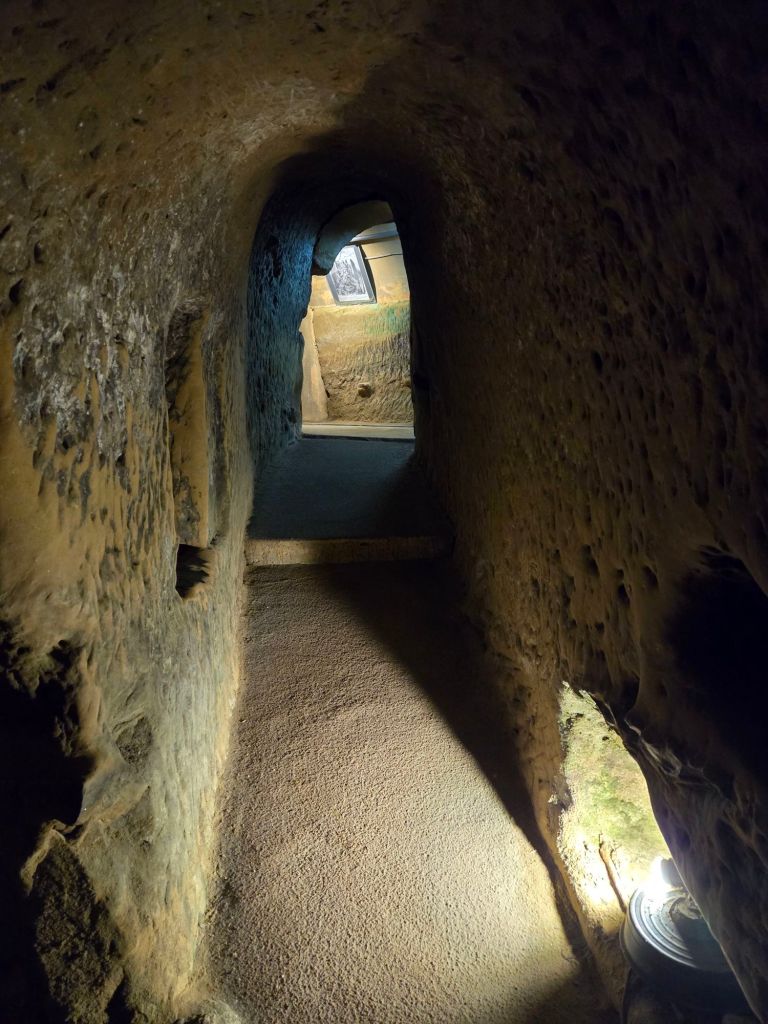
A reconstructed tunnel at the Former Japanese Navy Underground Headquarters
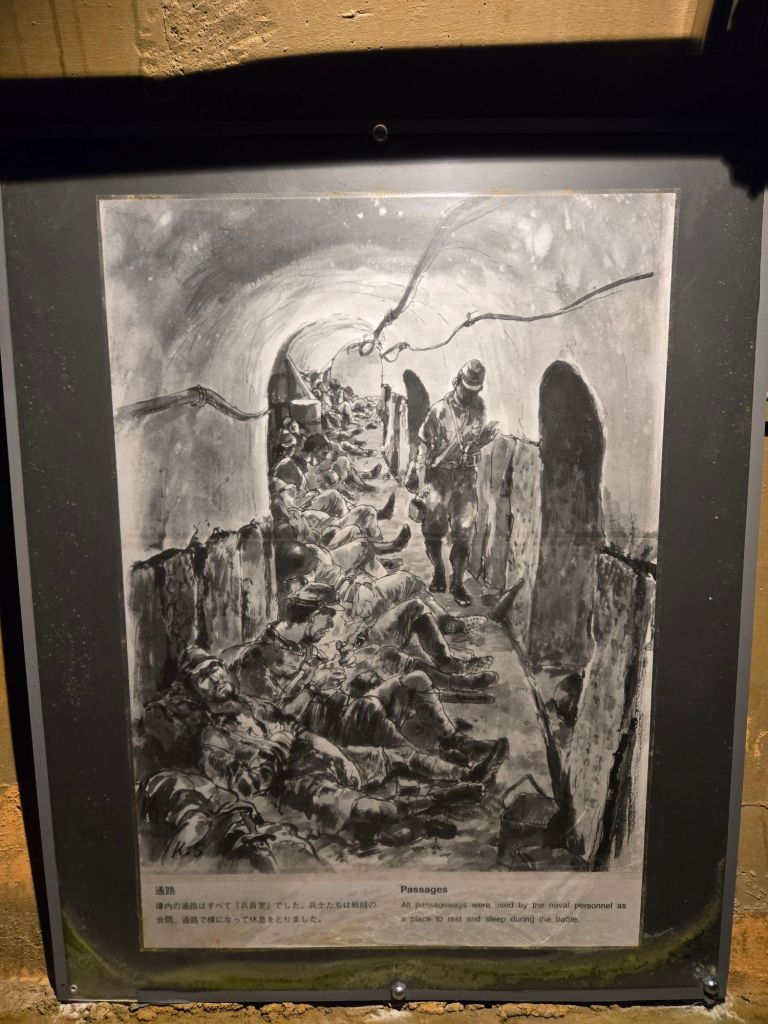
Artist’s depiction of troops crammed into tunnels at the Former Japanese Navy Underground Headquarters

Hopelessly outmanned and outgunned, the Japanese army resorted to nighttime attacks on American positions, armed only with spears. They conscripted elderly men and young boys in an attempt to swell their ranks.
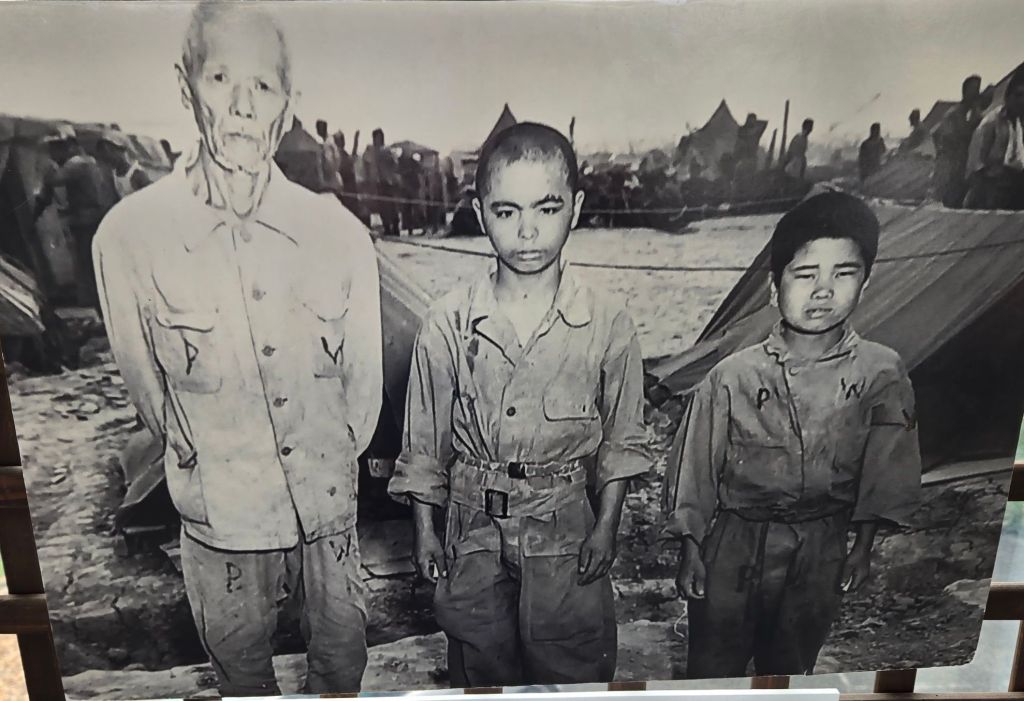
Photo of the elderly and boys forced to serve in Battle of Okinawa, on display at the Former Japanese Navy Underground Headquarters

As Japanese casualties mounted, Japan also recruited the girls and women of Himeyuri,  telling them they were needed as nurses in a field hospital. The students and teachers packed up their books and journals, believing they were being deployed to an official Red Cross hospital, and would still have time to read and write during breaks in their shifts.

Instead, they were led to a cave where injured Japanese soldiers were being brought for whatever help could be given under the most primitive of conditions. The women were assigned the filthiest, most dangerous tasks, which included leaving the cave to find food and water during the American assault. They had no breaks, and learned to sleep, quite literally, standing up.

As it became obvious that the Japanese were going to lose the Battle of Okinawa, the women were ” decommissioned,” told their services were no longer needed, and left to fend for themselves. They were barred from finding refuge in other caves being occupied by the Japanese military. Many were killed or took their own lives.

Back in the underground tunnels, Admiral Minoru Ota, the Japanese commander, realized not only that the battle was lost but that the sacrifices his troops had demanded of the Okinawans were unforgiveable.  In a telegram to his own commanding officer, dated June 6, 1945, he acknowledged that ” ever since our Army and Navy occupied Okinawa, the inhabitants of the Prefecture have been forced into military service and hard labor  while sacrificing everything they own as well as the lives of their loved ones. They have served with loyalty…but they will go unrecognized, unrewarded. Seeing this, I feel deeply depressed and am at a loss of words for them….And for this reason, I ask you to give the Okinawan people special consideration, this day forward.” A week later, he and his staff took their own lives.

More than a third of the population of Okinawa was killed during this battle, which took the lives of more than 200,000 people on both sides.

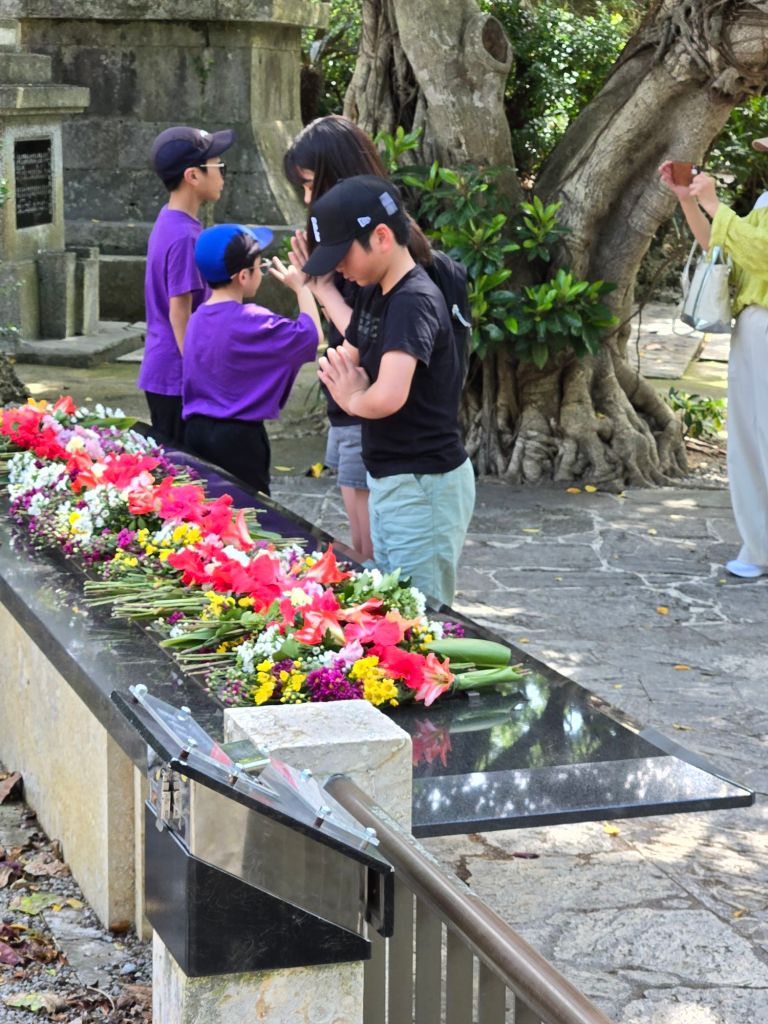
The women of Himeyuri  who somehow managed to stay alive remained silent about their experiences for years, many wracked by survivor guilt. Eventually, however, they realized that the best way to honor their classmates and teachers was to tell their stories, and the Himeyuri Peace Museum was established in 1989. Today, visitors can tour exhibits, listen to interviews, and pay their respects with bouquets. Just before the exit, a piece of music called ” The Farewell Song,” composed for but never played for the Himeyuri graduating class of 1945 ushers visitors back outside.

The day we visited, most families had young people with them, who, I hope, will ensure that the futility of battles like the one that ravaged Okinawa can be avoided in the future.
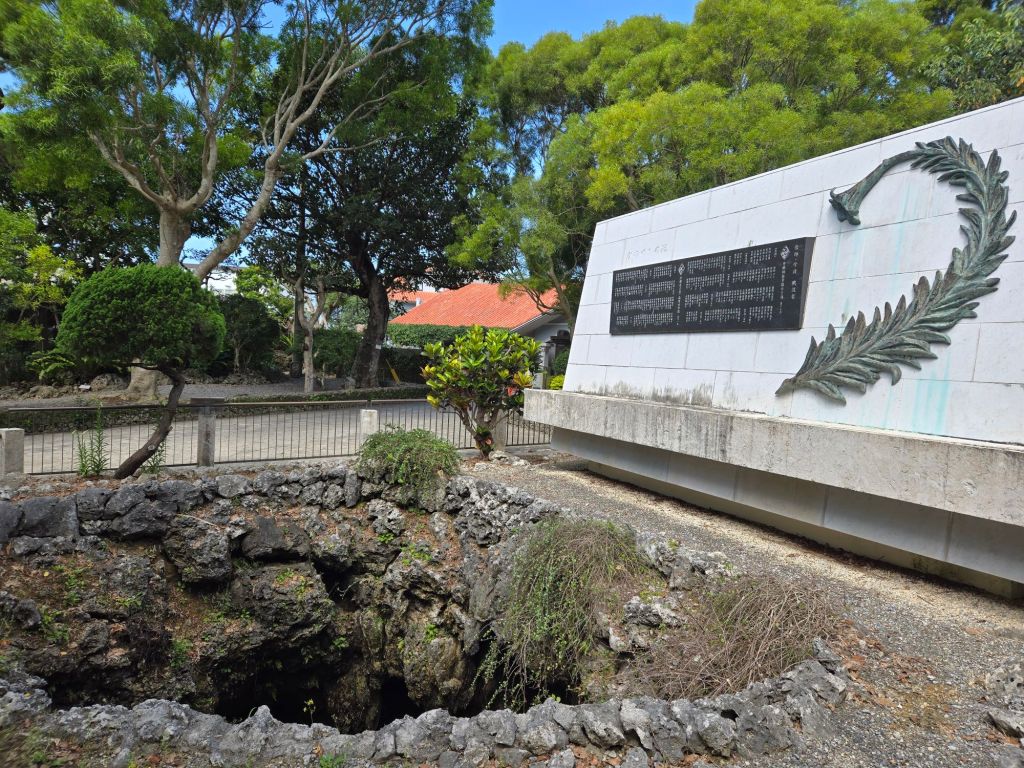
The Peace Monument, backgrounding a replica hospital cave
Children lay flowers in honor of the Himeyuri women
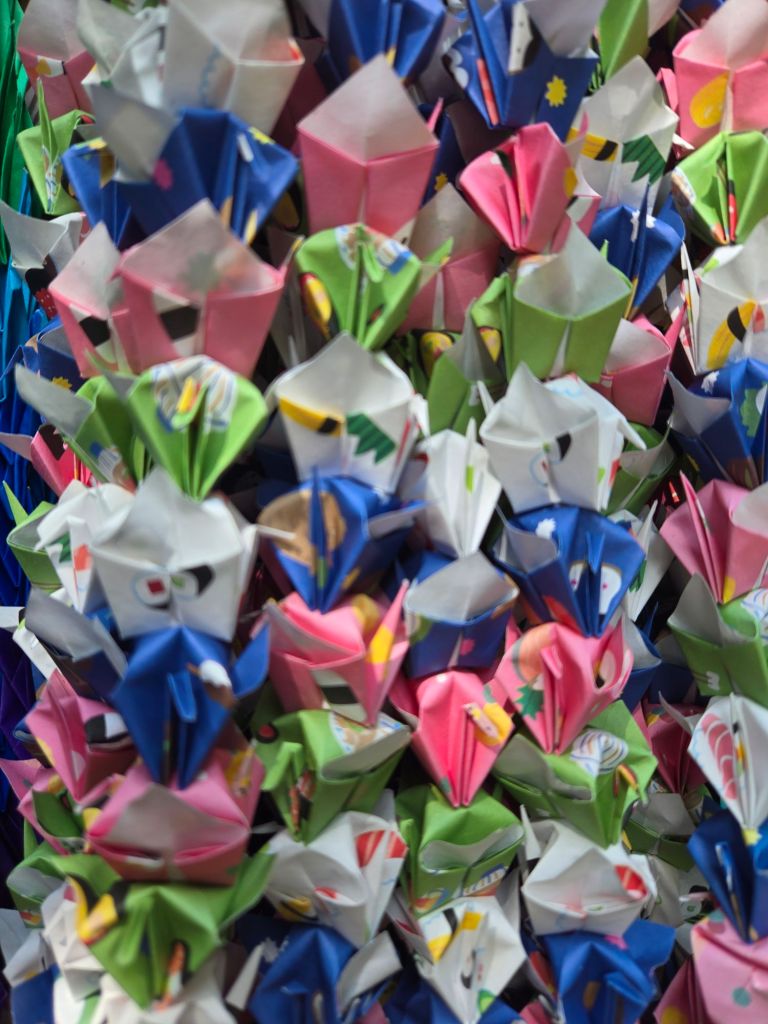
Peace cranes
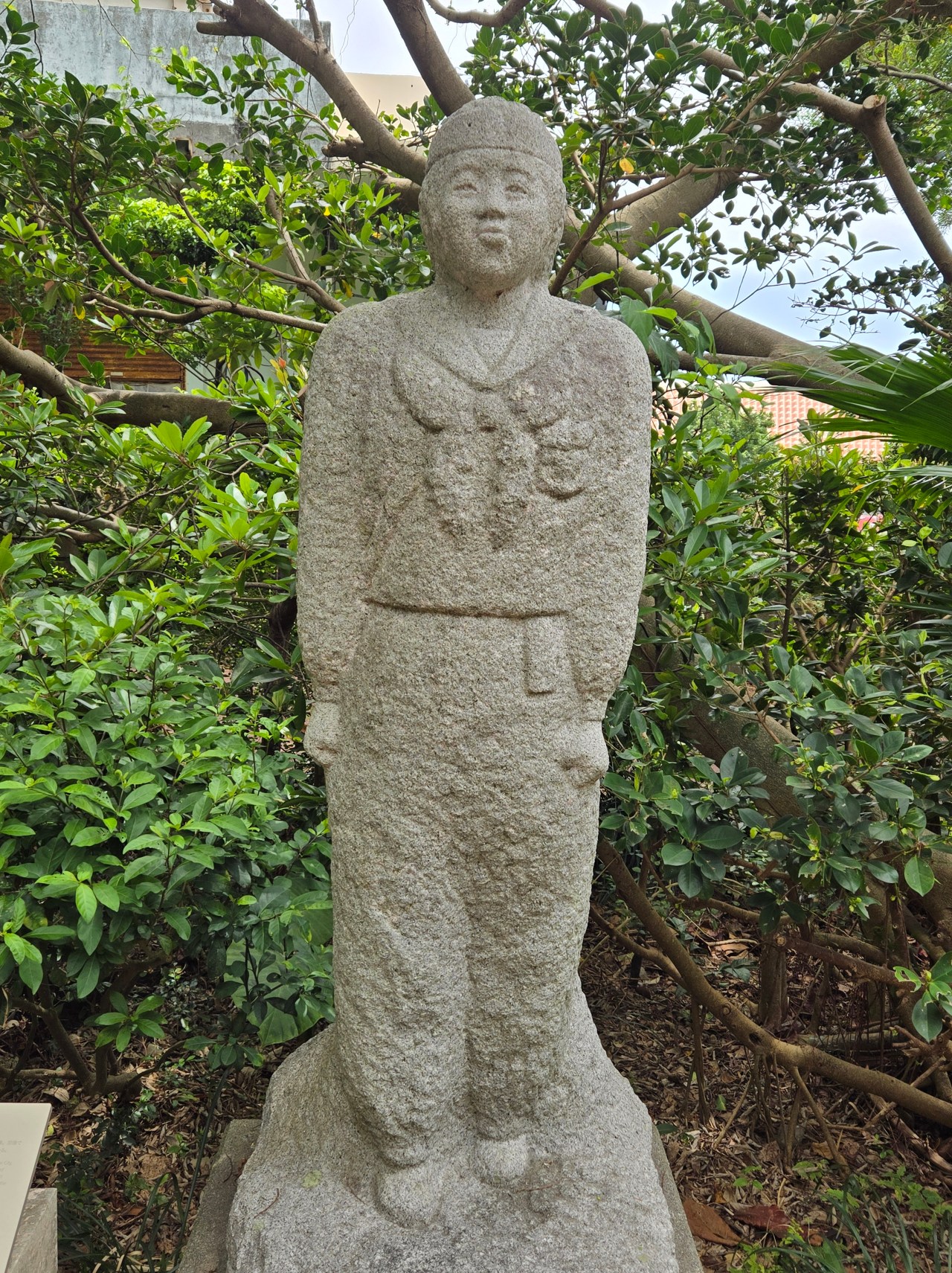
A statue of a Himeyuri student
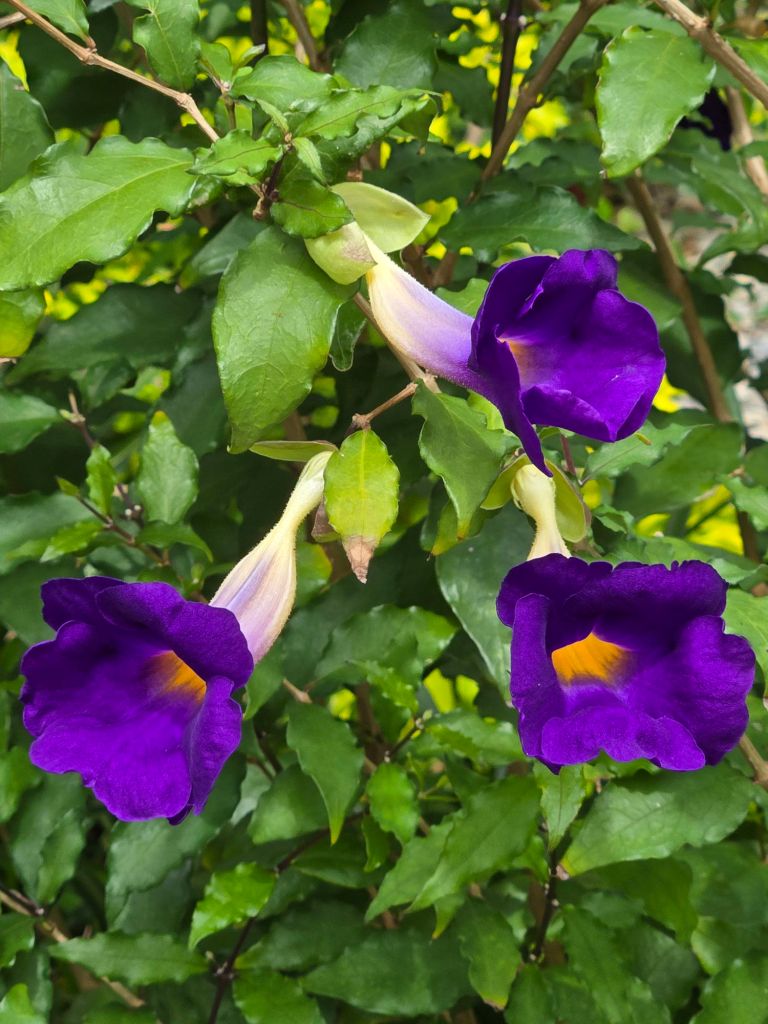
Peace lilies

Postscript: Today,  April 11, 2024, an article from the National Public Radio entitled “Okinawa feels impact of U.S. and Japan military shifts” popped up in my news feed. Apparently, “Okinawa… is the focus of U.S. and Japanese efforts to beef up defenses in Japan’s southwest islands” to ward off potential attacks from China.

It apoears that the special consideration Admiral Ota requested for Okinawans almost 80 years ago is being ignored. The line “When will they ever learn? has never seemed more appropriate.

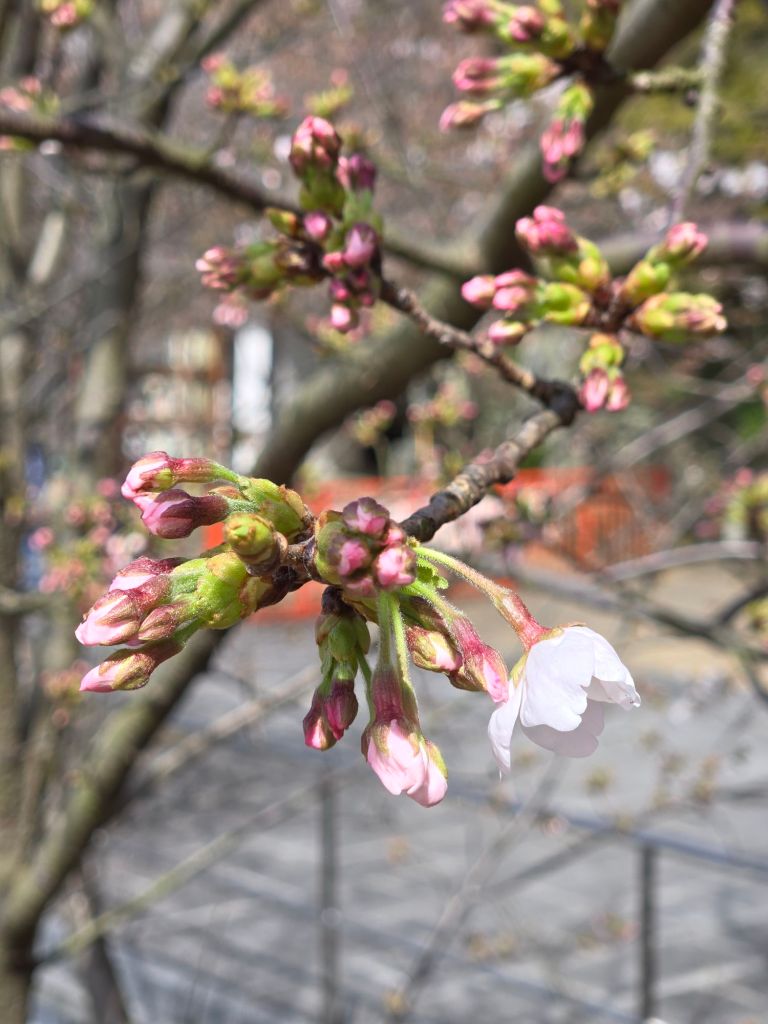
Seeing cherry blossoms – or sakura  as they’re called in Japanese – is one of the main reasons tourists visit Japan in late March.

And, of course, it’s not just tourists who anxiously await the iconic clouds of white and pink to drift into view. All over Japan, cherry blossom watches and forecasts, some of them updated daily, come in from one end of the country to the other. Japanese experts regularly examine “sample” trees in 58 locations around the country, and when 80% of the blooms on these trees have opened, the cherry blossom season in that locale is declared  “in full bloom.” People then have a week to ten days to enjoy wandering among the trees, marveling at their delicate beauty and taking #cherryblossom selfies.

Unfortunately, this year, Mother Nature kept everyone waiting, ripping up the cherry blossom schedules and forecasts and scattering them like so many petals in the spring breeze.

Too chilly for me!

An uncharacteristically warm winter in most of Japan, followed by chilly weather in the last week of March and early April, meant the blossoms stayed cozily inside their buds. We saw about six trees with a blooming branch or two open in all of Tokyo. Hiroshima?  No luck there either. Wakayama? Same. I joined other tourists and local enthusiasts as we strategically positioned our camera phones to zoom in  on whatever blossoms we could find.

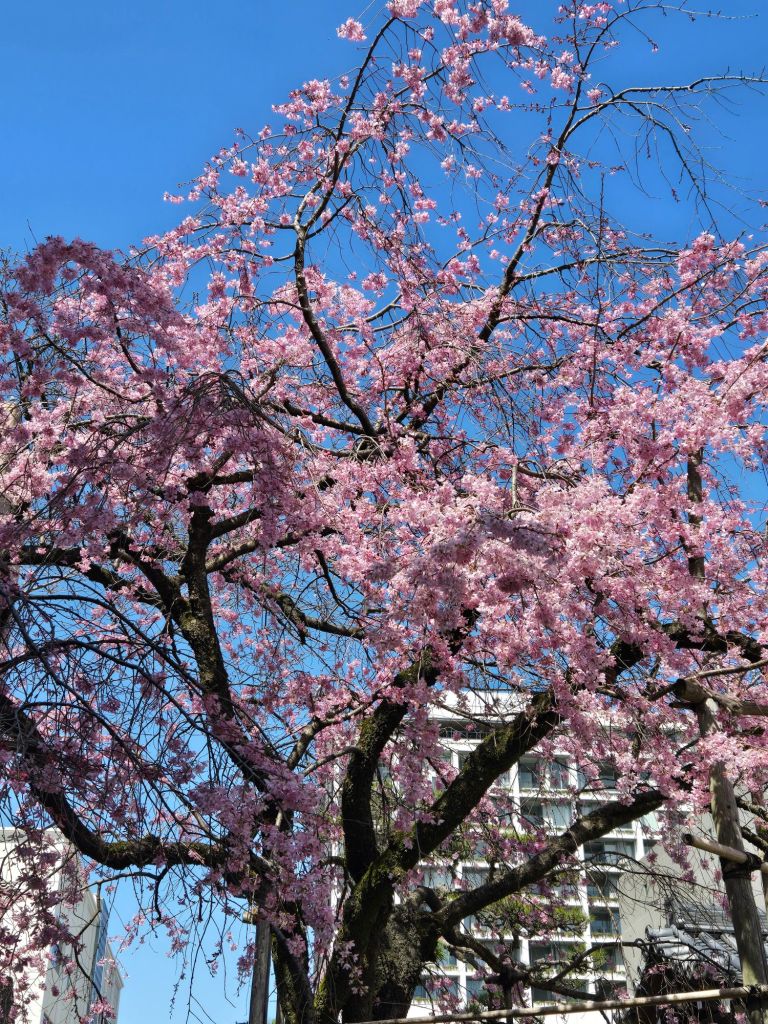
One branch blooming, March 24, Imperial Garden, Tokyo
March 27, Miyajima, near Hiroshima
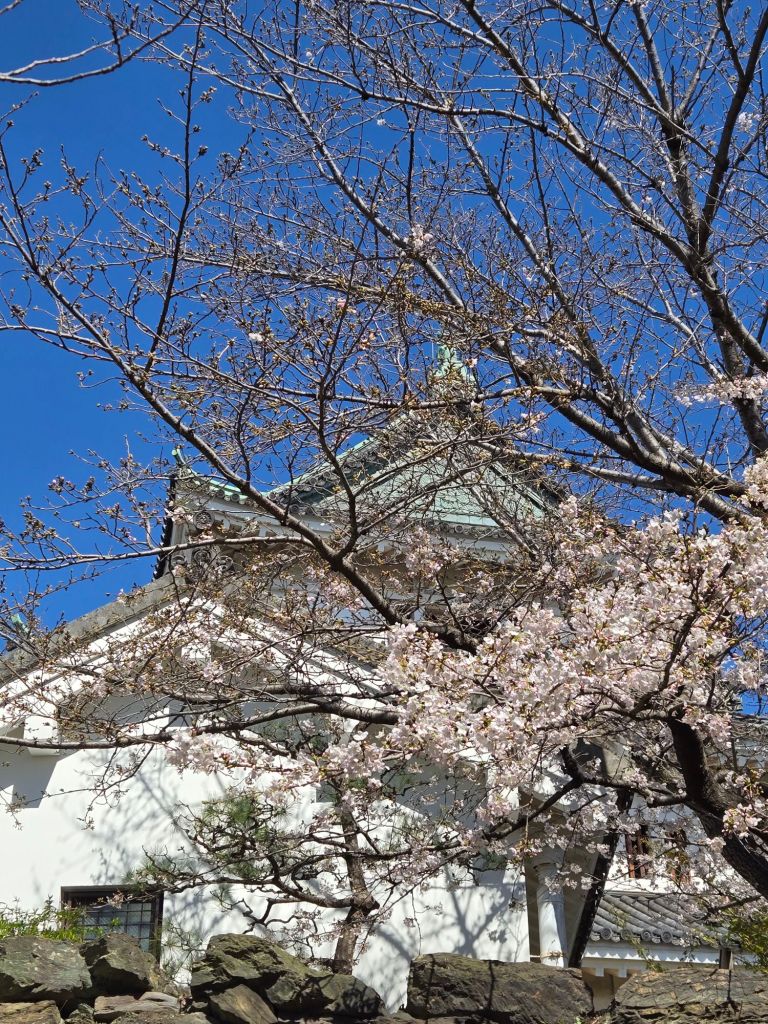
One tree blooming, March 29, Wakayama Castle
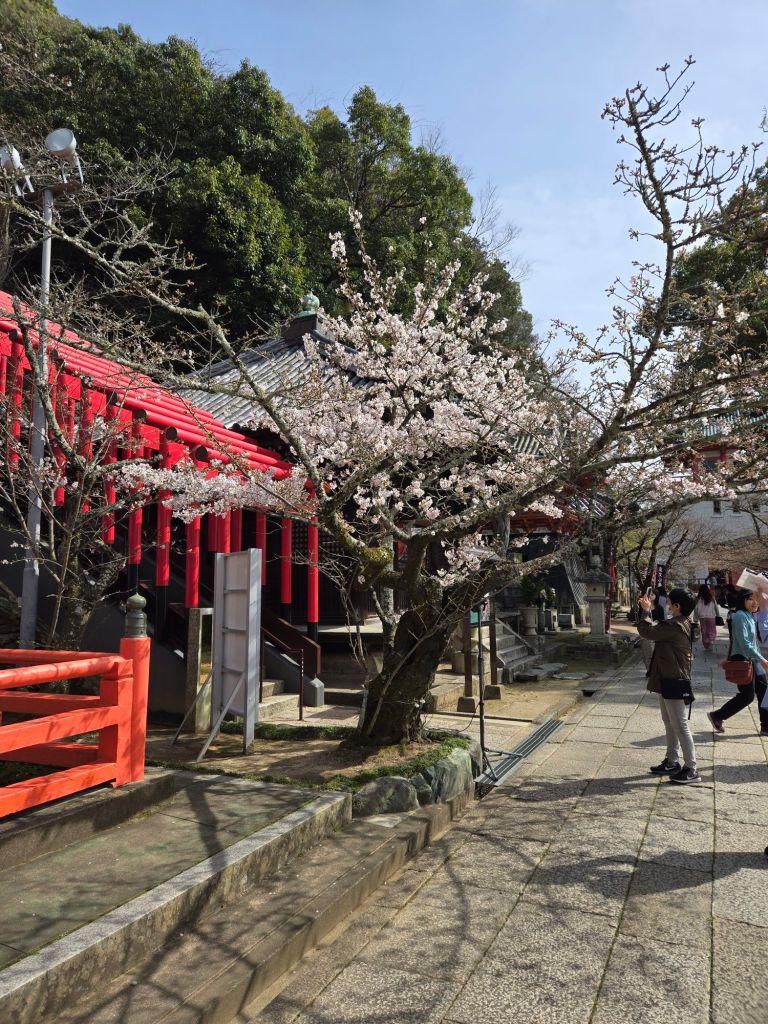
One tree bloomong, March 30, Kiimidera Temple

By the time we left for Okinawa,  which is so far south that their cherry trees finished blooming in February, I’d decided that we’d be among those tourists for whom cherry blossom season remained elusive. Sure, I was due back in Wakayama on April 8 for a visit with my friend Kazue but by then, it looked as though the cherry blossoms would  be off the trees there. I tried to follow the philosophical advice of the 13th century Japanese author Yoshida Kenko, which I saw reprinted on an English language website: “Are we to look at cherry blossoms only in full bloom, the moon only when it is cloudless?” 

And, then, today, Ono.

Kazue had told me before I left Canada that she’d be taking me to see her mom in a small rural town called Ono, which is famous for a 5 kilometer corridor of cherry trees. On our way there, her mom texted her that the traffic was likely to be heavy because the trees were in full bloom. At last!

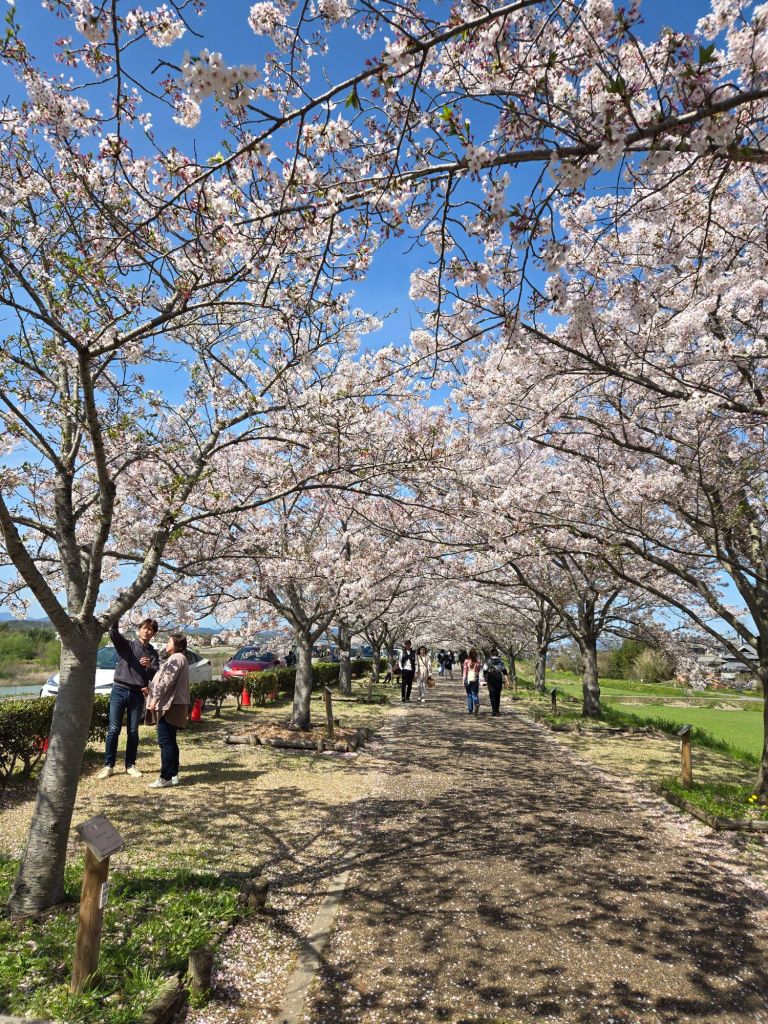
After lunch at her mom’s, Kazue and I walked across the bridge behind her family home in the bright sunshine, and there they were – as far as my gaze could reach, one blooming cherry tree after another.

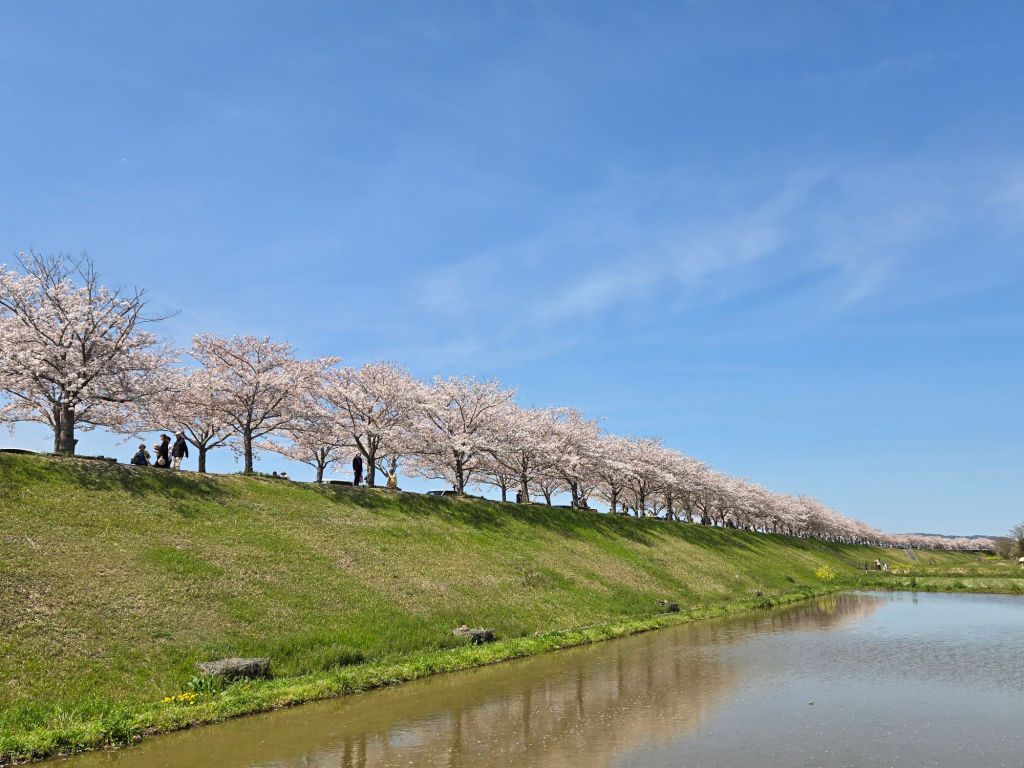
A small section of Ono’s cherry tree corridor

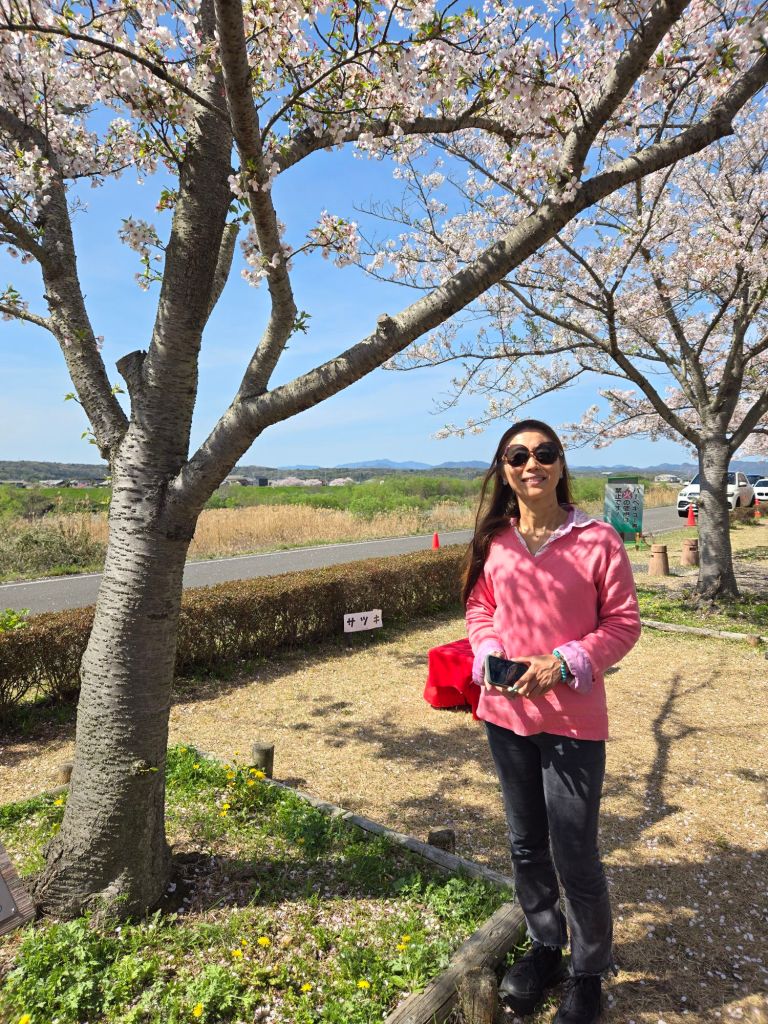
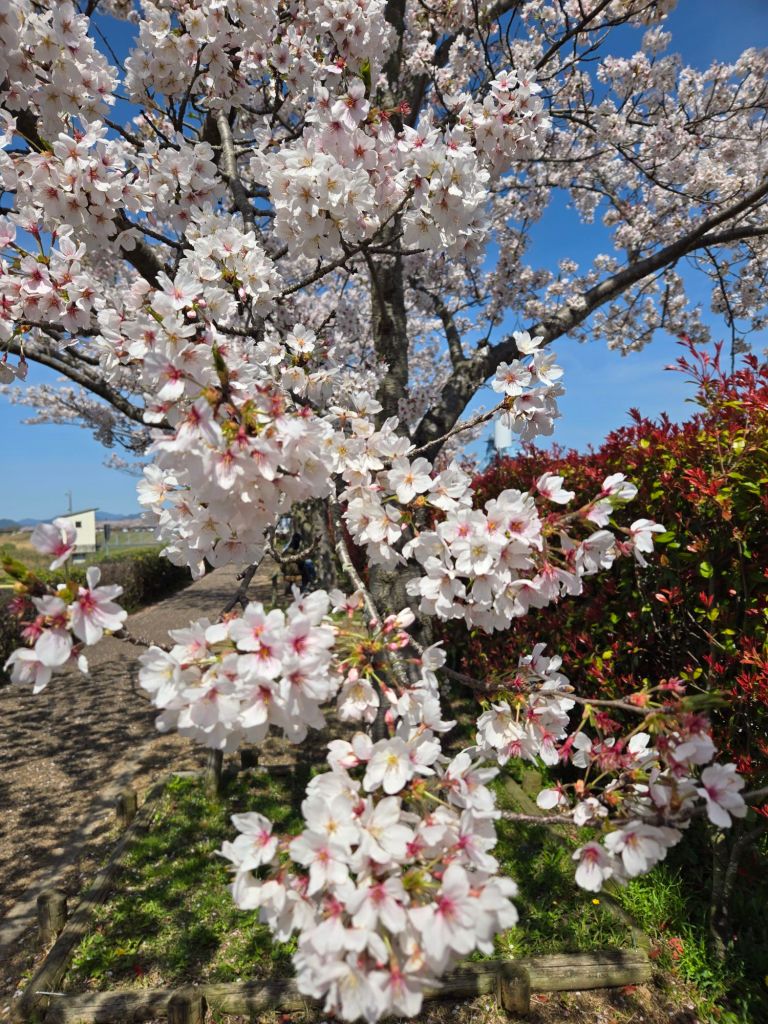
The great thing about Ono’s cherry blossom corridor is that it’s not a tourist destination. I was the only non-Japanese person wandering the path. These trees are also special because each of them has been adopted by a local family who has posted a plaque beside their family tree or planted some spring flowers at its base to enhance its beauty.

The Nakamoto family tree
” We tend this cherry tree like our child.”

Cherry viewing for many Japanese people is an event. We saw lots of people sitting under the trees on blankets with picnics and thermoses. A young dad held his fat- cheeked baby up to a blossom so his mom could take a photo. A grandad  posed under a tree with his grandson. An elderly couple set up a photo of their whippet dogs in matching sweaters, positioning  them in front of bright pink, red, and purple parasols. Young couples took  selfies, flashing teeth and V signs. 

As we walked, the petals were already starting to drift down. Kazue said we came at just the right time – in another couple of days, the trees will be mostly bare. In Japanese culture, the arrival of the cherry blossoms symbolizes the coming of spring and new life, but their fleeting beauty is a reminder to enjoy life and embrace its many joys while we can.

Lorne left a couple of hours ago for an all day snorkelling expedition off the Kerama Islands, and I’m getting ready to walk over to a coral dyeing experience about 50 minutes from our hotel.

My Japanese phone number pings.

TSUNAMI, it says with a red exclamation point. The rest of the message is in Japanese and can’t be pasted into Google Translate.
Huh.

I wait a few minutes but nothing else happens so I head off.

Ten minutes later, I’m waiting for a light to change next to a young Japanese man and his mom. Our phones go off simultaneously.

” Tsunami? Here?” I say to him.

He points to where we are on Google maps then to the ocean. ” Yes. Evacuation maybe. Probably.”
Darn English as an additional language. Which is it – maybe or probably?
I look at the traffic flowing around me and the other pedestrians continuing down the sidewalk. Nobody seems concerned.

My phone pings again. A message from Lorne.

” We’ve been evacuated to a nearby rooftop. Should be safe enough.”

WHAT?

Maybe just dangerous for people right by the water? Why isn’t anyone reacting where I am?

I continue walking while keeping an eye on the conditions around me. A teacher is leading a bunch of giggling middle schoolers along the sidewalk. A field trip or an evacuation to higher ground?

Lorne messages again to say his trip is canceled and all the snorkellers have been returned to their hotels. Apparently when he arrived, the hotel personnel were telling people to go up to the 10th floor, the highest in the building.

But when I make it to the coral dyeing building, all is calm. The class continues as planned.

One more ping when I’m having lunch. All 8 diners in the noodle shop look at their phones simultaneously and keep eating. Apparently, the all clear.

Later, I hear Taiwan had its strongest earthquake in 25 years that morning. I guess Japanese people, who live with the threat of tsunamis all the time, have learned how to read and respond to the warning messages.   I’m just glad that my years of solo travel have trained me to read the people around me so I stay both calm and out of danger.

For two Canadian prairie people, more used to the “dry cold” of April in their home province, Okinawa’s moist heat comes as a bit of a surprise

Not that we dislike hauling out our summer wear to tour Naha, Okinawa Island’s business capital. But after walking around for a while, we’re ready for a cool down.

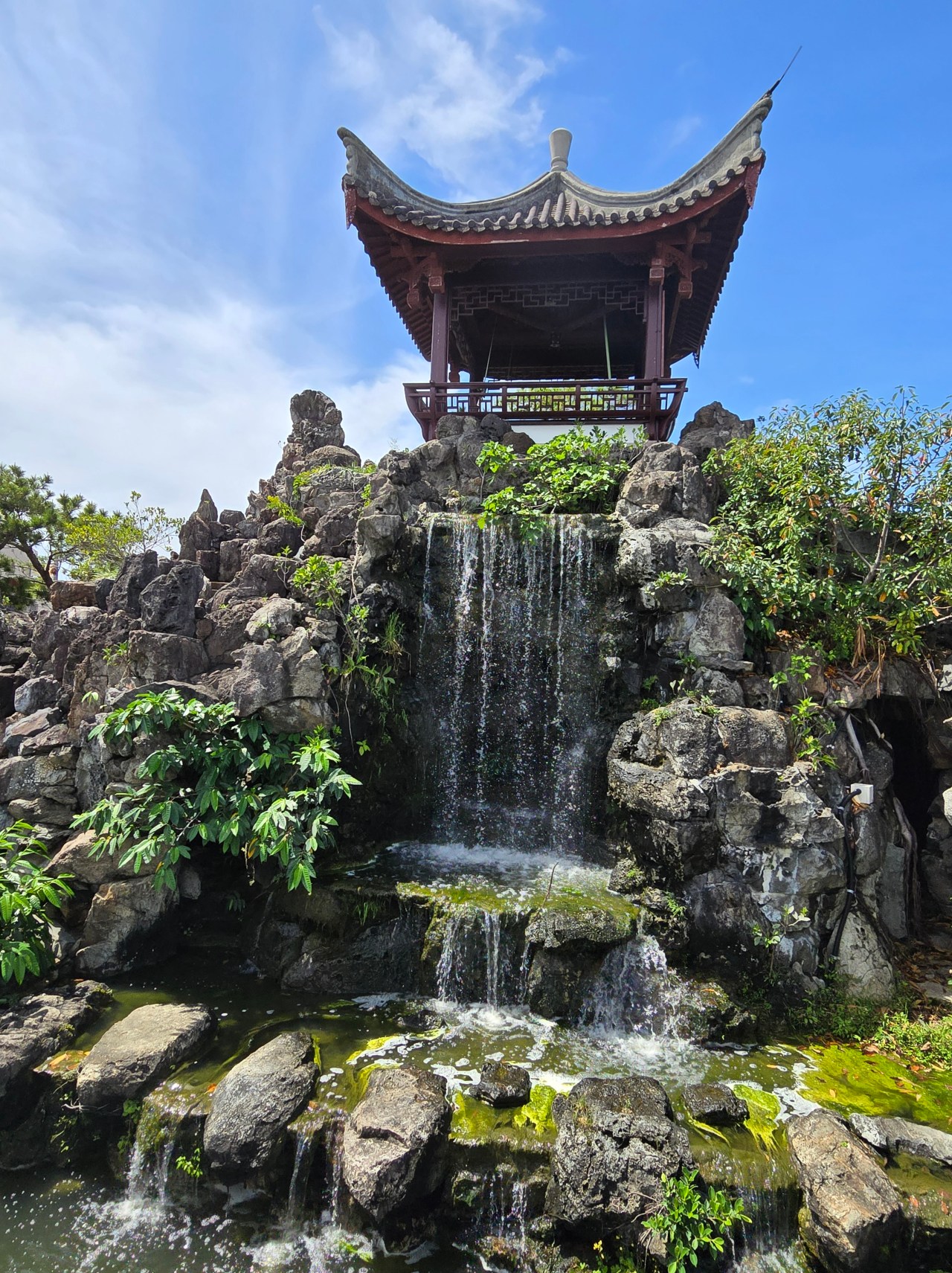
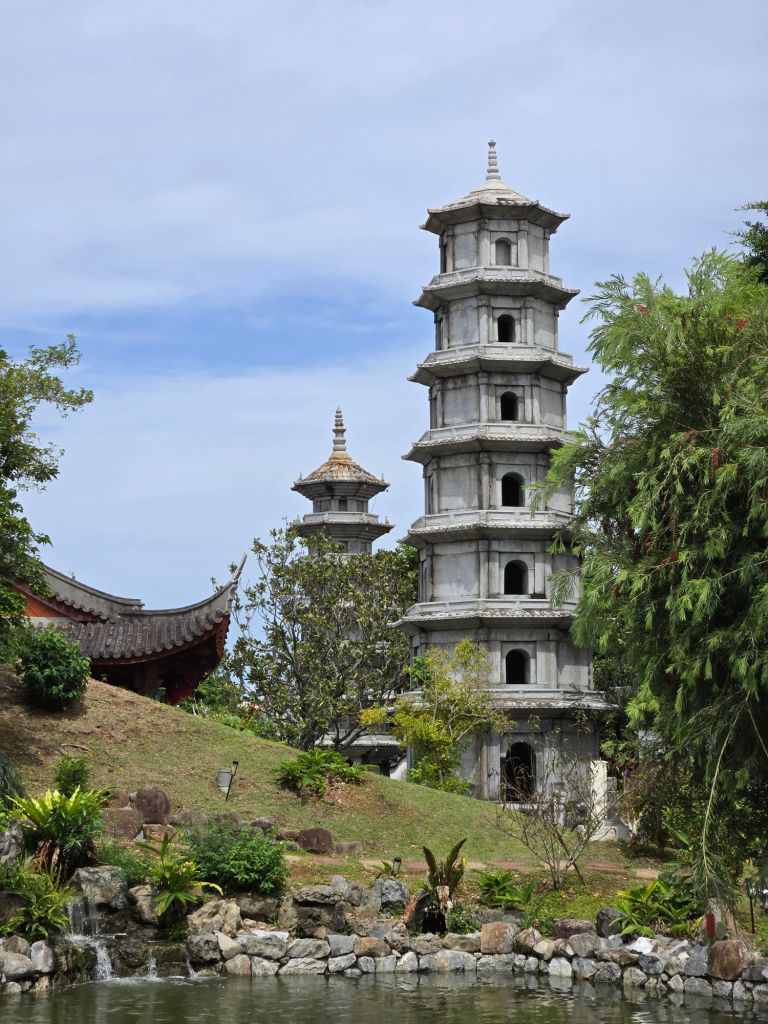
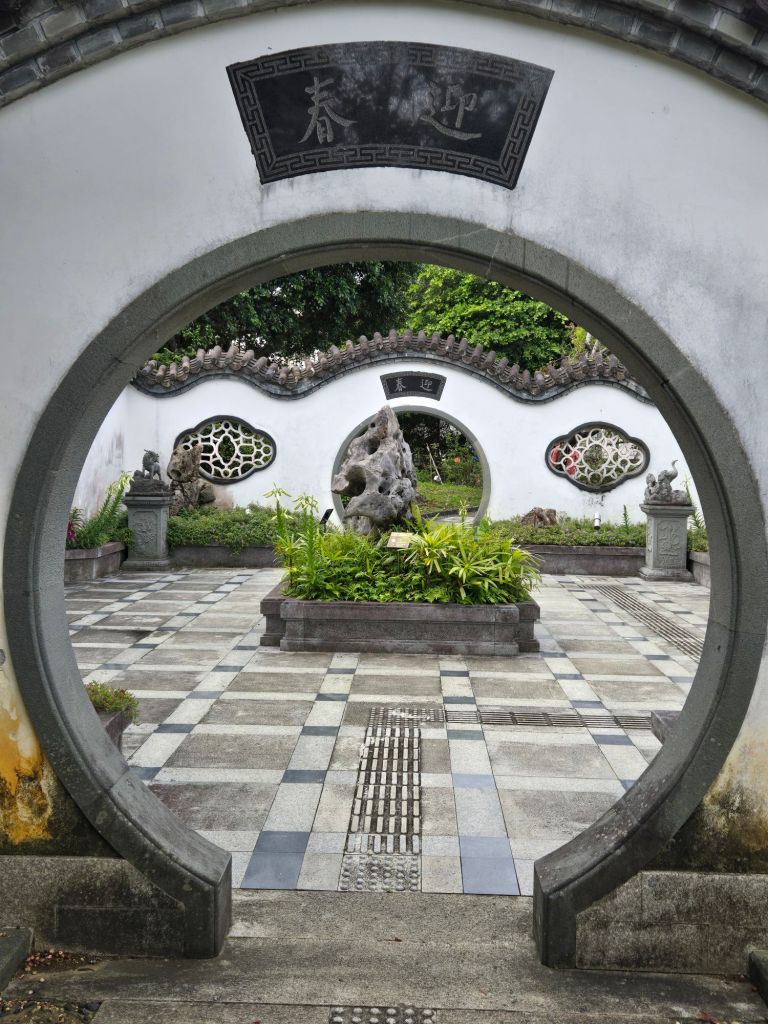
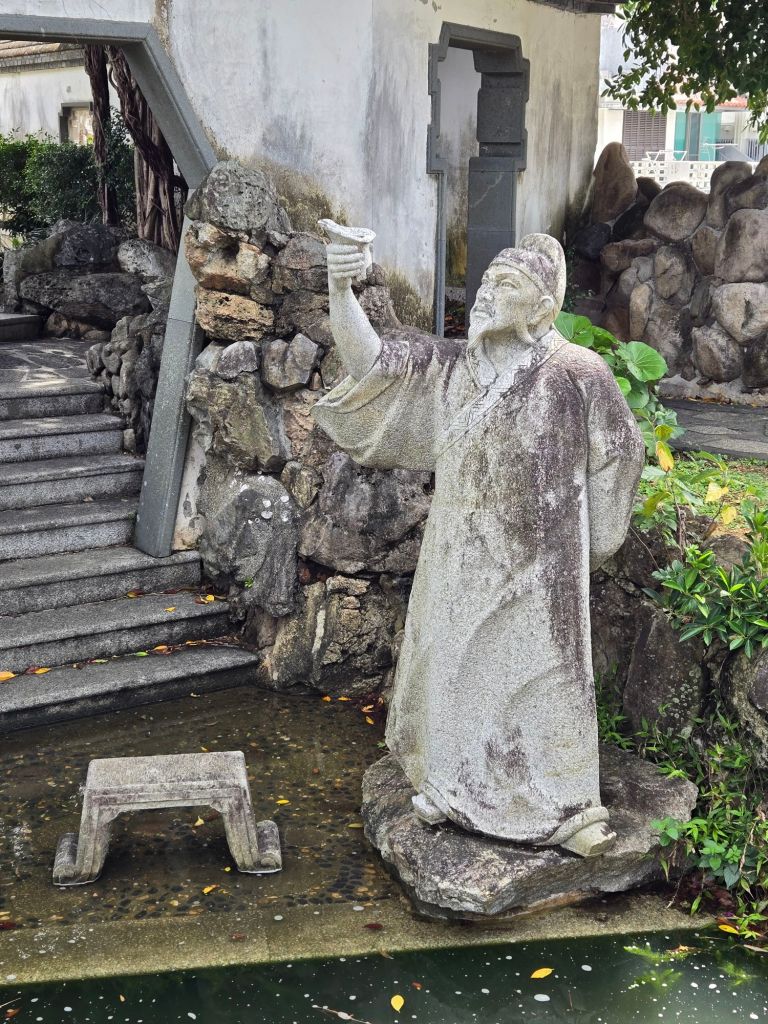
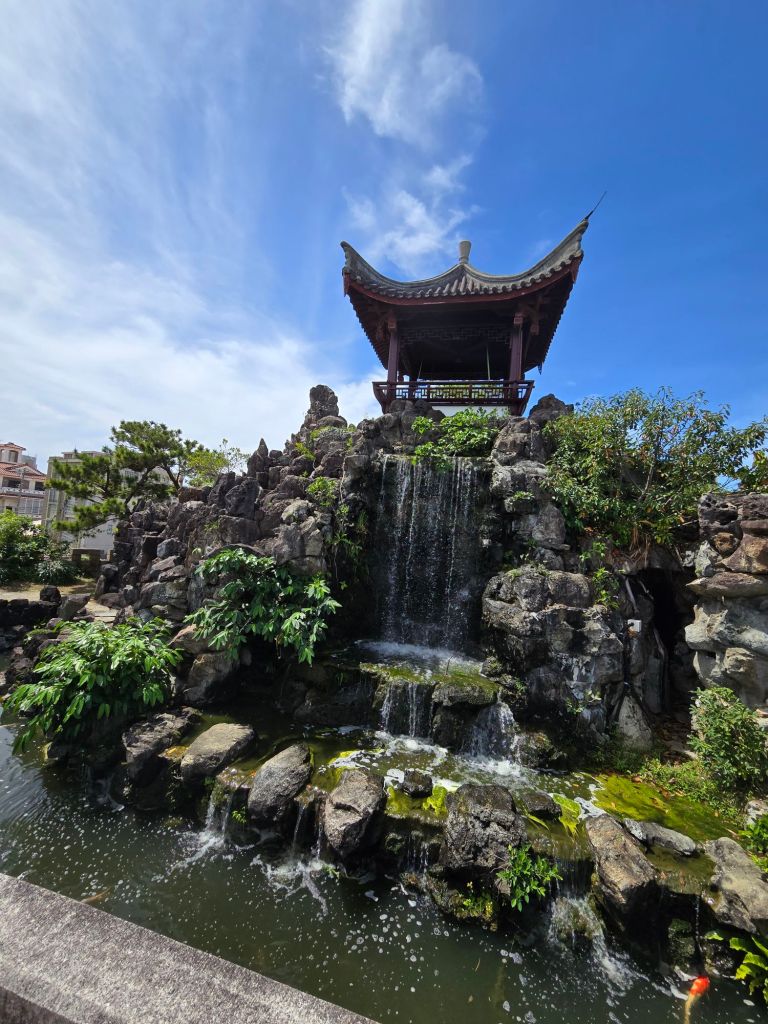
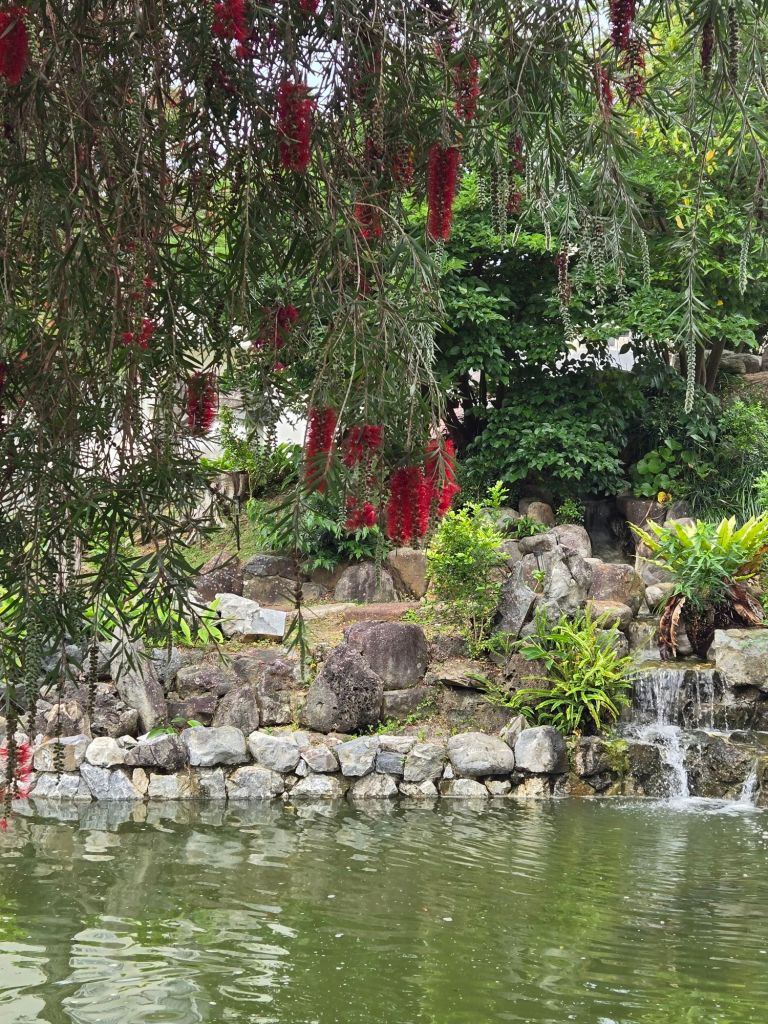
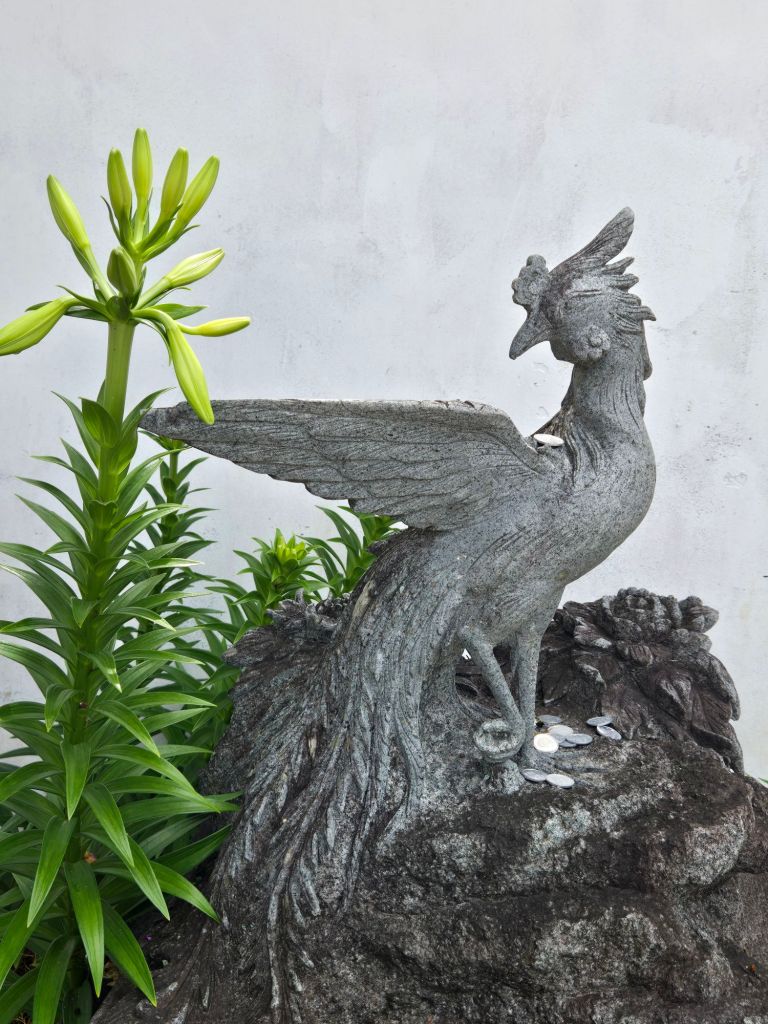
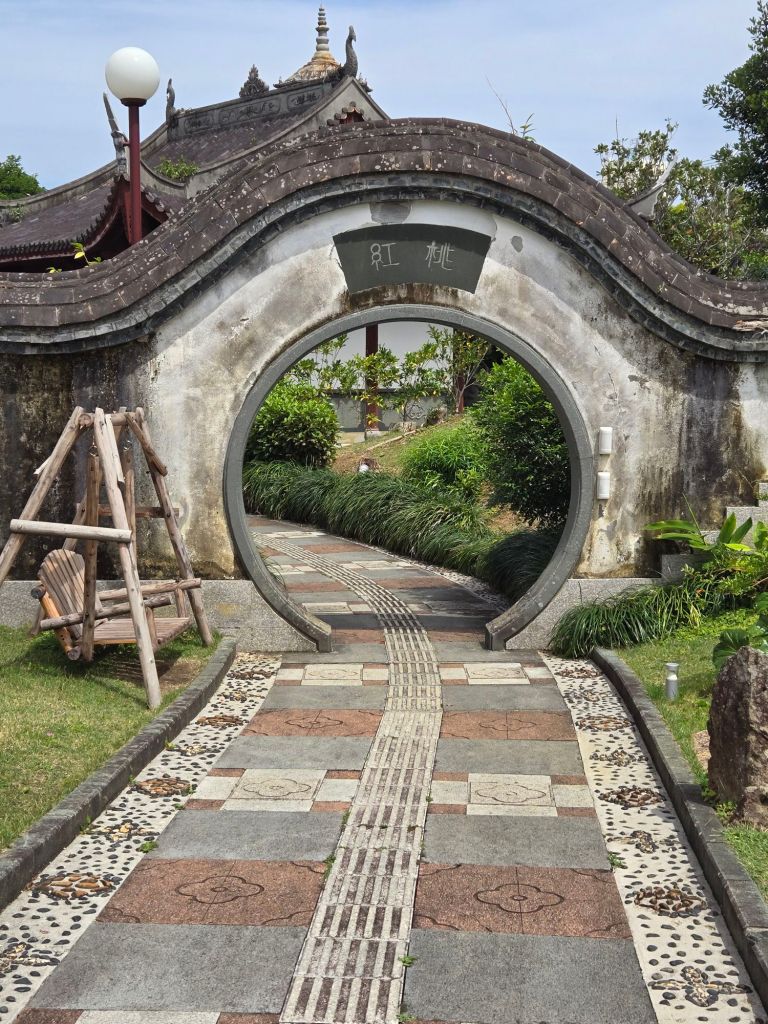
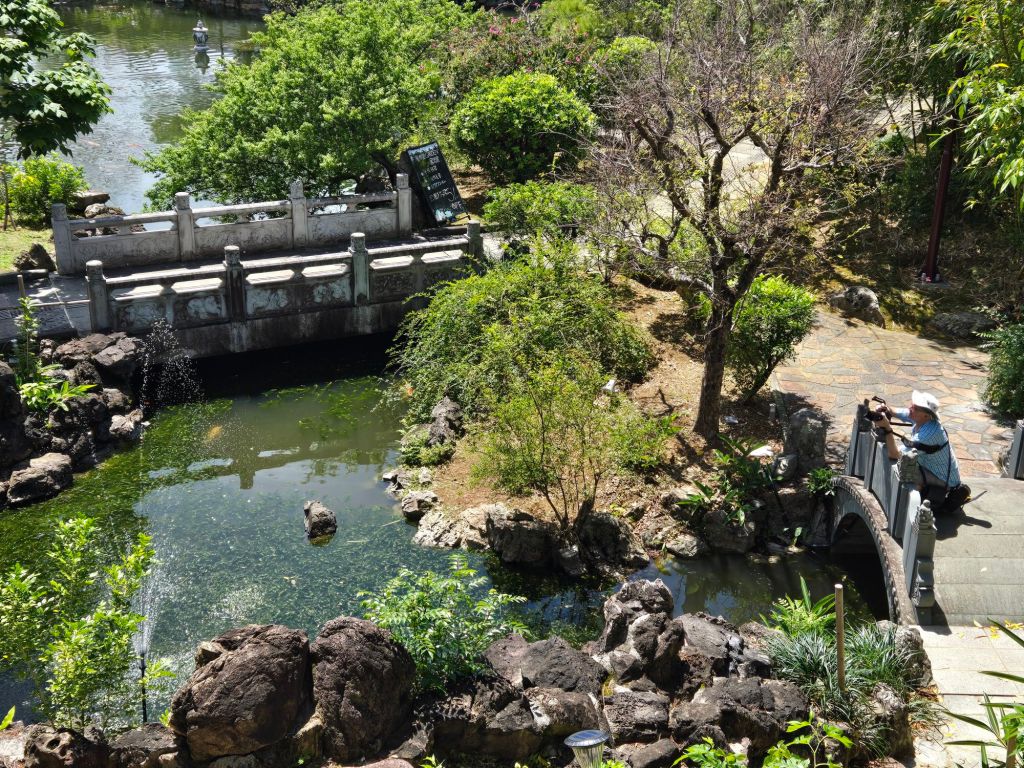
We find it in Fukushuen Garden, which celebrates Naha’s historic relationship with Fuzhou City in China. It dates all the way back to the 14th century and the Ryukyu kingdom’s prosperous trade era. The people from the province where Fuzhou City is located brought with them to Naha their interpretation and navigation skills, and influenced the establishment of the Ryukyu’s first public school.

Without further words from me, enjoy your ramble through what the Fukushuen website calls the  “walkable art” of this serene garden.

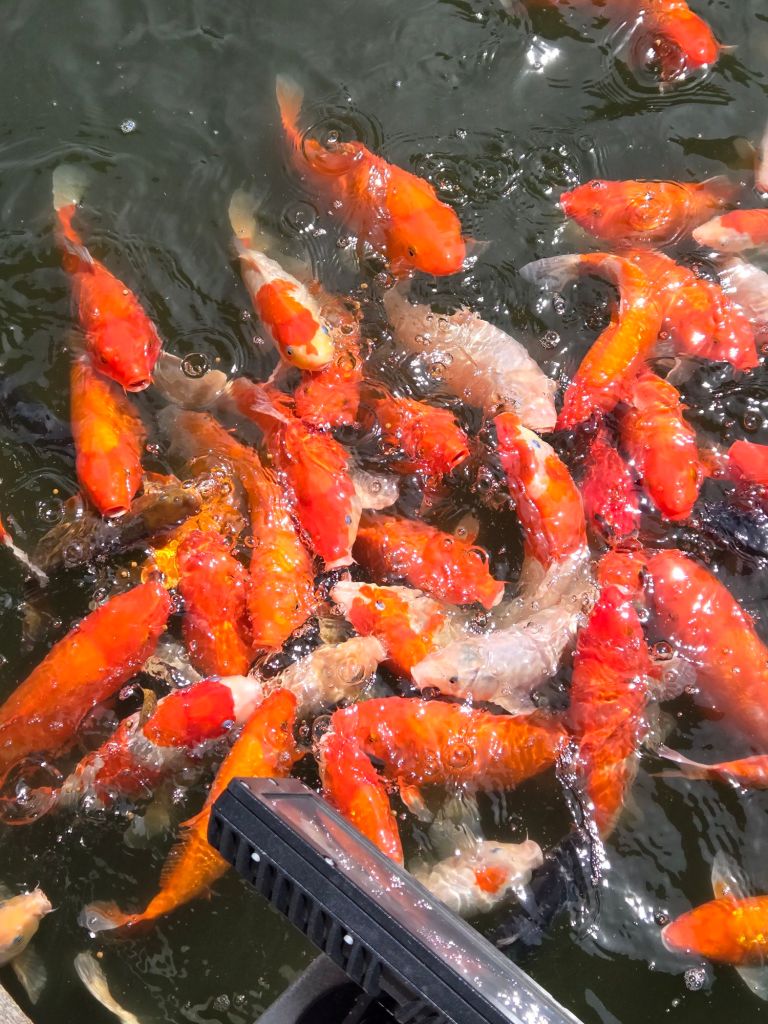
Feeding the koi
Koi frenzy!

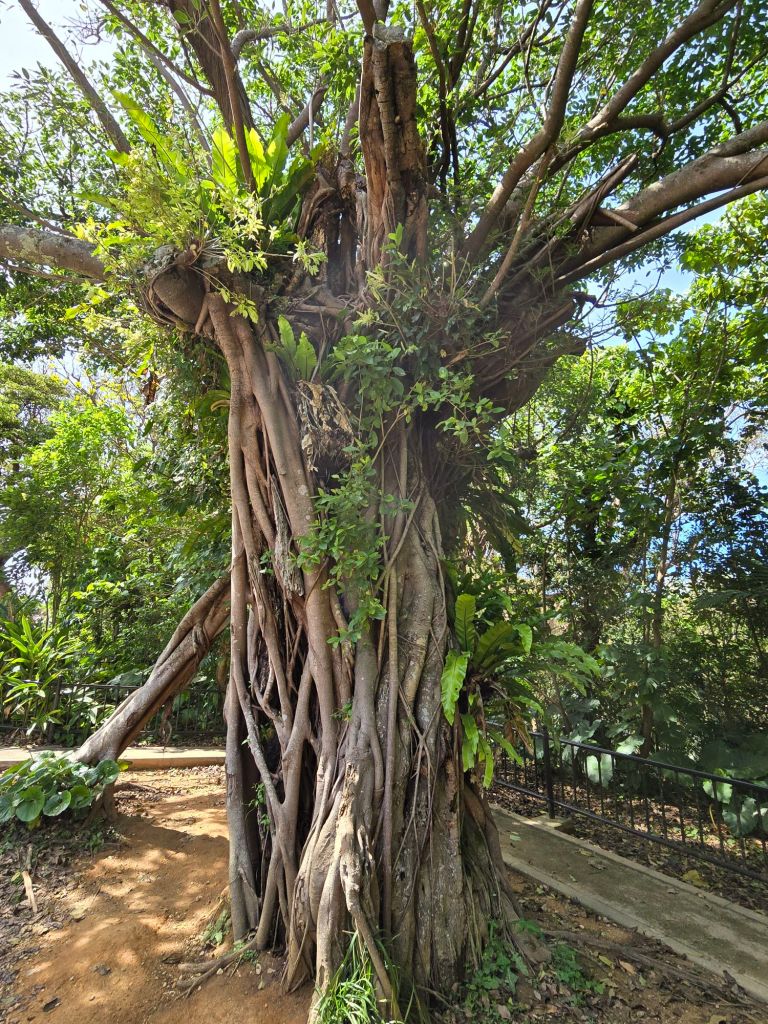
On the pathway leading up to Okinawa’s Shuri Castle stand the remains of a giant akagi tree, estimated to be more than 200 years old. It was heavily damaged during the 1945 Battle of Okinawa, and further battered by a typhoon. Although the original tree is no longer alive, a tenacious akou tree has grown among the remaining branches, restoring some of the akagi tree’s former beauty.

The tree is a suitable metaphor for the history of Shuri Castle in Naha City, Okinawa. The castle was originally built in the late 14th century as the palace and seat of government for the Ryukyu kingdom, which ruled the Okinawan Islands for hundreds of years. Ryukyu was a major trading partner of China and other southeast nations until it was annexed by Japan in 1879. Its loss of independence  still rankles Okinawans.

During Ryukyu rule, the Castle burned down three times – in 1453, 1660, and 1709 – and was reconstructed each time. In 1945, it was flattened by American bombers – and rebuilt again, opening to the public in 1992. In 2019, it burned to the ground once more.

But Okinawan devotion to its Ryukyu roots means that Shuri Castle would rise from its ashes a fifth time.

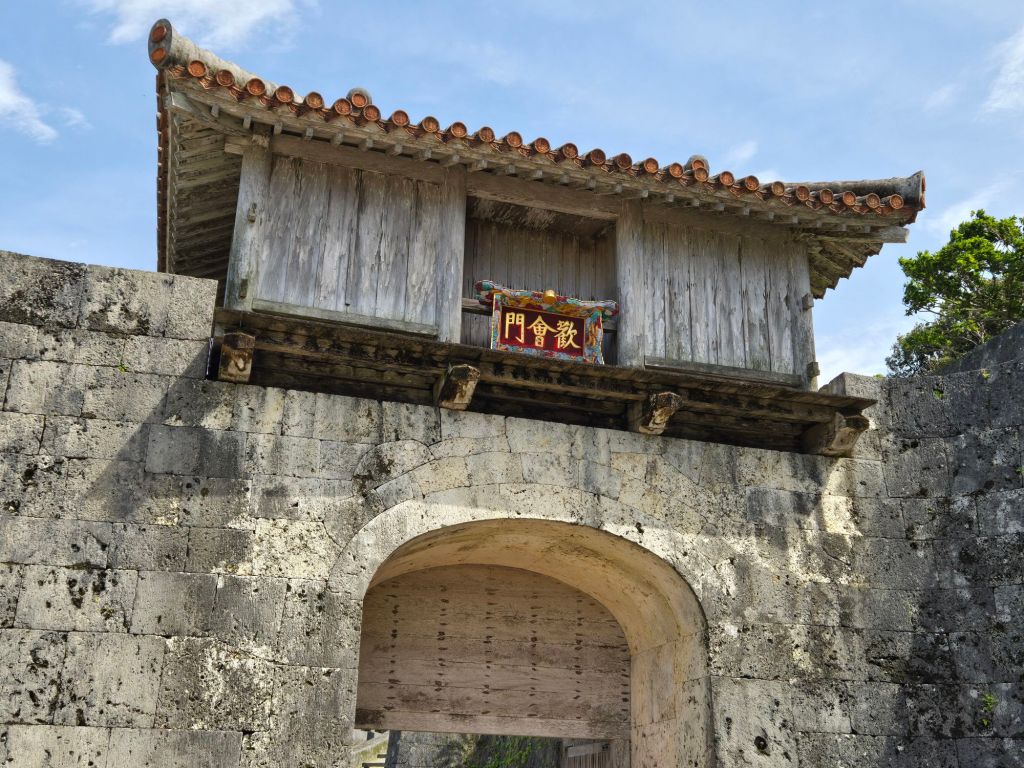
Shuri Castle Main Gate

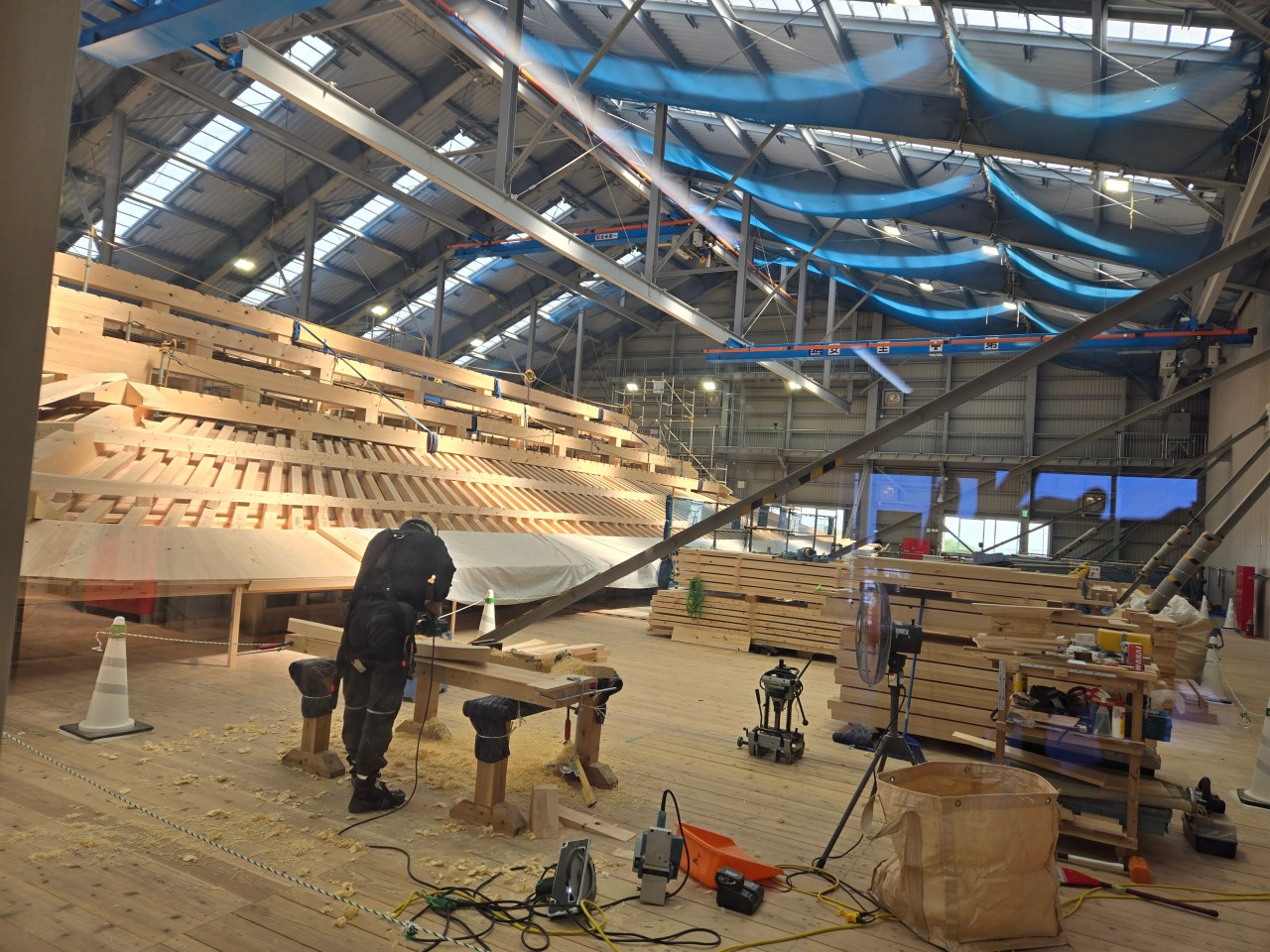
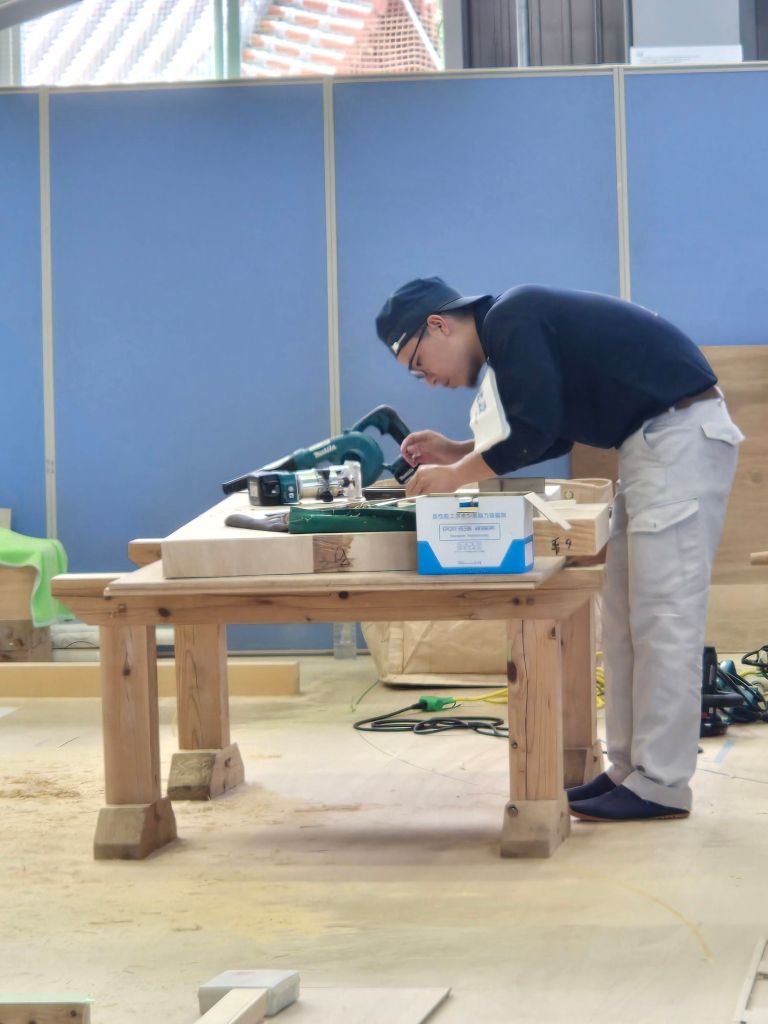
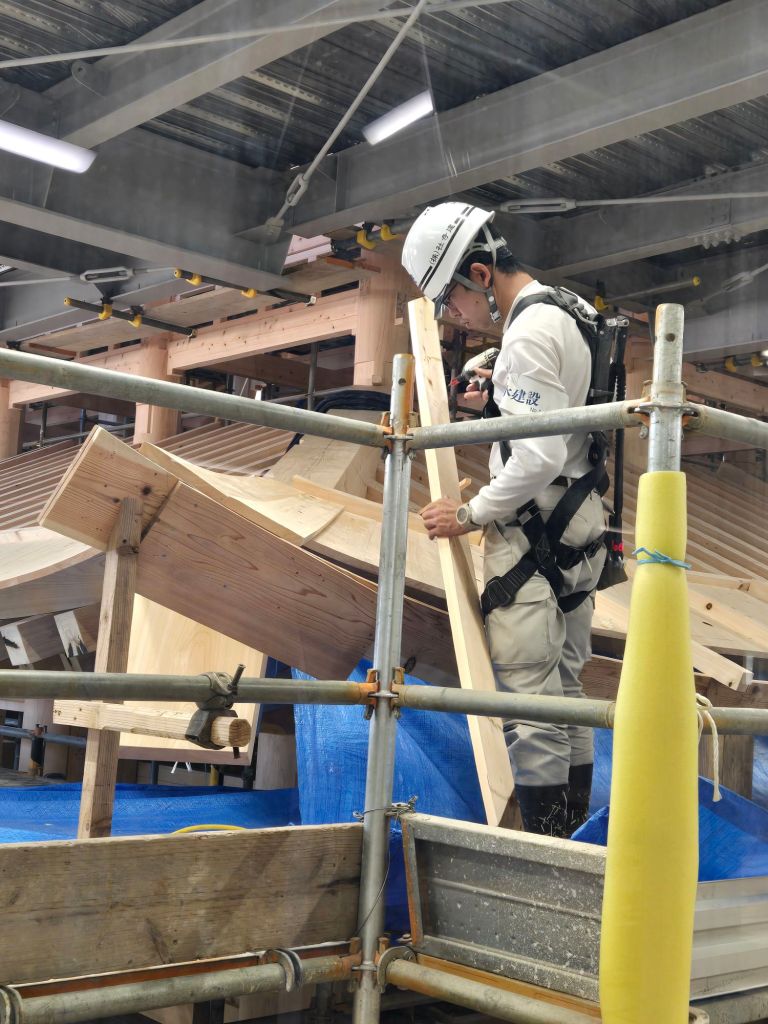
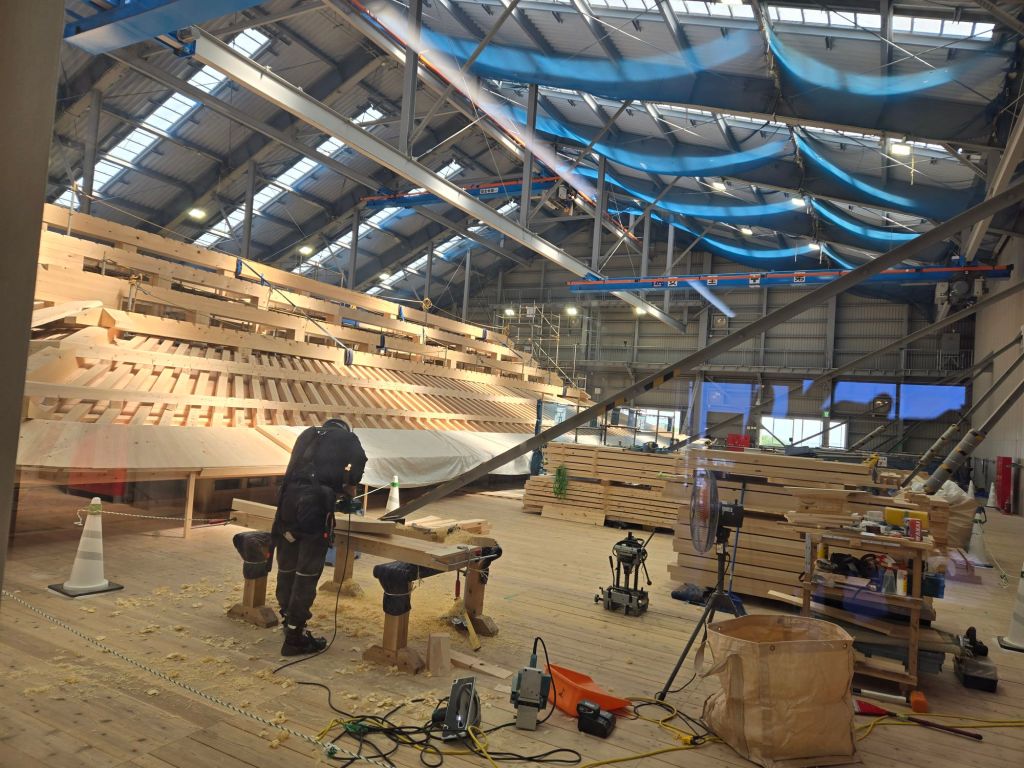
Journeyman and apprentice carpenters and Okinawan volunteers are collaborating on a massive indoor reconstruction program to restore the Castle to its former splendor.

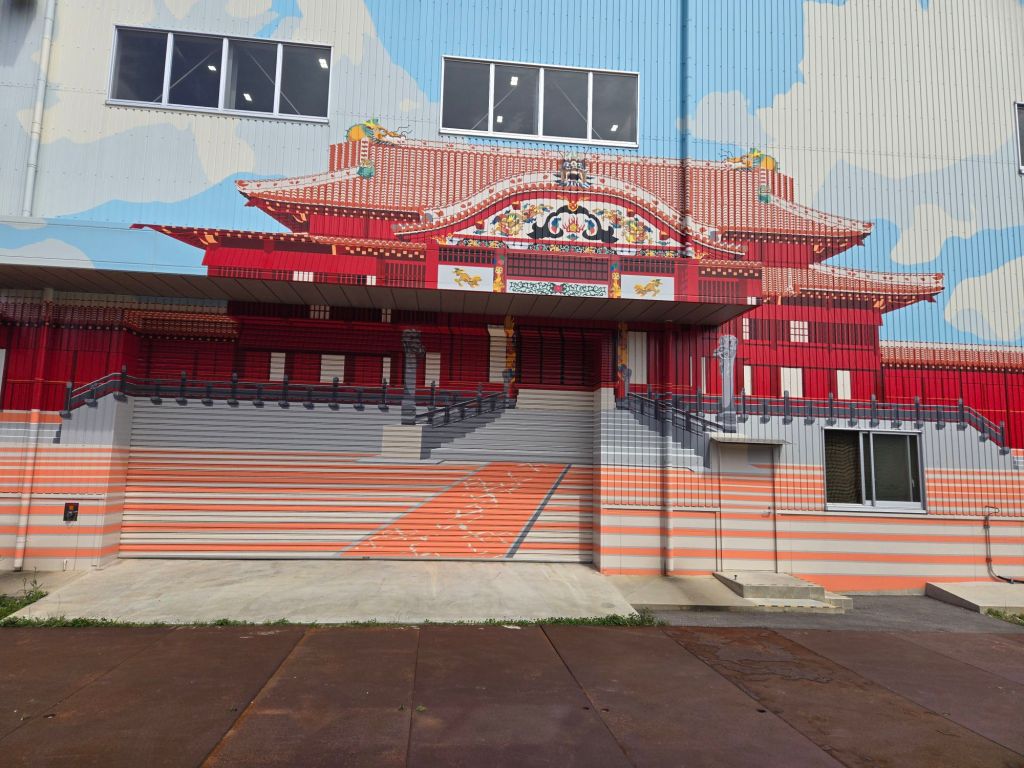
A mural of the original facade

As part of their stroll through the Castle grounds, visitors can watch these crafts people at work, using a mix of modern and  traditional carpentry methods and building materials. The restoration project even involves replanting the trees used for rebuilding. Although it will take these trees 100 years to reach maturity, this process is seen as an investment in materials for future repairs to the Castle, or touch wood (pardon the pun), in case there’s a sixth reconstruction necessary sometime down the road. Shuri Castle will always represent Okinawan identity, and that can never be burned down, bombed, or otherwise destroyed.

Scale model Castle builder
Crafting a roof board
A new roof for Shuri Castle

The taxi driver in Hiroshima asks us where we plan to  go next in Japan. When we mention Okinawa, he’s surprised. “Kyoto? Osaka? Very beautiful. “

Yes, I think, and also crowded with tourists. Besides, we’d been both places on other trips. Now it was time to explore a less well known destination, at least to North Americans and Europeans.

Okinawa,  nicknamed the Hawaii of Japan,  is a popular vacation spot for lots of Asian and southeast Asian tourists. It’s an island group closer to Taiwan than the Japanese mainland , 2.5 hours by plane from Osaka, and sporting a totally different vibe than any of the other places we visited in Japan.

Part of that is its tropical location. The temperature in March is already hitting 26C or above. As a result, there’s an island casualness here. You don’t see many men in Tokyo black suits and ties, striding off the subway to drive their corporate careers forward. Instead, business people more often wear a kariyushi shirt, sort of like a Hawaiian flowered shirt but more tailored and a bit more formal. Even the security officers at the airport wear them – fuchsia printed with white tropical flowers, which makes them seem a whole lot less intimidating than most airport personnel I’ve met.

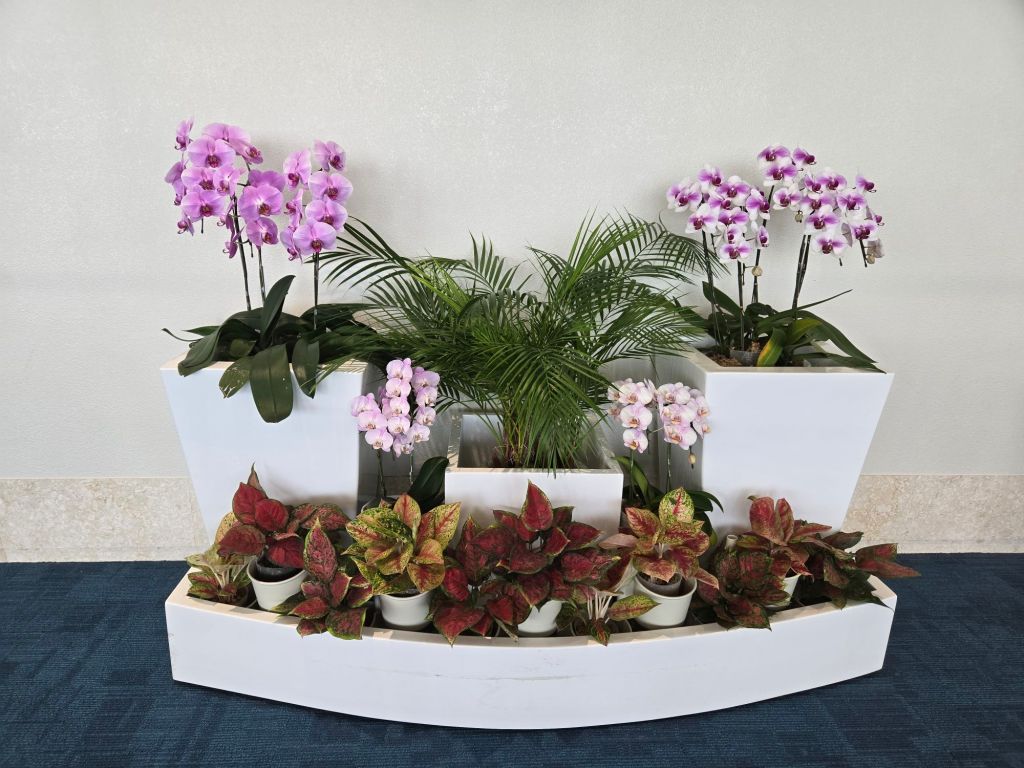
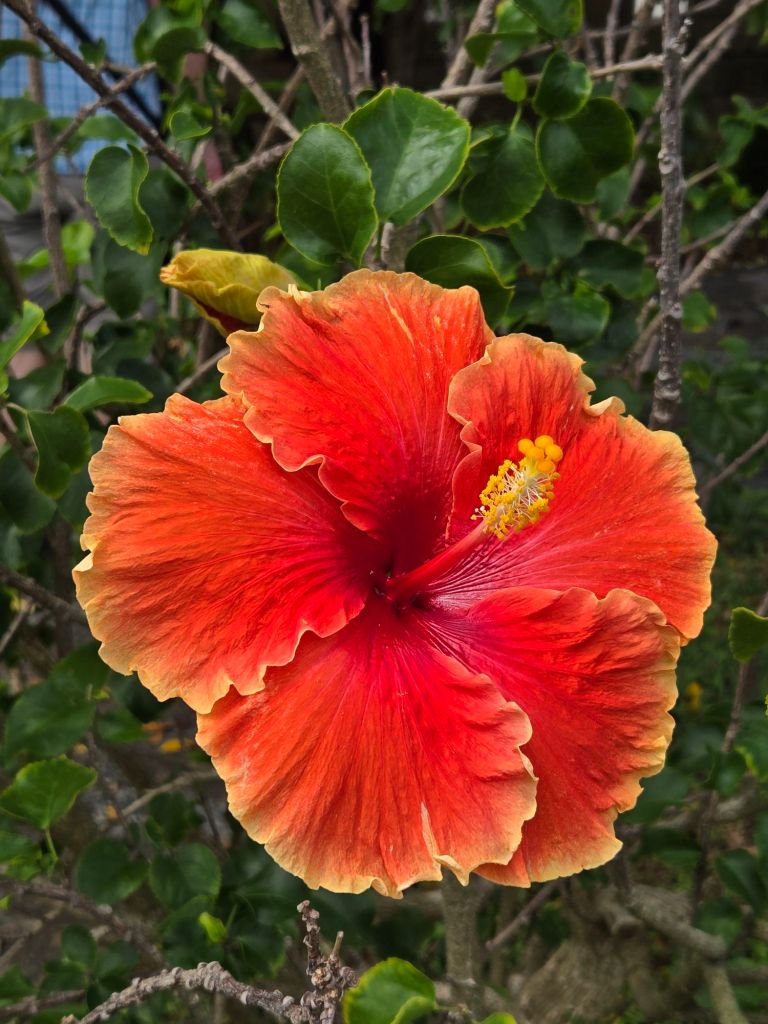
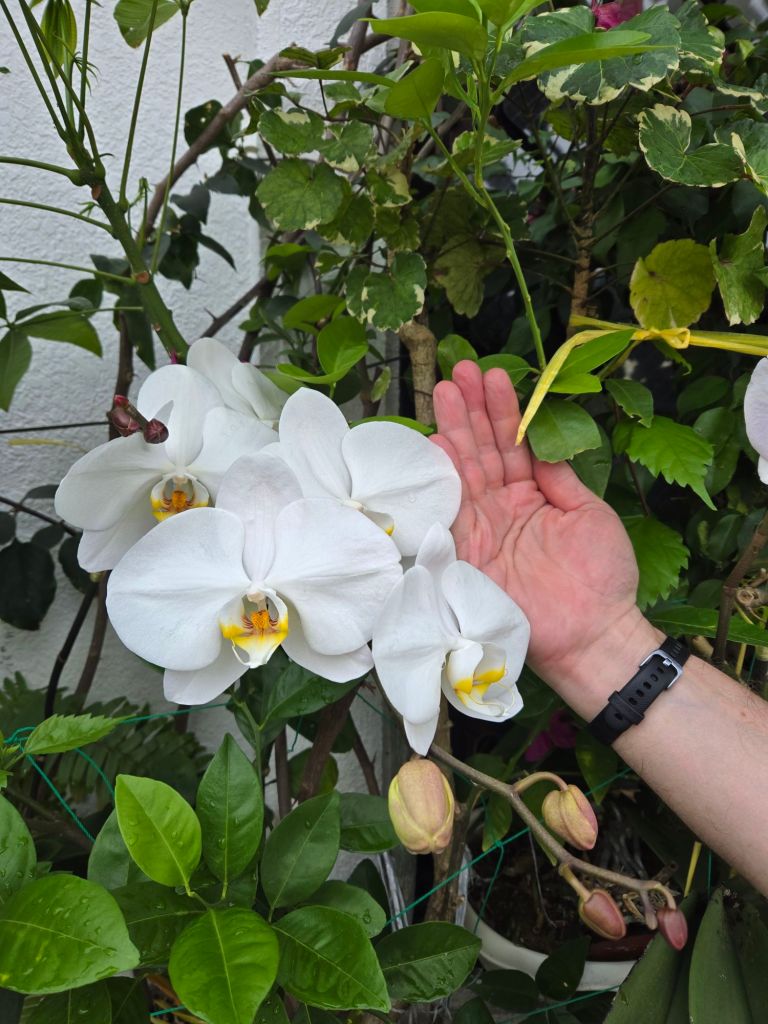
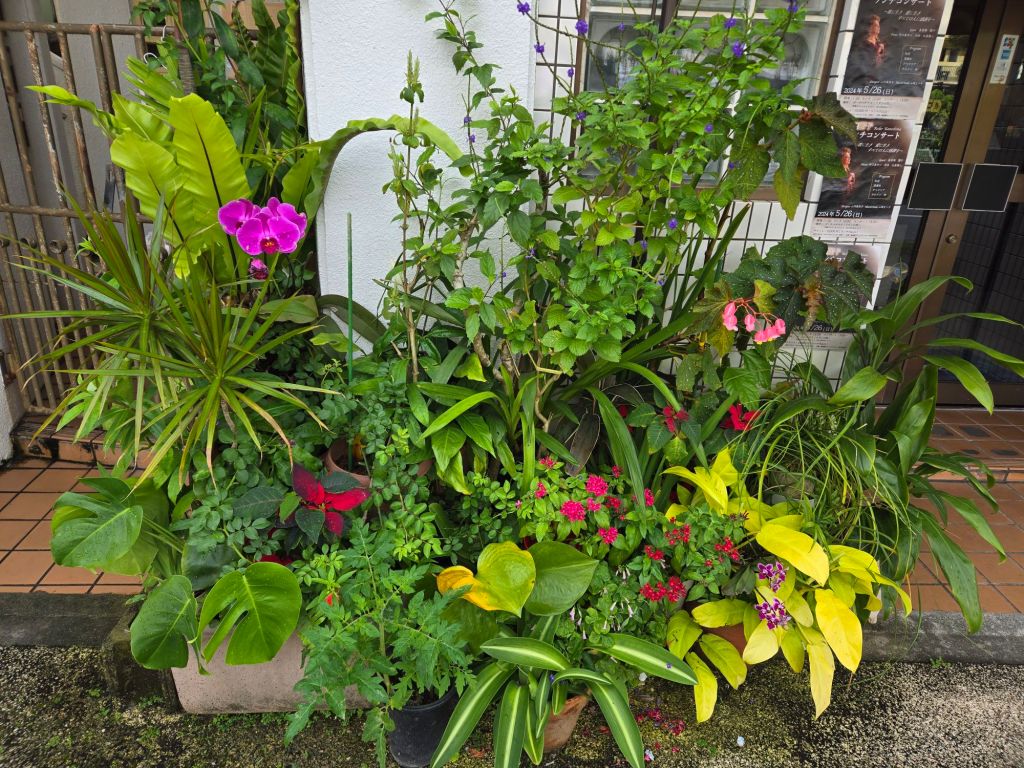
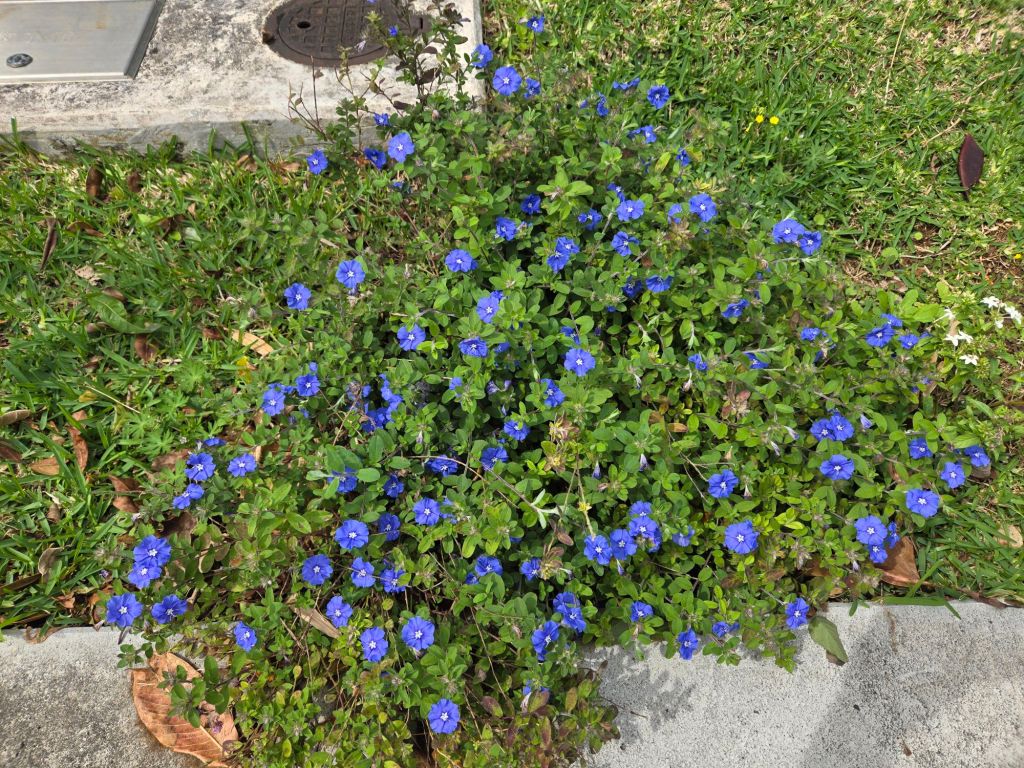
And the flowers! Tropical varieties and some I struggle to grow at home between May and September –  greeting travellers at the Naha City airport, growing wild by the side of the road, and lovingly tended  in pocket gardens outside residences.

Naha airport welcome orchids
Orchids bigger than Lorne’s hand
Huge hibiscus
Pocket garden outside a store
Anagallis bush
Residential pocket garden

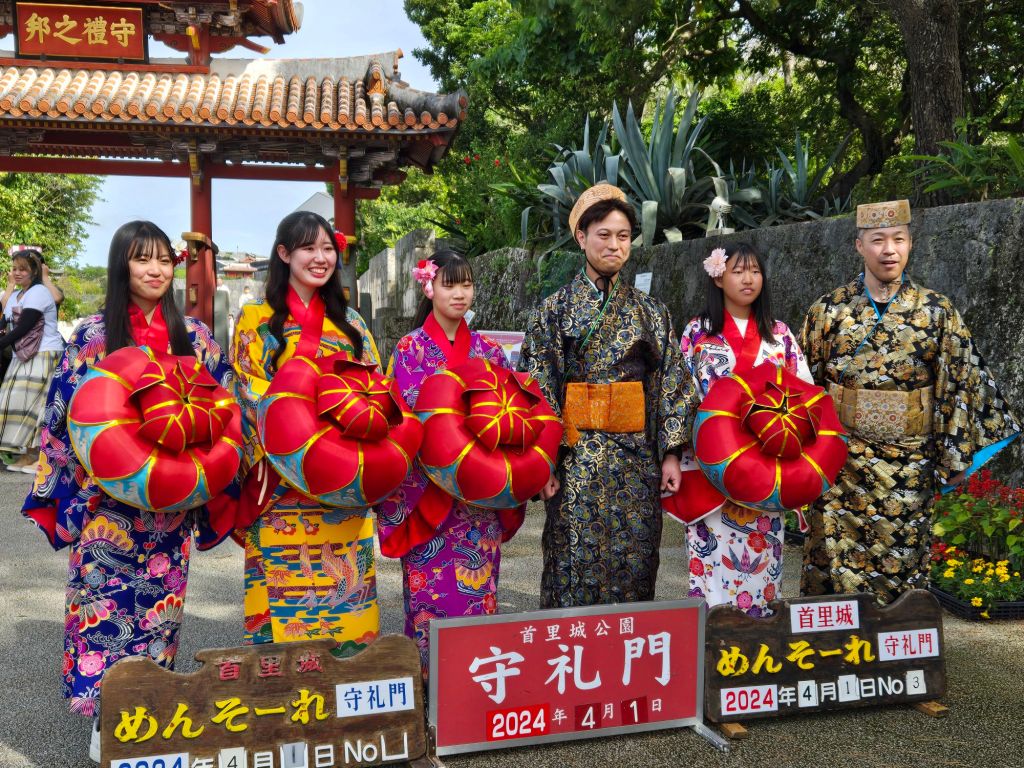
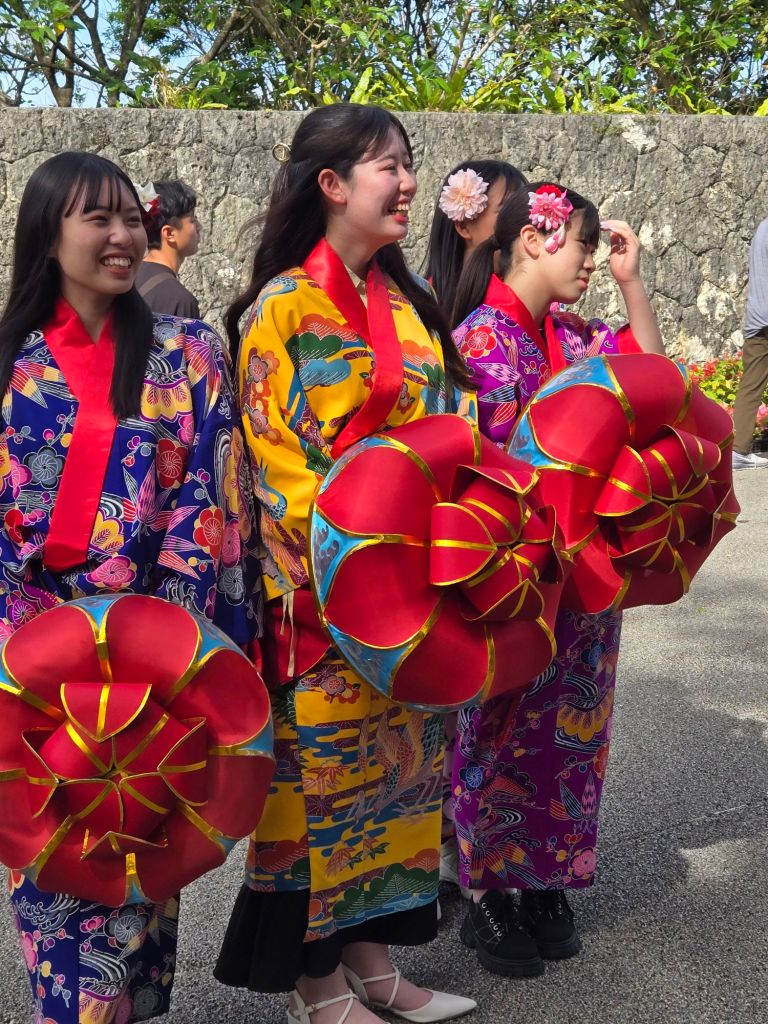
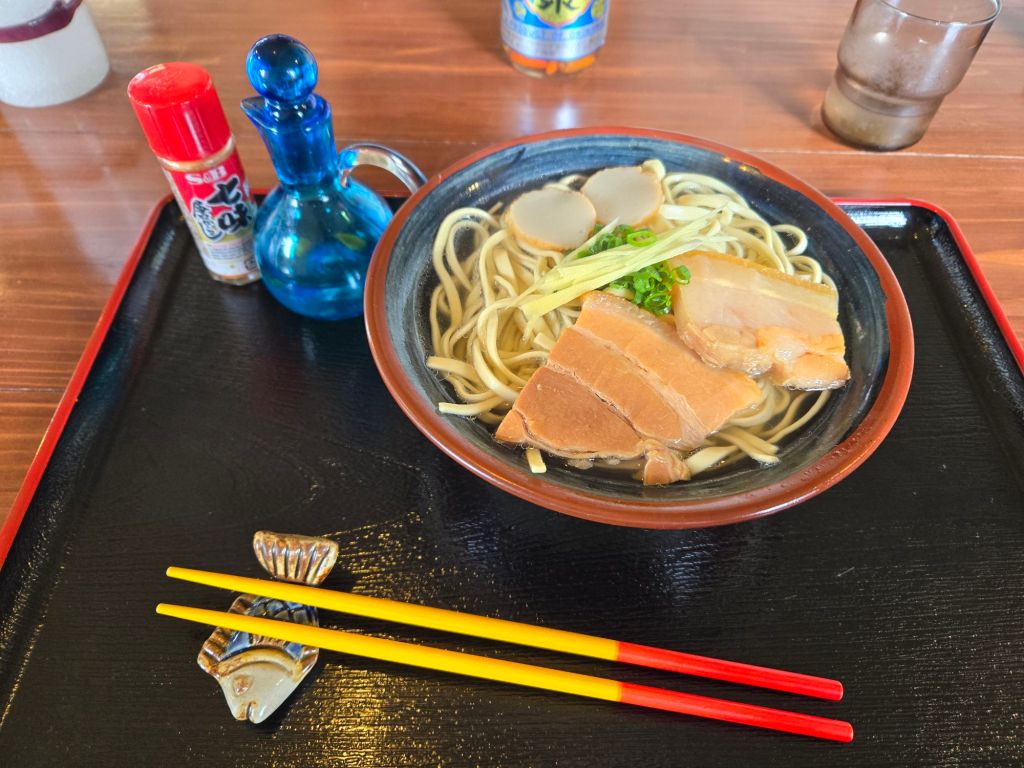
But it’s not just the weather that makes Okinawa different from mainland Japan. For 450 years, it was its own empire, the Ryukyu kingdom, trading with China and other southeast Asian countries. Its annexation by Japan in 1879, the abolition of its king, and its renaming as Okinawa Prefecture still rankles the locals, who identify as Okinawans first and Japanese second.  Okinawans speak a dialect which my Japanese friend doesn’t understand, wear kimonos that are looser and lighter and include hats for both men and women, and feature dishes on their menus found nowhere on the Japanese mainland.

Commemorative photo taken at Shuri Castle in Naha

Okinawa soba and Okinawan red handled chopsticks

Every experience we had in Okinawa was characterized by the fierce independence of its people – watch for it in my upcoming posts. The prefecture has never shared in Japan’s economic prosperity, but its stubborn resilience and willingness  to fight for its cultural differences make it a truly fascinating place to visit.

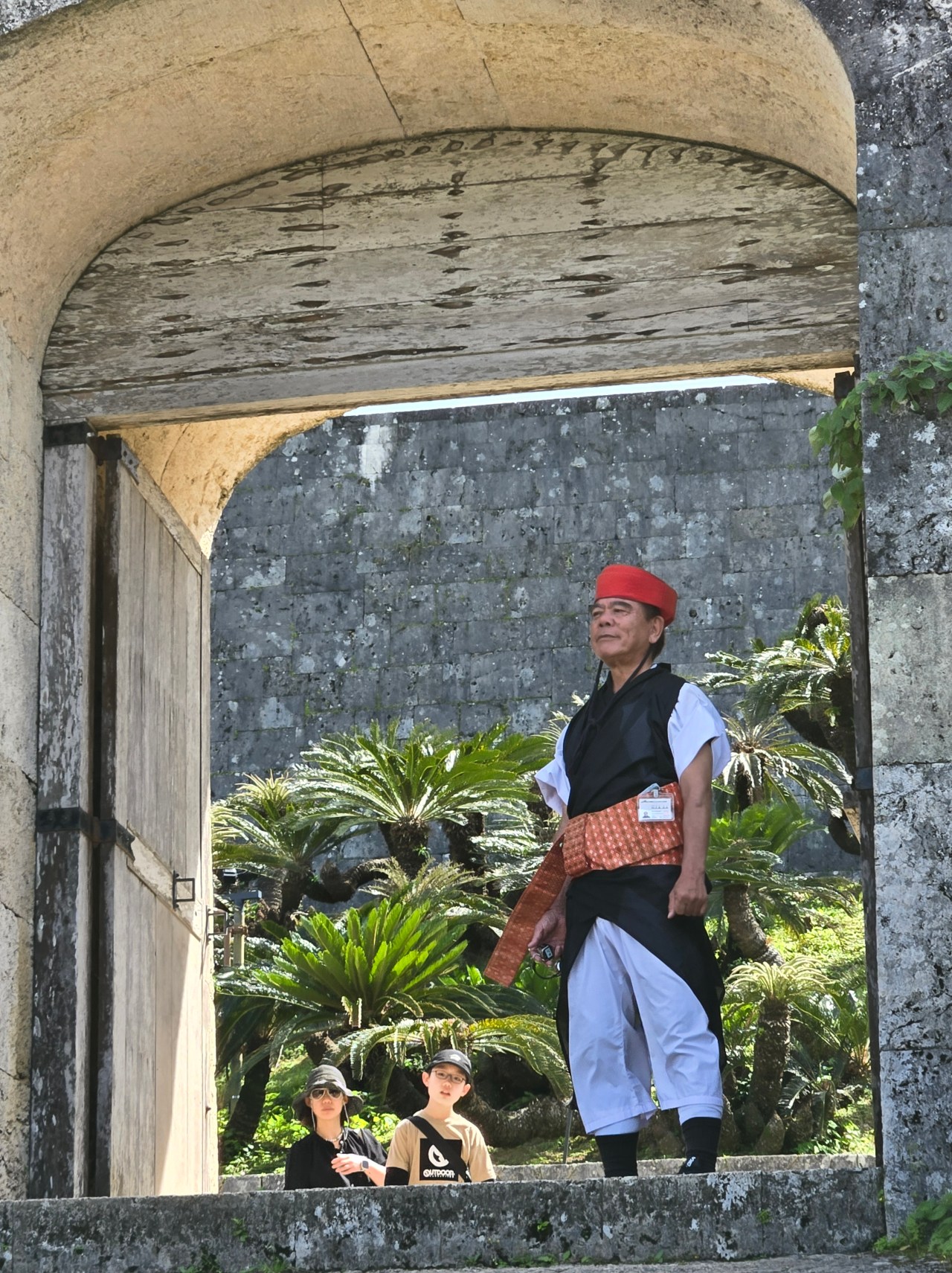
Guide in traditional Ryukyu outfit at Shuri Castle

I met my friend Kazue in 2017 when she visited the University of Alberta as part of a delegation from Wakayama University. We  initially bonded over a mutual passion for engaging teaching, and she invited me twice to Wakayama to work with their professors on enhancing their teaching methods.

Since then, we’ve discovered we share a lot of the same values, and the same things make us laugh. We’ve worked together on translation projects and swapped stories on Skype calls.

So when I let Kazue know we were coming to Japan on vacation, she invited us to stay at her apartment in Wakayama, even though she’d be traveling herself when we arrived.

The timing for our stay was spot on. We loved Tokyo and Hiroshima but we’d been so busy touring, we felt the need for a bit of a vacation from the vacation. We found that in Wakayama.

There’s just something about staying in someone’s well-loved home that is so much more relaxing than being in a hotel. We slept in and lingered over coffee in the morning. We did our laundry. We got takeout for dinner from the 7-11 down the road ( 7-11s in Japan have really great take away meals, not the post-bar hopping fare you get in North America.)

We even took the local bus to a couple of great tourist attractions. The nice thing about Wakayama is its a hidden gem, so the two places we visited were relatively quiet.

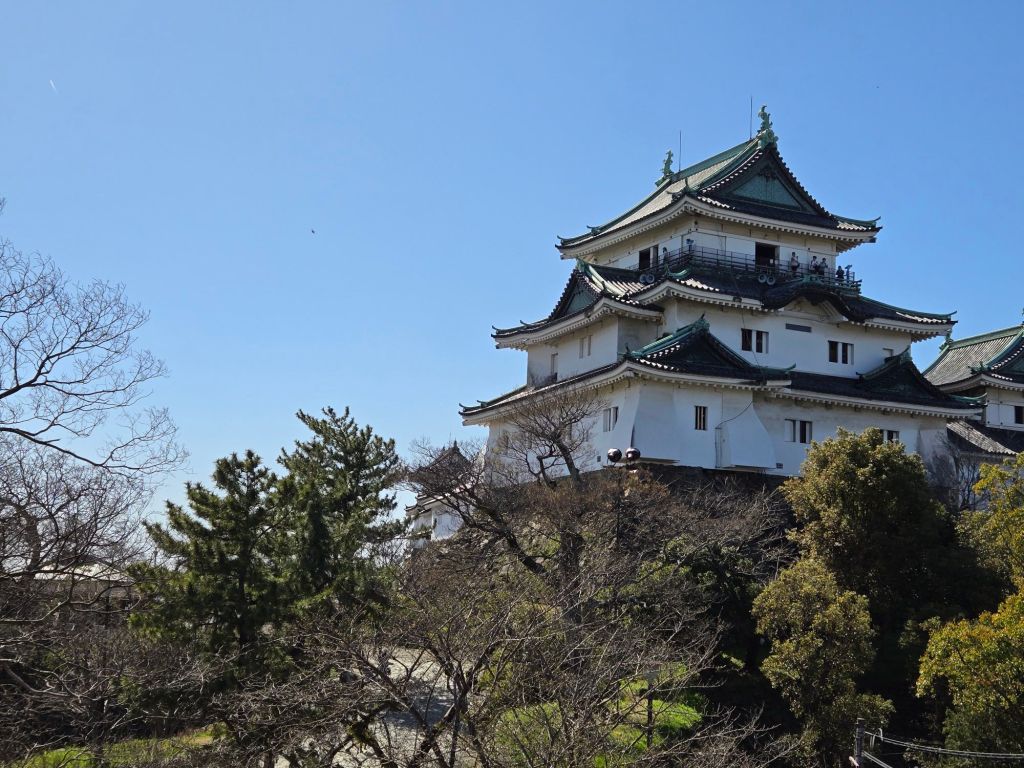
I’d been to Wakayama Castle one sizzling,  cicada-strident day in July 2017 during my first visit to Wakayama, but Lorne was keen to go, and I’d never been there in the spring. With the addition of a few early blooming cherry blossoms ( they’ve been slow to open this year), the Castle was even more spectacular than I remembered.

The approach to Wakayama Castle
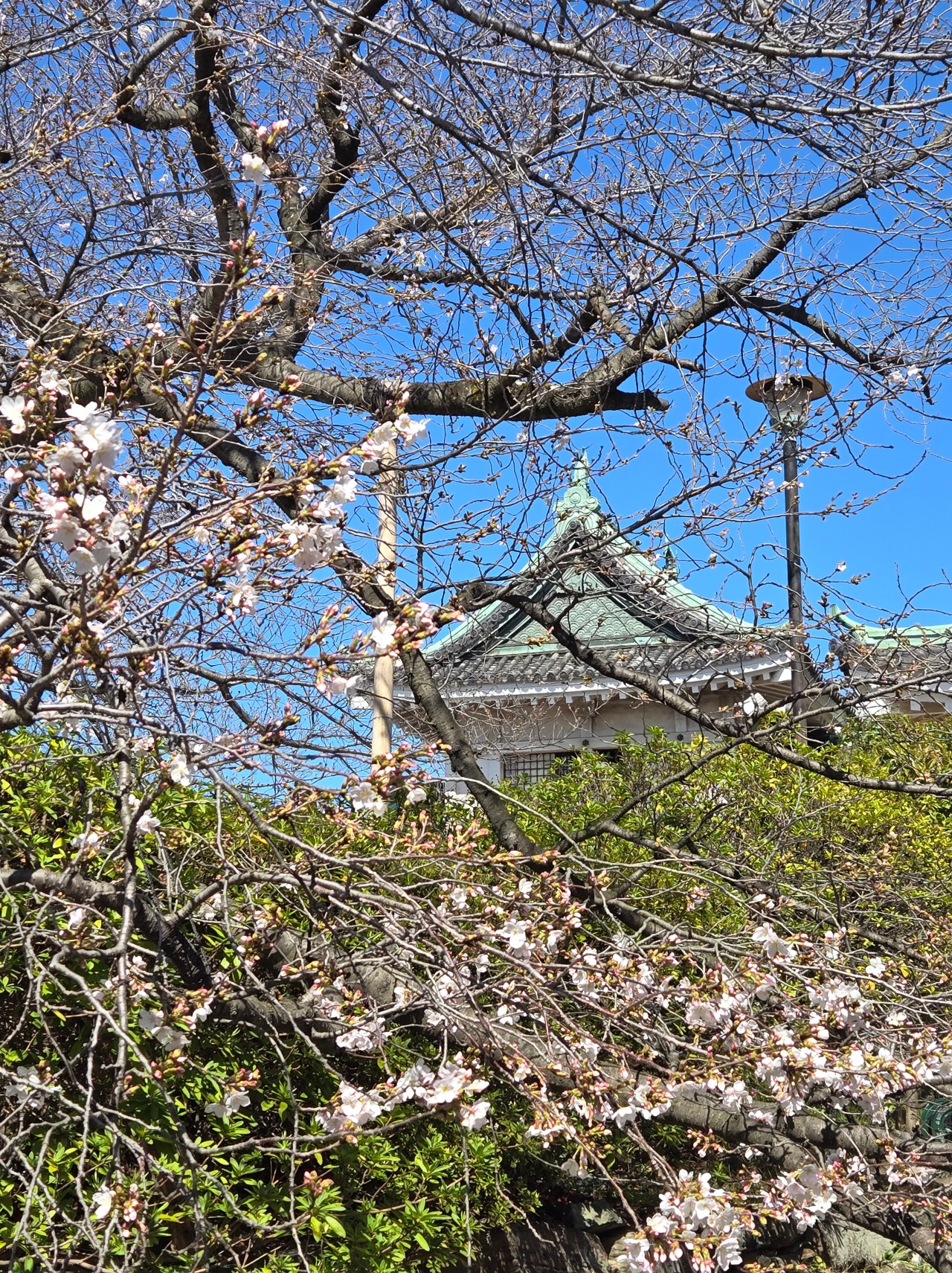
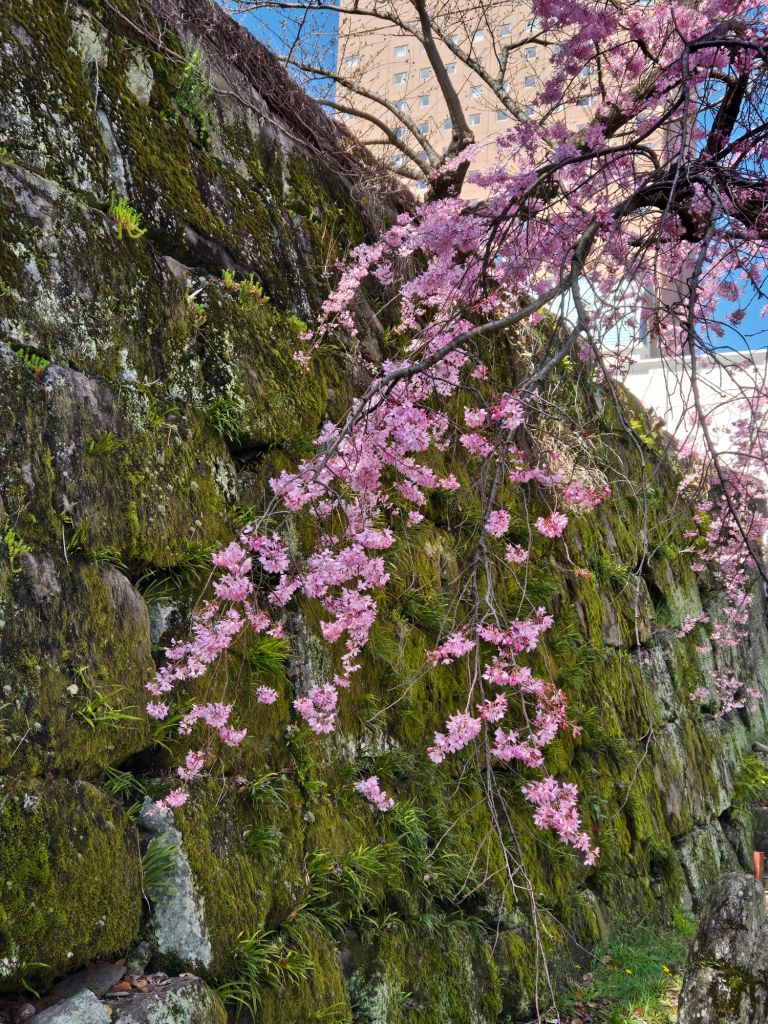
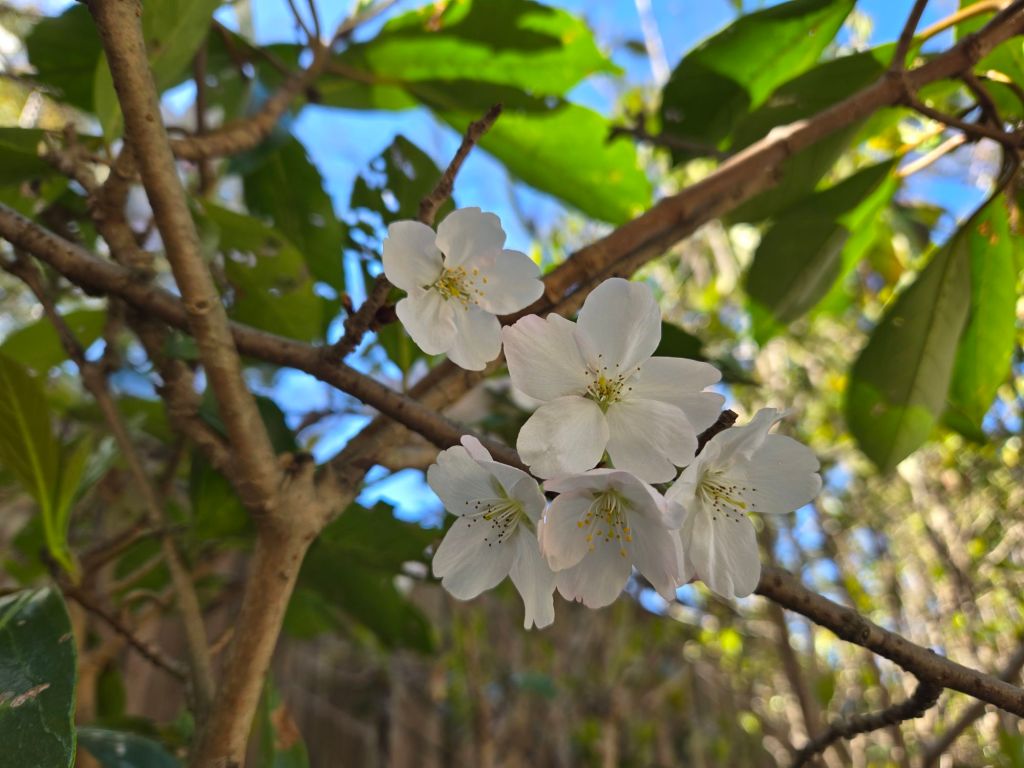
Cherry blossom branch and mossy green wall

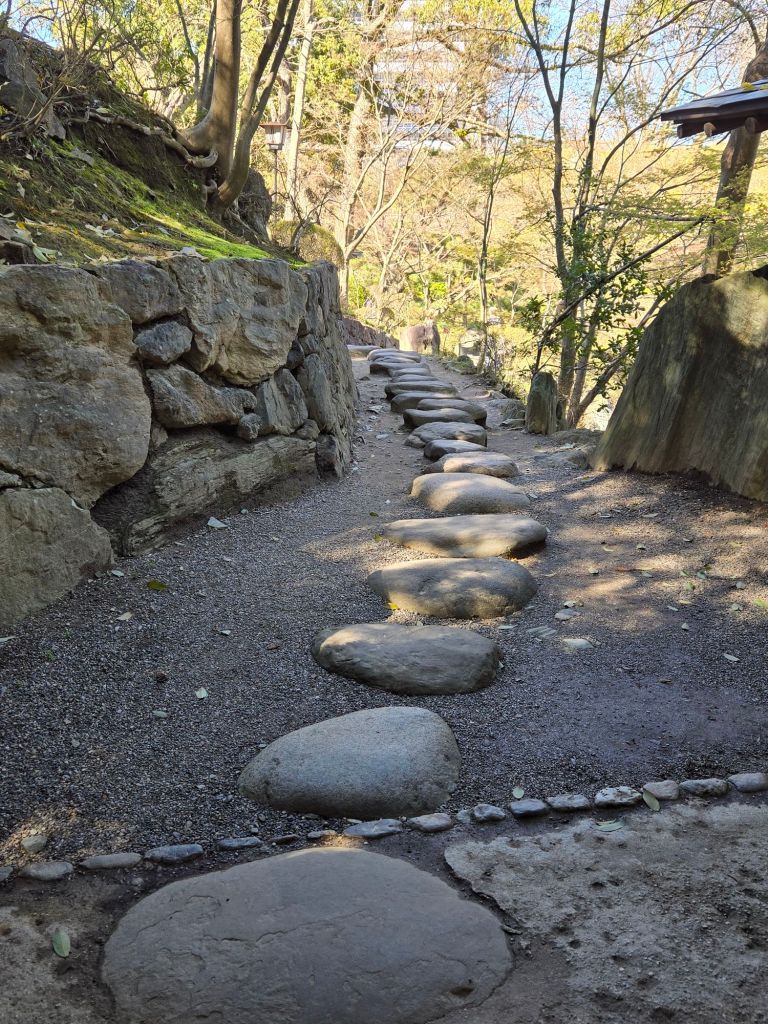
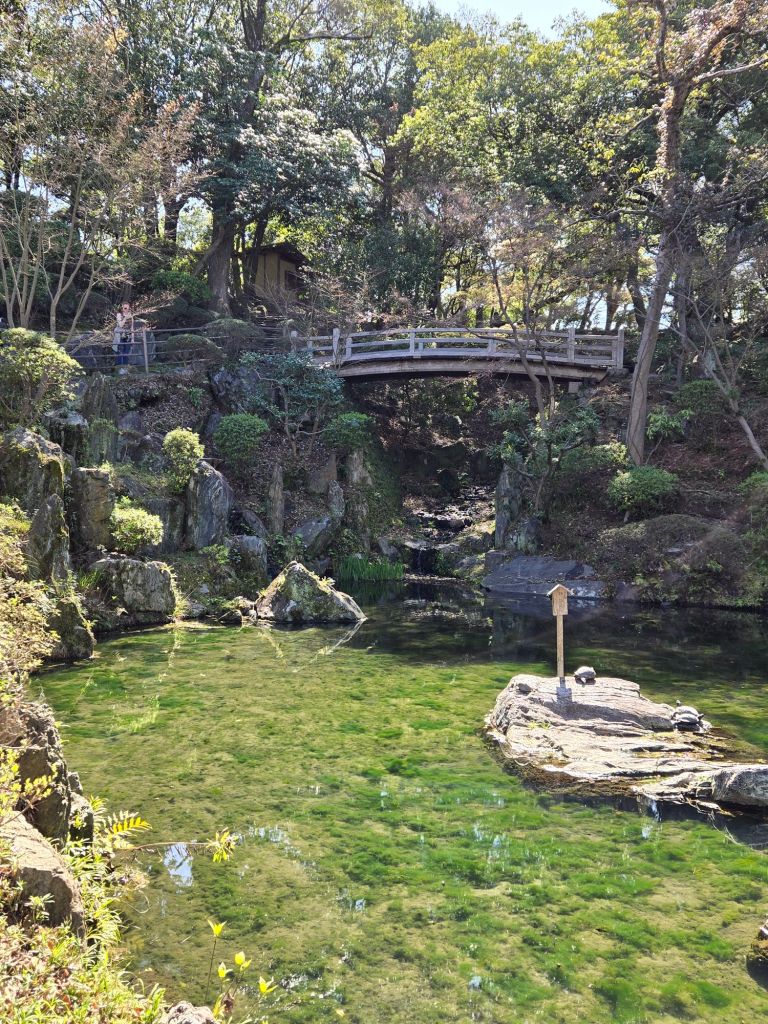
Attached to the Castle grounds is the Momijidani Gardens, a tranquil space of stone pathways, green ponds, and yes, a few more cherry blossoms.

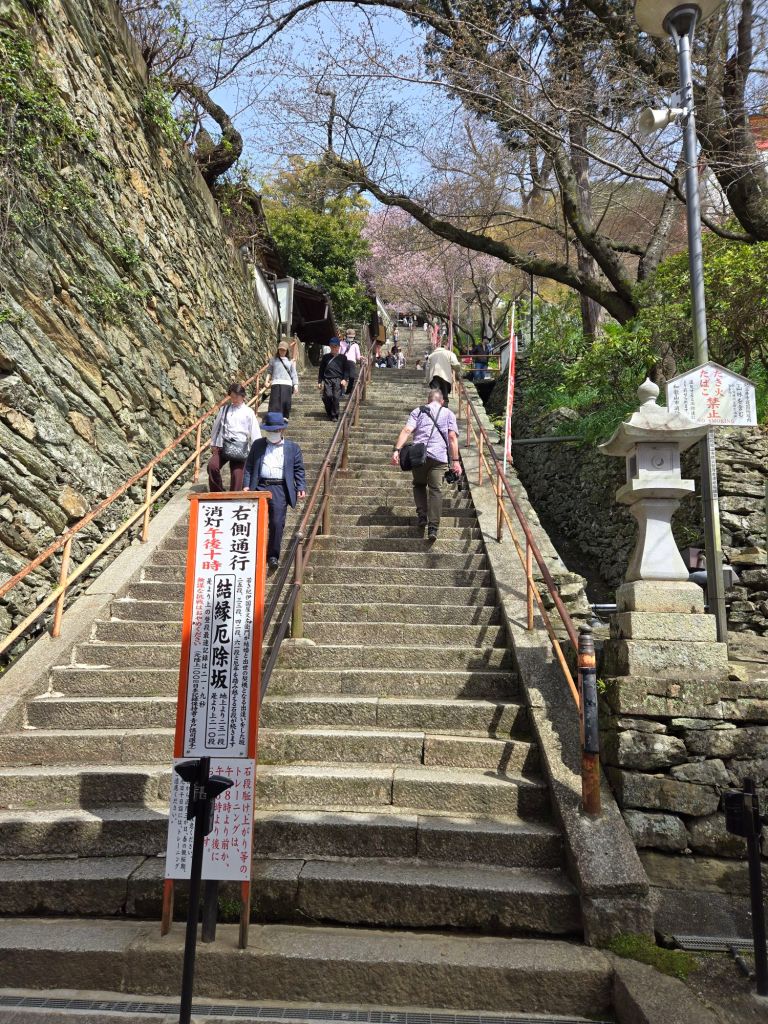
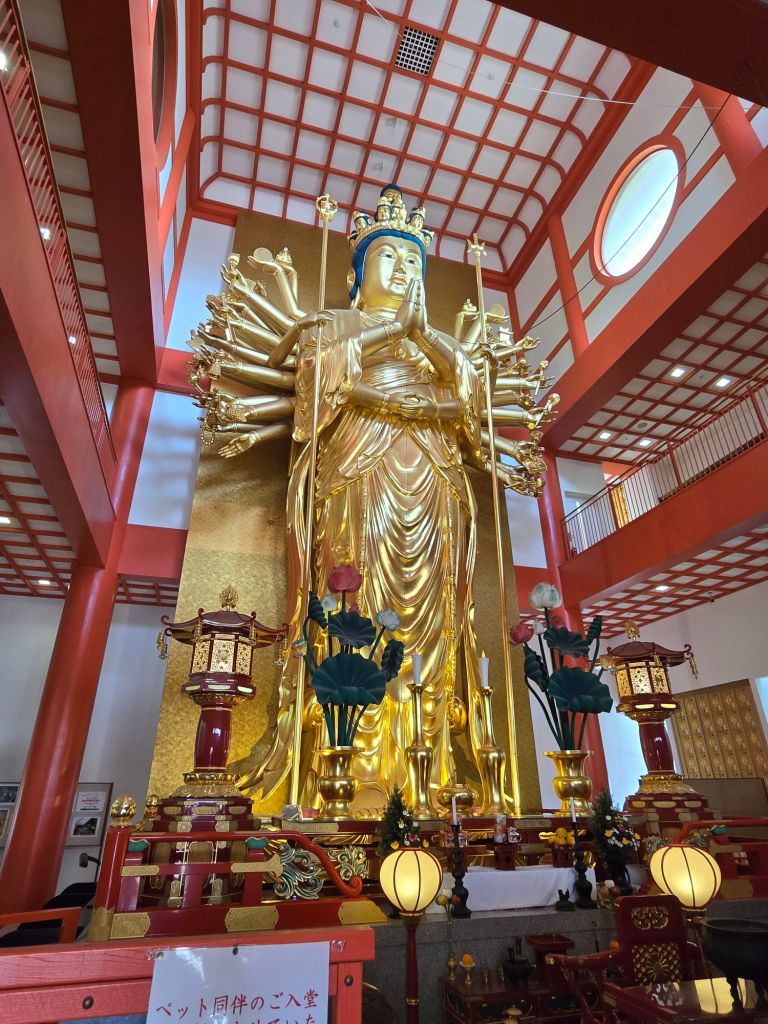
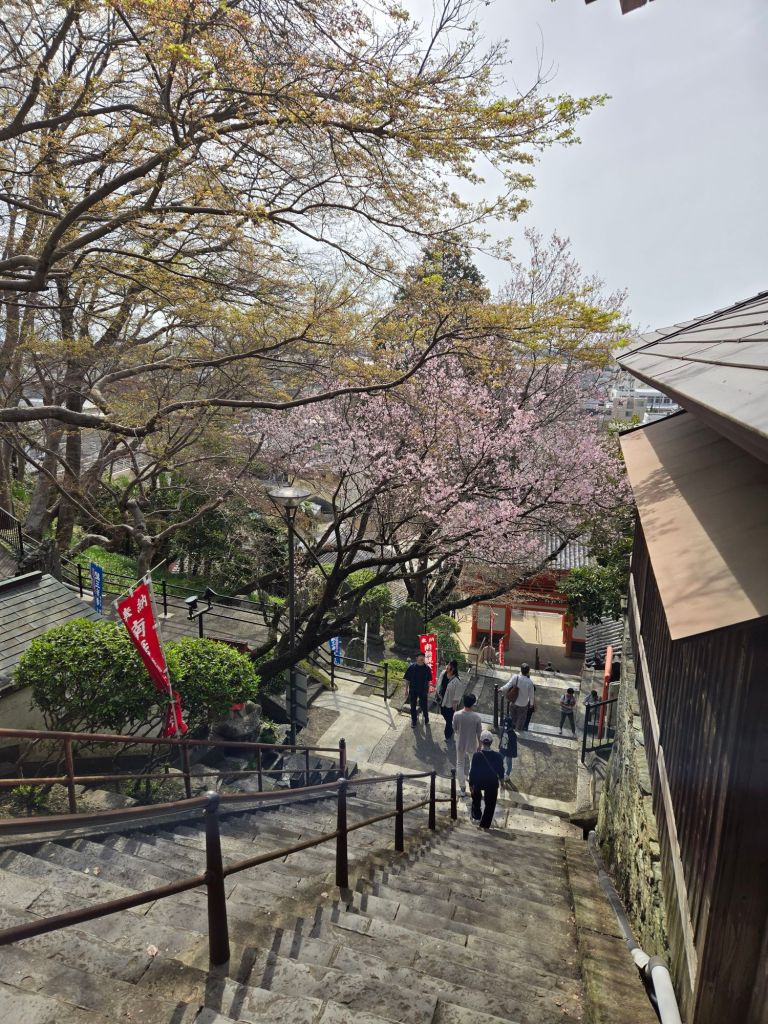
The next day, we bussed a bit further afield to Kimii-dera Buddhist Temple. To reach it, you need to climb 231 steps ( or take a tram for a small fare), but the sights at the top are worth every puffing breath.

In a hall all its own, for obvious reasons, stands the largest wooden statue in Japan, an 11 metre tall representation of  the Senju Juichimen Kannon, a Buddhist deity with a thousand arms and 11 faces, resplendent in lacquer and gold leaf.

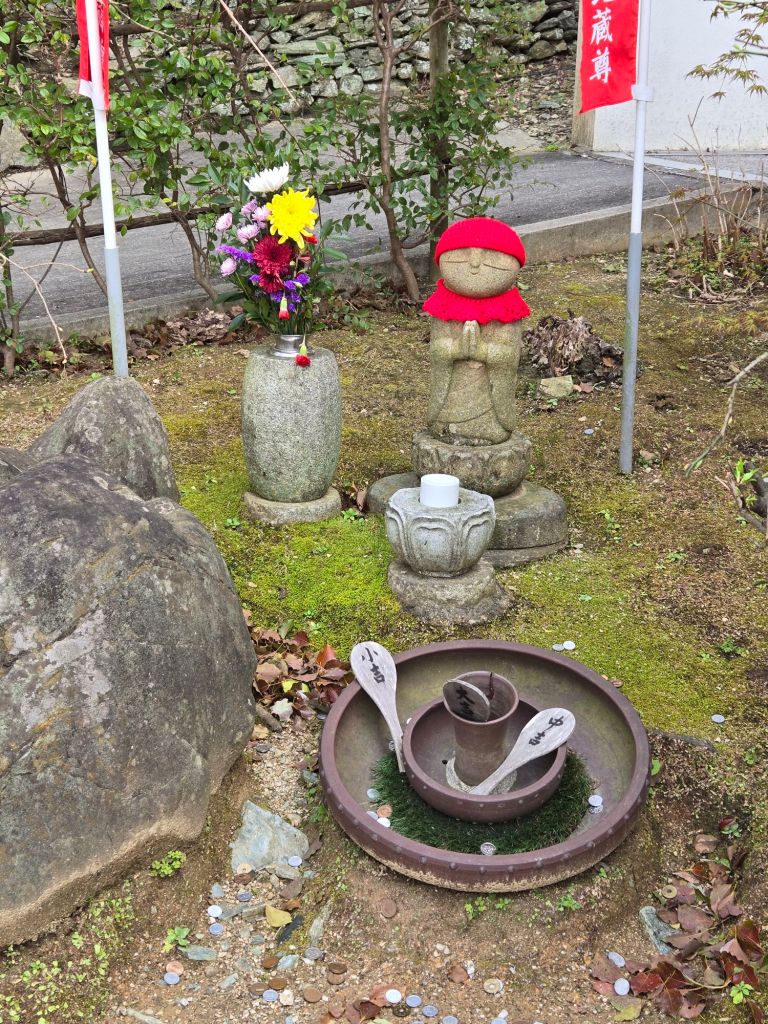
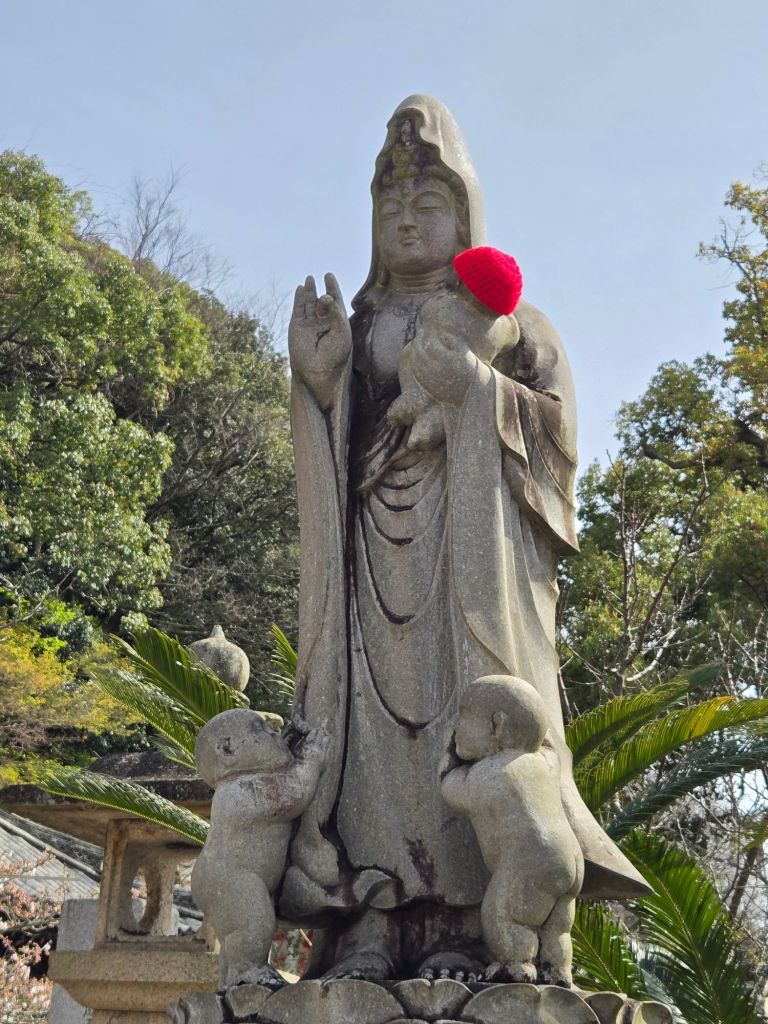
Throughout the site, childlike statues wear red caps and bibs placed there either by grieving parents as part of their prayers for their children who passed away, or to give thanks when children recovered from a serious illness.

Kiimidera is also notable for its cherry blossoms, but as with Wakayama Castle, we see only one tree fully in bloom.

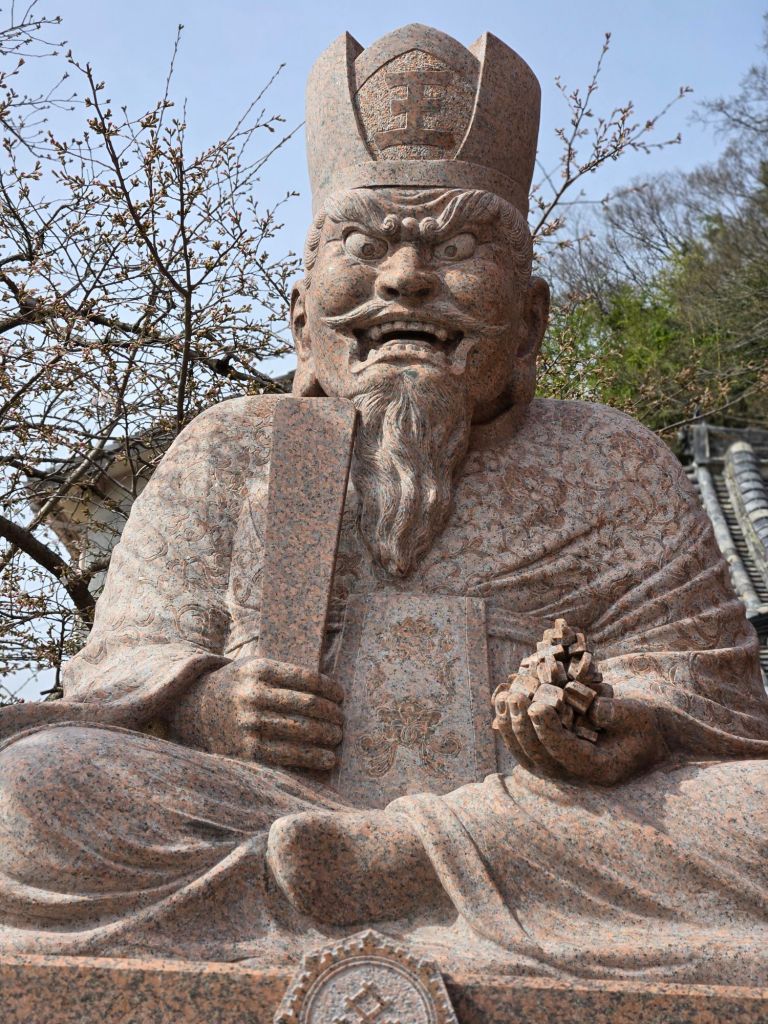
Just before we descend the stairs, we come face to face with the fiercely grimacing King Enma, the King of Buddhist Hell and the judge of the afterlife. Not a bad parting reminder to live life with love and compassion for others.

King Enma
Farewell, Kiimidera

As we join the line to walk through the dimly lit exhibition space in the Hiroshima Peace Memorial Museum, a sign warns parents of the disturbing content, and cautions them to prepare children for what they’re about to see and monitor their responses.

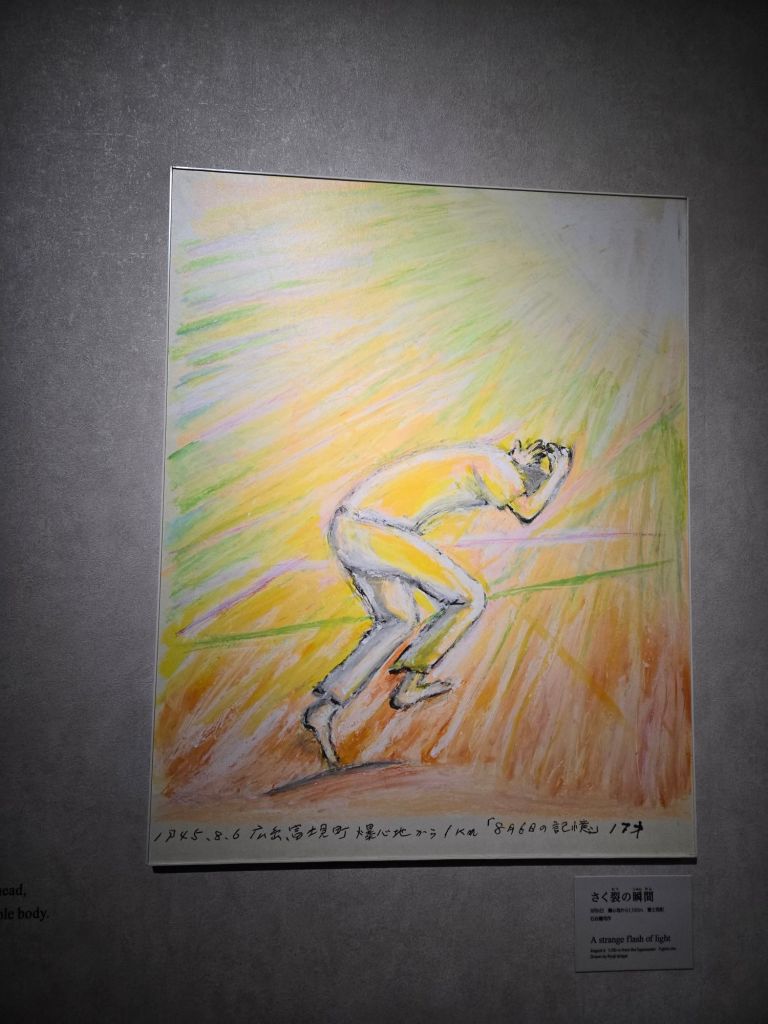
It’s good advice for all of us. I take only one picture, the first in a series of art depictions of and photographs taken on August 6, 1945. Then I put my camera away. Somehow, it doesn’t seem respectful to capture the other horrifying, heart rending moments of those whose lives were changed forever that morning.

Hiroshima, August 6, 1945

Most visitors have made the same decision. As the line moves slowly along, and we lean in to look at the displays and their captions,  the exhibit rooms are silent except for the occasional whisper or murmur.  It’s not easy to look at the shreds of children’s clothing, their damaged school bags,  a blackened, twisted tricycle, photographs of the horrifying injuries inflicted on people’s bodies by the atomic blast. Reading the survivors’ memories of what they saw and heard that day wrenches my heart: Parents looking desperately for children. The injured crying out for water.

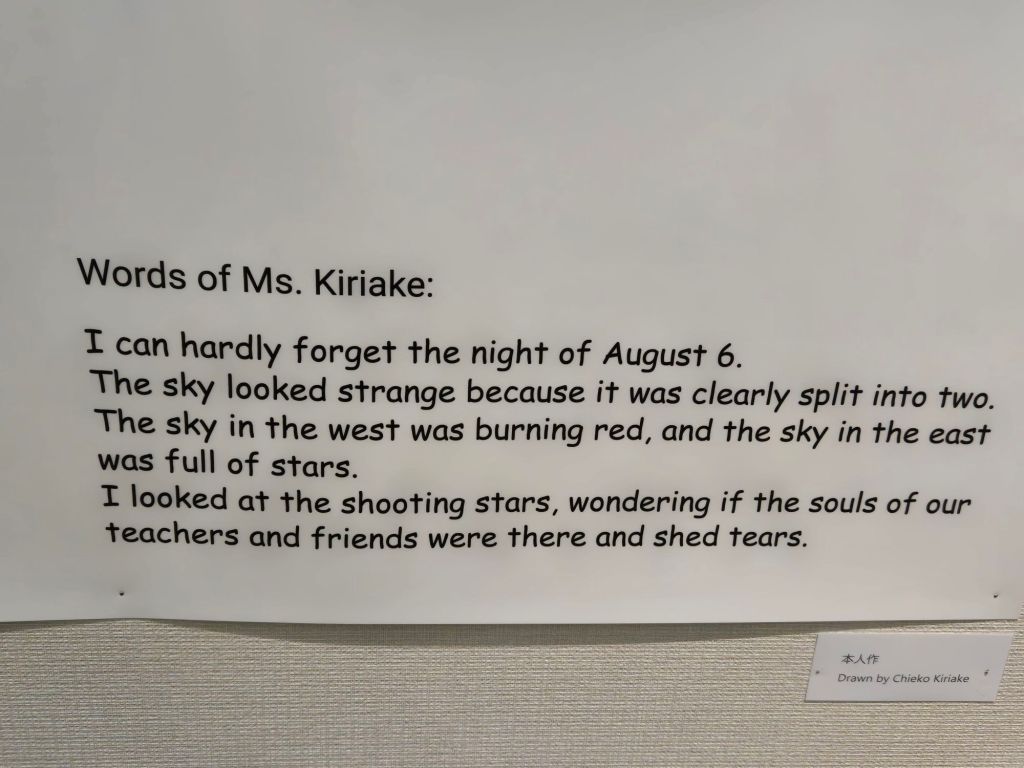
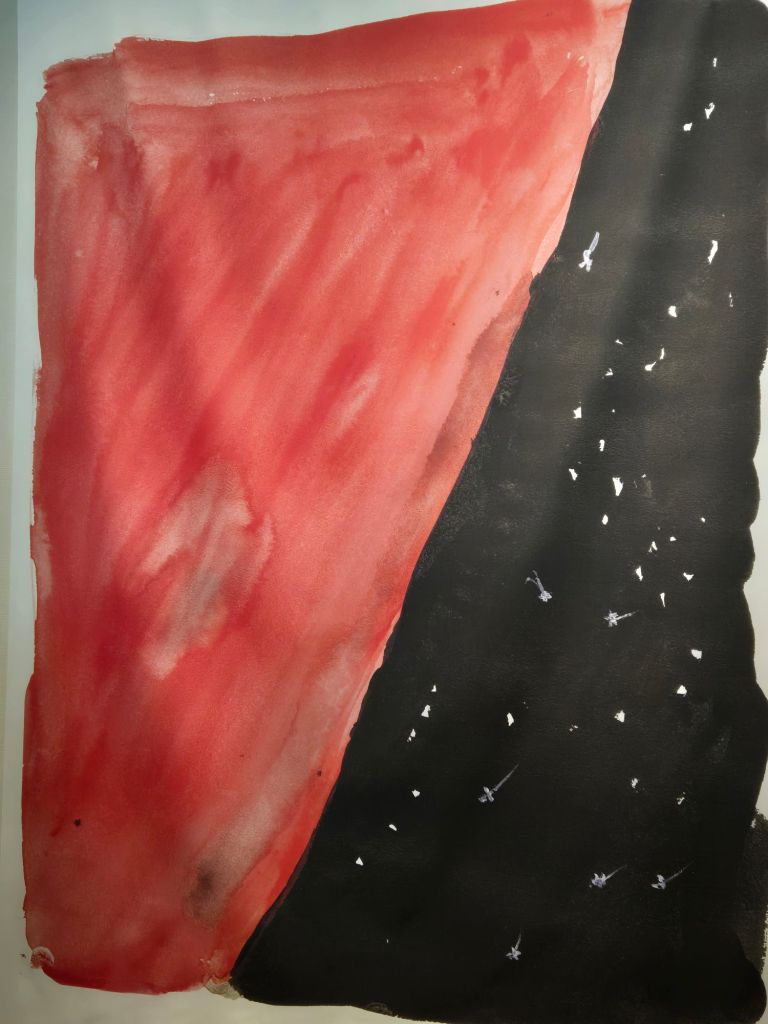
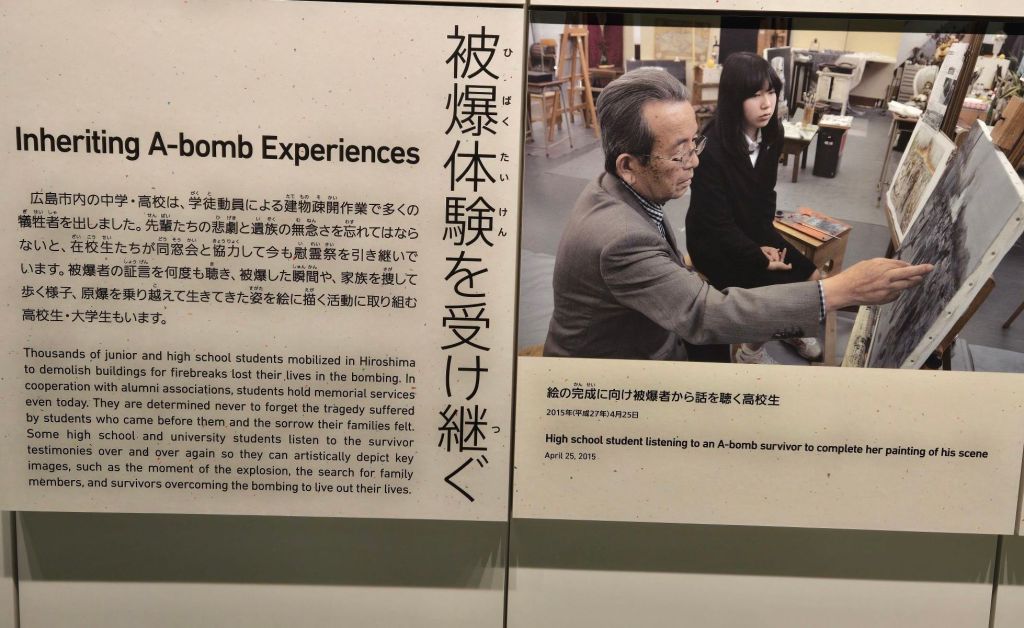
So many of the victims were children and their teachers, out early that morning clearing away the remains of already bombed buildings to make fire breaks in the event of other attacks. Those children who miraculously survived shared memories of the day in journal entries, interviews, and drawings. Chieko Kuriake, who was 15 years old, had these words and an accompanying painting to describe the sky that night:

I monitor my own responses closely as I view the exhibits. A few times, I step out of the line, unable to continue imagining the atomic bomb aftermath. I see a dad with his arm around his son’s shoulder. The boy, about the age of my 8- year- old friend Isaac at home, holds his dad’s hand, and a sob clutches my throat.

After we leave the exhibit area, there is a long corridor with floor to ceiling windows overlooking the Peace Park. Some people are sitting on benches, staring out the window. The father and son I saw earlier are having an earnest conversation. We wander the rest of the exhibits which focus on how the citizens of Hiroshima are preserving the memory of August 6 and trying to convince world powers to eliminate nuclear arms. As fewer survivors remain to tell Hiroshima’s story, high school students record their memories in drawings.

I’m glad that we are able to view the outdoor monuments in the Peace Park under sunny blue skies.

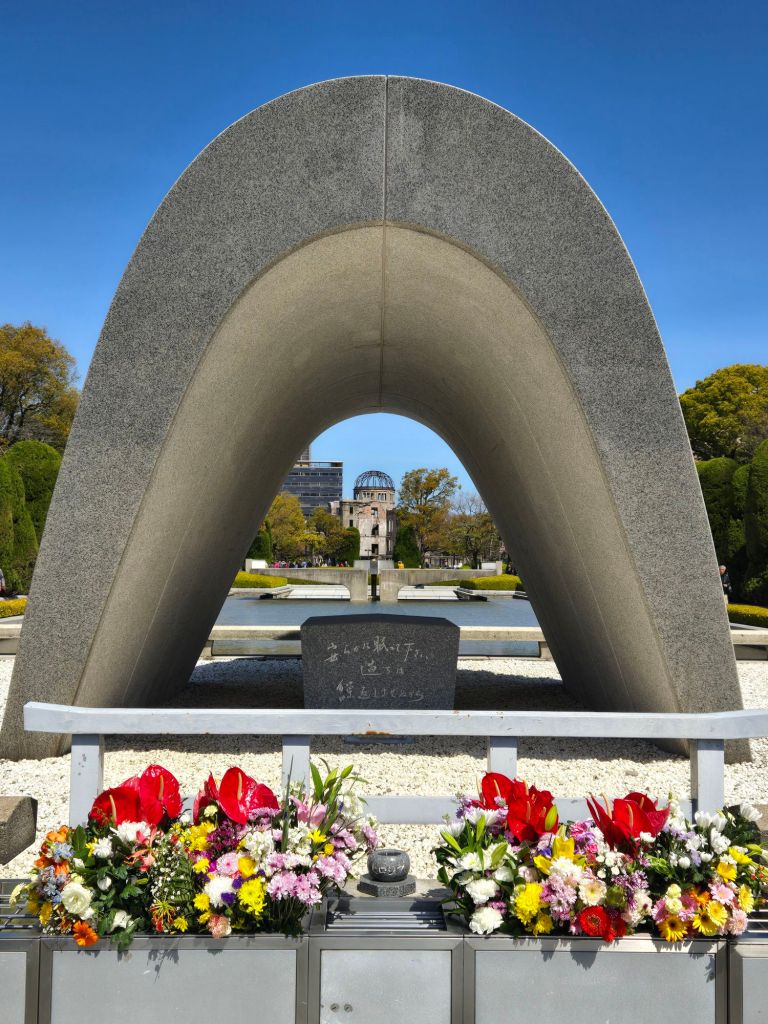
An inscription on the memorial cenotaph for the victims says it embodies “the spirit of Hiroshima – enduring grief, transcending hatred, pursuing harmony and prosperity for all, and yearning for genuine, lasting world peace.”

Hiroshima Memorial Cenotaph for the Victims

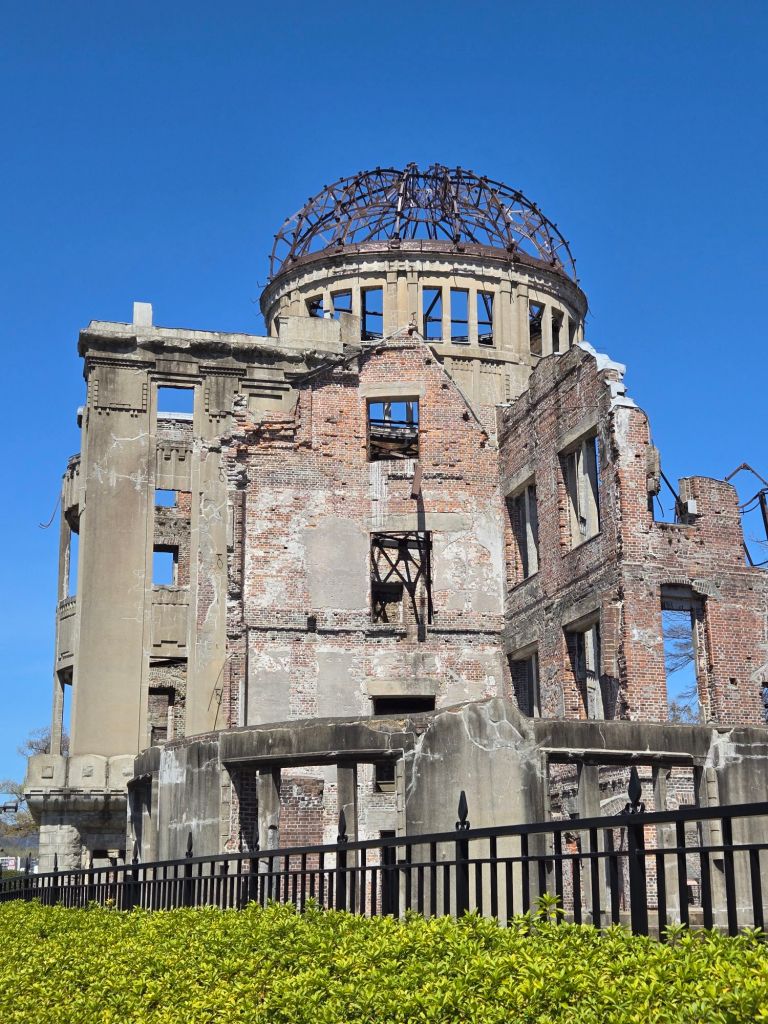
The cenotaph  frames the remains of the Hiroshima Prefectual Promotion Hall, which was 160 meters from the hypocenter of the blast. This is one of the more controversial reminders of that day, with some residents calling for its demolition because of the painful memories it evokes. However, it was added to the UNESCO World Heritage list as a reminder of “the horrors of the atomic bomb and as a symbol for world peace.”

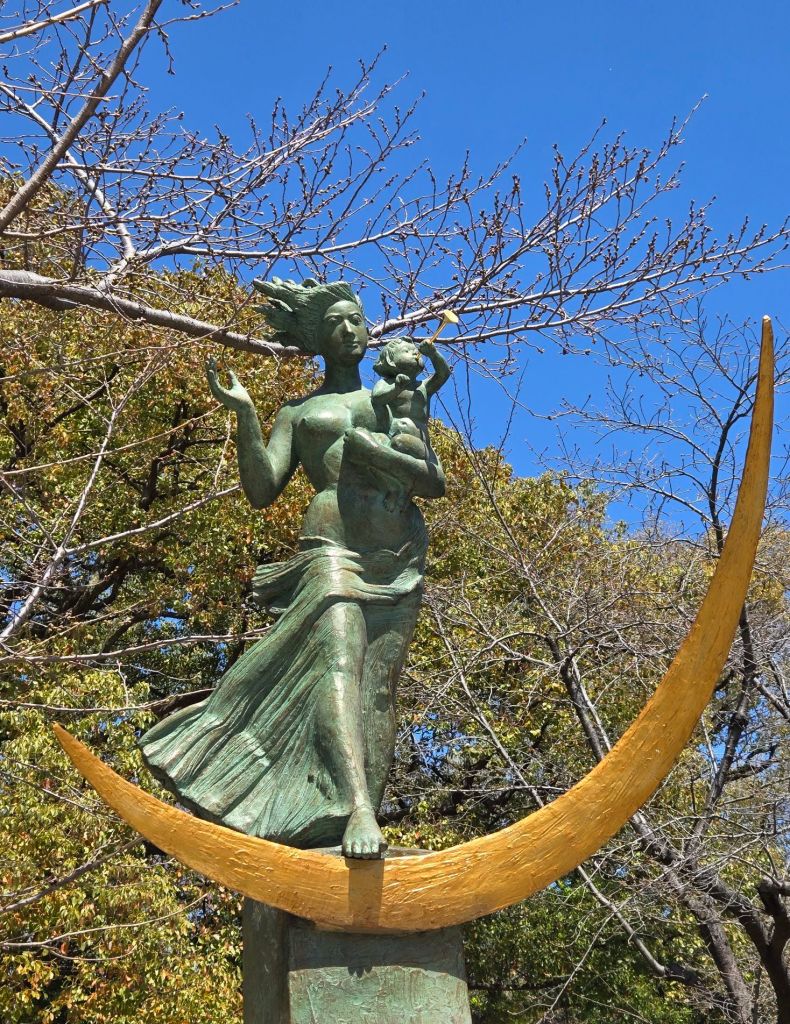
Statue of a Prayer for Peace

The Prayer for Peace Statue depicts a mother holding a child playing a golden trumpet for peace ” in the search for a new future, as a crescent moon becomes a full moon.”

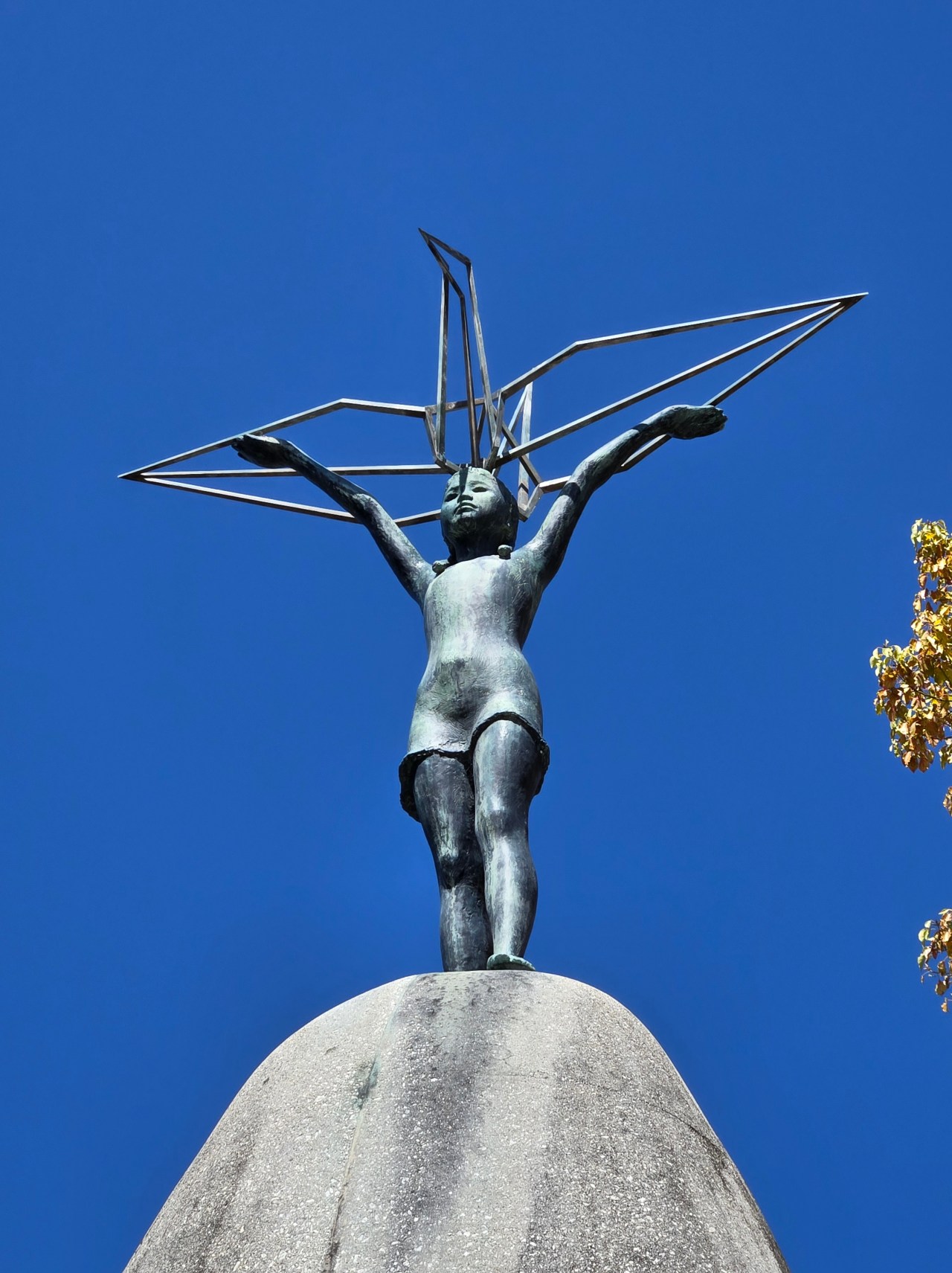
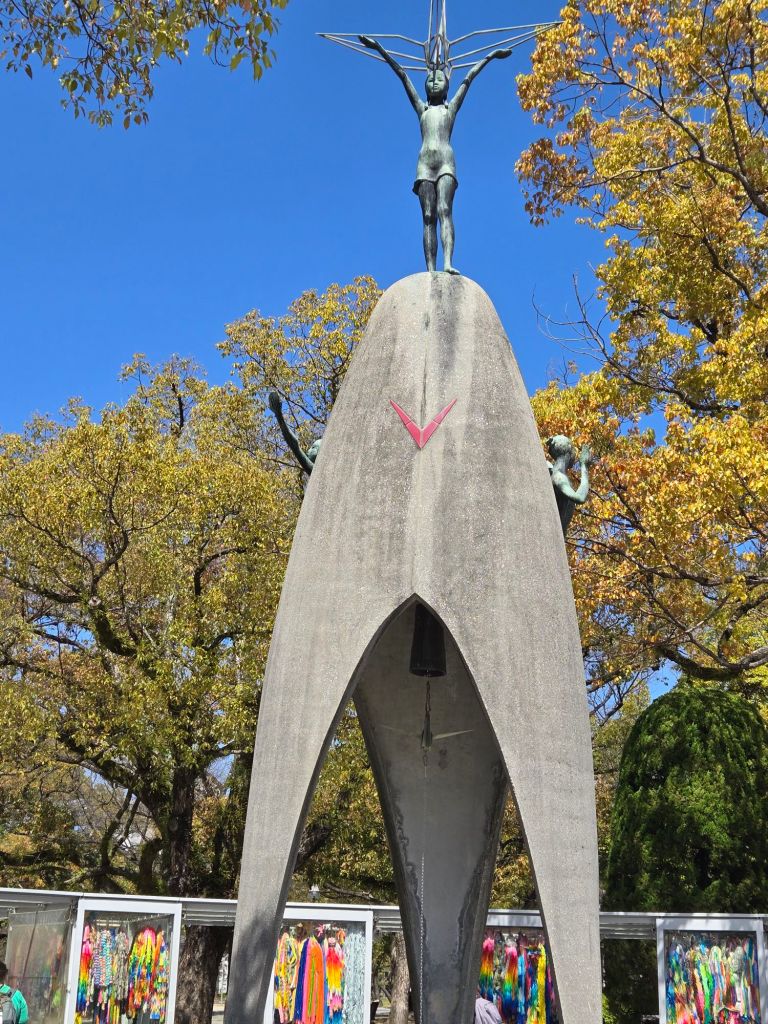
The Children’s Peace Monument

The Children’s Peace Monument, funded by donations from more than 3200 Japanese schools and donors from nine countries, honors all the children whose lives were lost that day and in the following years. At the top, a girl lifts a golden crane ” entrusted with dreams for a peaceful future.”

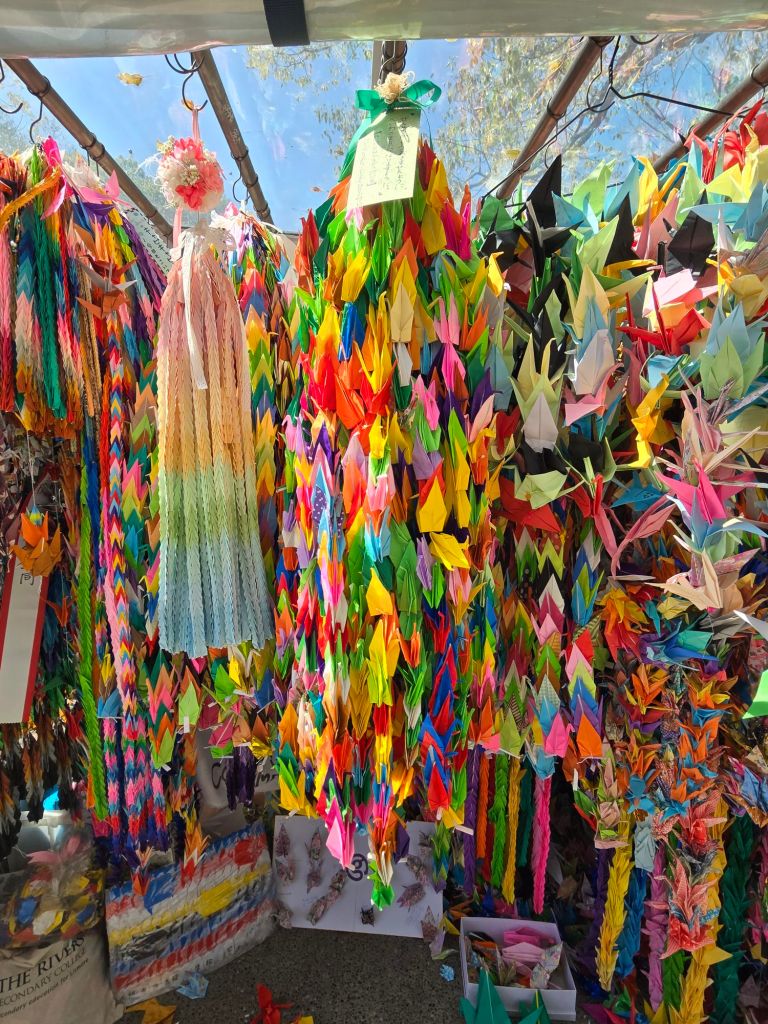
Crane chains

Under the monument in display cases, there are hundreds of strands of paper cranes, sent from around the world. A note of appreciation says how glad the Peace Park is to receive them as a symbol that people still remember Hiroshima’s grief and stand with the city in a call for world peace.

Before I came to Tokyo, I hadn’t realized it’s now the largest metropolis in the world, with a population of 37 million people.

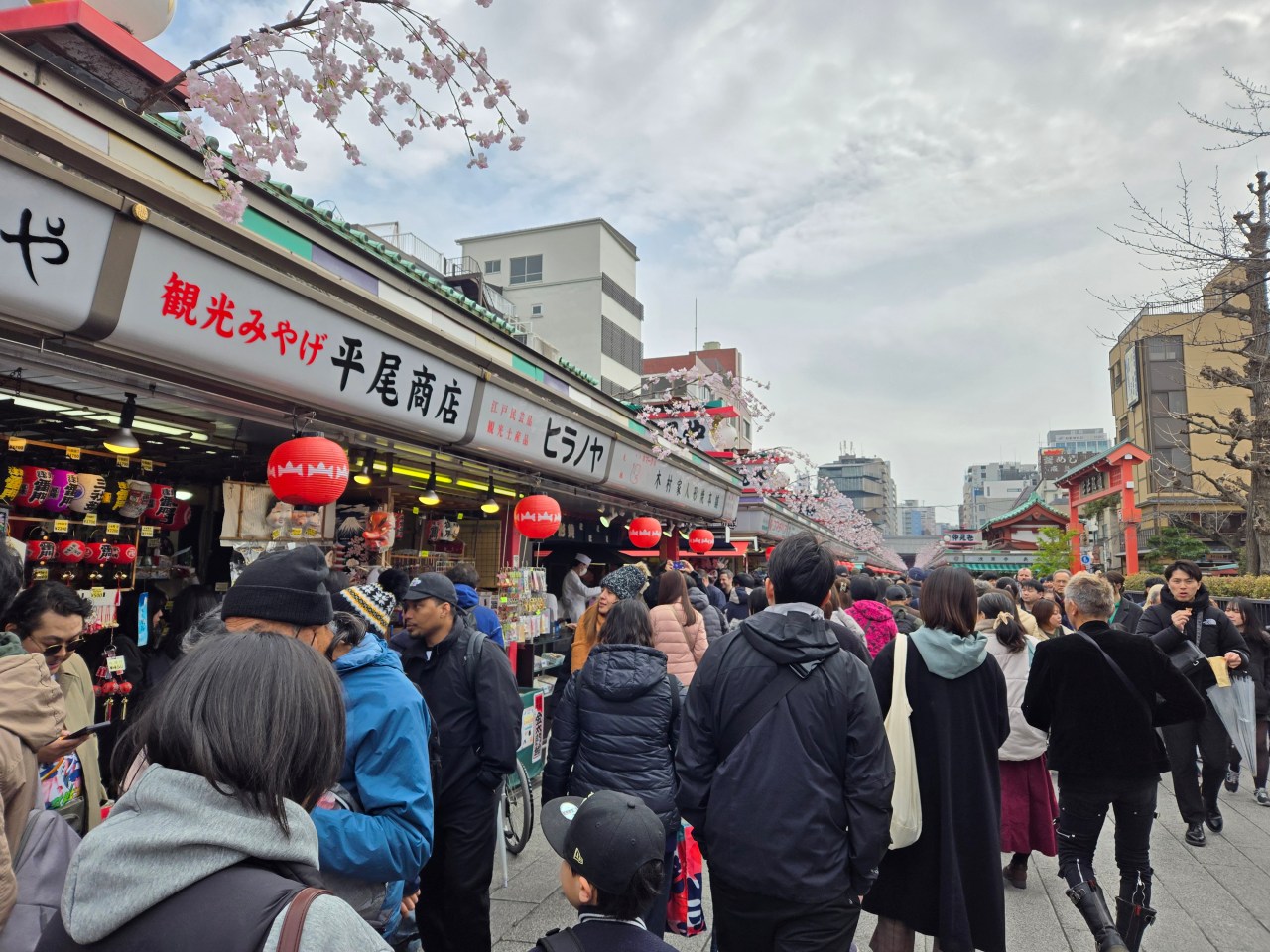
That meant when we traveled around  the city, we experienced crowds. But I never felt unsafe or claustrophobic or disrespected. I never got pushed or shoved or had someone openly lose patience with me because I got in their way. And believe me, as we were figuring out where to put our subway passes or how to get through the gates at Tokyo Station, we got in people’s way a LOT. But always we were met with smiles and tolerance of our mistakes. People weave their way through crowds with an unspoken orchestration, rarely bumping into each other. Bike riders on the sidewalks take precautions, slowing down and even dismounting if conditions get too congested.

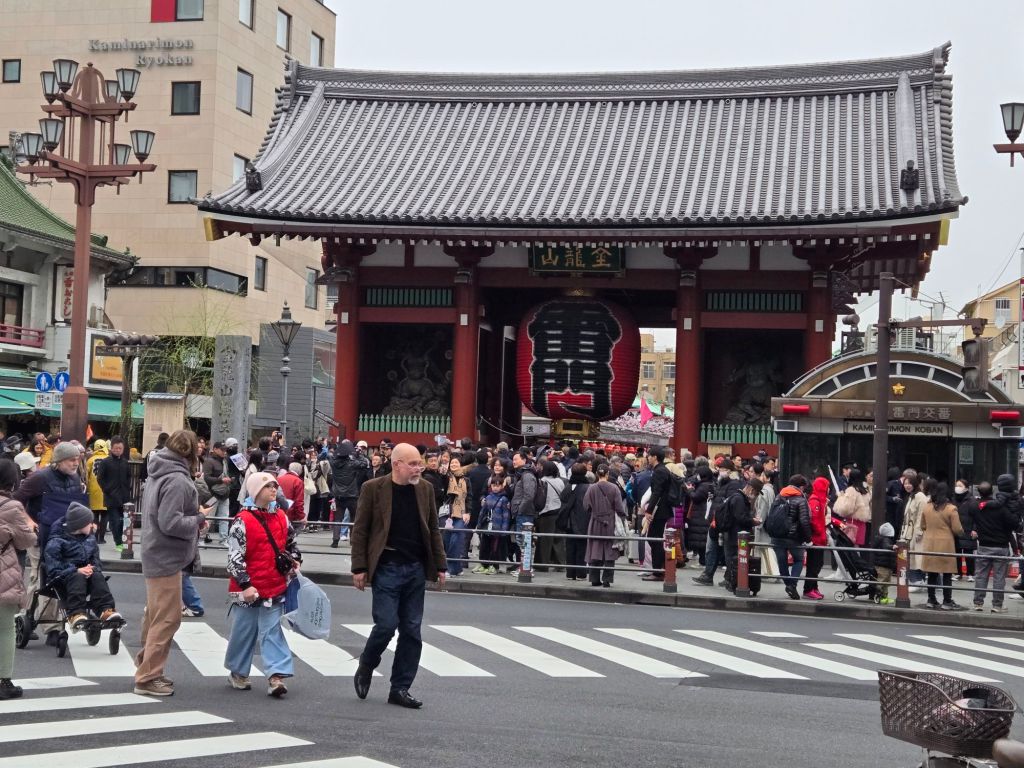
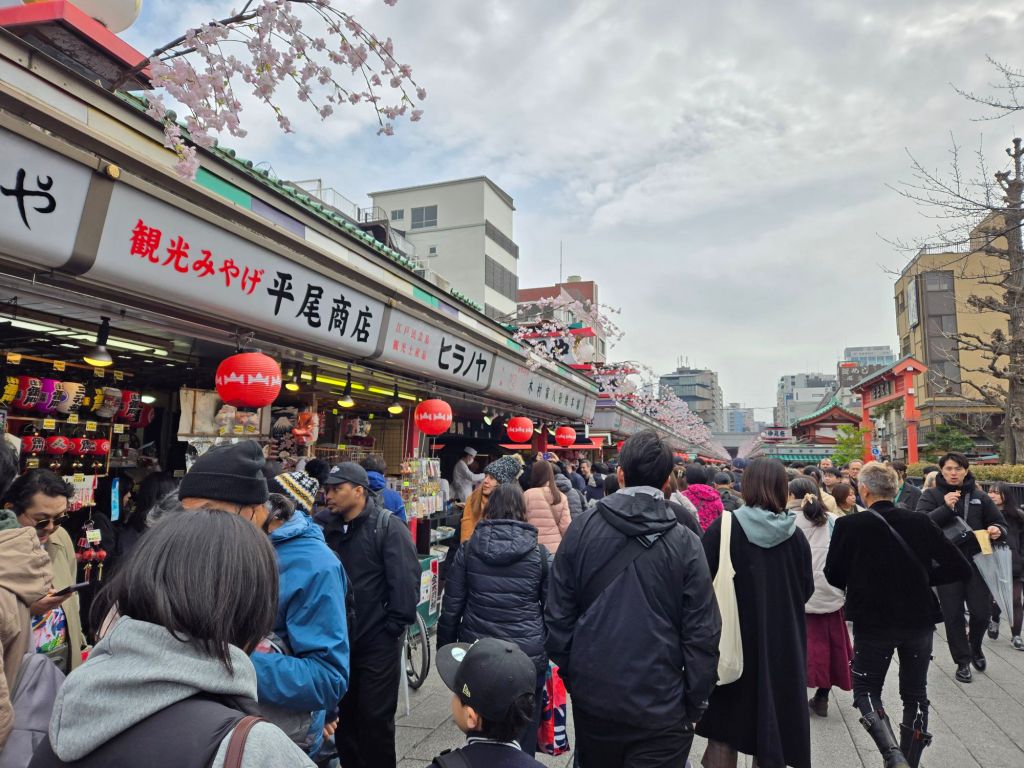
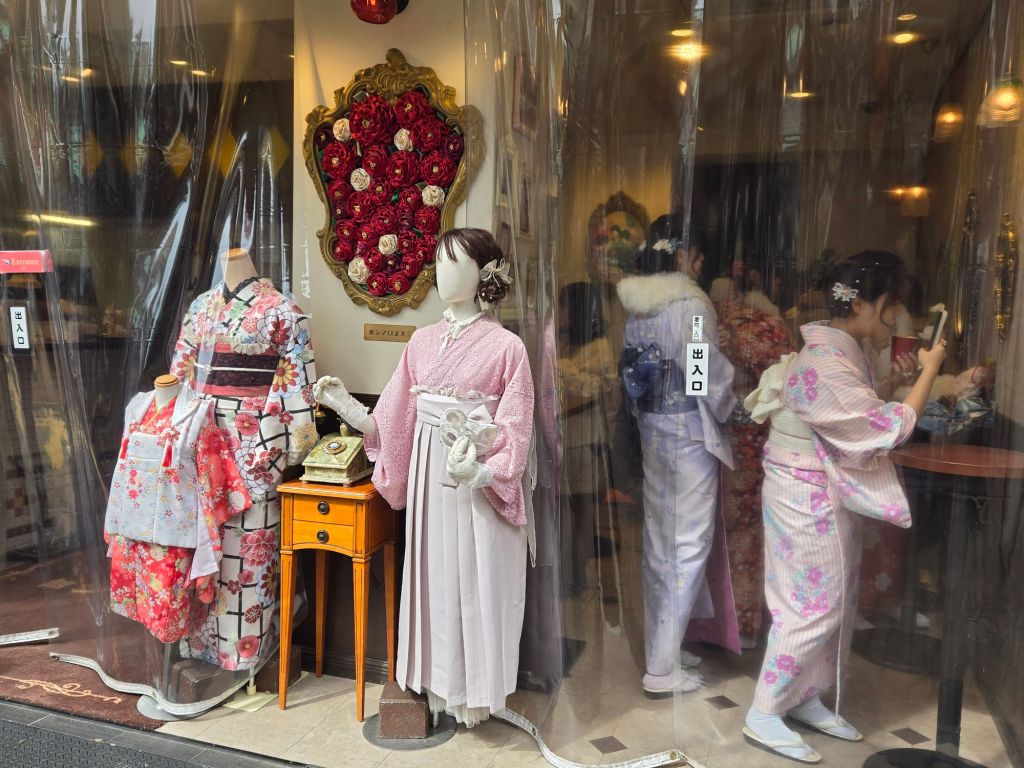
There was even a certain jolliness in some crowds. One Sunday afternoon, we visited the Asakusa neighborhood, which is known for its Old Tokyo vibe, and the Sensoji temple, the oldest Buddhist temple in the city. Turned out lots of Japanese and tourists had the same idea. Posses of young women had visited kimono rental shops and were parading around taking selfies. Rows and rows of food stands were lined up with people purchasing treats ranging from meat on a stick to matcha ice cream to my personal favorite, melonpan, a giant domed bun, its sugar cookie crunchy top scored to look like cantaloupe skin, its inside stuffed with whipped cream. Our favorite discovery of the day was the Kapabashi kitchen tools street, shop after shop specializing in all thing culinary –  knives and baking pans, lacquerware and chopsticks, even a store featuring the plates of  plastic foods you see on display  in front of many restaurants.

Were there crowds in all these places? Of course. Did we still enjoy them? Absolutely.  Tokyo has a lot to teach the rest of the world about crowd manners, and being respectful of other people making their way through the world.

Sensoji Temple entrance
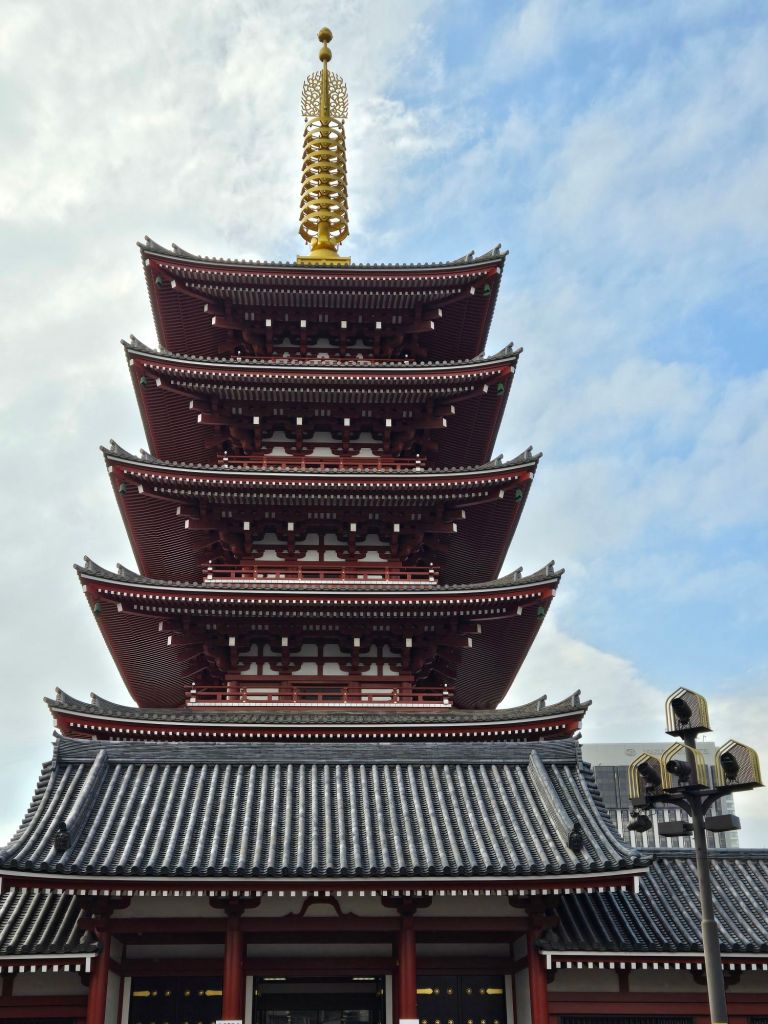
Five story pagoda in Asakusa
Let’s get a tasty treat!
Let’s rent kimonos with our friends!
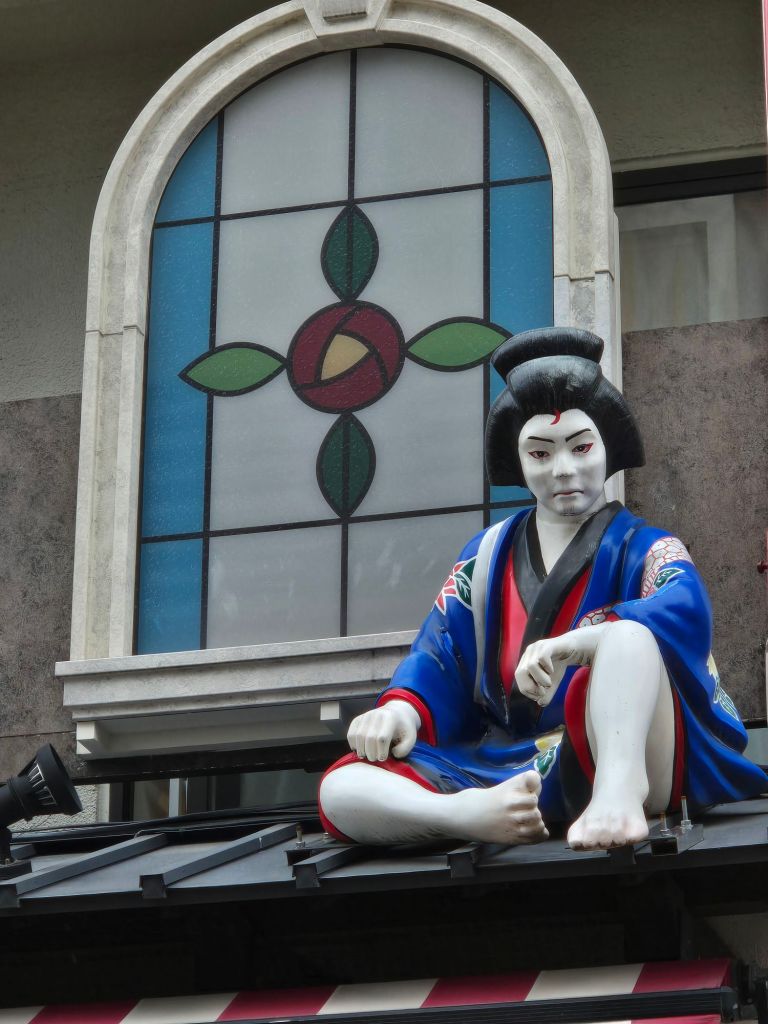
Asakusa rooftop figure
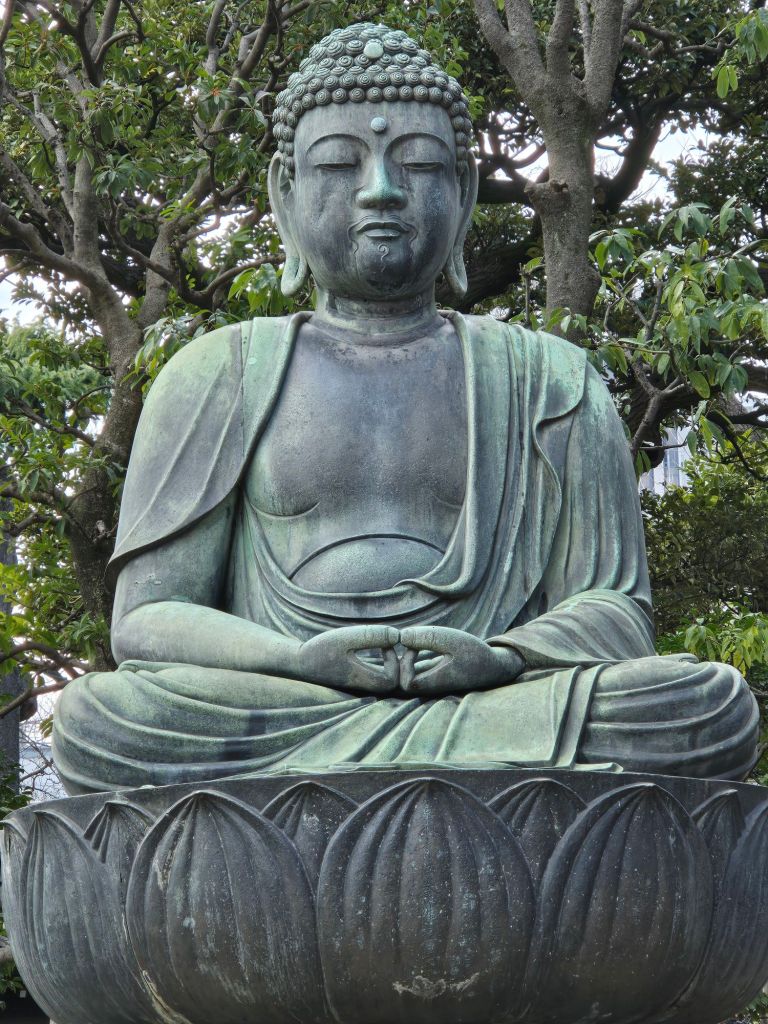
Buddha watches over the Asakusa crowds
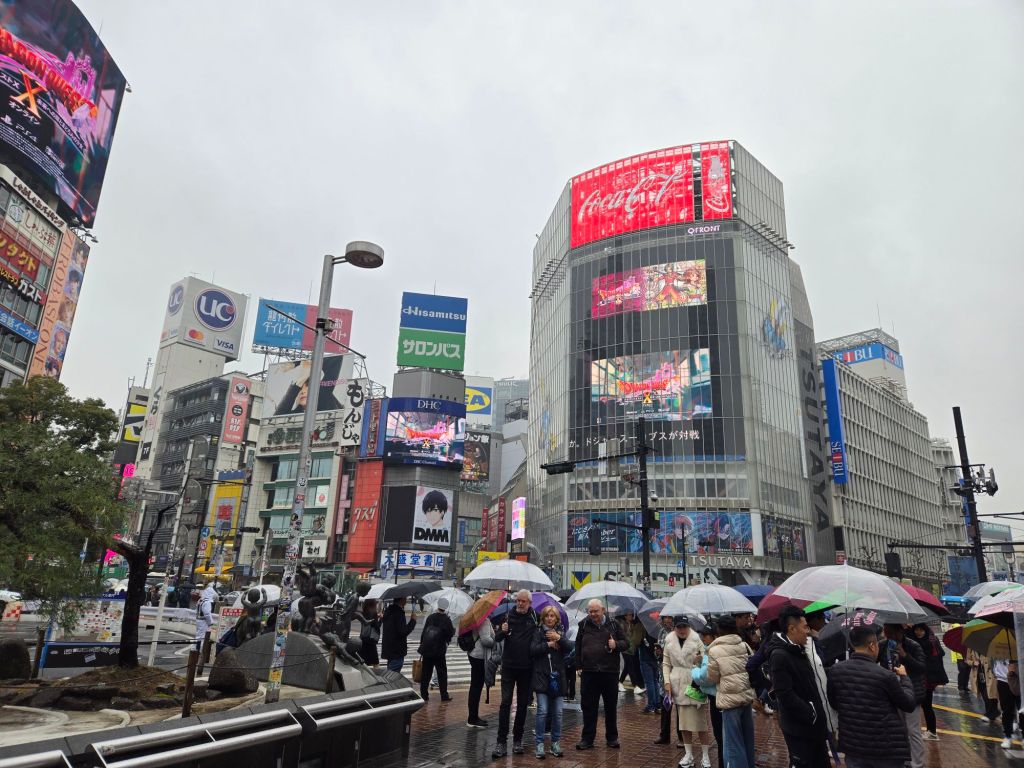
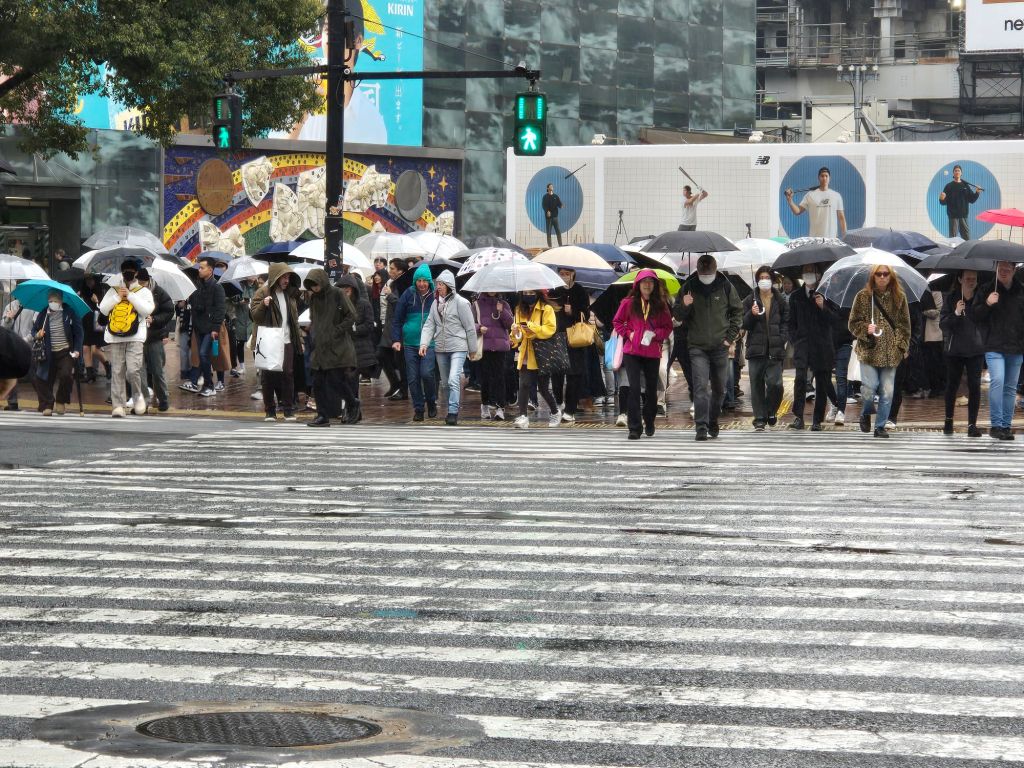
Ad screens across from Shibuya Station
The start of a Shibuya Scramble

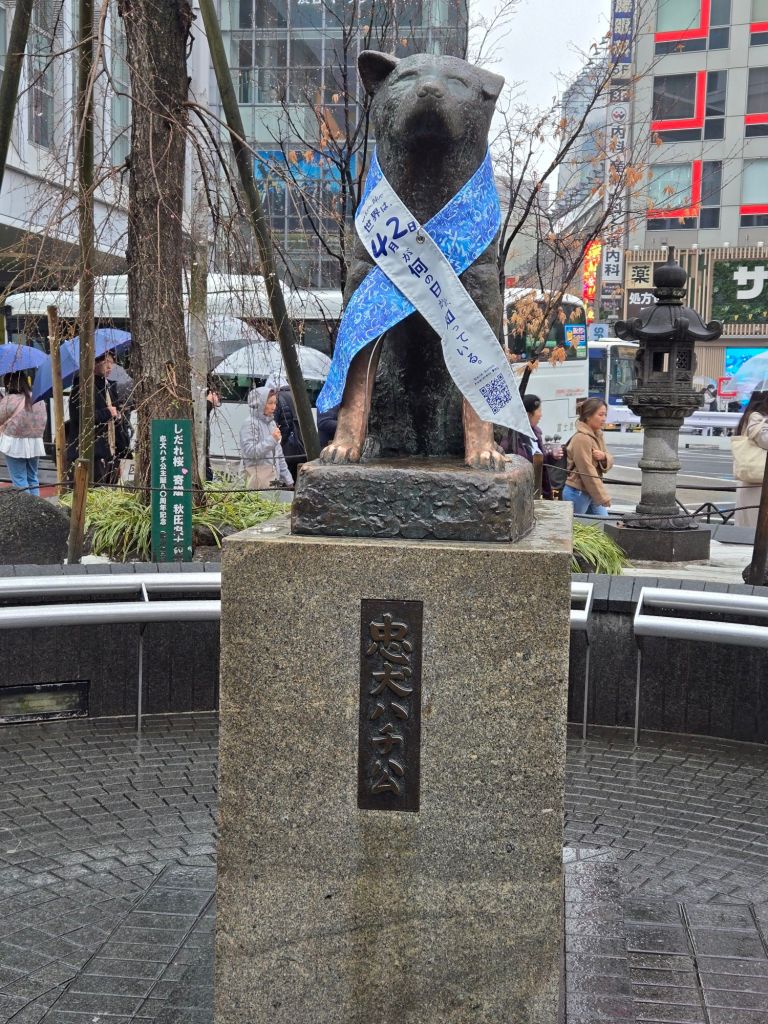
Today, a traveler arriving at  Tokyo’s Shibuya Station is greeted by the sight of towering ad screens and the noteworthy Shibuya scramble, where thousands of pedestrians cross the intersection from all directions at the same time. Now that I know the story of Professor Eizaburo Ueno and his Akita dog Hachiko, I wonder what the station looked like when the two visited the station together every day in the early 1920s.

Every morning, Hachiko would accompany his master to the station as the professor  headed off to work at Tokyo’s Imperial University. And each afternoon, Hachiko would trot down to meet the train when the Professor came home.

Then, one day in 1925, Professor Ueno died at work from a cerebral hemorrhage. But Hachiko continued to wait for Ueno at the station every day until his own death 10 years later. Ueno and Hachiko are buried together in a Tokyo cemetery.

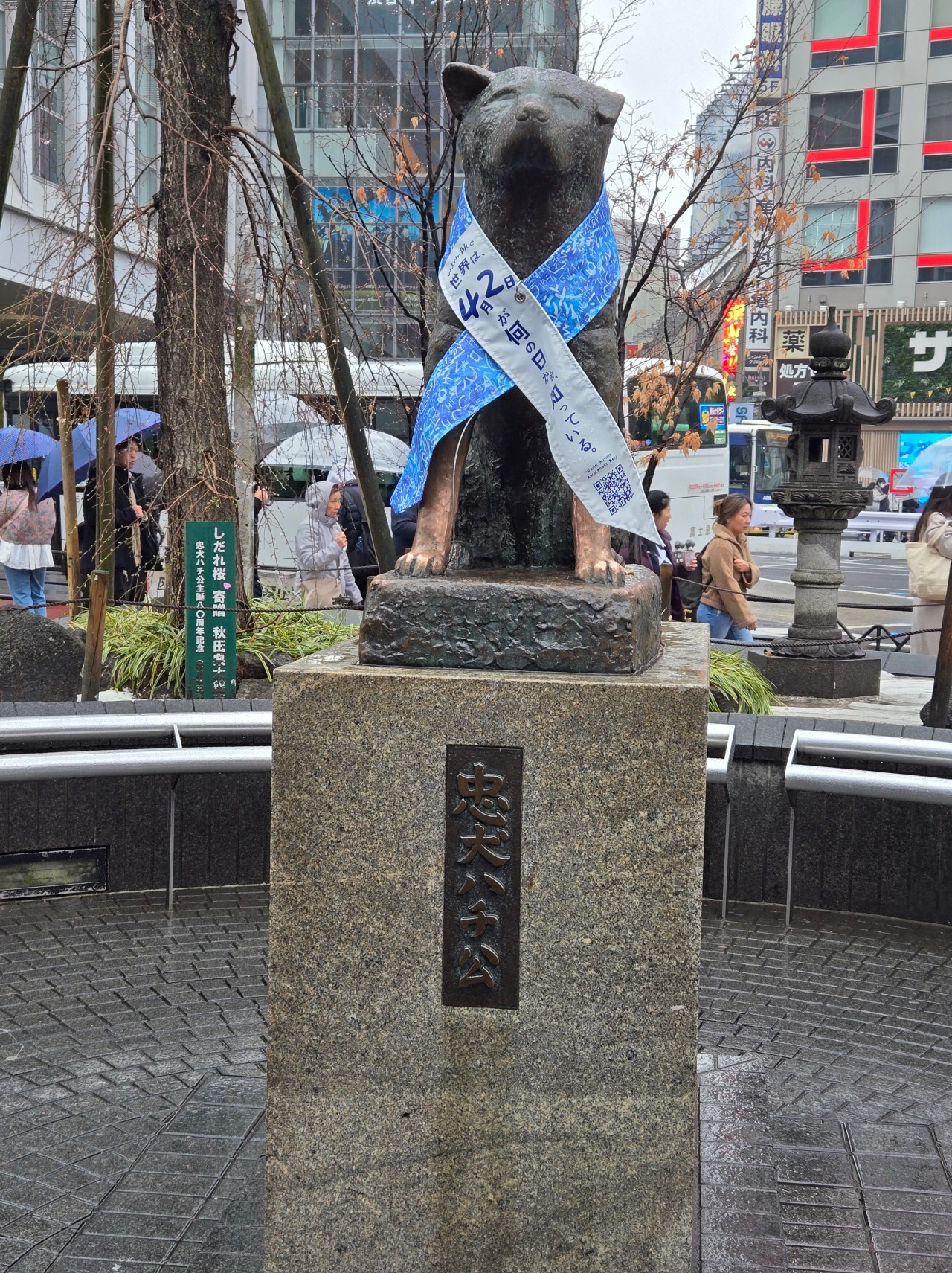
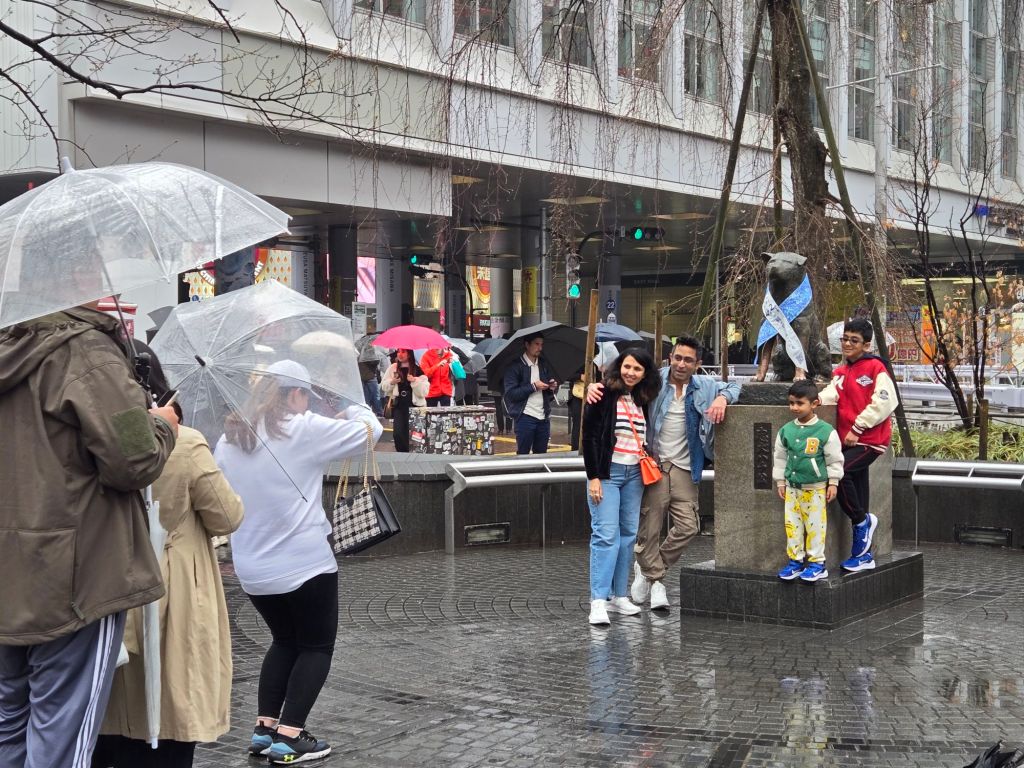
The Japanese, great admirers of fidelity and family loyalty, encourage their children to follow Hachiko’s example. Today, children of all ages from around the world line up to take photos with the dog’s statue where he once waited patiently for his human to come home.

The honorary Hachiko
May our children learn from Hachiko
Sheltering Hachiko from the rain