Wise Woman Travel

Exploring the world from a female perspective

One week into our China trip, Aaron and Mia, two of our grad student guides, decided it was time for Walter and me to get to know the non-academic side of Changsha.  On Saturday morning, they arrived at our hotel at 10 o’clock, brimming with plans: a trip to Taiping Street, one of the city’s historic neighborhoods; a browse along  the river, and finally over the bridge to Orange Island Park, a Mao-related tourist mecca .

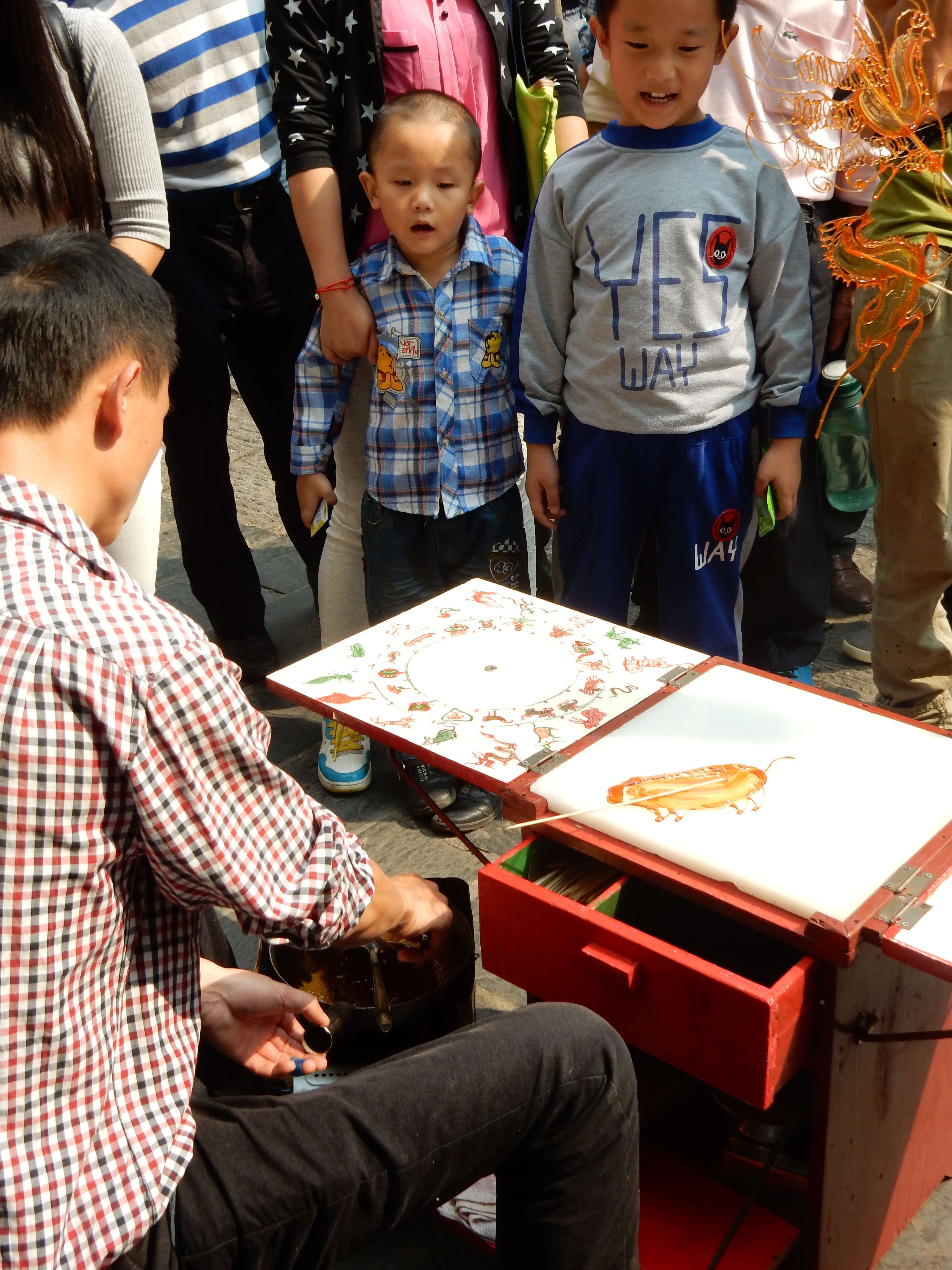
We headed out into the steamy morning – the temperature was already well on its way to 32 C – and wedged ourselves into a tiny taxi. Twenty minutes later, we had arrived at the gateway to the pedestrian-only, Taiping Street and, wow, were there ever a lot of pedestrians. The street was packed with multi-generational families, young couples holding hands, food vendors, merchants working outside their shops, and pop-up artistic displays.

Beating the heat

Beating the heat

Handmade scales

Handmade scales

Barley candy maker

Barley candy maker

Street food

Street food

We browsed through some of the shops but I didn’t feel like buying anything. It seemed more important just to let the smells, sounds, sights, and sensations of Changsha sink into me.

DSCN0874And of course, I can’t forget the tastes. Aaron and Mia had a lunch restaurant in mind, and after much consultation with the server and each other, they chose several dishes for us to share: a steaming cauldron of seafood; lacy, crepe-like pancakes, embedded with corn; noodles; rice, and squares of tofu, covered in a black crust whose ingredients our Western palates couldn’t quite identify.

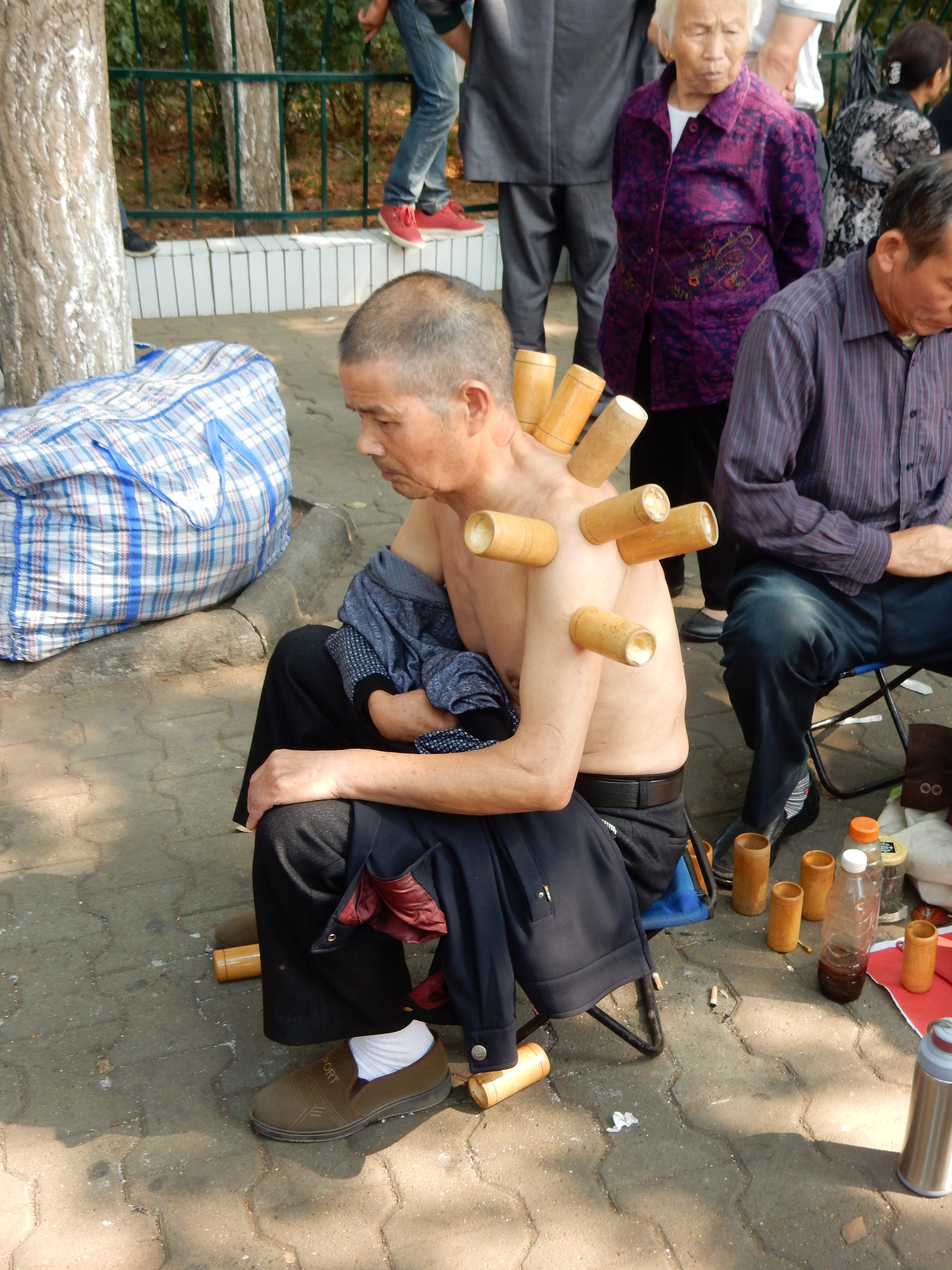
After lunch, we left the downtown area, and wandered along the Xiang River, a tributary of the Yangtze. It was shadier but even more crowded than Taiping Street.  Once again, there were vendors everywhere, but without storefronts: people had staked out a patch of pavement or worn-down grass to sell lottery tickets, medicinal treatments, and food, or to entertain onlookers with songs blaring from portable amplifiers. Although we had seen very few non-Chinese faces on Taiping Street, we saw none here, and the mostly older crowd looked at us curiously as we passed.
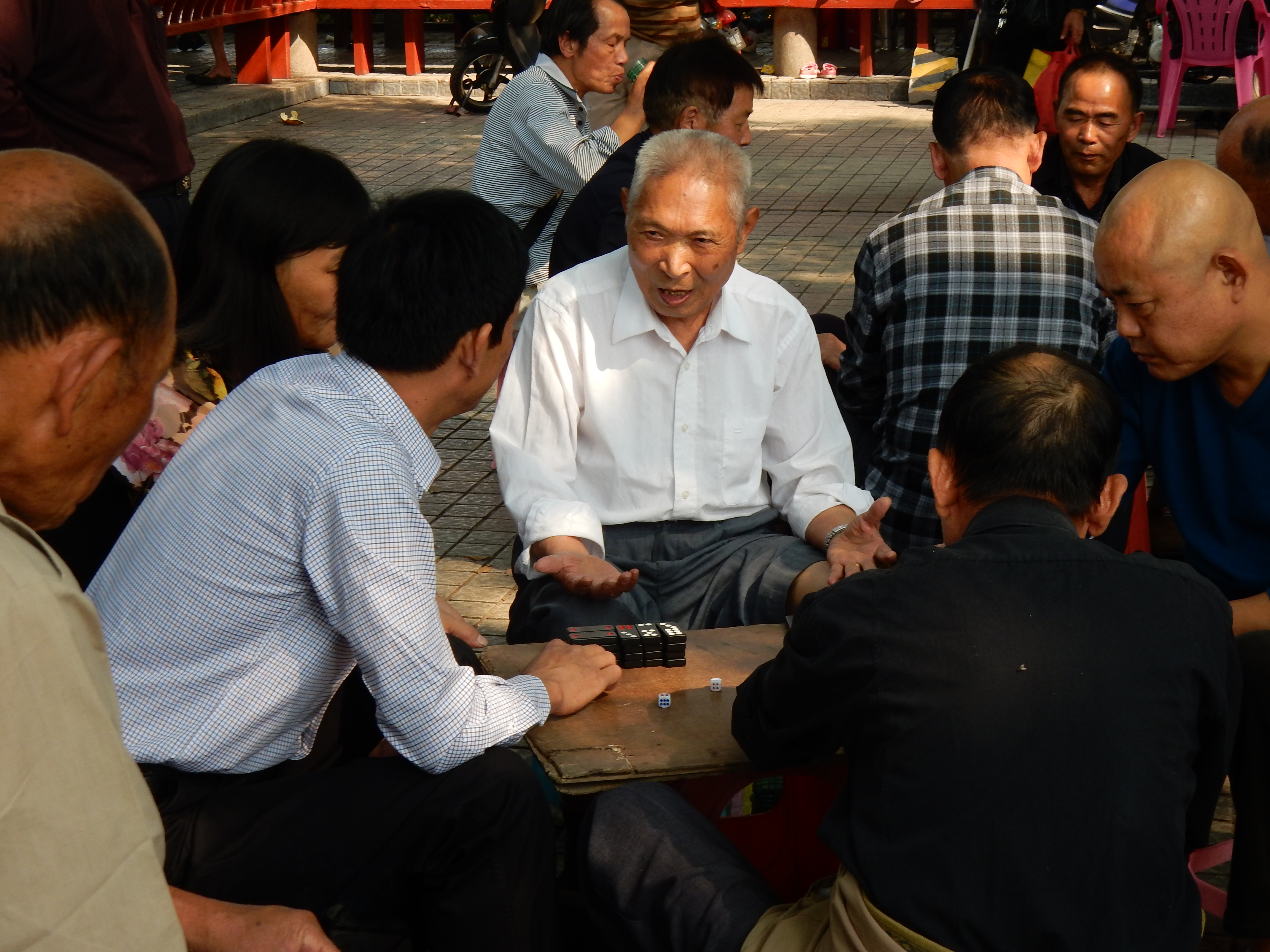
Setting out the rules of play
Setting out the rules of play

Ancient medicinal treatment
Ancient medicinal treatment

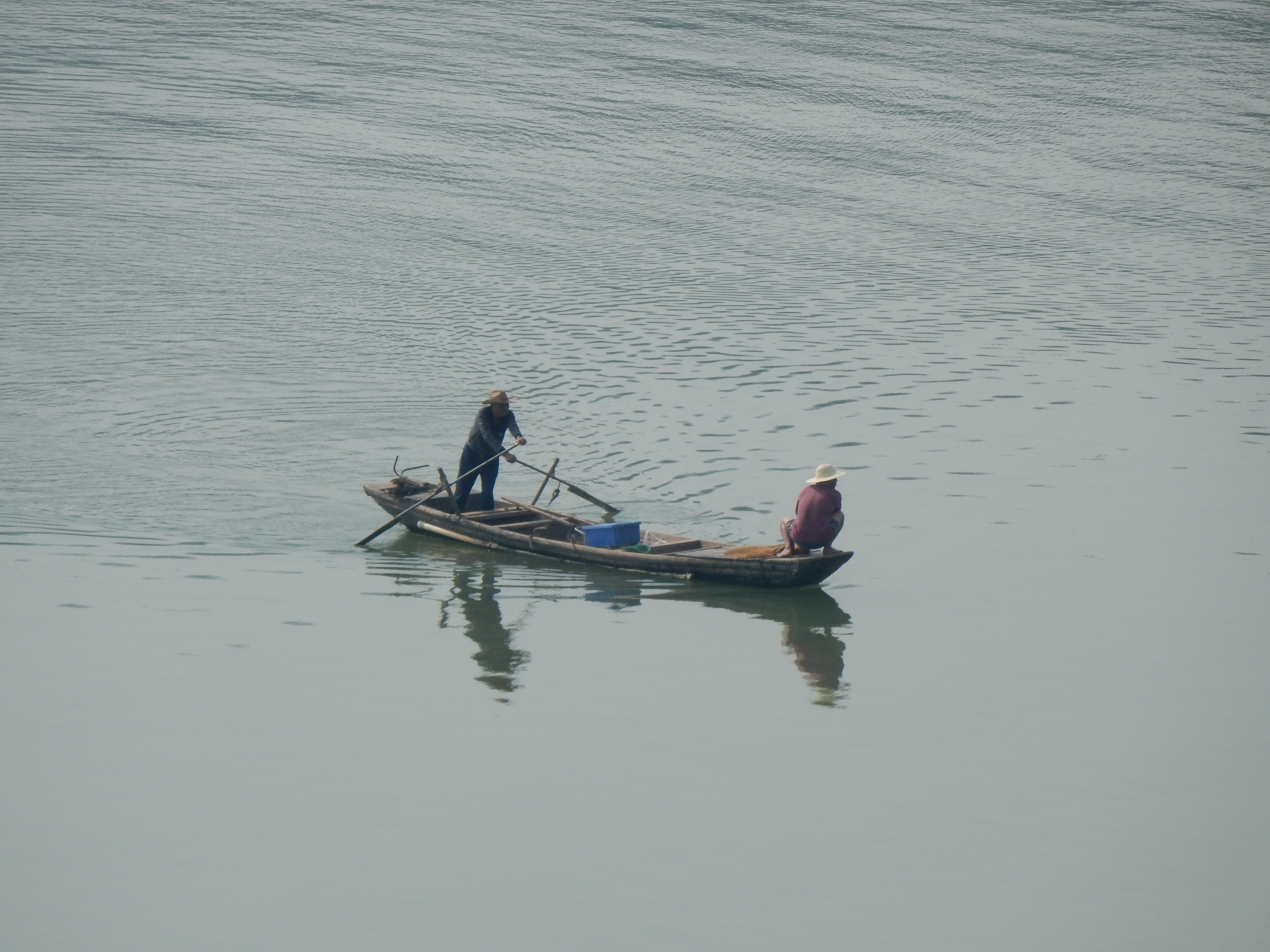
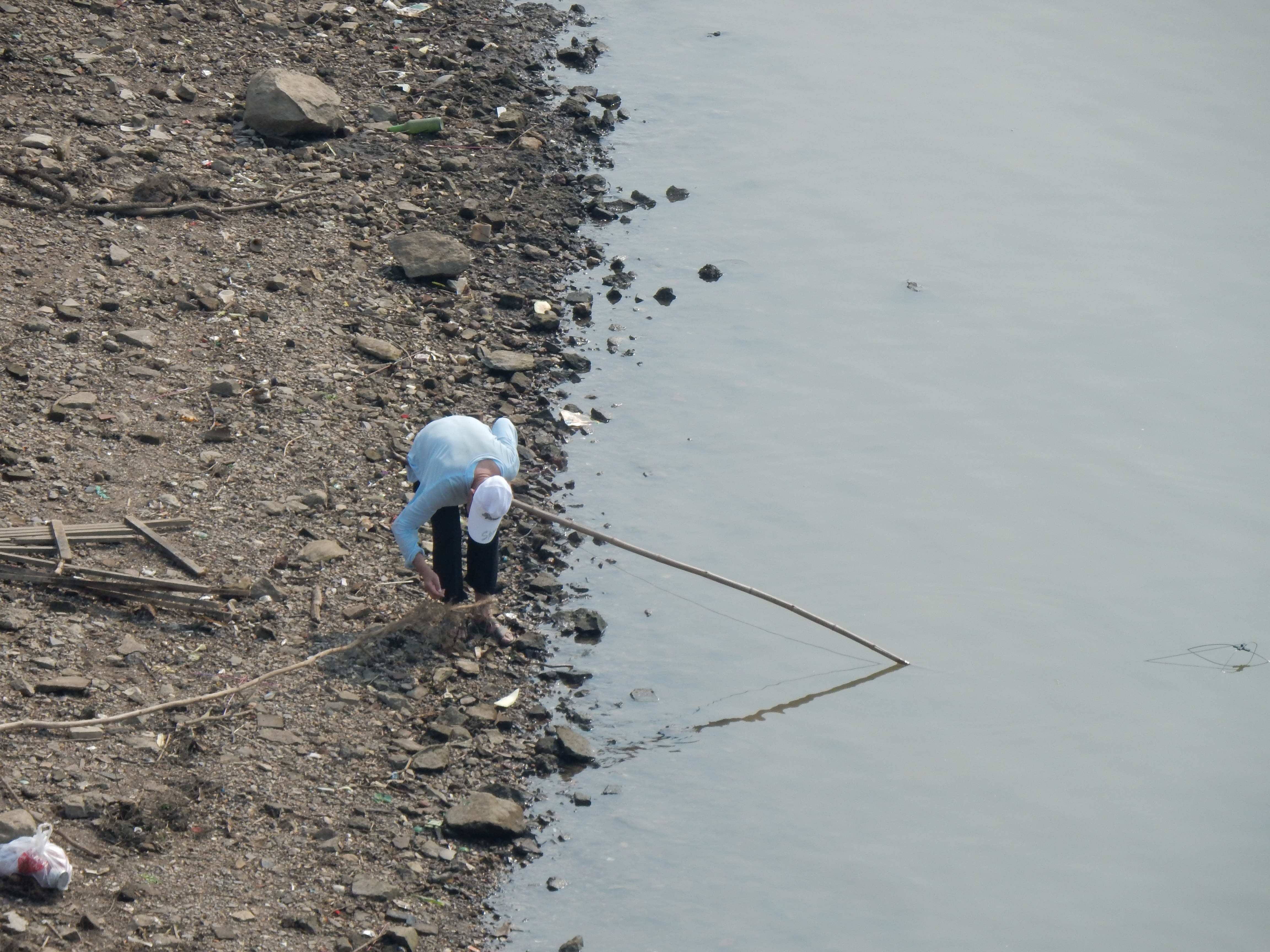
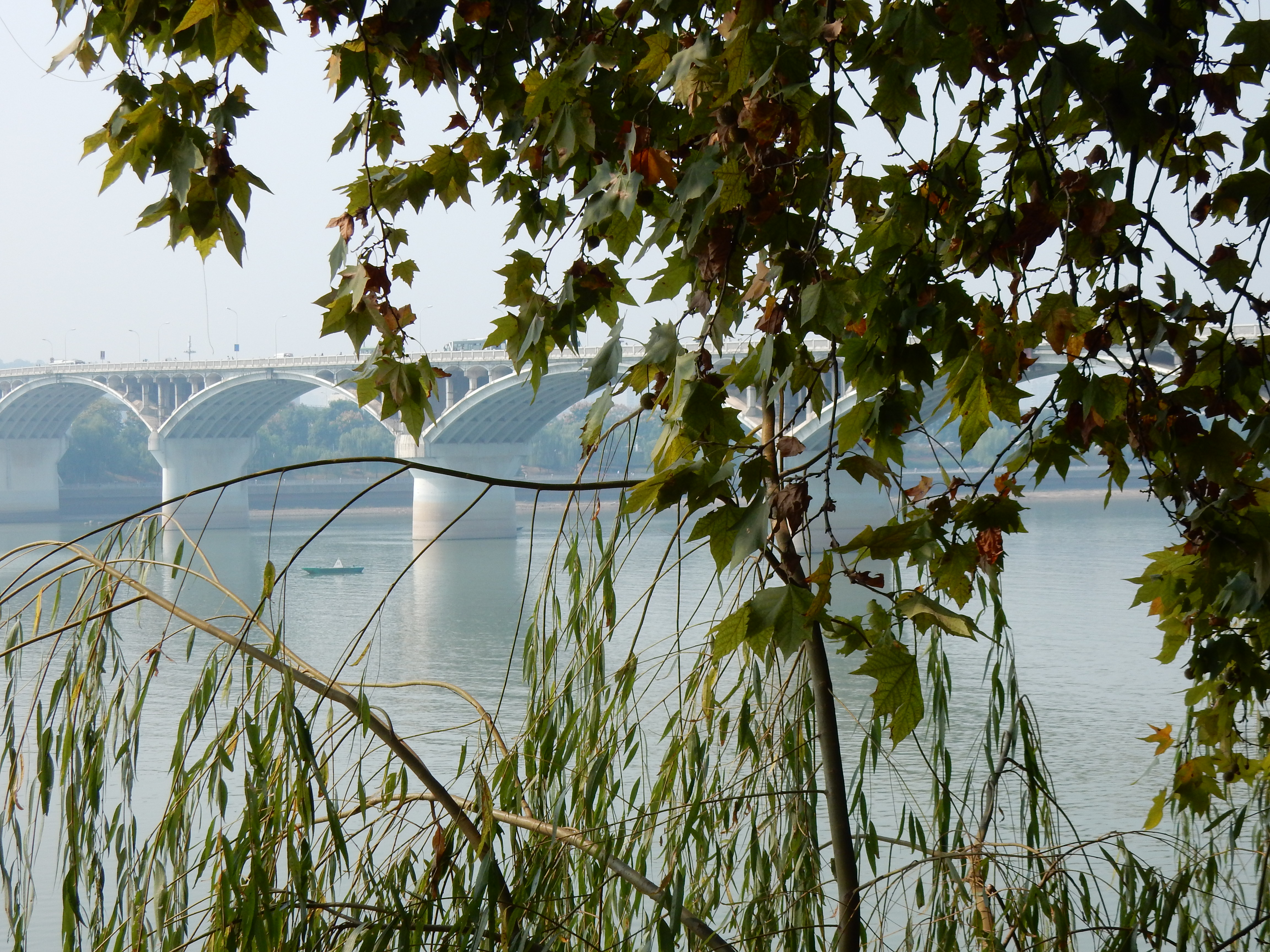
DSCN0893Our next destination was Orange Island, which we accessed by crossing the  Juzizhou Bridge. It seemed as though a lot of other people had the same destination in mind, and we joined a stream of walkers, cyclists, and motor scooters, which weren’t supposed to be on the sidewalk but used it anyway. The river itself was busy with fishermen and boat traffic, and I was fascinated by the juxtaposition of modern and traditional scenes all around me. DSCN0898 DSCN0899
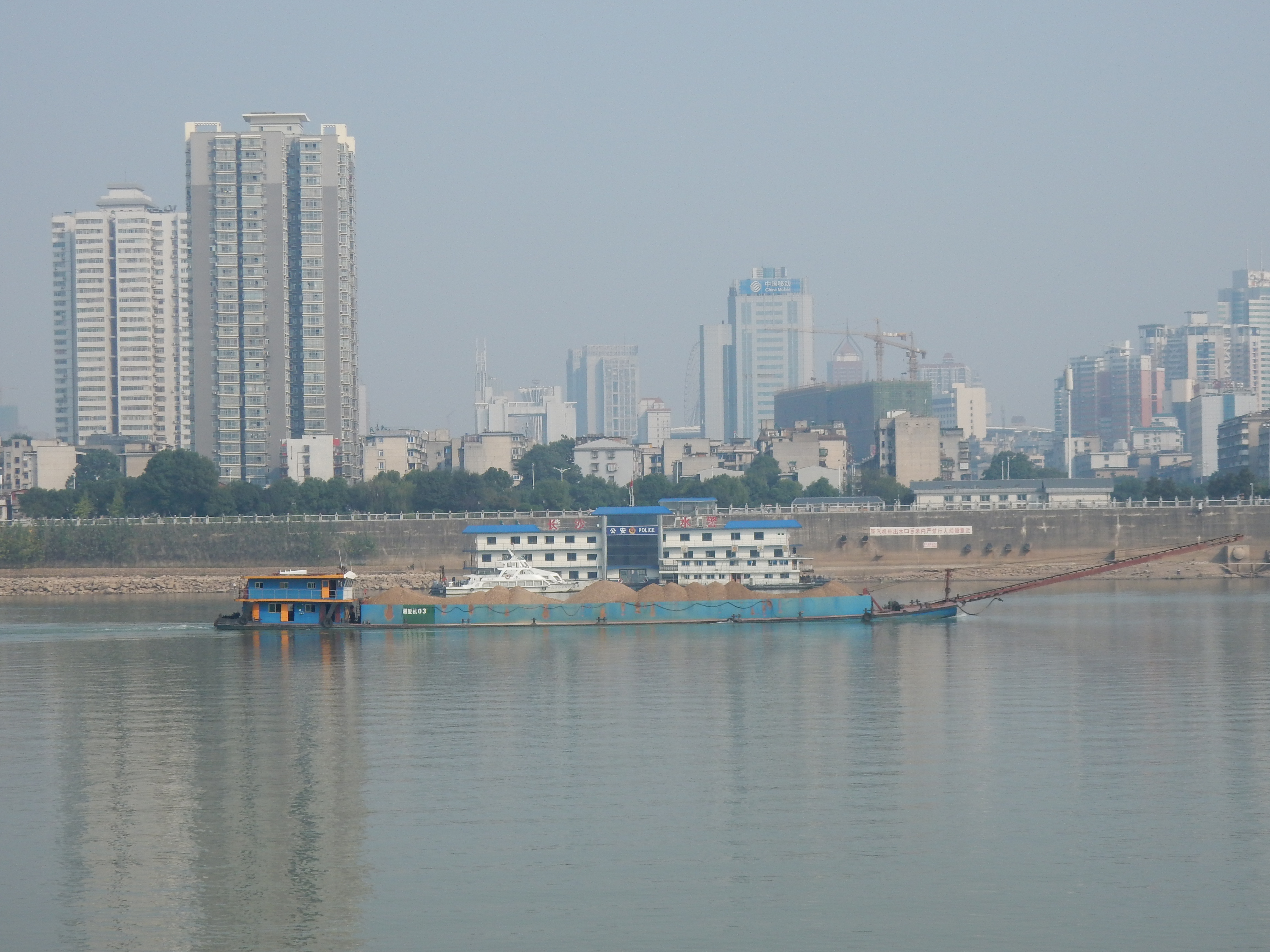
An afternoon on the river

An afternoon on the river

Fish story

Fish story

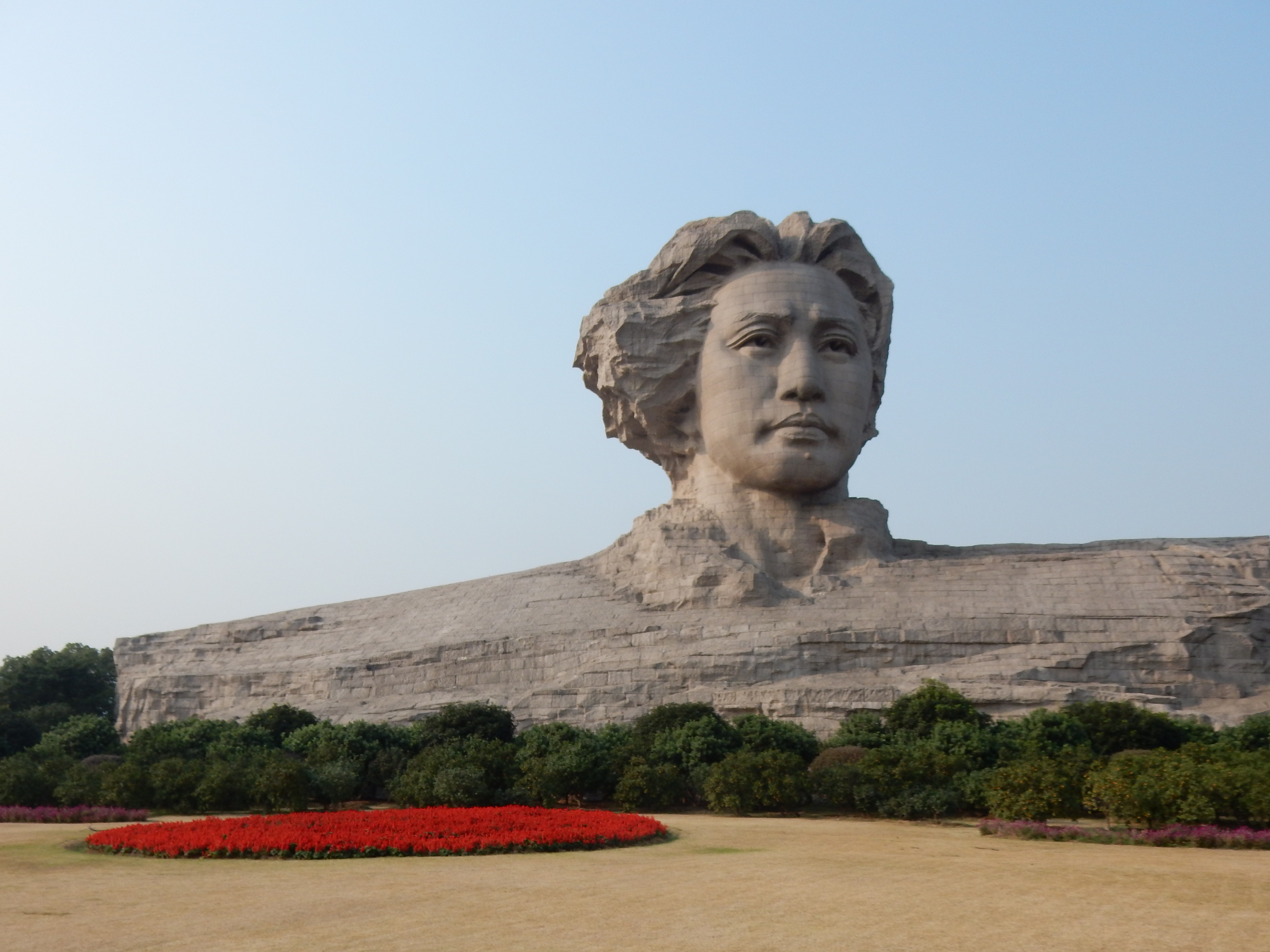
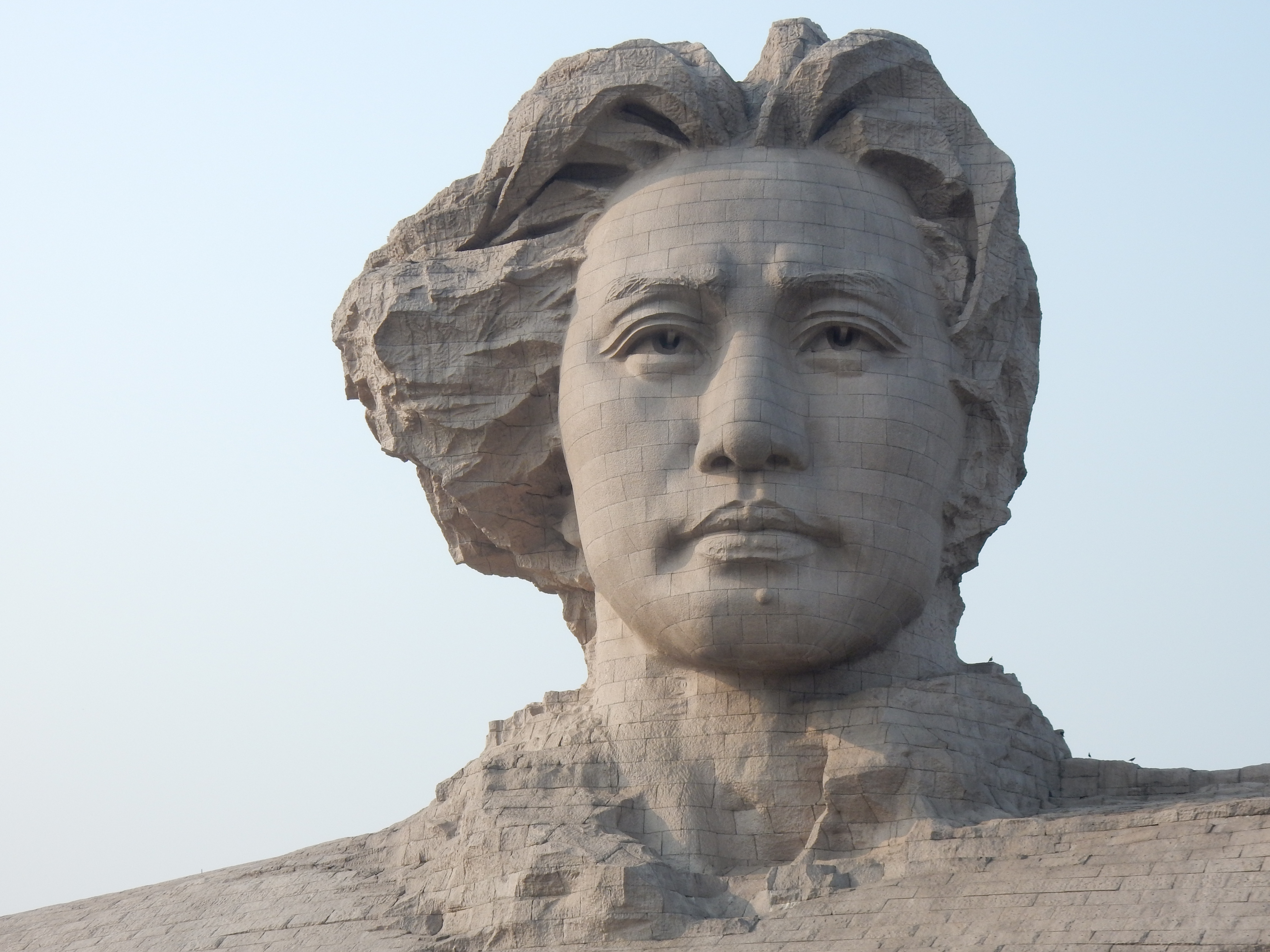
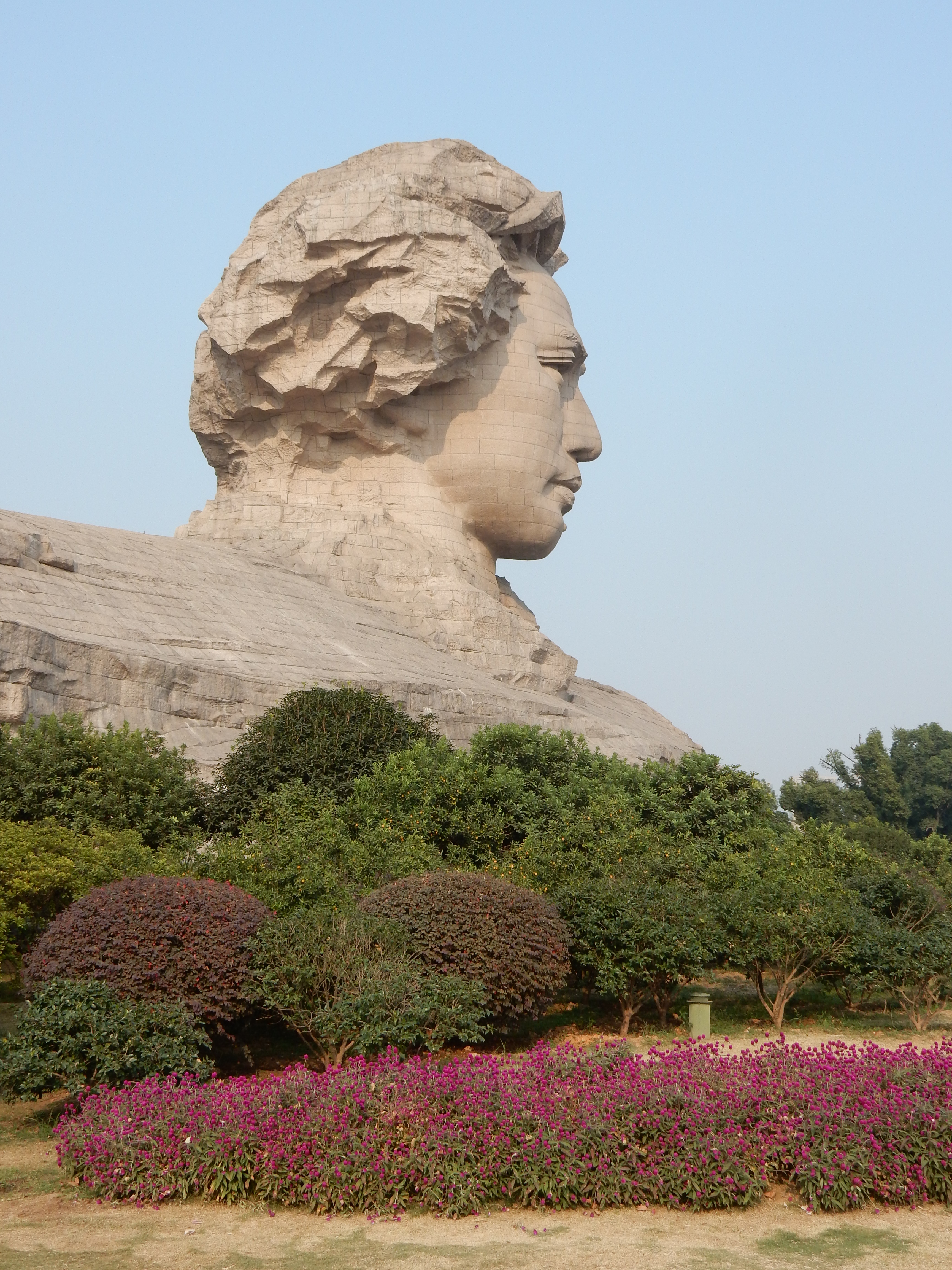
We took a breather on the other side of the bridge to guzzle water and buy hats, both of which would have been a better idea before we headed across the water in the dazzling afternoon sun. Then, we hopped onto one of the jam-packed, open-air tourist trams, which took us out to the main Orange Island attraction: an enormous, white marble statue of a youthful Mao Zedong, gazing out across the river. Standing 32 meters (105 feet) high, 83 meters (273 feet) long and 41 meters (125 feet) wide, it was riveting. We staked out a spot for a group photograph, and as we walked past, and around, and behind the monument, I couldn’t take my eyes off it.  DSCN0901

Mao keeps watch

Mao keeps watch

DSCN0904 DSCN0909

By the time we were on our way back to the entrance of the park, we were all feeling a little exhausted, and decided it was time to head back to the hotel. “But, wait,” Walter said, suddenly. “If this is Orange Island, why haven’t we seen any oranges?”

Aaron and Mia looked confused. “Of course we have, Walter. There’s one right there.” They pointed up into a nearby tree. “That’s an orange?” Walter said, staring at a fruit that dangled from a branch like a large yellow water balloon.
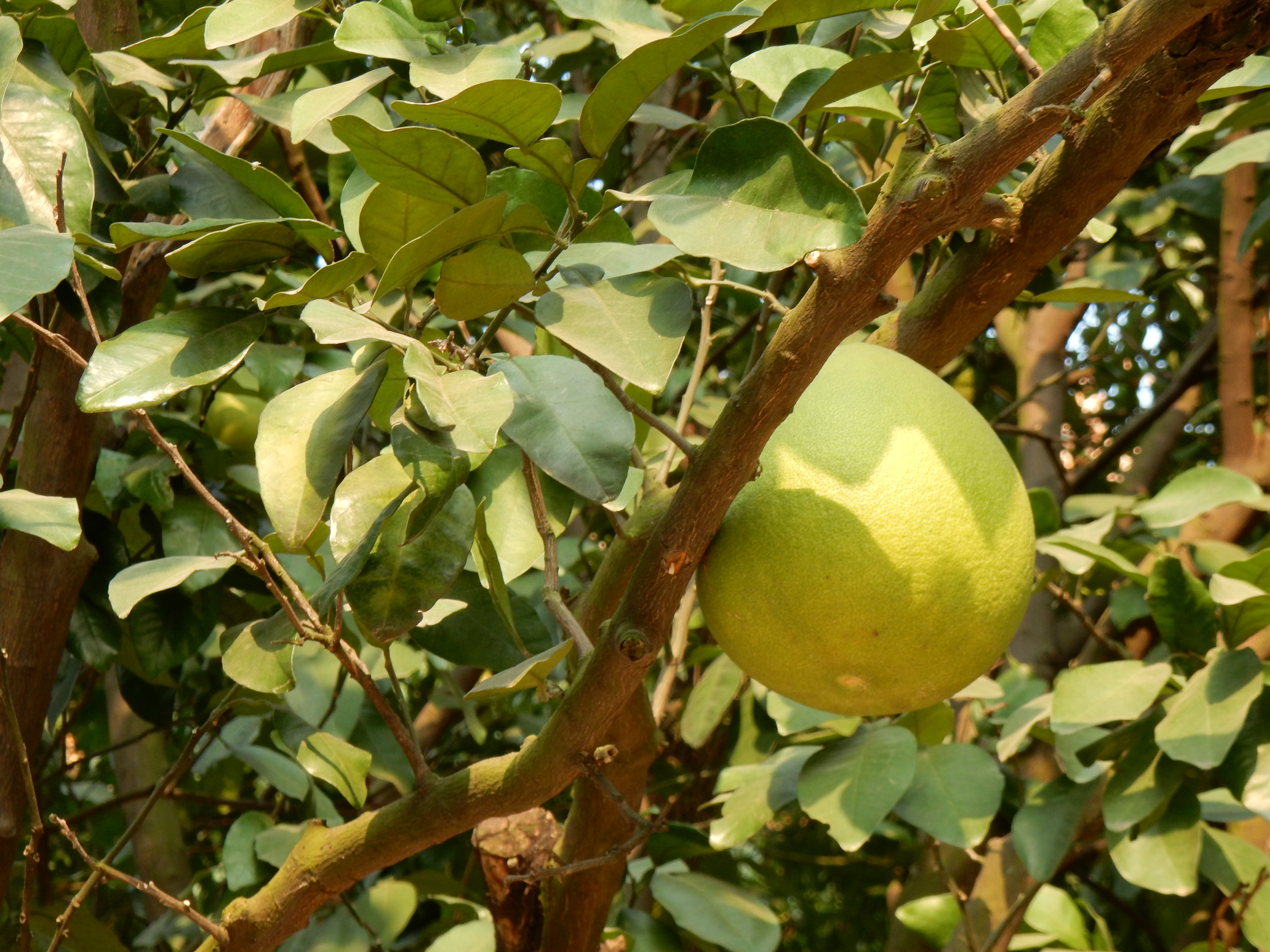
Yes, that's an orange!

Yes, that’s an orange!

.

“Well, it’s not ripe yet. But it will be in another few weeks.”

What a day. My introduction to the Changsha that lives and breathes outside the university gates was a spectacular experience. As a teacher, it provided a valuable cultural lens through which to view my students and their lives. And as a learner, it gave me an entirely new perspective on my life in Canada.
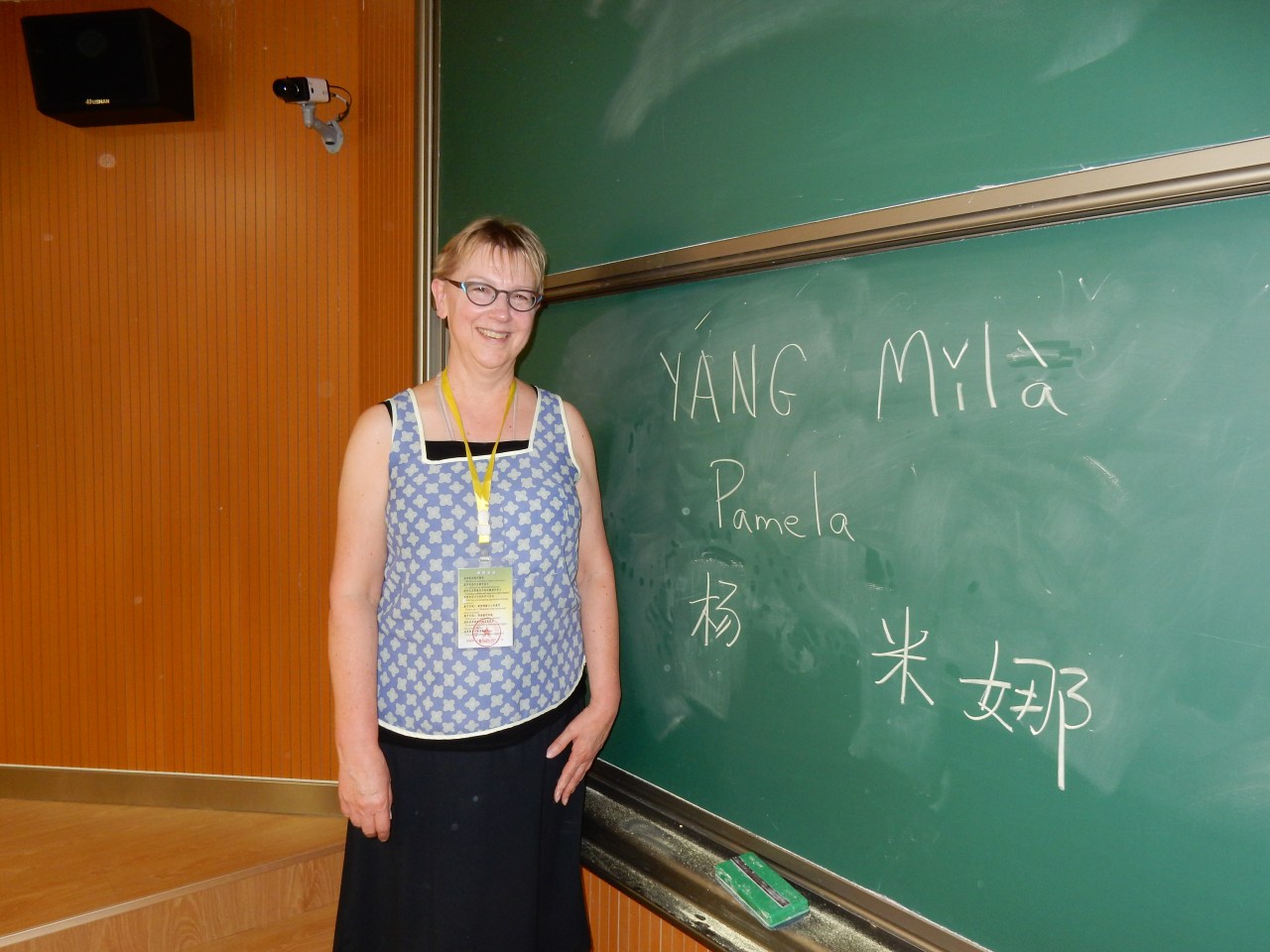
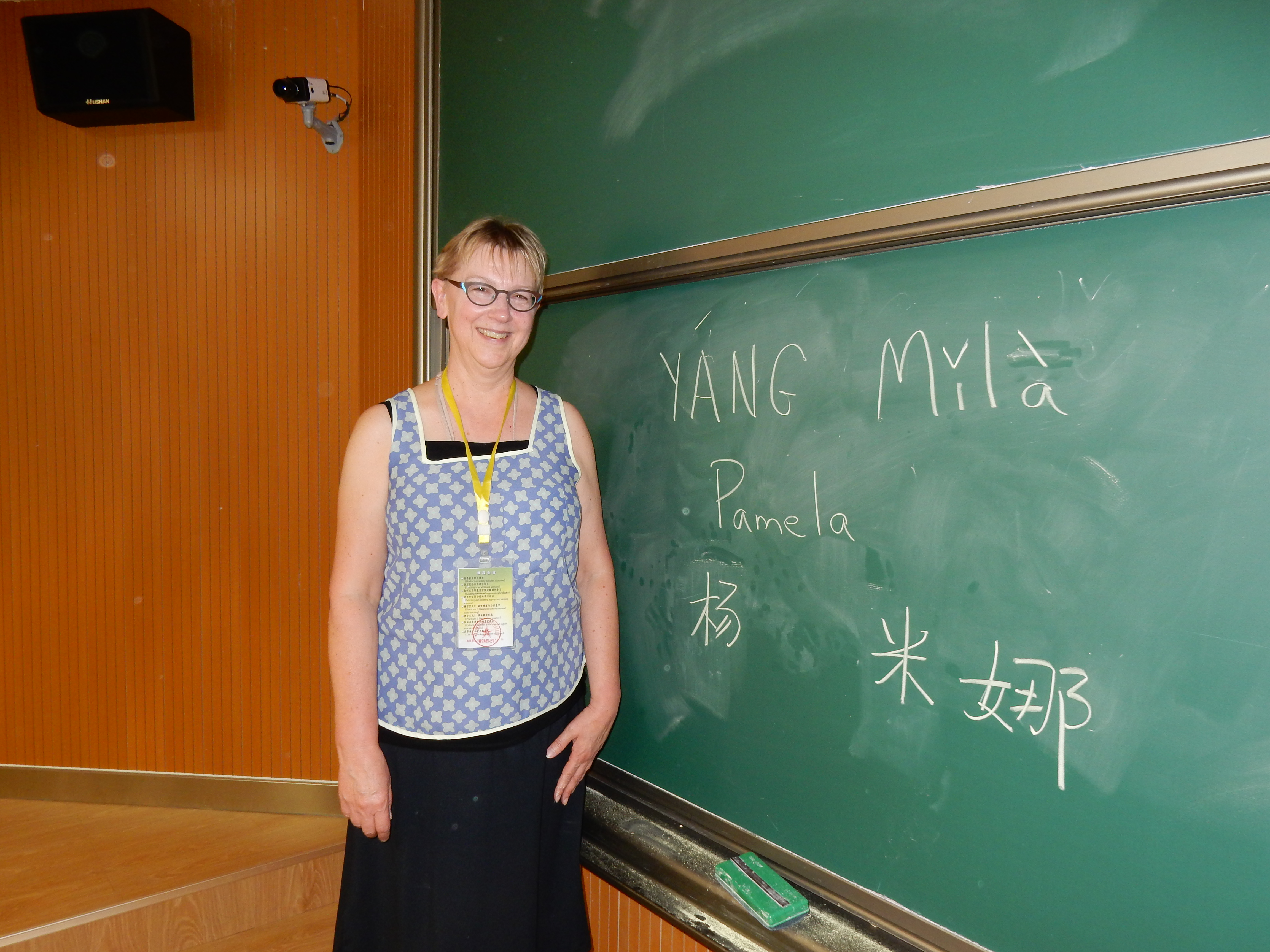
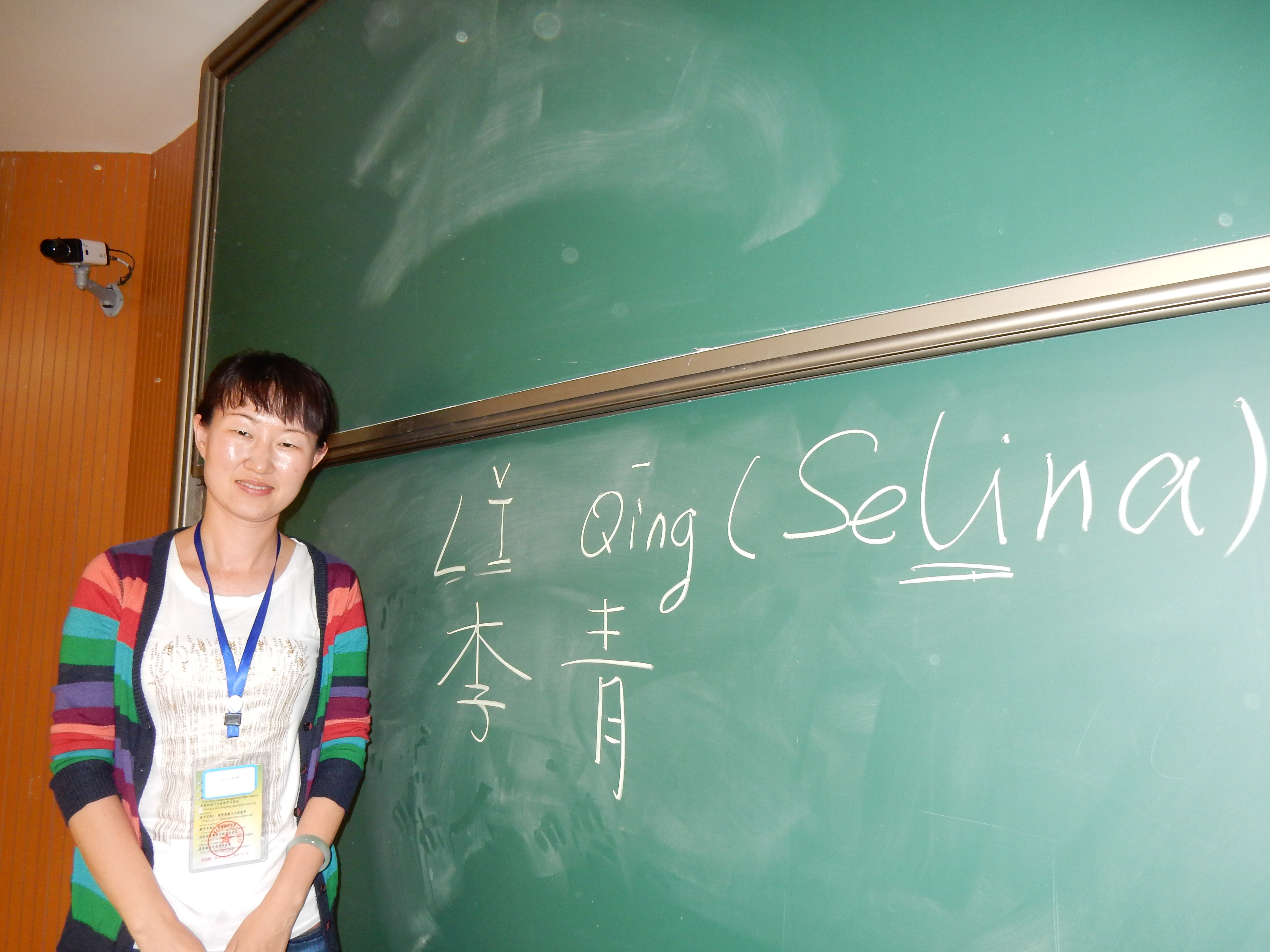
DSCN0972I have a new name. It is Yang Mila.

I guess it’s not quite accurate to call it new. When I took Mandarin lessons more than a year ago, my teacher translated my English name and helped me to pronounce it. But before I came to China, I’d found very few opportunities to introduce myself as Yang Mila.

That changed a few weeks before I arrived in Changsha. When I was updating the syllabi for the four courses I was going to teach, I included my English and my Chinese name. I knew that many Chinese students gave themselves English names, because English speakers often struggle to pronounce Chinese names. I’ve always thought that sacrificing such an important piece of their original identity for another person’s linguistic comfort was a gracious gesture. The least I could do was return the favour.

Clearly, my students appreciated having a choice of names they could call me. Some addressed me as Professor Pamela or Professor Young, while others went straight for Pamela or Mila (although the most senior of my students asked for permission before calling me by my Chinese first name). A few did a Chinglish mashup, referring to me as “Pamila.”

I struggled a lot longer with their names. First of all, there were 25 to learn. Some used only a Chinese name, while some had an English one as well. I wanted to be able to match their faces to their names as quickly as possible, so we had a school photo day during the first week of class.

DSCN0958 DSCN0955 DSCN0962This activity produced more laughter than I was expecting. The students argued over the correct Chinese characters and tonal marks for their names. One student erased and rewrote his colleagues’ printing if he thought their letters weren’t neat and precise enough. In good-natured retaliation, one of his classmates drew a metred measuring stick on the board just before I took the printing stickler’s picture, implying he was posing for a prison mug shot.

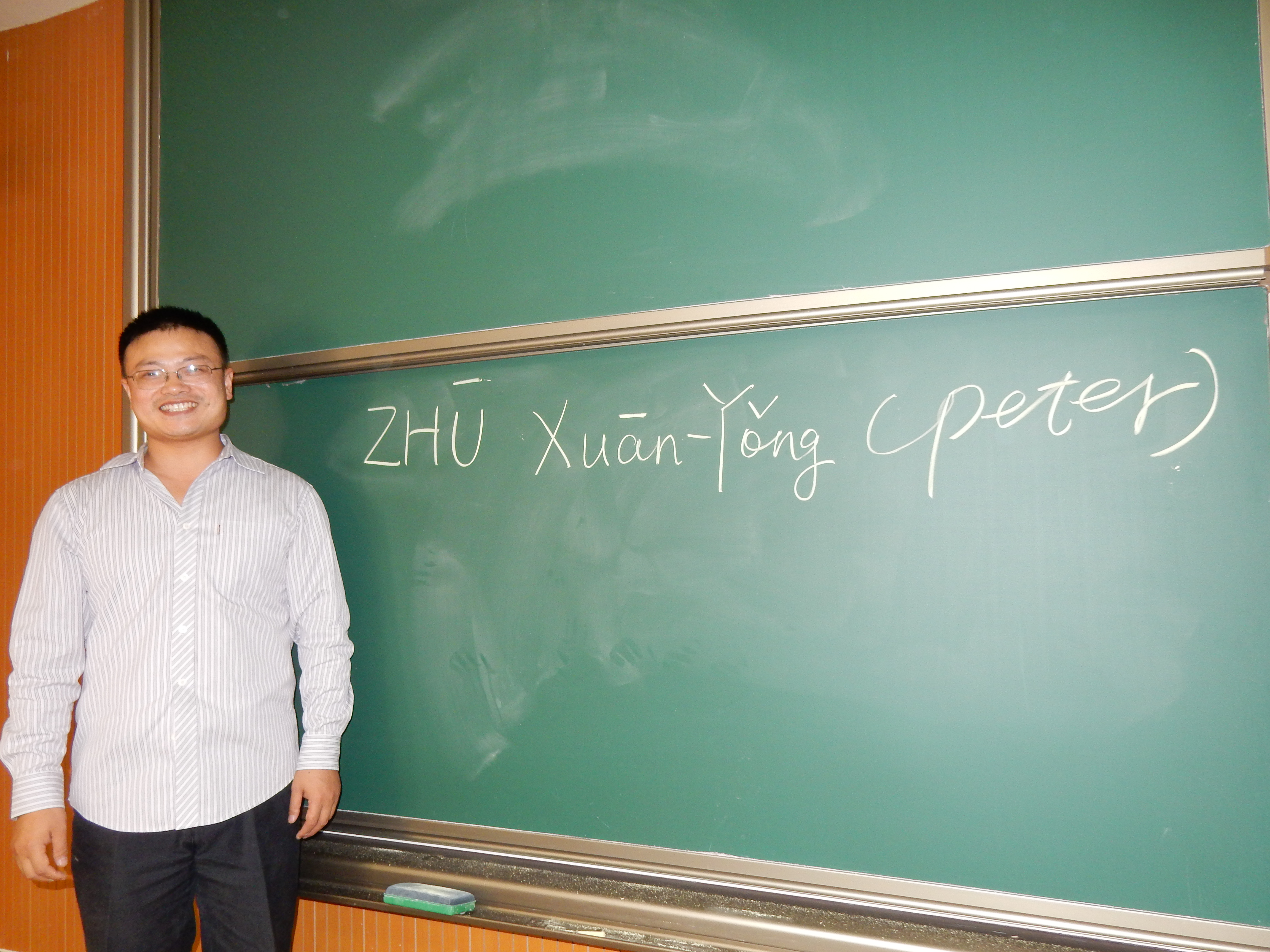
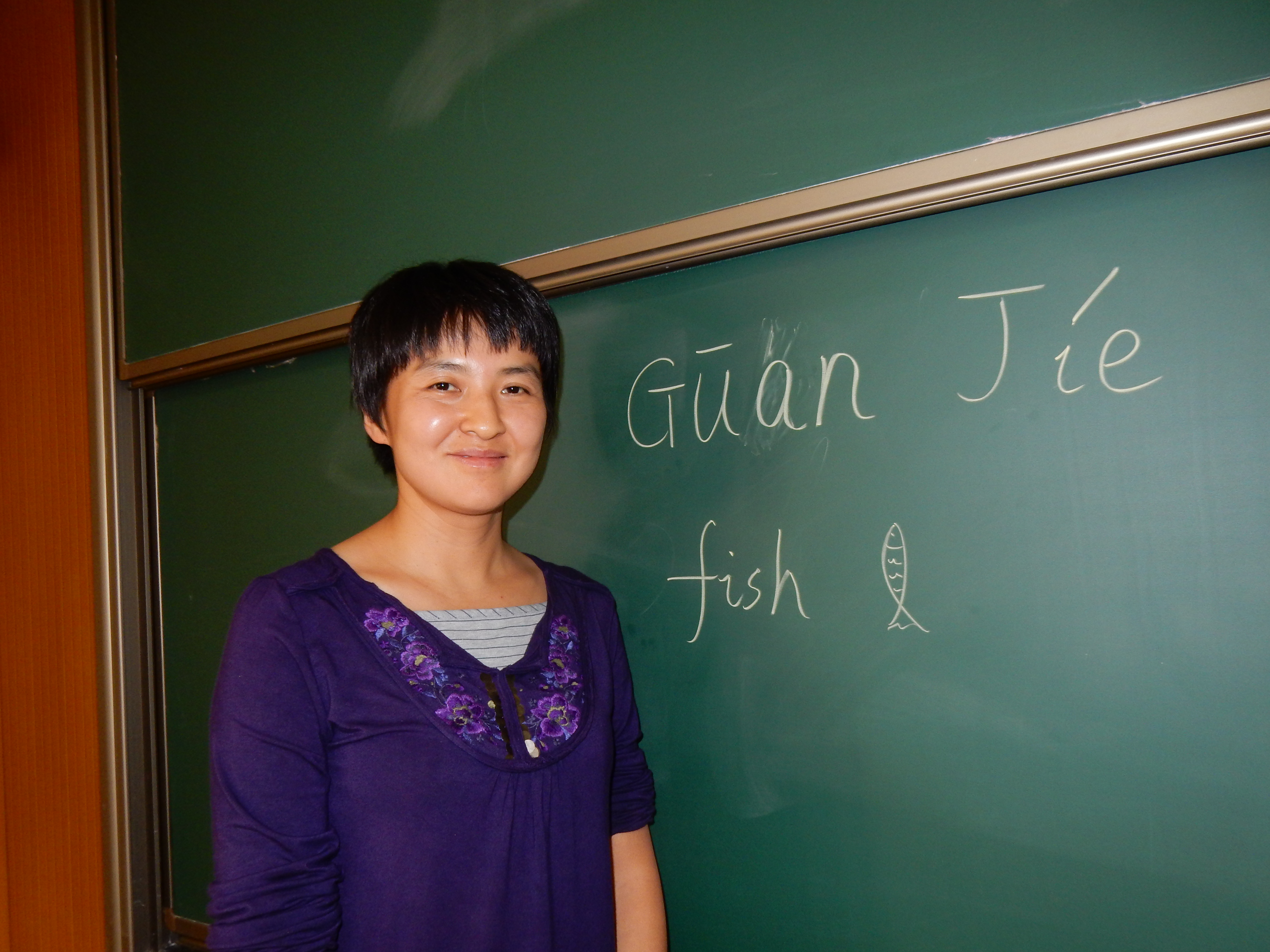
I found it interesting to speculate on the students’ choice of English names. Sometimes, they simply used a name that sounded like a part of their Chinese name; for example, Xiaomei called herself “May.”  Other English names had no correlation to the students’ Chinese names; one of the business profs had chosen Tin Tin, while two of the graduate students who guided me back and forth to the university said that their names, Aaron and Mia, came from an actor in Dead Poet’s Society and the protagonist of The Princess Diaries. One of the applied math professors said  she’d chosen “Fish” because it was her favorite animal.

Then came the task of trying to say the students’ names correctly. Many Chinese consonants and vowels are pronounced entirely differently than their English equivalents: “Q” is said “ch”, “X” is “sh”, “a” like “ah”,  “i” as “ee” and iao like “ow.” And the tone markers make you say vowels as though you were singing rather than speaking. Get them wrong, and you can end up saying an entirely different word than the one you intended.

But my students were patient with my early floundering attempts, and praised even my smallest successes.   A few of them spent a long time clustered around me at the blackboard on school photo day, helping me to pronounce my own name correctly. Yang Mila contains three different tones: I had to remember to send my voice up for the “a” in “Yang”, down and up as I said the “i” in Mila, and then down for the final a. My name didn’t contain the high neutral vowel tone found in several of the students’ names, which sounds like the note a violinist plays to help the orchestra tune.

Eventually, with a lot of solo practise in my hotel room at night and the untiring assistance of my students during the day, I began to feel more comfortable naming names. I even changed my philosophy that a second name means sacrificing your original identity.  Now it feels more like another way of walking through the world. One of the characters in my Chinese name translates as “a person who likes to dance.” And when I say Yang Mila correctly, I hear a robin doing scales on a summer morning. So, I’ve ended up with a Chinese name that sings and dances, a welcome addition to my sense of self.

“Walter! Walter! Hello! Hello!”

My teaching partner and I scan the crowd waiting to meet passengers at the Changsha Airport. Two women and a man are waving enthusiastically in our direction from behind the barrier. To say that we’re glad to see our colleagues from the National University of Defense Technology is an understatement: Including flights, layovers, and a 75 minute delay leaving Beijing, we’ve been underway for more than 24 hours.

Our colleagues quickly relieve us of our suitcases and take us out to a waiting van. “We’re sorry that we can’t find you a room to stay in the Foreign Experts’ Building at our university,” says Yue, a female professor in the Department of Computing Science. “We hope it is acceptable that we booked you into a hotel nearby instead. It is very close, only 5 or 10 minutes by car.”

DSCN0921Right now, any room with a bed sounds good to me. When we arrive, our hosts take care of checking us in and accompany us upstairs. “We think you will need a good rest tomorrow,” says Yue. “We would like to bring you to the university at 4 o’clock. Then we will go out for dinner together.”

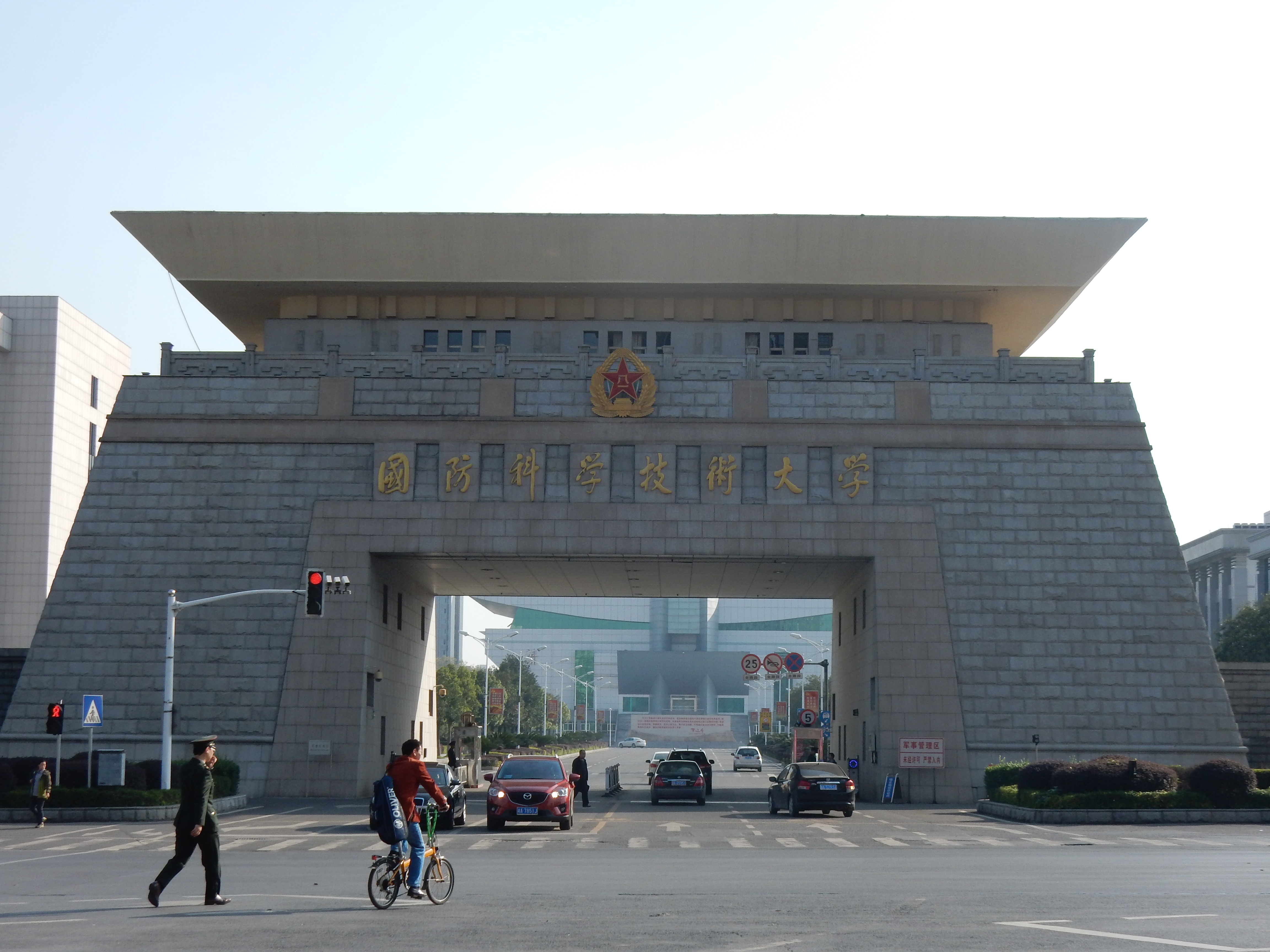
The next afternoon, refreshed by sleep and oriented by a bit of exploring around the local neighborhood, we meet Yue and our driver, who fights his way through a thick tangle of horn-honking cars, buses, and motor scooters. He turns off under the massive stone university gate. Soldiers stand guard at the entrance, and around the campus, and many students are in military uniforms. Yue explains that there is an army training centre here in addition to the various “civilian” faculties.

We tour two prospective classrooms, one larger with fixed desks and seats curved around a central computer console, one smaller with movable tables and chairs. We’ll figure out which we want to use once we know more about our professor students. We’re introduced to half a dozen smiling computer science graduate students, who will be taking care of our teaching needs and our weekend tours around Changsha. At the arrival of the university vice-president, who issued our official letters of invitation, the graduate students disappear and we sit down with him and several instructors from the department of computing science to talk more about our teaching context.

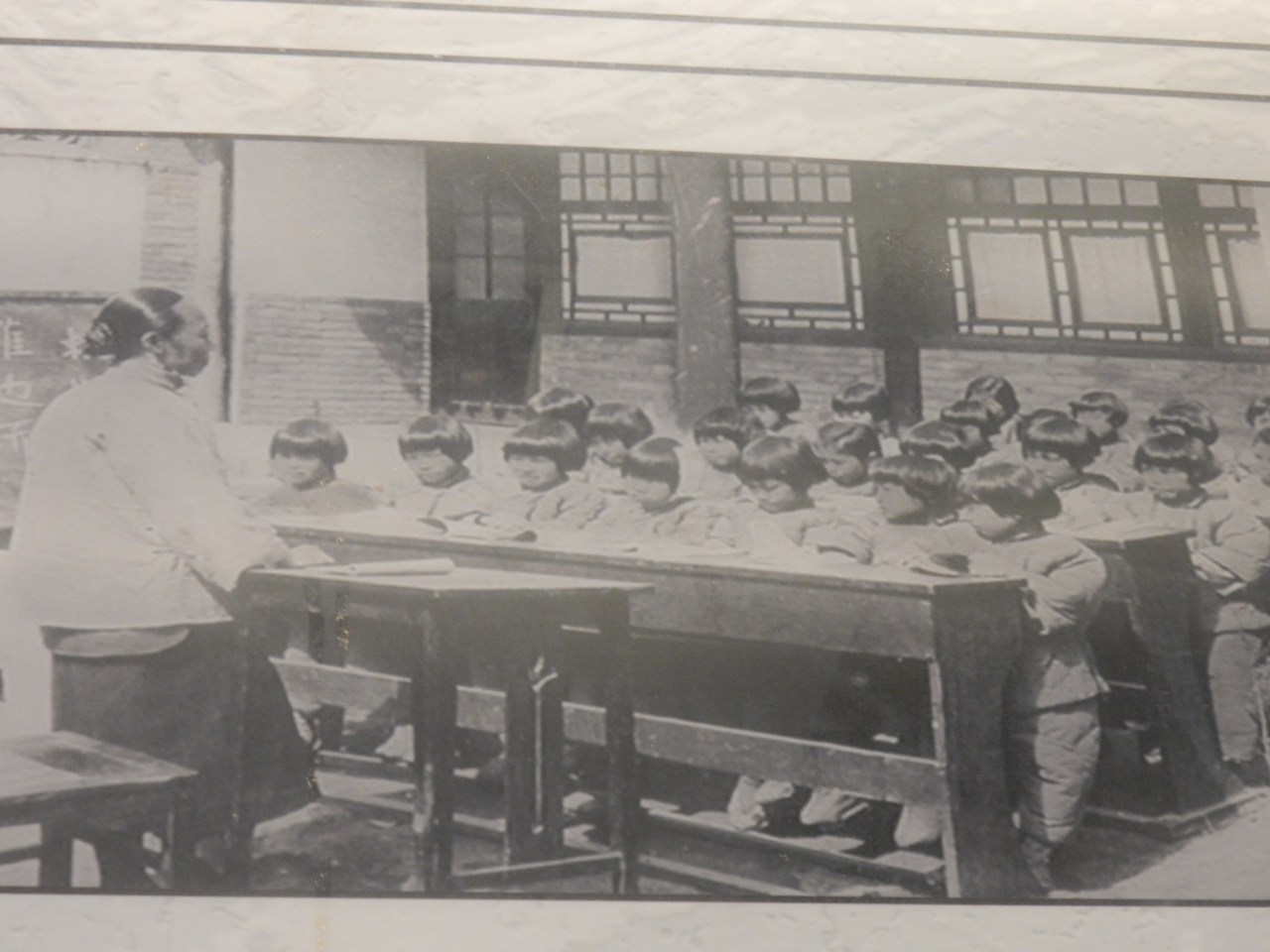
DSCN0866

Traditional elementary classroom in China

“In China,” the vice-president says, “learning is very different than in Canada. It is hard, hard work. It is not fun or enjoyable. Learning is suffering. When our children begin kindergarten, they cry. We know that this must change, but it is part of our culture. The change will not be easy.”

We talk a little more about university students in China. Yue tells us that the students attend class regularly – “they have to, because they live here and they have nothing else to do” – but often fall asleep during lectures. They are expected to give “the right answer,” not engage in problem solving. “We don’t know how to teach here. Nobody ever showed us how. That’s why we need your help.”

We are also curious to learn more about the professors who will attend our classes. They are coming from five universities, including our host institution. “They will be quiet at first. They like to write, not talk. And some of them may not have used the English they learned in school for ten years.” Walter and I exchange glances. It’s a good thing both of us have experience in teaching English as a second language.

Just as the meeting is about to end, the vice president says, “There is one more thing we want to tell you. Our toilets are the kind they have in India. There are no flush toilets anywhere on the campus. You only find those in the hotels. We are sorry.”

As we head towards the van that will take us to dinner, a troop of crisply marching soldiers in green camouflage parallels our walk, heading towards a large open square. Instinctively, I reach for my camera, but something stops me. “Am I allowed to take pictures here?” I asked the vice-president.

“No, you should not take photographs on the campus. The soldiers don’t want to have their pictures taken. And you are a foreigner, so the guards will not know why you are taking the pictures, or what you plan to do with them. Another day, one of us can walk with you and show you what you can photograph.”

As we head off campus, one of the guards near the gate salutes us. We’ve had our introduction to the National University of Defense Technology, but I have the feeling the next four weeks will hold as much learning for us as they do teaching.

DSCN1610

Western gate at the National University of Defense Technology

Recently, I returned from a month-long teaching experience in Changsha, China. The professors in my class were participants in the University of Alberta’s Teaching in English program, a Faculty of Extension citation designed for higher education instructors to enhance their ability to teach their subjects in English. 

Blue sky jet trails

My seat mate on the 11 hour flight from Vancouver to Beijing was returning to China from visiting her daughter in Edmonton. She loved the time she spent in my home city. “I feel very comfortable there. The air so fresh, and I can see a long way.” Her daughter earned a degree in chemistry at the University of Alberta, found a well-paying job, and just bought a house. Her mother was thrilled. “My daughter have a good life in Canada. She is very happy.”

It became clear during the flight that my seat mate was keen to learn more about Canadian culture and to practise her English. I was more than happy to help her out with both. I listened hard to her questions, and tried to give easily understandable answers. When she struggled to tell me about her experiences, I supplied her with the words I thought she needed. When our first meal was served, I watched her peering closely at the all-English label on the container of blueberry yogurt. I was trying to think of a way to explain to her what she was looking at when she ripped off the foil lid and dumped the yogurt on her salad. It must have tasted all right, because she finished it off and scraped the inside of the empty container with her spoon to enjoy the last bits.

On the flight to China, I wasn’t the only one providing language and cultural assistance. My seatmate helped me as I tried to figure out how to operate the inflight entertainment system: she explained the movie selections, laughing loudly to indicate the comedies, and imitating kung-fu moves to show me where I could find the action movies. When she judged that the flight attendant was not relieving me quickly enough of my proffered empty tray, she took it out of my hands and held it for me. Later, when the refreshment cart came by, the flight attendant didn’t offer coffee as a choice. My seat mate followed her down the aisle, and reappeared with cups of coffee for each of us. She replied with a sleepy smile when I had to push past her during the flight, and even asked if I needed help accessing my bag in the overhead bin.

We didn’t interact during the entire flight, though. I had lots of time to begin exploring Chinese culture and expression on my own. The movie choices were a bit surprising, including more golden oldies than I expected: John Wayne and Shirley Temple flicks, The Sound of Music, and Heidi. I also read a copy of the China Daily newspaper. My favorite section was the “Around China” capsule news reports, where I found these culturally divergent stories.

In Longshou County, “a young woman ran naked …to get a free iPhone 6…[after] she made a deal with a WeChat friend….Images of the streaking young woman went viral on the Internet that night, spurring debates about young people’s morals and values.” In Hunan province, where I’m headed, “two men who forced monkeys to perform tricks were expelled from downtown Changsha….A resident called the city’s forestry department after witnessing the two men force four monkeys to perform difficult movements by whipping and intimidating them.”

When the announcement finally came that we were descending into Beijing, my seatmate and I started to pack up our belongings. She reminded me that I had put my coat in a different compartment from my flight bag. I told her to keep on practising her English, and thanked her for her help and conversation.

My official teaching duties don’t begin for several more days, but, as a learner, my education has already started. If I keep my eyes and ears open, I expect I’ll find many more “classrooms” in Changsha in the coming weeks.

"I see joy in this classroom"
Changsha, China

Changsha, China


Celebration time! We’ve worked hard during the last four weeks, and now it’s time to honor our accomplishments.Tonight, our Changsha university is hosting a dinner for all of us – instructor-students, student-instructors, and grad student guides – at an awe-inspiring hotel complex. The architecture is traditional Chinese, and the interior of the restaurant is luxurious.

Once we’re all seated at two huge tables, Dr. Zhang, the university VP, proposes a toast and the food begins to arrive. Dish after dish is served onto the enormous lazy susan at the centre of the table so that we can help ourselves whenever we want. The room begins to buzz with talking and laughter. Throughout the meal, people get up and circulate around the room, chatting in small groups. I’m tapped on the shoulder frequently to join in toasts and pose for pictures.

One of my favorite conversations of the evening is with a student who had surprised me during the first day introductions with his BBC-accented English. He tells me that he appreciated learning new techniques to try with his own students. “But most of all,” he says, “when I get back to my classroom, I’m going to be less authoritarian and more of a friend. That’s important, I think.”

Two hours later, after the food is mostly gone and our wine glasses are empty, we all head back to the hotel. We want to make sure we’re refreshed for the next day’s official graduation ceremony.

In a reprise of our first day with the students, Walter and I are greeted by applause when we walk into the classroom in our graduation day formal attire. And then it’s the students’ turn to be honored, with University of Alberta citation certificates and Canada flag lapel pins. It’s a joyful time, but a sad one too as we realize we’re enjoying our last time together before we say goodbye.

Then, it’s time for the exchange of gifts. Walter presents Dr. Zhang with a U of A golden bear. In return, we’re each given a paper cutting that features the crest of the National University of Defense Technology; two group photographs taken previously in the week; and a generous supply of Hunan tea. We shake hands, and Dr. Zhang turns to the students to give his final address.

“When I visited this classroom,” he says, as the room falls silent, “I saw joy. This has not been the Chinese way in education. So, I want each of you to help your students to enjoy learning in the ways that you have experienced it during this program. This is how we will change what it means to learn in China.”

Dr. Zhang told me during our first meeting that learning in China was more about suffering than enjoyment. Will the professors be able to shift that dynamic when they return to their classrooms? When I go home to Canada, some of my favorite memories will be of the times we learned and laughed together.I can only hope that similar memories will sustain these professors as they push against ancient teaching and learning traditions in the years to come.


To talk of many things
Changsha, China

Changsha, China


“The time has come,” the Walrus said, “to talk of many things,
Of shoes, and ships, and sealing wax, of cabbages and kings,
And why the sea is boiling hot, and whether pigs have wings.”
– Lewis Carroll

* * *
The last course in the Teaching in English program is designed to give students the chance to show off everything they’ve learned in previous weeks of the program by teaching a 20 minute demonstration lesson on a topic of their choice. The professors in my class had been working diligently on their lesson plans for the last two weeks. Some chose to teach a concept from their subject area, while others delved into topics of personal interest.

As a class of 26 instructors, we had been giving our colleagues feedback before, during, and after class, and back at the hotel where we were all living .

As I reviewed the professors’ PowerPoint presentations, speaking notes, handouts, and plans to involve their colleagues in active learning, I knew what a treat of a last week we would enjoy together, sampling a buffet of fascinating topics and learning techniques.

The lesson from the first week of the course, on making lesson content inherently engaging, had not been lost on most of these instructors. The engineers explained the theory behind road width, the pipe roof method of ensuring safety in tunnel excavation, and the difference between ground water and surface water quality. An applied chemist discussed glow sticks.

The computer science people discussed viruses and computer worms. We also learned about the differences between IQ and EQ, the concepts of “paying it back” and “paying it forward,” the benefits of running, and medieval architectural styles, to name only a few lesson topics.

Even more of a thrill for me than the diversity of lesson subjects was the variety of methods the professors used for the direct teaching of content. They connected their topics to learning theories and practices we’d discussed in class. They explained abstract concepts with movie clips from Forrest Gump, Troy, and William and Catherine’s wedding. We listened to the Radetsky March, and a variety of other music.

An applied mathematician demonstrated greatest common divisor using apples and oranges. A computer security professor compared the Trojan Horse virus to the Trojan Horse of Greek mythology. The image selections in their PowerPoints were thoughtful, illuminating, hilarious, and often deeply moving.

And the progress the professors showed in their ability to involve their colleagues in learning activities? Stellar! Many showed significant movement away from ” stand and deliver” lectures; and some displayed complete comfort with their role as the “guide on the side,” keeping their colleagues busy doing rather than listening throughout the full 20 minutes of the lesson.

Individual work was a common initial activity. Some professors asked their colleagues to provide definitions or explanations, then post them for discussion and analysis. Others asked for volunteers to assist them in showing the practical application of concepts.

Group work was a part of other lesson plans. The professors monitored their colleagues as they discussed concepts, and offered individual feedback.

For me , the opportunity to participate as a learner was a rare treat. I sat in on group discussions. I participated in an activity designed to assist us to learn the difference between decimal and binary numbers. Although I failed to accomplish the timed activity (make a number under 31 from the dots displayed on chairs in under 10 seconds), I realized that I might have been more engaged in math if one of my instructors had involved me in this type of activity.

I also learned that my concept of medieval Cathedral architecture was severely messed up. A professor asked us to draw a picture of a cathedral at the beginning of his lesson. Then he taught the lesson and followed up by requiring us to modify our initial drawing, based on what we had learned. My rose window was out of synch with the rest of my Gothic drawing, so I erased it. Then I watched as the other students drew their sketches on the blackboard, and the professor discussed what they had learned.

By the end of the week, we were exhausted but exhilarated by what we’d taught and learned. We finished the demonstration lessons just in time for our end of program party that night, and the upcoming graduation, agreeing that we were all richly deserving of both.


Sages and guides
Changsha, China

Changsha, China

In 976 A.D., Zhang Shi, and Zhu Xi, two leaders of ancient Chinese learning, embarked on a journey up Yuelu Mountain together. When they arrived at the top, they built a platform which they named “Hexi,” which translates as “the splendor of sunrise.” The platform became the foundation for Yuelu Academy, one of four ancient academies of higher learning in China. It accepted students throughout the Song, Yuan, Ming, and Qing dynasties, eventually becoming Hunan University in 1926.

So, on a warm October Saturday, Aaron, Claudia, and I joined thousands of other travellers intent on retracing the footsteps of those ancient academics, to explore the rebuilt grounds and buildings of Yuelu Academy for ourselves. Although hardly a mountain by Canadian standards, it was a healthy trek uphill, its way now lined by restaurants, stores, and trinket booths.

Once we reached the hilltop, the crowds dispersed a little, and we enjoyed the cool, quiet greenery and ponds that surrounded the academy buildings. Happily, the information signs were written in Chinese and English so I could read them for myself. Claudia supplemented my learning by listening in on the Chinese tour guide commentaries, and translating them for me when the group moved on.

Although I learned about many aspects of Yuelu Academy’s history and functions, the lecture hall fascinated me the most. The lecturers would sit on a raised platform. One would write on a board behind their chairs while the other one talked. The students, or disciples as the information boards called them, stood up in the lecture hall, absorbing the words of their teachers. We couldn’t find out how long the lectures lasted, but I’m inclined to think the concept “mini-lesson” hadn’t been invented yet.

One of the reasons that Walter and I were invited to deliver the Teaching in English program here in Changsha was to introduce the professors to alternatives to the lecture method. The vice-president of our inviting university emphasized that the direct transmission of information, intended to be memorized by students in order to pass a test, was not helping China to develop creative thinkers or problem solvers. So, in my classroom, I’ve designed as many activities as possible to help the professors experience some alternatives to the downloads of information via lectures.

So far, they’ve participated in a panel discussion on motivation and engagement in higher education, which they delivered while seated at the front of the room. Many of them said that this was a group work option they hadn’t considered offering to their students.

We also played a learning game called Four Corners to help them consider the advantages and disadvantages of various learning activities. In groups, they walked around the four corners of the classroom and added a pro and a con to each posted sheet, without duplicating what the group ahead of them had said. To add some fun to the game, I said that the last group to add a new comment would “win” that sheet.

They also participated in a “sketch to stretch” activity. I asked the professors to choose one sentence from an eight sentence paragraph that described a theory of how students learn. They sketched their understanding of the words, and I posted the drawings in an “art gallery.” When the gallery opened, they could view all the sketches and ask each other how to interpret the drawings.

Then, one day, a professor asked me two thought-provoking questions. “What is the purpose of student-centred activities? And what is my role as an instructor in a student-centred classroom?”

My visit to Yuelu Academy gave me a different lens through which to consider the question’s answer. The activities I had been asking the professors to consider trying with their students pushed against the cultural mass of more than 1000 years of two Chinese higher education traditions: the teacher as lecturer, and the teacher as the sole expert in the classroom. Were my Western ideas about how student-centred learning occurred too tall an order for the professors to enact when they returned to their universities?

And so we discussed the question from a variety of perspectives over many days. I told them about my visit to Yuelu Academy and what I had learned there. One of the professors said that he too had visited the site: “I like this place very much. It is about Chinese higher education,” But a GIS instructor reminded his colleague that Yuelu tell the story of traditional Chinese higher education, rather than its present state. We discussed the pros and cons of both the lecture method, and interactive methods. Which was better suited to produce the innovative, thoughtful problem-solvers that China needs, now and in the future?

I introduced the professors to the concept of the teacher becoming the “guide on the side” in a student-centred classroom, which meant they would give up at least some of their role as “the sage on the stage.” I also explained that they would be very busy in their new role, setting up a learning environment for the students: choosing engaging materials, arranging discussion groups and other instructional activities to get students thinking, and facilitating these activities rather than lecturing.

The professors considered all these ideas, debated them, tried to figure out how and if to implement them in their daily practice. Ultimately, this decision will be their responsibility. But from what I have heard and understood of their thinking, I believe that there are some Chinese students who will be experiencing some exciting new learning opportunities in the weeks and months to come.


BIg bang!
Changsha, China

Changsha, China


One evening when I’m having dinner with the grad students, Mia and Claudia are badgering Aaron to think through his buddies for possible boyfriend candidates (they are speaking Chinese, but Claudia often remembers to explain to me their general topics of conversation, if not all the details.)

“Aaron is asking what our requirements are,” she grins.

“And what are you telling him?”

“We are saying we want someone tall, rich, and handsome,” she giggles (I guess “dark” is a moot point in China).

As I listen to them chatter and laugh, I’m reminded of early episodes of the Big Bang Theory, so I start to describe the program to them.

“Oh, yes!” say’s Claudia. “We watch that show. Sheldon is very funny.”

(Turns out some of my students are also Big Bang fans. One of the English language teachers told me that It plays here with Chinese subtitles (can you imagine the complexity of that interpreter’s job?))

Once the grad students have exhausted their quest for love conversation, we finish dinner, and head out of the mall towards the river. There is a fireworks display in Changsha every Saturday during the summer and fall, and tonight is the final show of the season. Changsha is internationally famous for its fireworks, exporting them around the world. The city also received the honor of supplying all the big bangs for the Beijing Olympics.

It’s a short but crowded walk to the fireworks viewing area. The six lanes of vehicle traffic between us and the river is at a standstill, so Aaron scampers across and reaches the other side with no problem.

But before Claudia, Mia and I have the chance to move, the traffic begins to flow again. And just as suddenly, fireworks light up the sky. Claudia says, “Come on! The show is starting!”

She grabs hold of my right elbow, and Mia takes my left hand.

“No, wait,” I say, “I don’t think it’s safe to….”

“It’s OK, Pam,” says Mia. “Don’t be scared!”

Before I can resist any further, they’ve steered me halfway across the road. I stand between them, trying to make myself as small as possible, wondering if we’re about to star in a big bang episode of our own. The traffic is whizzing within inches of us on either side. Finally, a monstrous bus pulls up directly in front of us and stops, blocking our view of the fireworks and our path to the curb.

“This way!” Claudia yells over her shoulder, finding a small gap between the back of the bus and the bumper of the BMW behind it. .

“There!” says Mia as we reach the sidewalk. “Now you are safe.”

I exhale, and we plunge into the crowd. Aaron takes my backpack, and the three of them wiggle me into the best viewing position, closing ranks behind me.

What a show! Fireworks explode in a massive bank of crimson, silver, gold and pink. The sky is a gallery of waterfalls, hairy spiders, spinning wheels, sun sparkles on snow. The colors arch, and zip, and gyrate. And just when I think the spectacle can’t go on much longer, another burst rockets into the darkness.

Twenty minutes later, we cheer the finale. All of us are grinning, wide-eyed, delighted children as we make our way back through the crowd of balloon hawkers, trinket salesmen and couples waltzing to music blaring from a loudspeaker.

Aaron spots an empty taxi, and we pile in. Claudia videoed the entire fireworks display, so she and I relive the show while Mia and Aaron flip through their cell phones and talk across the back seat.

“We are already planning what to do next weekend!” Mia says.

I can hardly wait.


Hallowe'en Treats
Changsha, China

Changsha, China


“You celebrate Hallowe’en in Changsha?” I asked Claudia last weekend, my attention attracted by an advertisement at the bottom of an escalator in a downtown mall.

“Yes!” she said, scanning the ad’s QR code with her phone, and peering at the results. “And there are going to be some activities. Do you want to go?”

Does a ghost say boo?

So, on Friday night, Claudia, Aaron, Mia and I (without hard-working Eric, who is completing his master’s thesis) caught a taxi downtown, ready to join in the fun. As with all of our nights out together, our first order of business was to find a good place for dinner (accompanying Walter and me around town gets the grad students away from the canteen monotony at the university, so they always choose an interesting restaurant where they can order a lot of food for us to share ).

Tonight, they’re attracted by a come-on troupe of Hallowe’en costumed singers and dancers outside a fish and seafood place in Changsha’s largest mall . No sooner had we ordered than the troupe began to visit individual tables, serenading people with their choice of song. The couple next to us requested “something Spanish” and was rewarded with “Bessame Mucho.” When the performers came to our table, I asked for anything by a Canadian singer. The troupe members consulted each other and gave me Shania Twain’s “Still The One.” As I sang along with them (“You’re still the one that I love/The only one I dream of”), I got tears in my eyes as I thought of home and love and Canada.

After dinner, the grad students considered what we should do next. “Do you like karaoke, Pam?” Well, sure, why not. I’m envisioning going to a bar to sing off-key in front of a crowd of strangers. But when we arrived at a place called the Happy Puppy, Aaron collected two microphones at a pay booth and led us down a hallway flashing with neon lights. This didn’t look like any bar I’d ever been to.

The students ushered me inside an empty room equipped with a computer input terminal on the wall, two large screens, a roomy, booth-style table, and a raised platform in the corner with a stool and a microphone. “We’re having our own private karaoke party,” Claudia announced. The four of us got busy flipping through the names of Chinese and English pop singers, old and new, choosing the songs we’d present to each other during the next hour.

Mia warbled Avril Lavigne and went “Crazier, Crazier” for Taylor Swift. Aaron and Claudia chose Chinese singers, some of whom they knew from “The Voice of China,” the equivalent of American Idol.

I introduced them to Abba’s “Dancing Queen,” Elton John’s “Crocodile Rock,” Shania Twain’s “That Don’t Impress Me Much,” and even Ann Murray’s “Can I Have This Dance?” We all sang along with the lyrics we knew, and I found the rhythm if not the words in the Chinese tunes.

By the time we finished, it was only 9:00, too early for the evening to end. We wandered around the mall for a while, which was alive with people of all ages, clearly enjoying themselves and the evening.

Finally, and unexpectedly for me, we ended up at the entrance to a wax museum. The grad students consulted each other briefly in Chinese “Come on!” said Mia, using one of her favorite English expressions. “Let’s GO!!!”

Cameras and cell phones at the ready, we started our journey through celebrity land, posing and posing again and giggling at the photos we snapped of each other .

After our visit to the wax museum, we thought we would still have enough time to wander around on the outside sidewalks to see people in costume. But it was pouring rain, so we abandoned that plan and flagged down a taxi to take us home, Squashed into the back seat between Mia and Claudia, I realized I hadn’t experienced that much silly fun on Hallowe’en for a very long time. What would be my fondest memory? Our dinner together? The karaoke warbling? The goofy shots with wax celebs?

I recalled a comment that Eric made on my first Saturday in Changsha when he and Aaron came to my hotel room to get my computer up and running. Even then, well before we really knew each other, we chatted amiably. When they were ready to leave, Eric said, “I liked talking to you. It was a good chance to….” He paused and searched for the words.

“Practise your English?” Aaron offered.

“No,” Eric said. “Make a connection. That’s important, I think.”

Exactly.


You've never seen the likes of me before,have you?
Changsha, China

Changsha, China


On any sidewalk in North America, a blonde, 5’6″, middle-aged woman, and a 6′ 2″ man with a grey moustache, attract very little attention from passersby. We not only blend in – we’re mostly invisible. But here in Changsha, where few foreigners visit, Walter and I have become minor celebrities.

The first time we became aware of our heightened profile, we were sitting on the deck of the Roti Princess, a little local eatery that makes a pretty decent cappuccino. It was shortly after 12 noon, and many children from a nearby elementary school were going home for lunch. We noticed a pack of little boys approach the restaurant, then stop, look at us and point, speaking to each other in excited Chinese. They began to giggle behind their hands and, like a litter of romping puppies, pushed and shoved each other up the steps towards us. Finally, the tallest of the bunch came a little closer and said to me, “Hello. What – is – your – name?”

I introduced myself and Walter, and asked for the boy’s name. Then I said, “How old are you?”

The boy paused, and his forehead furrowed slightly as he accessed his elementary school English lessons. “I am – ten – years old.”

Our conversation produced shrieks of laughter from the little leader’s friends. After this short exchange, the group decided it had experienced enough bravery for one day, and toppled back down the stairs and onto the sidewalk, looking back at us as they disappeared around the corner.

Several days later, Aaron and Mia, two of our grad student guides, were touring us through downtown Changsha. Twice, Aaron was approached by 20-something-year old strangers, who put a cameras in his hands and said they wanted him to take a picture of them posing with us. The same thing happened with a young waitress in a restaurant last week. I’m sure our smiles in those photos looked as bemused as we felt.

But my favorite experiences have been with the mothers and grandmothers of Changsha’s youngest residents. All I have to do is smile in the direction of a toddler, and the child is urged to “Say hello! Say hello!” They never do, looking back at me with puzzled, serious eyes.

These interactions always make me think of the scene in the Alastair Sim version of A Christmas Carol, when Scrooge discovers the ghost of Christmas present sitting in his drawing room. The enormous, bearded spirit booms, “Come in! Come in and know me better, man! You’ve never seen the likes of me before, have you?” Scrooge cowers, and admits he hasn’t. I imagine the residents of Changsha view Walter and I with a similar mix of curiosity and maybe even a little fear. I can only hope that our smiles and our attempts at conversation trump the strangeness of our appearance, and leave a more lasting impression.