Wise Woman Travel

Exploring the world from a female perspective

All right, everyone. Fingers on your buzzers. It’s quiz time.

In which country did the tango originate?

If you said “Argentina,” you’re only half right. For full points, you’d need to answer “Argentina and Uruguay.” The two countries used to squabble over where it developed, but, in 2009, they applied together to UNESCO to have the dance added to the “intangible cultural heritage of humanity” list.

To make the history of tango more tangible to tourists, Montevideo built a tiny  museum on the site of the dance club where La Cumparsita, the classic tango tune, was debuted in 1917  (if you think you don’t  know La Cumparsita, you actually do: give it a listen on this turn of the century player, located at the museum.)

The tango overcame its early associations with the sexuality of the lower classes to become a sophisticated, elegant dance popular around the world, and often lampooned. We saw videos at the museum of Japanese and Chinese tango dancers, and even an old Tom and Jerry cartoon in which Tom tangoes unwillingly with the dog who had been pursuing him.

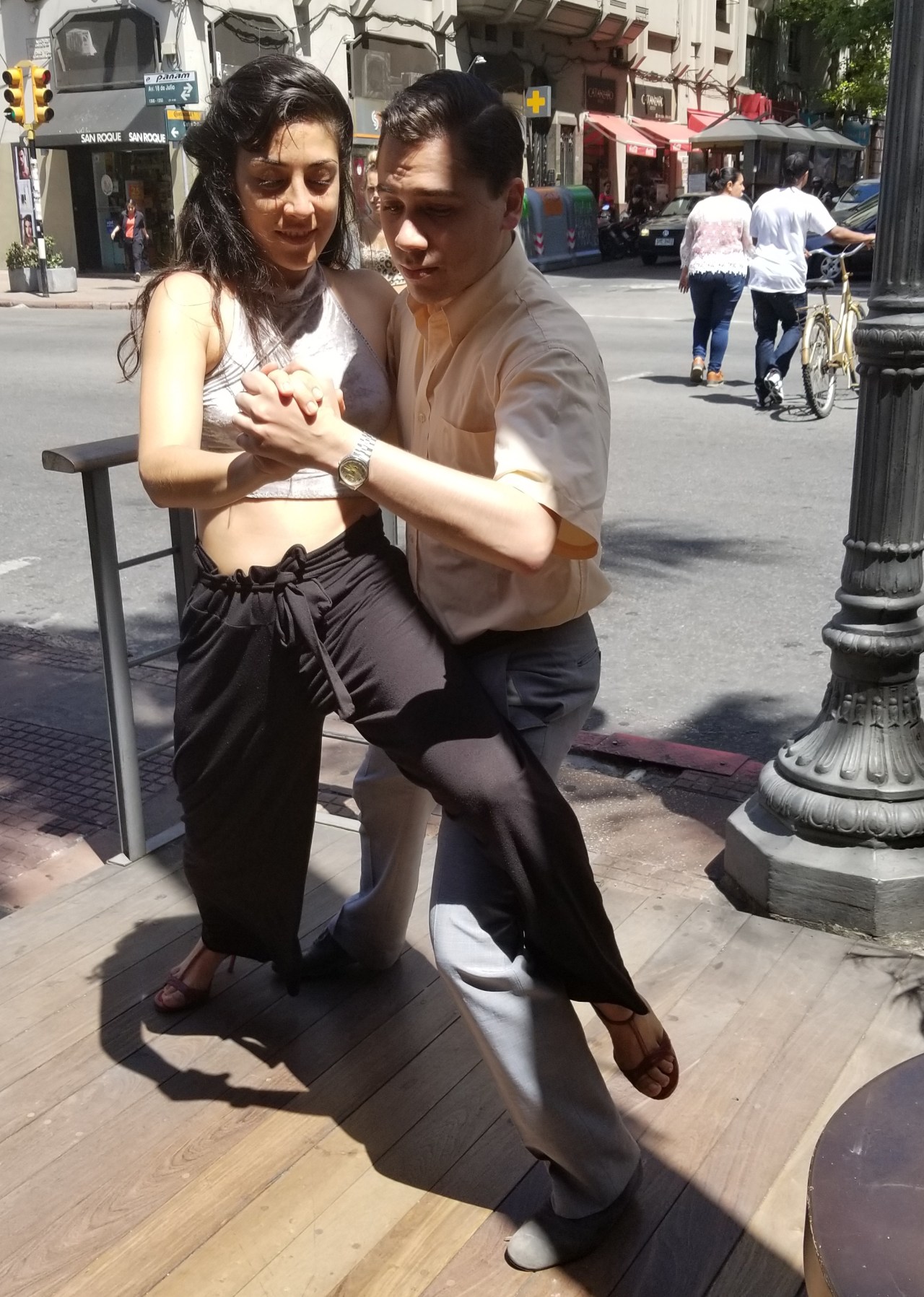
Several days after our museum experience, we snagged a lunch table outside a busy downtown restaurant called Bar Facal. Established in 1882, it is the oldest bar in downtown Montevideo. As we waited for our lunch to arrive, a young woman joined a young man at the table across from ours and began to change from runners into red spike heels. I assumed she was arriving to start her shift as a server.

But then, the couple got to their feet, a recorded accordion and violin tune began to play, and they tangoed: wow, did they tango.

When the performance was done, the woman asked where we were from. She’d noticed us taking pictures while most other people passed by with hardly a glance. “Uruguayans don’t appreciate tango because they’re used to it. After I graduate from the National Dance School, I’m going to France.”

I suppose it’s natural not to value traditions that are so tightly woven into your national fabric, you don’t even notice them anymore. So I’m glad that the tango is forever protected on the UNESCO heritage list and that two young dancers are keeping it alive on the streets of Montevideo for those of us who still admire its exotic performance.
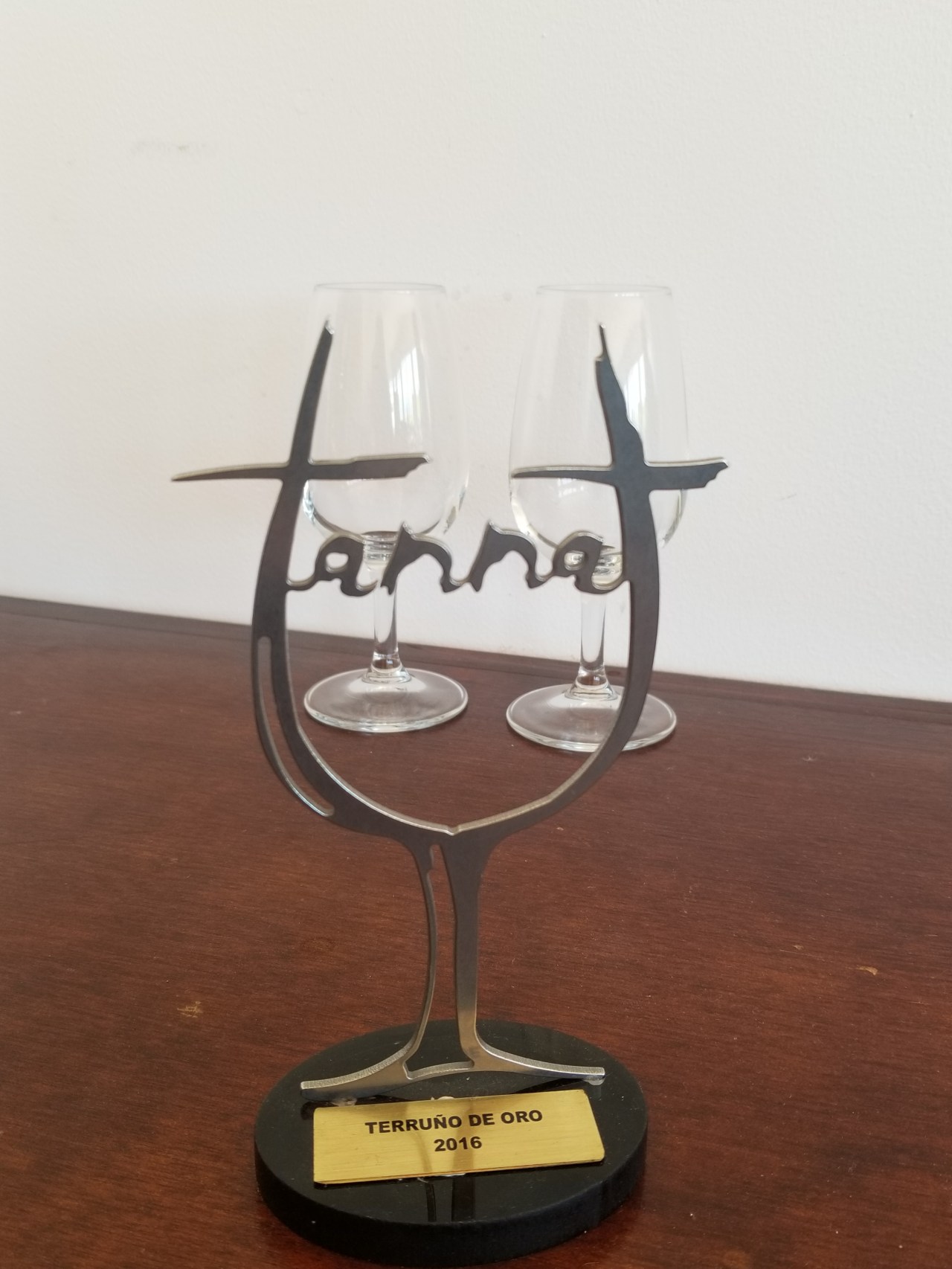
If you love to drink South American red wine, there’s a very good chance you’ve quaffed a Malbec from Argentina, or a Chilean Cabernet. But Uruguay’s claim to grape fame- the big, bold tannat – may not have arrived in a wine glass near you, especially if you’re Canadian.

Part of that is because of the federal government’s tightly controlled process for bringing wines across the border into Canada. Part of it is due to Uruguay’ s less well-known presence as a wine producer, as compared to its famous South American neighbors. So when we had the chance to find out more about Uruguayan wine on a private tour, we jumped at the opportunity.

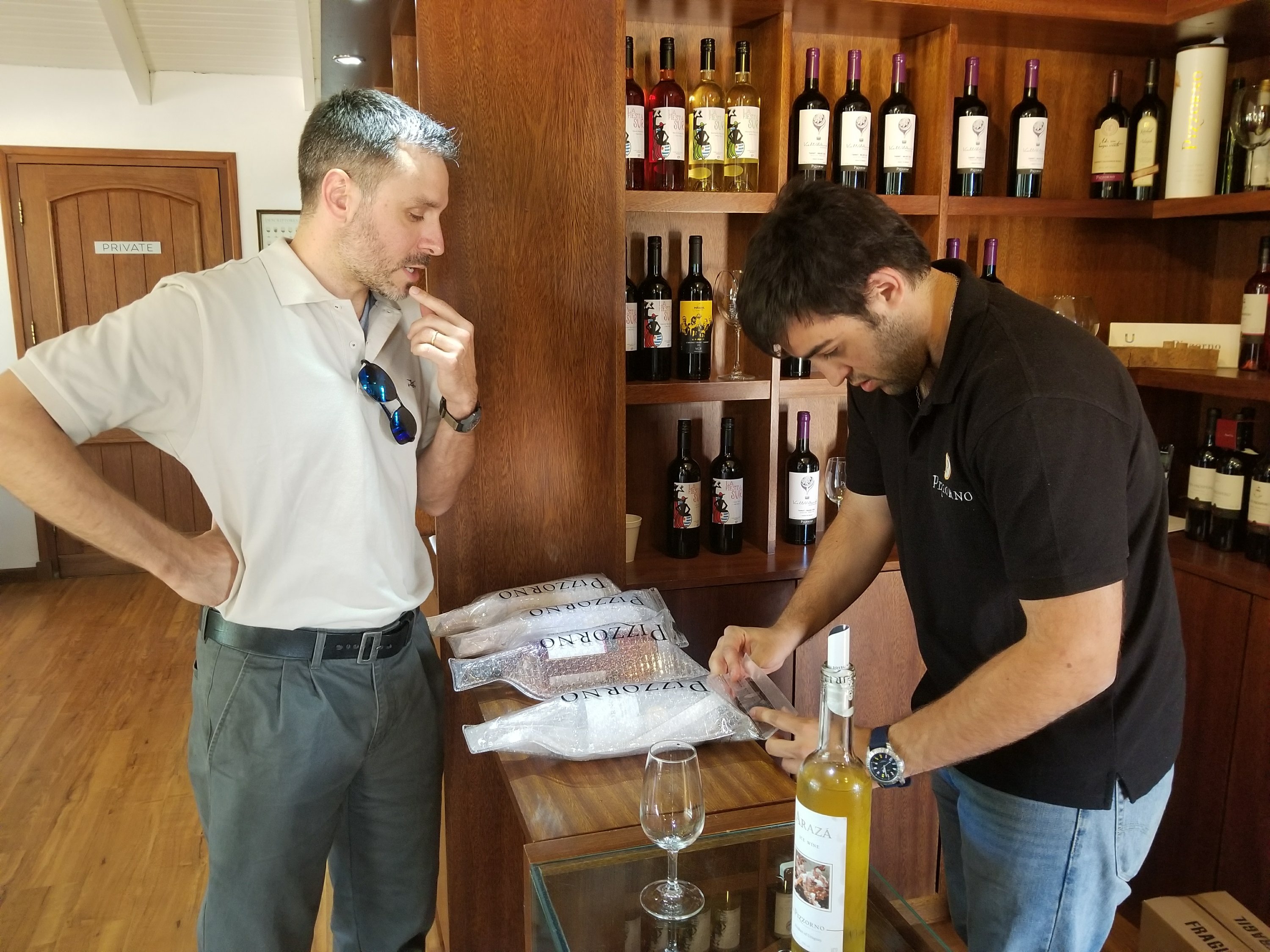
On a recommendation from Guru’guay, the cleverly named and informative website about all things Uruguayan, we booked with Borravino Wine Tours, owned by Damien Pinon, an expat Argentinean, wine enthusiast, and soon-to-be wine exporter.  He picked us up at our hotel and whisked us north to Pizzorno Family Estates , a winery on the border of Montevideo and Canelones. There we were introduced to Francisco, great grandson of the winery’s founder, who would give us a tannat education.

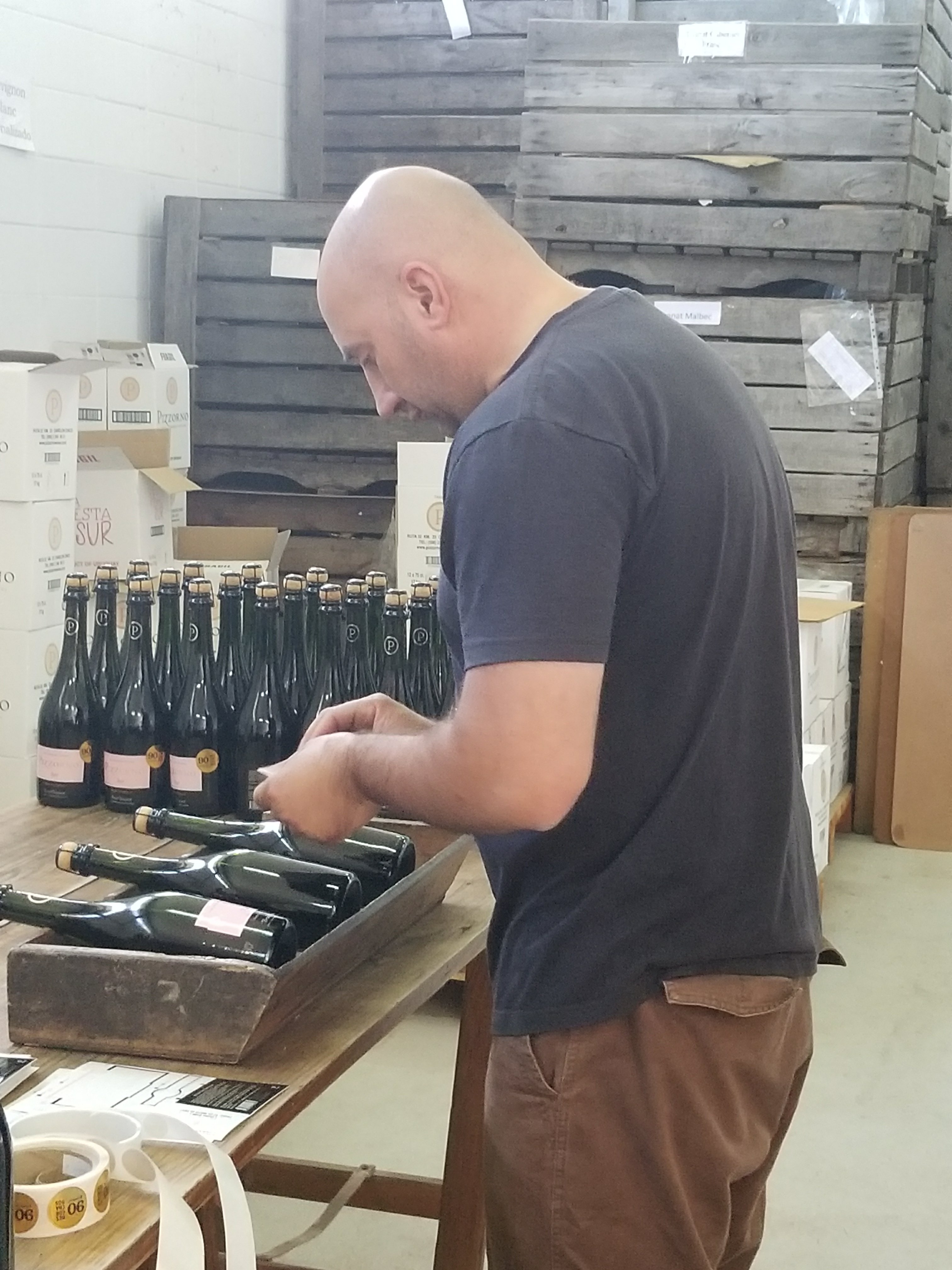
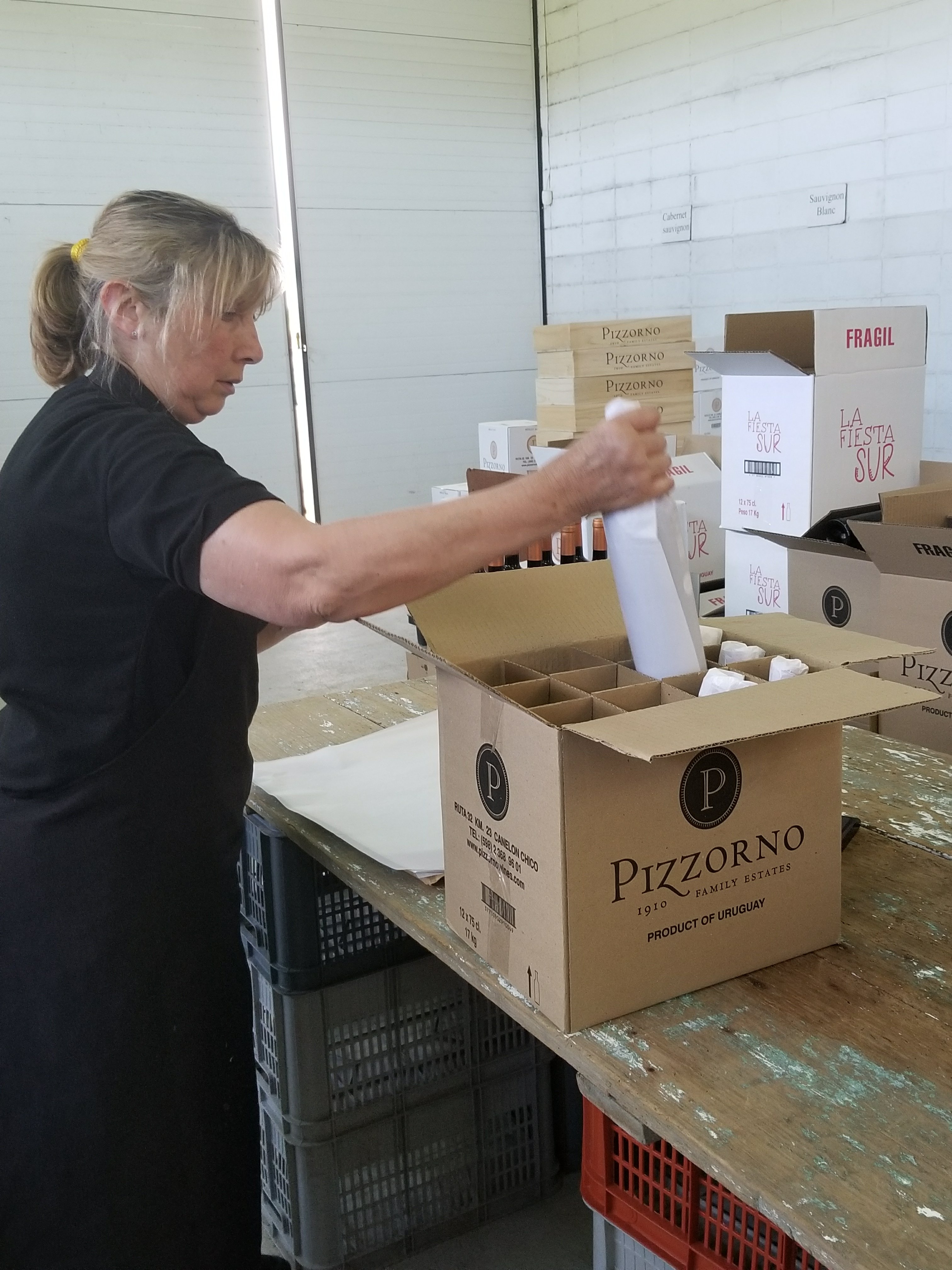
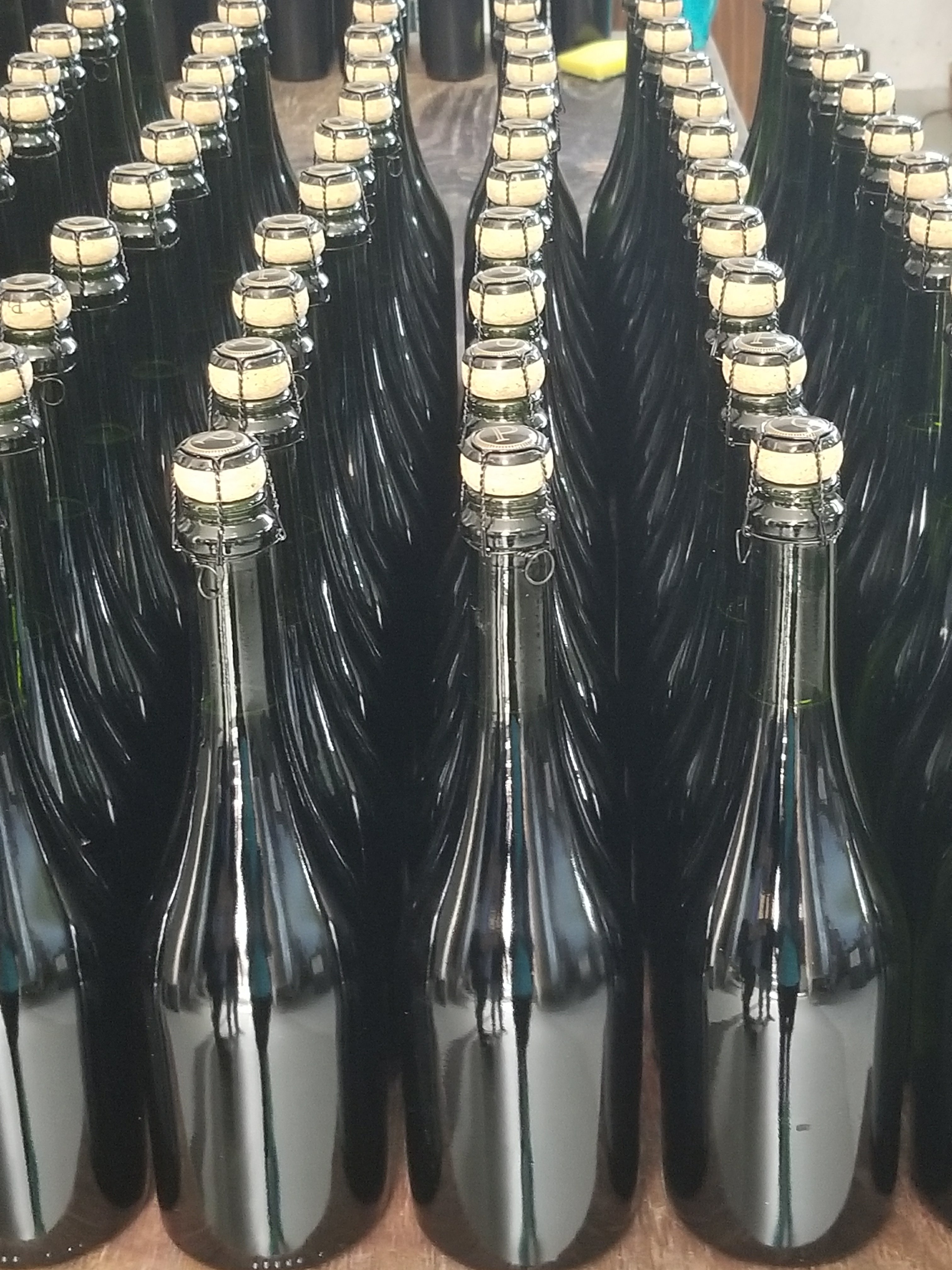
The earthy smell of fermenting grapes filled our noses as we looked around the production area of the winery. Pizzorno is small, producing only 200000 bottles annually, but the upcoming holiday seasons (summer and Christmas) meant the bottling area was particularly busy. 

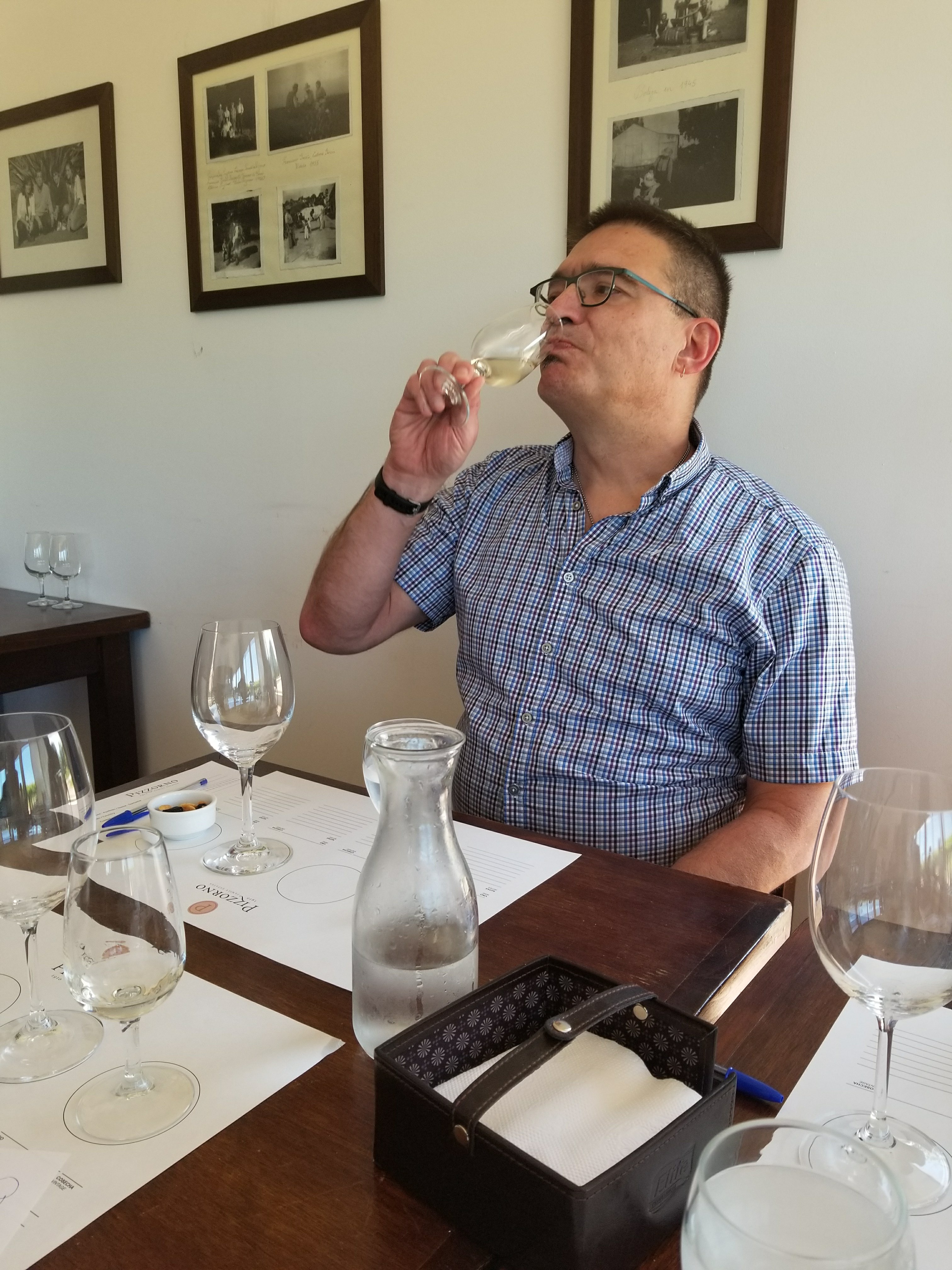
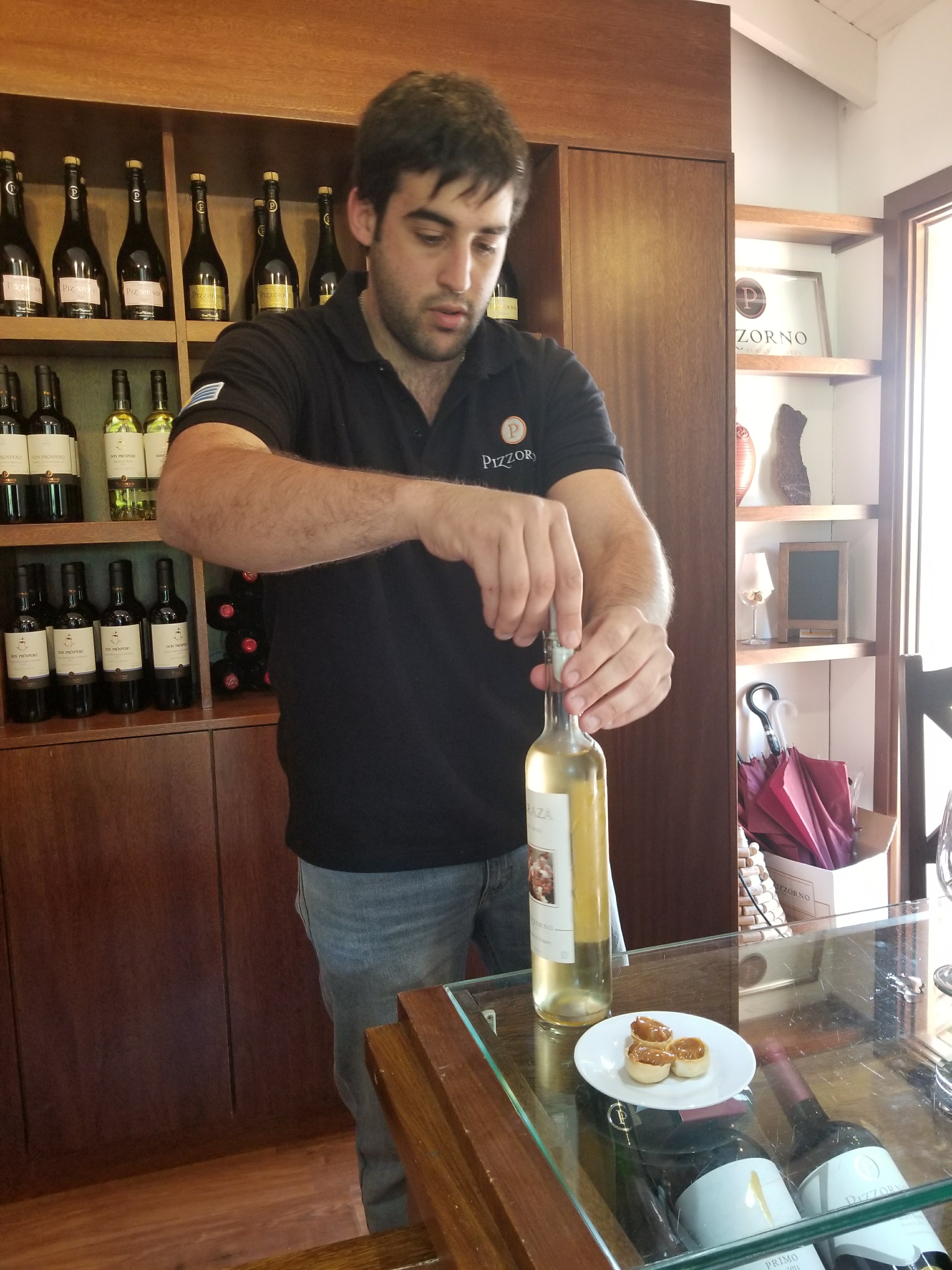
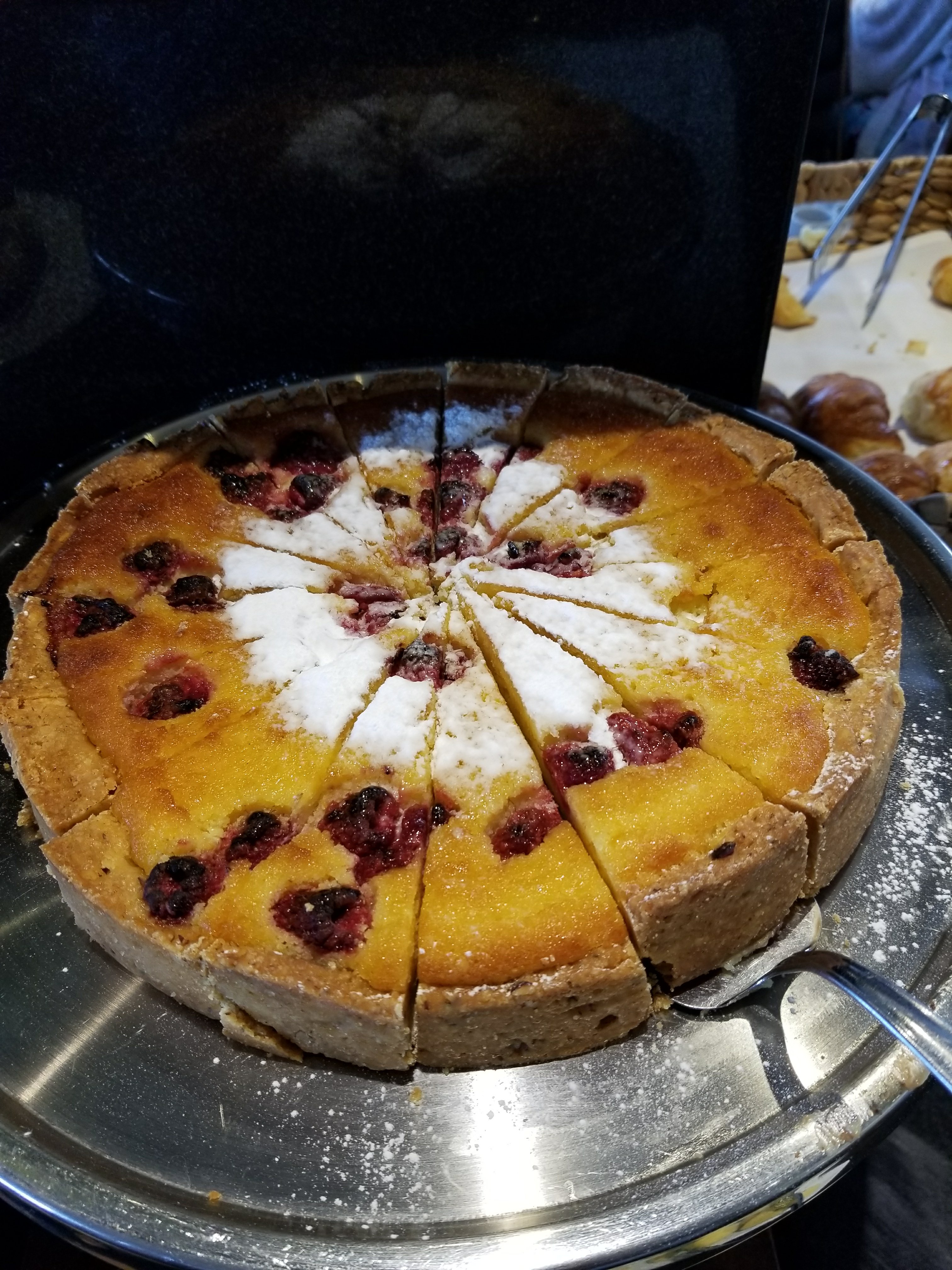
Back upstairs, we were ready to get busy ourselves with some serious tasting. We sampled six wines, ranging from a Sauvignon Blanc to straight up tannats to tannat blends. We ate palate-cleansing empanadas in between our samples and a dulce de leche tart to show off the changing character of an ice wine (made in a freezer because it never gets cold enough in Uruguay for nature to do the job).Eventually, Francisco packed up four bottles for us to bring back home.

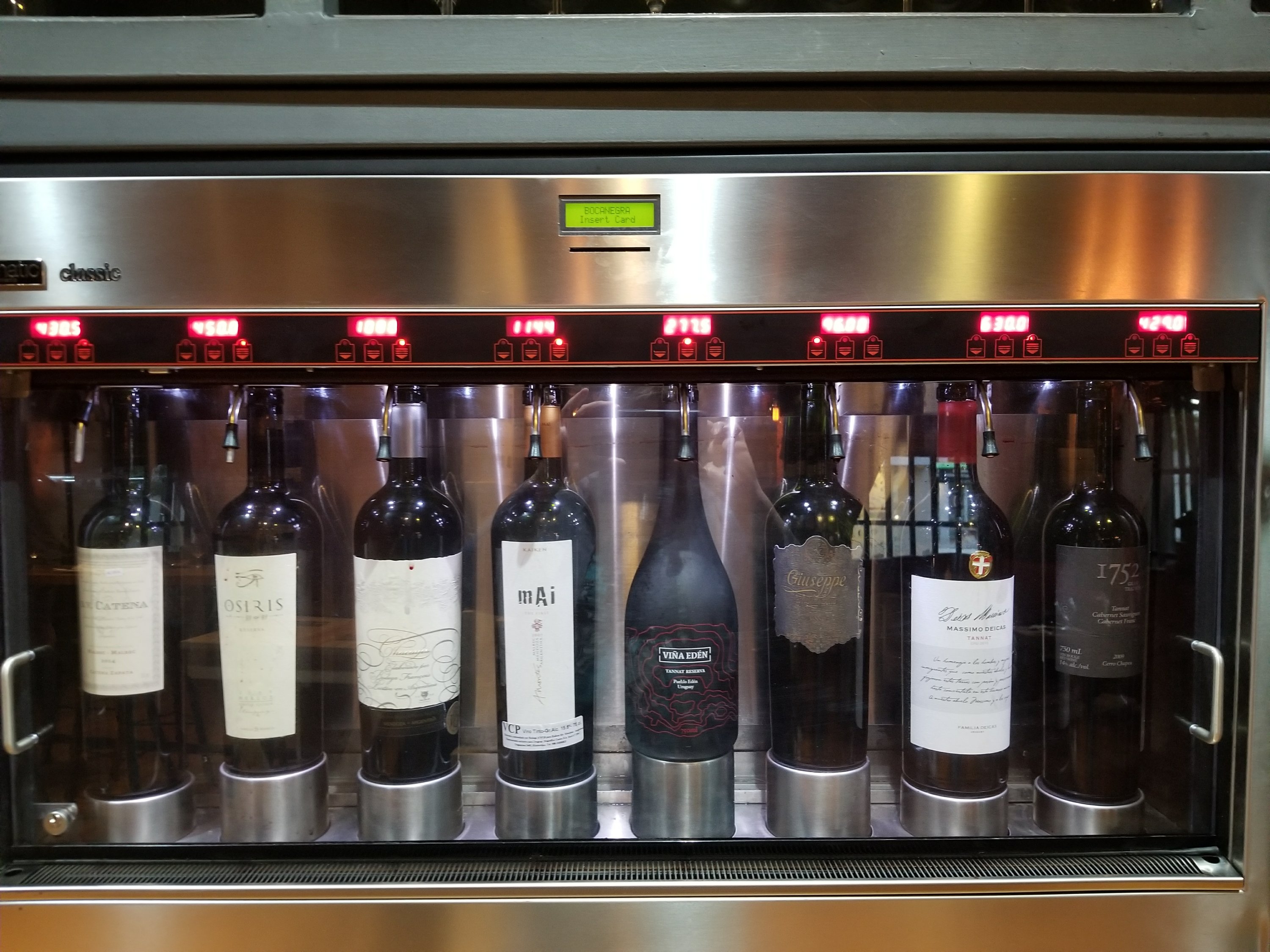
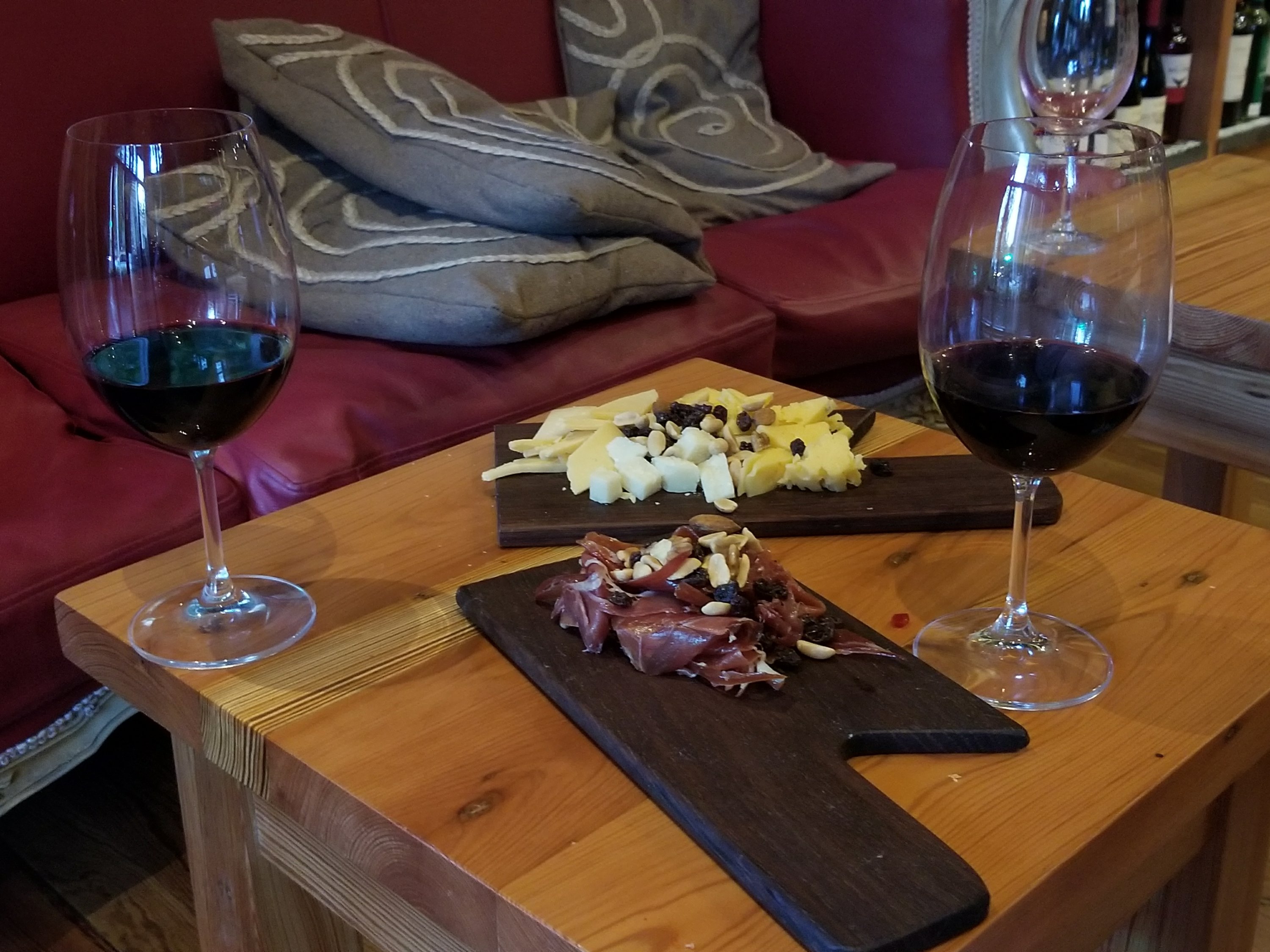
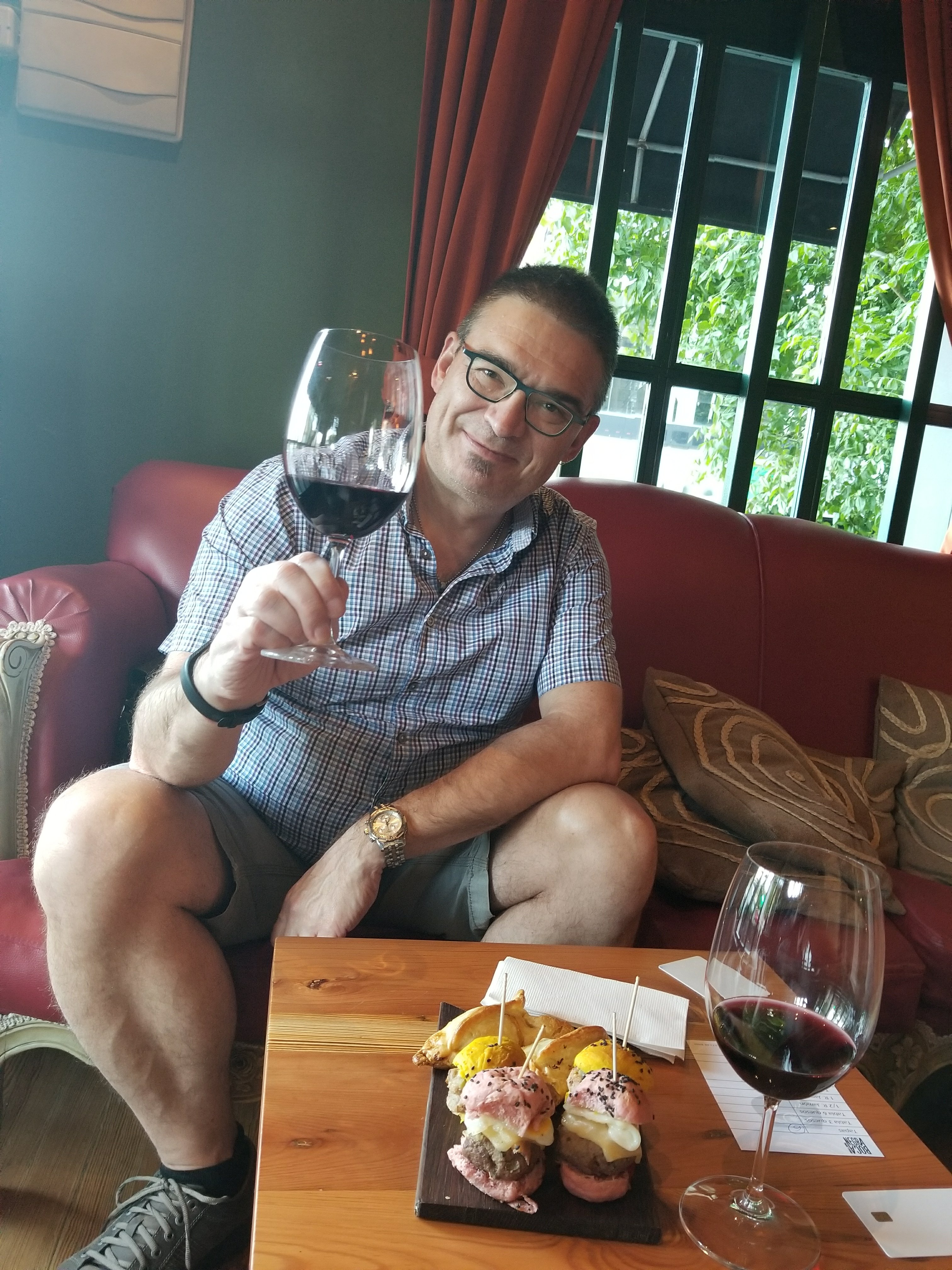
On the way back to the hotel, Damien suggested a wine bar where we could sample more of Uruguay’s best wines-Boca Negra Vinos y Tapas. We loved their totally cool, self-dispensing sampling system (kind of like an ATM for wine, complete with client card) and their homemade tapas. Doing our part to support local business and industry had never been so much fun.


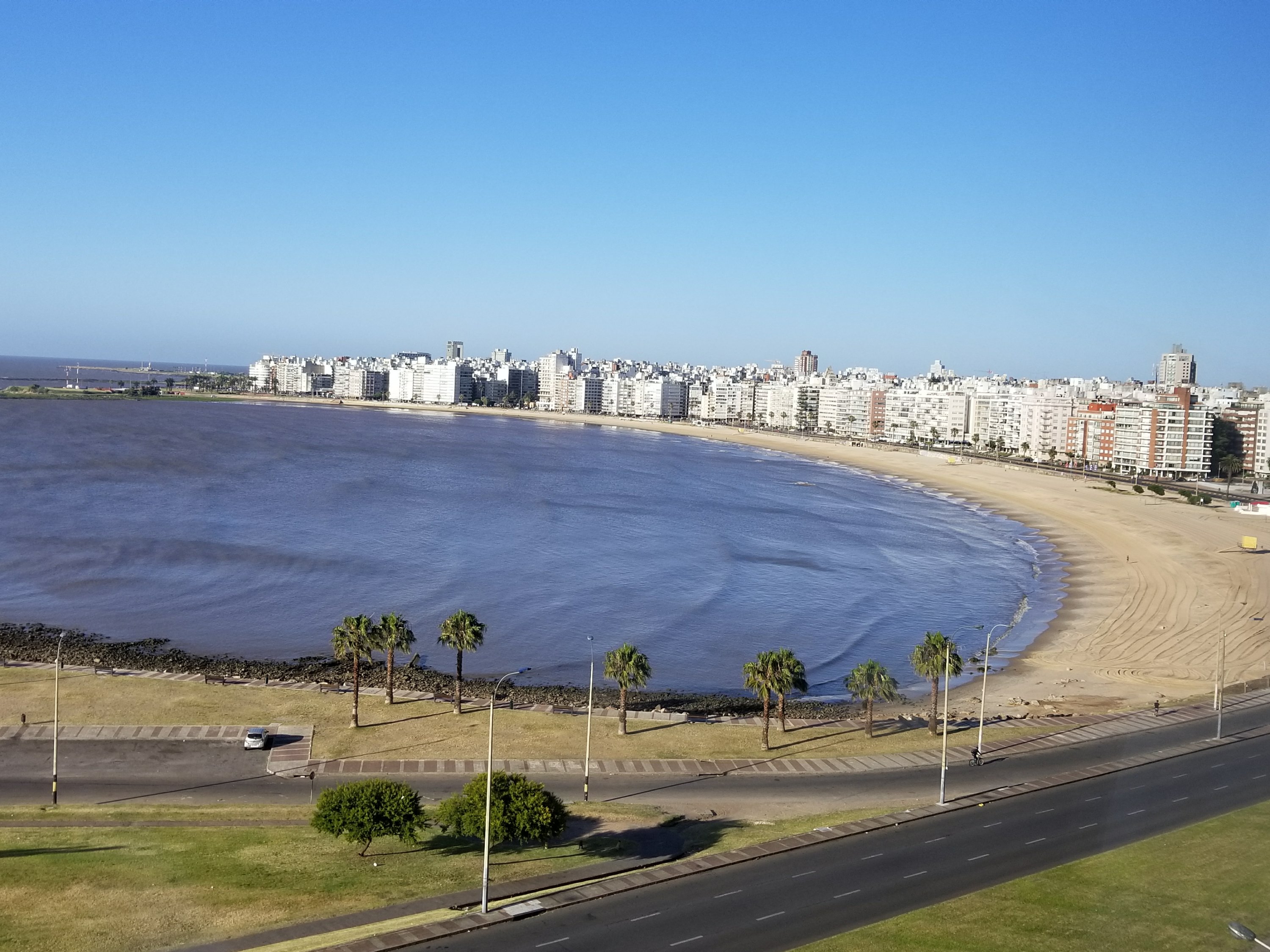
Maybe it’s because I come from a landlocked Canadian province. Maybe it’s  the rhythm of the waves, their constancy reminding me that while most things change, some things never do. Maybe it’s the Montevideans, who, like me, can’t get enough of walking by, playing near, or gazing out at the shoreline. But whatever it is, I’ve loved my two weeks of living by the water in Montevideo.
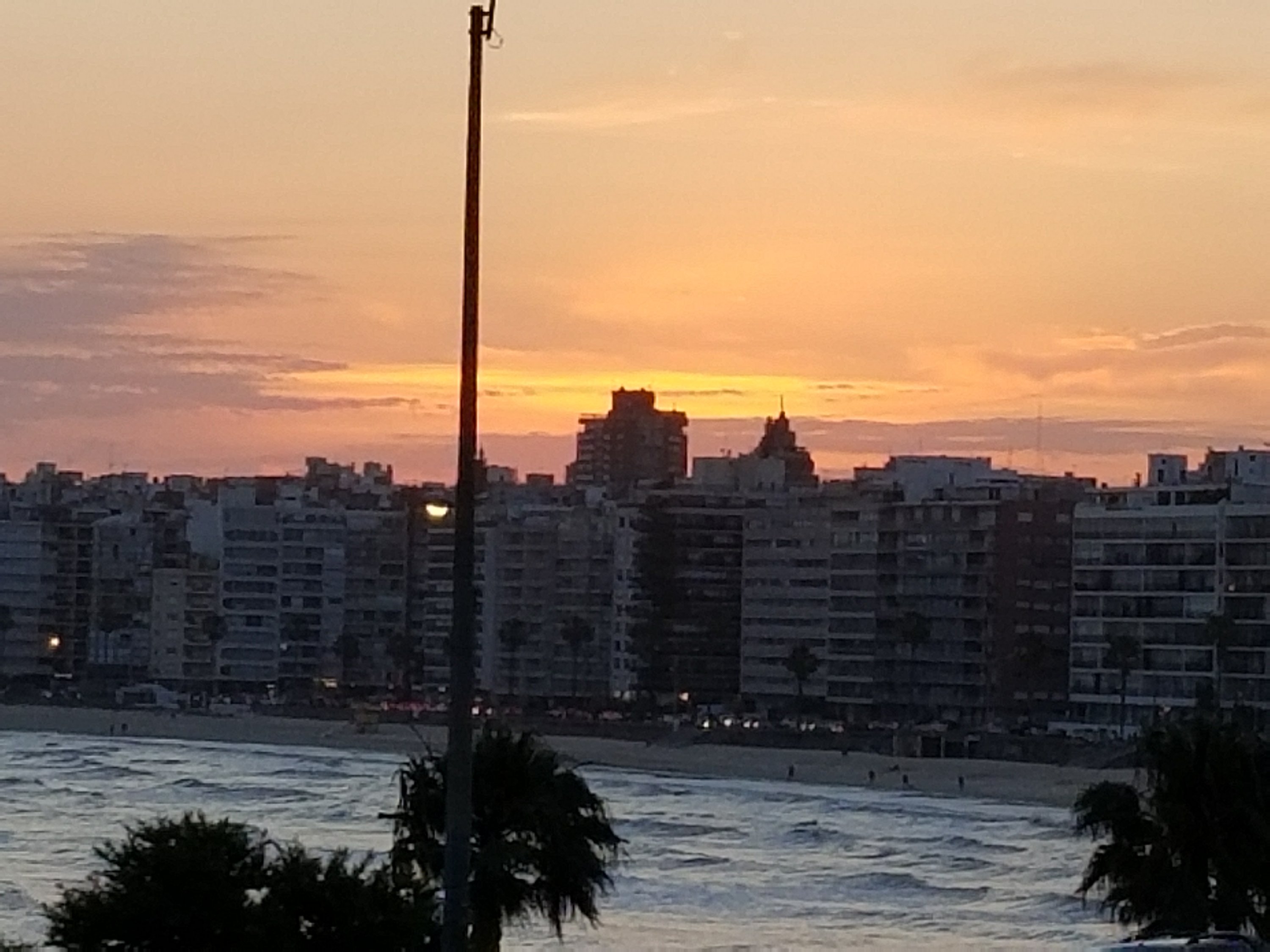
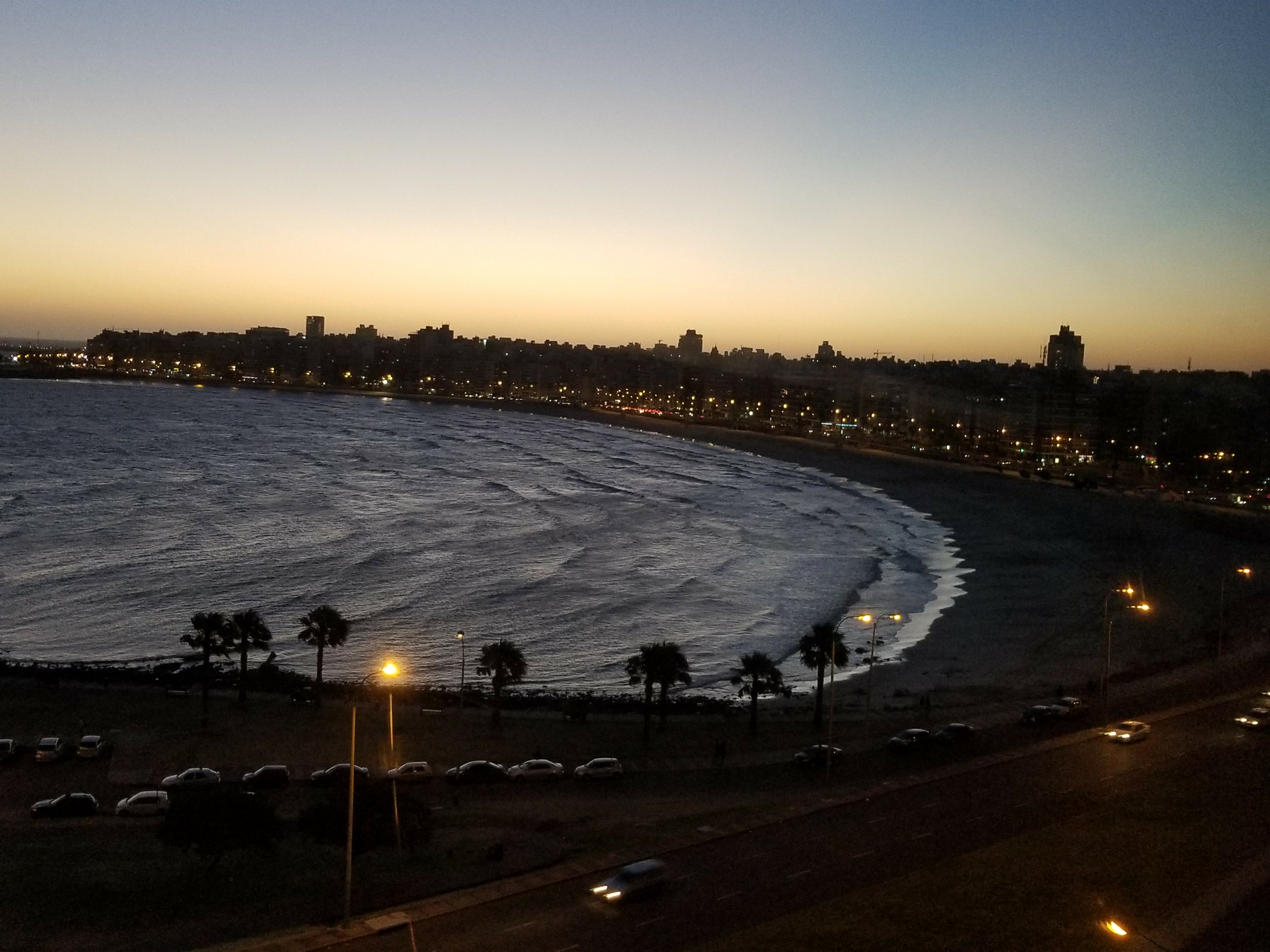
The changing colors of surf and sky have mesmerized me at all hours of the day and night.

I’ve stared out the back of an Uber, packed up against colleagues on our way to a business meeting, wishing I were one of the photographers braving the spray of waves jumping over the breakwater on a windy morning. After the meeting, I’ve tramped along the sand, that same wind roaring in my ears, and wondered what it would be like to have an ocean to wander beside every day after work.

And then, I found out that the ocean I’ve been sighing over isn’t an ocean at all: it’s La Rio de la Plata, the silver river, and the widest in the world, 222 km at its mouth. It forms part of the natural border between Buenos Aires to Montevideo, where it provides a deep harbor for cruise ships and the freighters I’ve seen riding at anchor on the horizon.

Montevideans say that while Buenos Aires turned its back on the river, they preferred to face it. This is one Canadian who’s glad they did.

As a woman of mostly British heritage, drinking tea has been part of my life since I was a little girl.

My mom never strayed too far from Red Rose, and it was more often an after dinner drink than a mid-afternoon refreshment. But as I grew up, I experienced a wide variety of teas at different times in different places- the Empress Hotel,  in Victoria, BC; the MacDonald Hotel, in Edmonton, Alberta; with my friend Claire, in and around Hebden Bridge, UK; and last summer, with a tea ceremony master in Wakayama, Japan. 

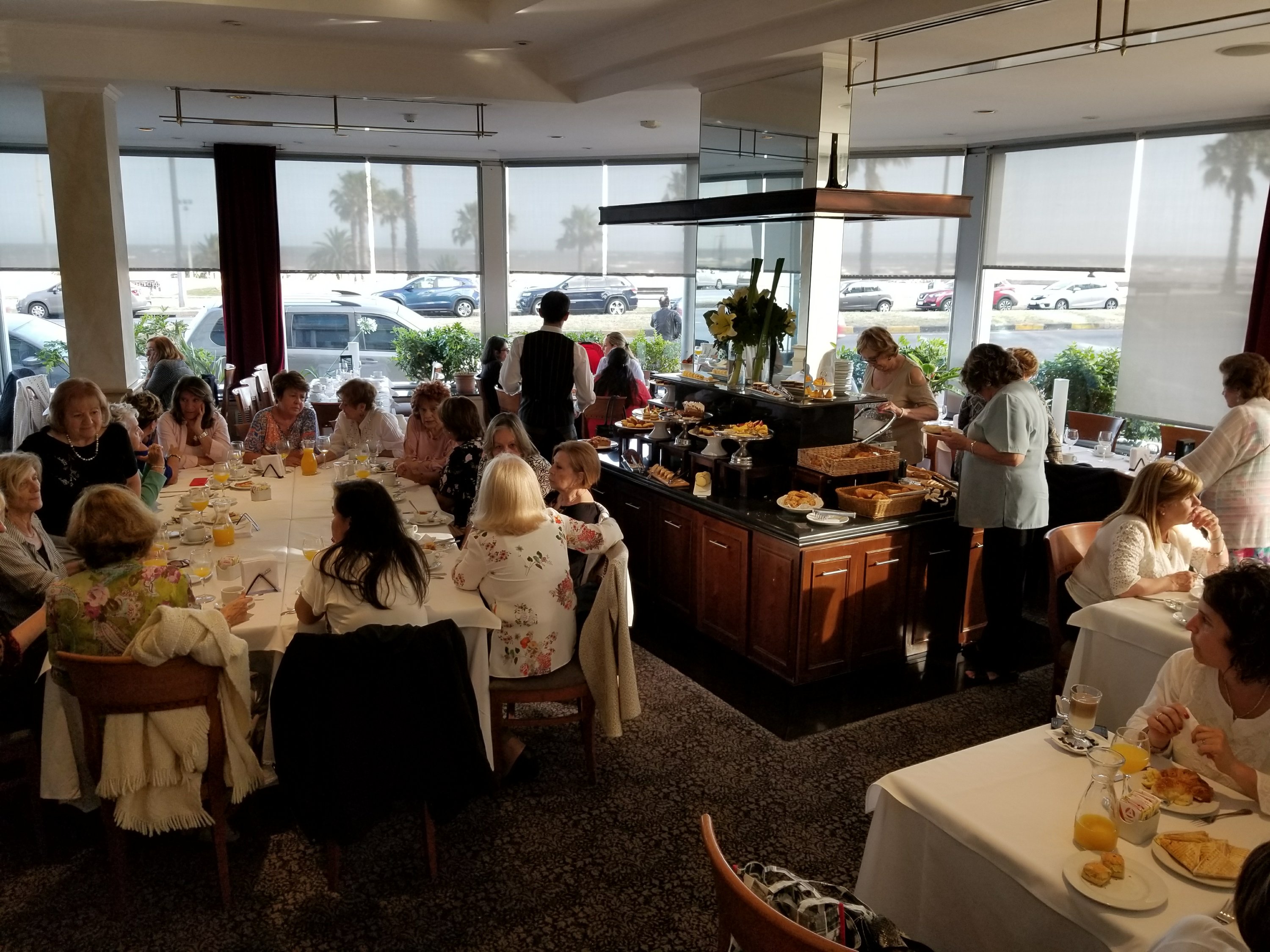
So, when I found out that my Montevideo hotel, Cala di Volpe, offered a tea saloon (I  assumed an “o” had snuck in during the English translation), I was happy to give it a try. High tea fits right in with the Uruguayan tradition of noshing in the late afternoon because dinner won’t be until around 10. So ten minutes after its 5:00 start, I went downstairs to find a table. 

The dining room was already alive with the energy of women’s voices and laughter. The dining room host pointed out two tables for two where I  could sit – having tea here, like most activities, is clearly a collective experience. 

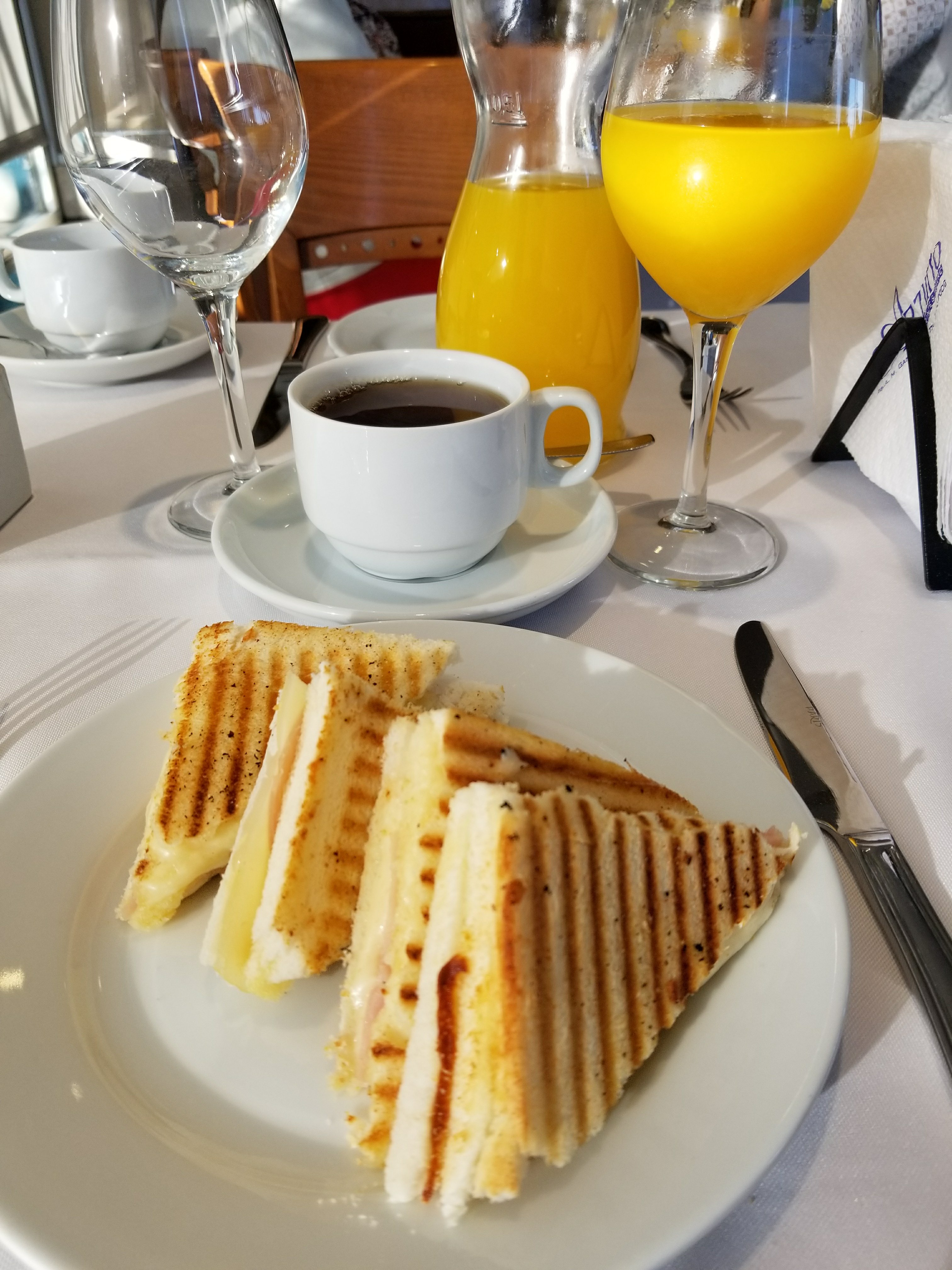
The waiter quickly arrived at my table. “Would you like orange juice and a toasted ham and cheese sandwich to start?”

Um- si?

“Coffee or tea?”

Um- tea?

He brandished a glass coffee pot in which the tea had already been brewed- no personal pot or choice of teas in a fancy box. 

” Help yourself to the buffet as you wish.” 

I ate my toasted sandwich while the cheese was still hot, then browsed what else was on offer: Egg salad on white, salmon and cream cheese on brown mini torpedoes , salami on rosemary buns.

But it’s clear who the stars of this tea service were. While the little sandwiches occupied a small corner of the buffet, the desserts took up both ends and the entire other side.

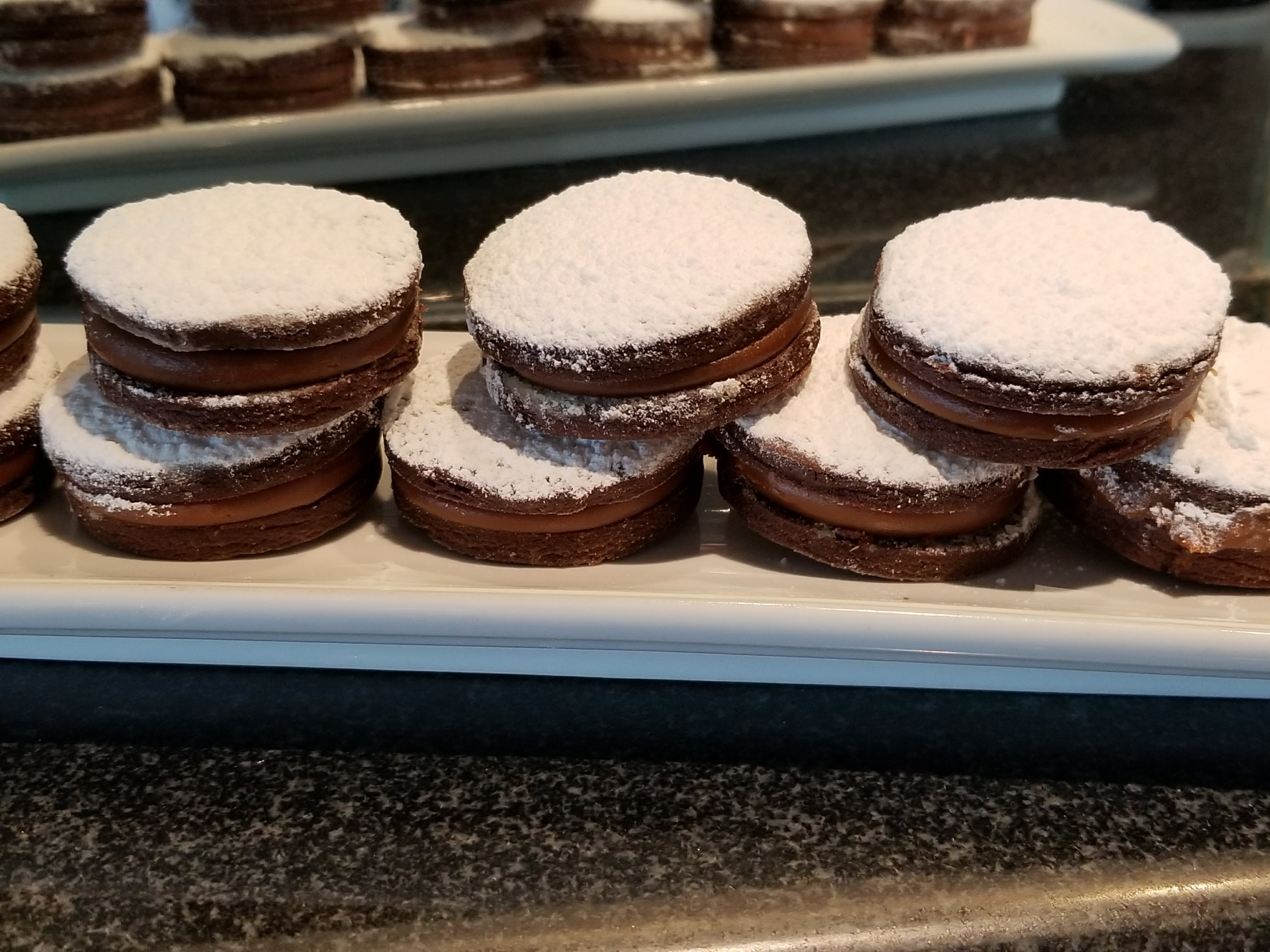
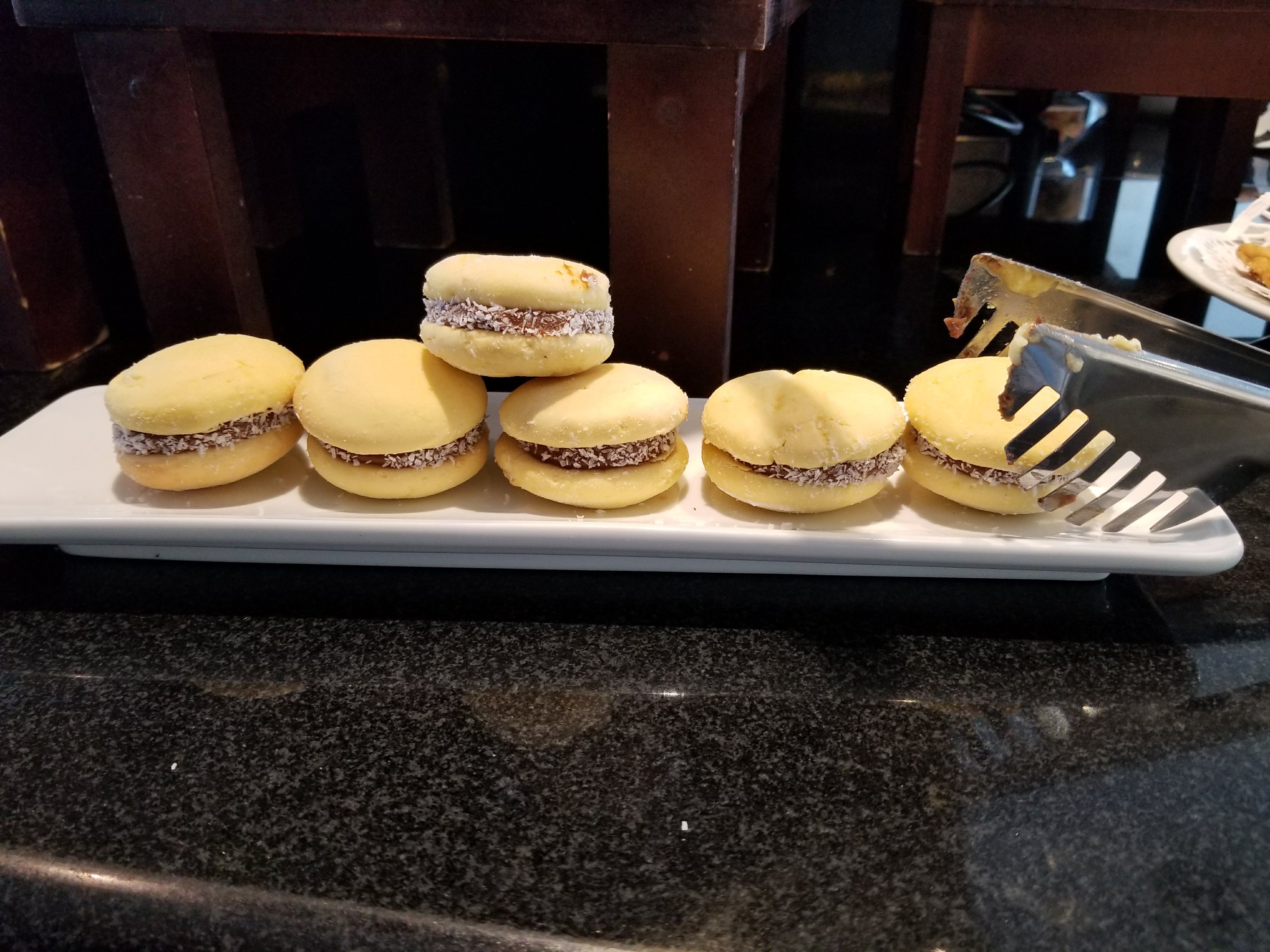
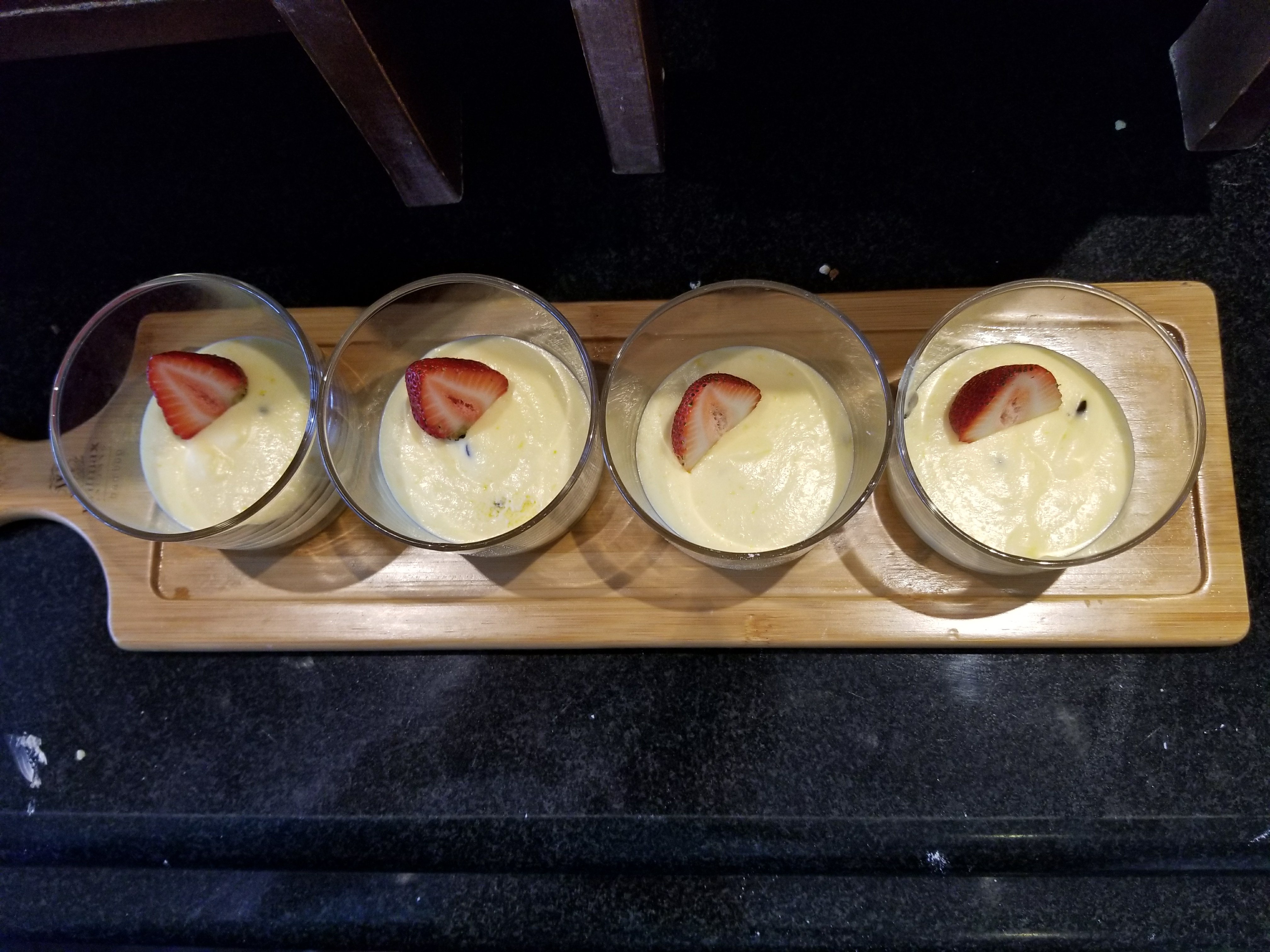
I helped myself to one slice of a chocolate and dulce con leche (caramel) mousse but my fellow tea service participants were not so shy: women were returning to their tables with three and four desserts at a time. One server was kept hopping just to ensure the plates of sweets were always replenished.

I had a couple more cups of tea, but I was  done in for sweets when I finished my mousse. As I looked around the room, I noticed the other women were not only finishing their desserts but going back for more. 

I  wonder if there’s such a thing as a dessert consumption boot camp in Montevideo for those of us interested in, er, punching above our weight class. If so, I’ll be the first in line.

No matter where we live, the start of summer is usually a happy time – we shed winter’s clothes, constrictions, and inhibitions as we celebrate the beginning of warm weather, long evenings, vacations, and a more relaxed pace of life.

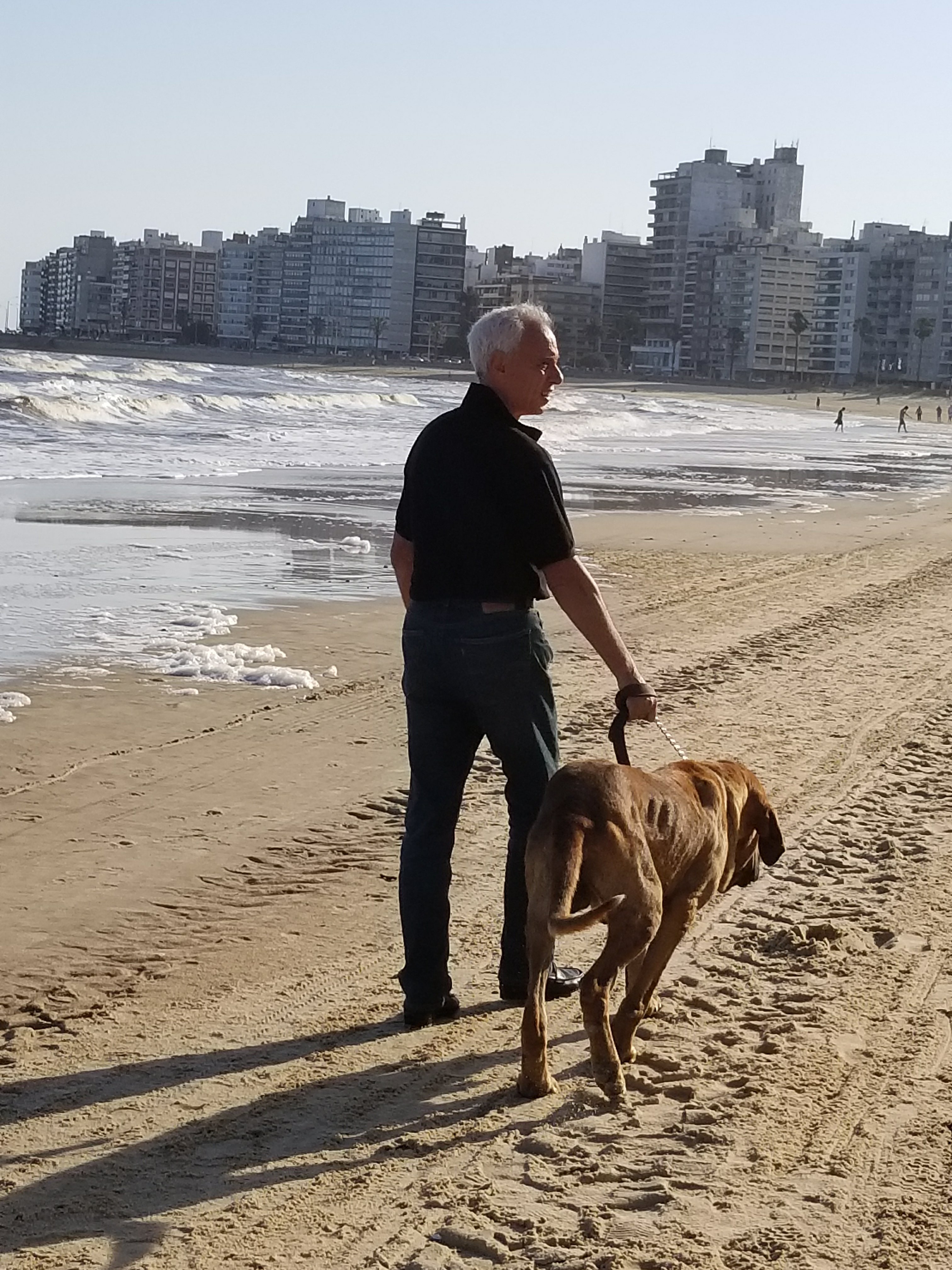
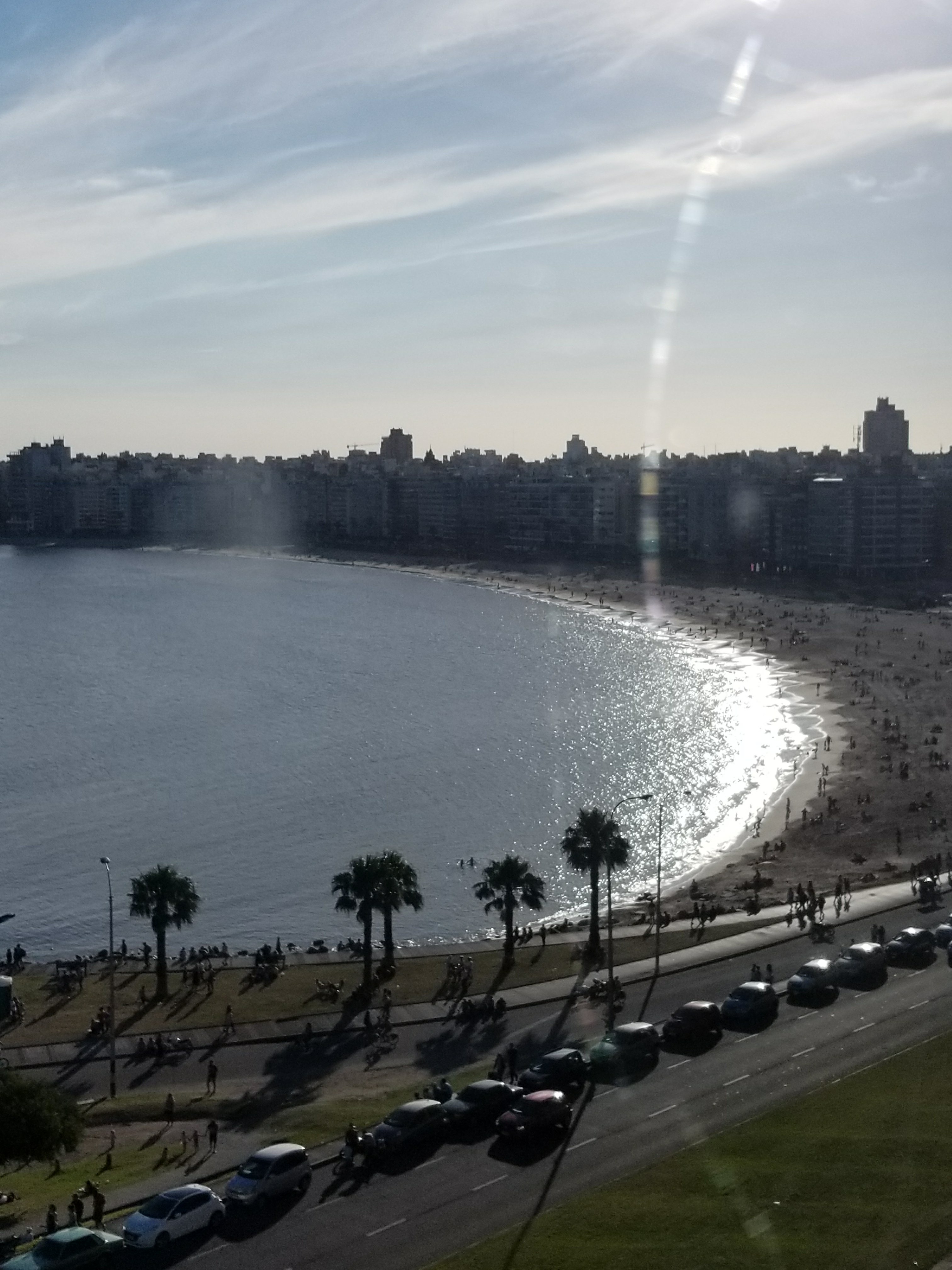
So this afternoon, I join thousands of Montevideans wandering along the 22.2 kilometre La Rambla, the longest continuous sidewalk in the world.  Trying to  access the beach side from across the street gives literal meaning to the phrase the quick or the dead (crosswalks? I don’t think so). But once you find a gap in the traffic, you’re ready for a great afternoon of people watching.

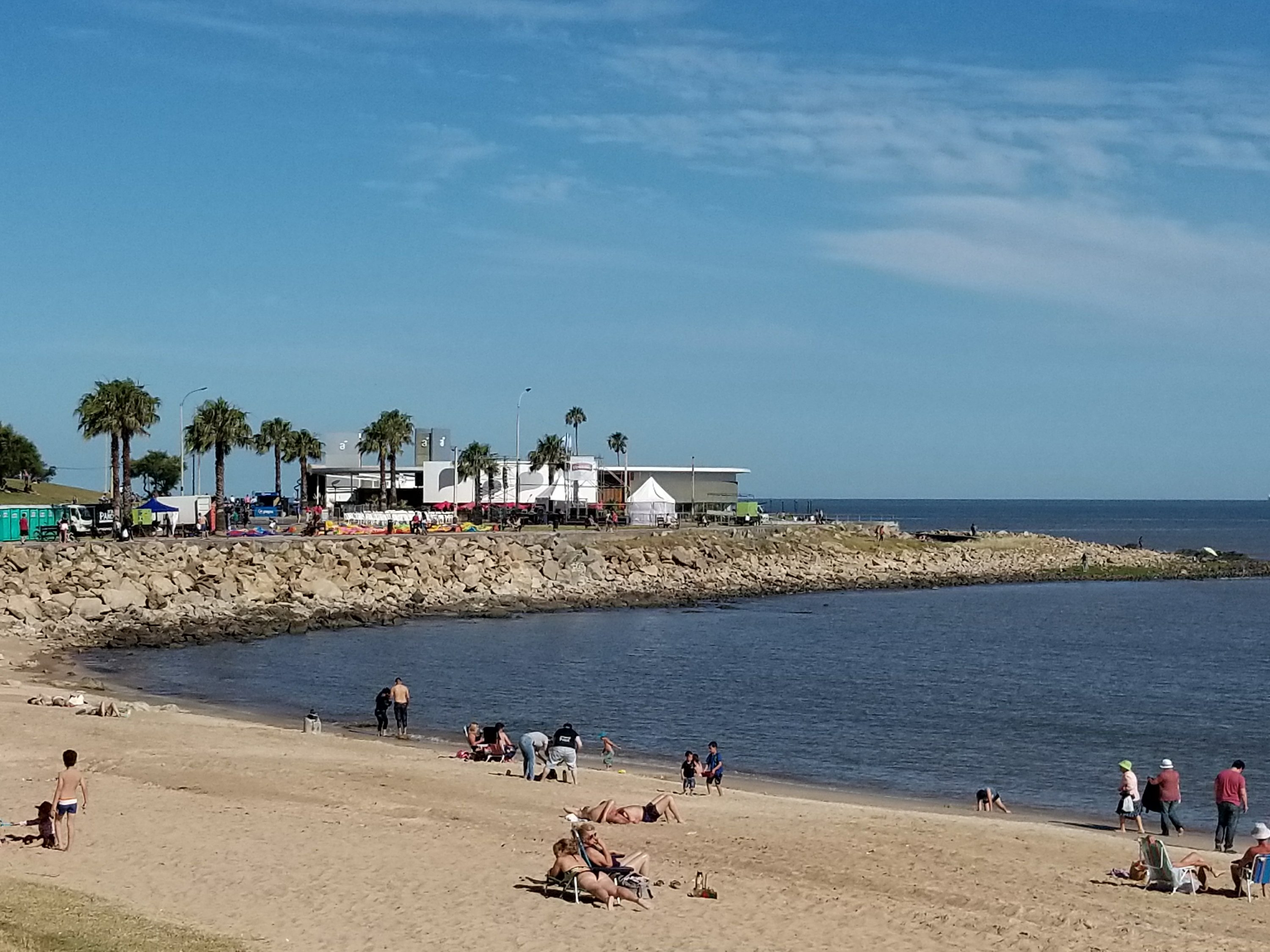
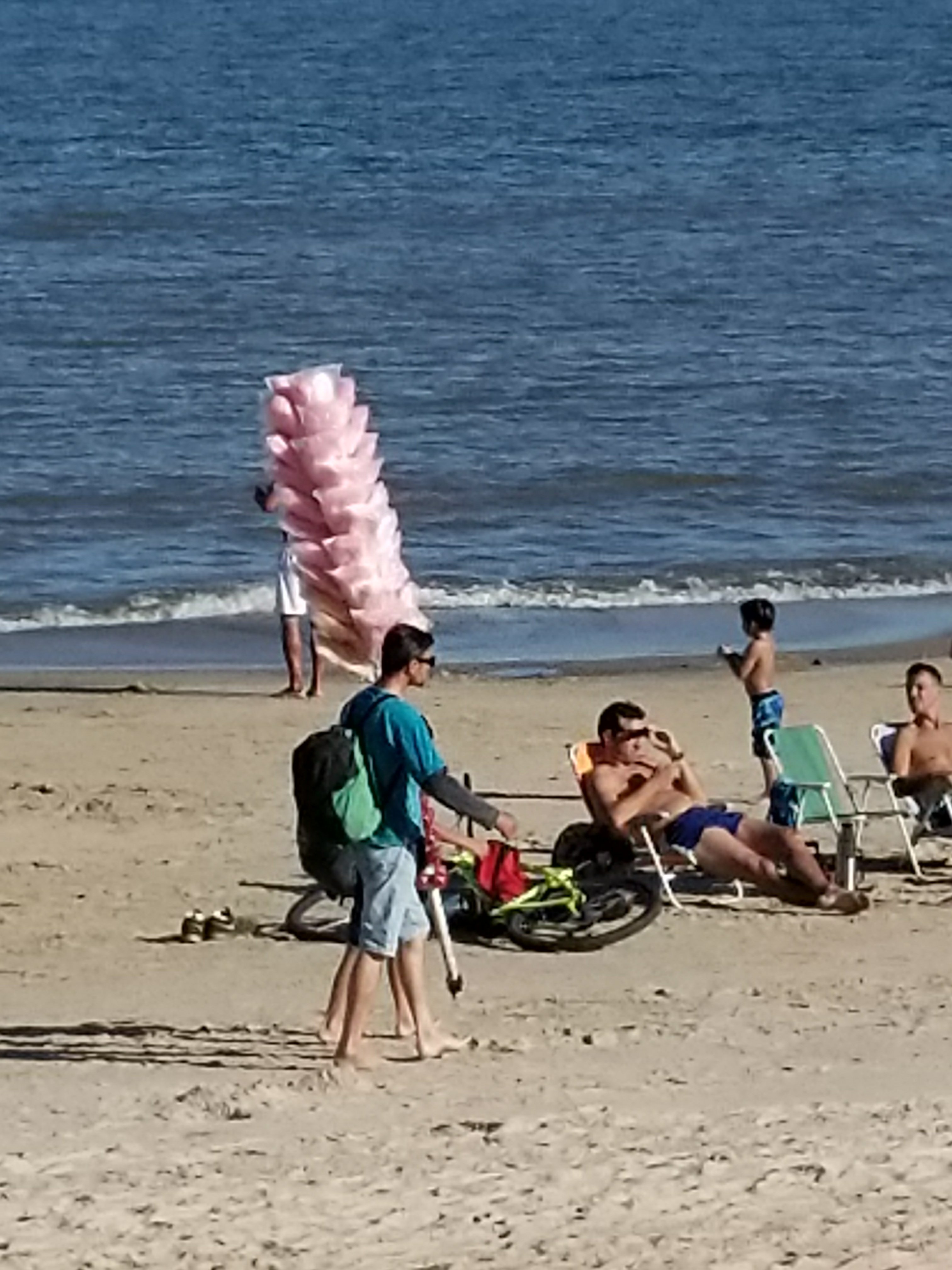
The crowd separates itself into two groups- the beach-goers and the sidewalk browsers. I figure the Atlantic hasn’t warmed up quite enough for swimming yet because only a brave few are in the water. Most people are lounging on the sand,  showing off sometimes-more, sometimes-less beach-ready bodies, playing volleyball or soccer, or flagging down the snack vendors.

Up on the sidewalk,  the wheelers, the walkers, and the sitters compete for a place in the action. Cyclists dart in and out of the crowd (warning bells? I don’t think so), and roller bladers glide or stagger by. A man pushes an elderly woman in a wheelchair while his wife holds the woman’s hand.

Young, buff-bodied men with their shirts off swagger by, eyeing young, tight-jeaned women, who pretend not to notice them. People walk Golden Retrievers, and Boxers, and Bull Terriers, who strain against their leashes in an effort to make contact. Elderly couples in large sunglasses and sweaters hold hands and take careful steps.

On benches, sometimes supplemented by lawn chairs, moms and dads watch affectionately while grandmas and grandpas cuddle grandkids. Women cuddle each other. Middle-aged couples drape their arms across each other’s shoulders. Friends meet up with friends and hug- not the “eew, I can’t wait for this to be over” kind of hug but a HUG. Elderly ladies with swollen ankles, their hands clasped on top of their purses, watch the passing scene, maybe remembering hugs of their own.

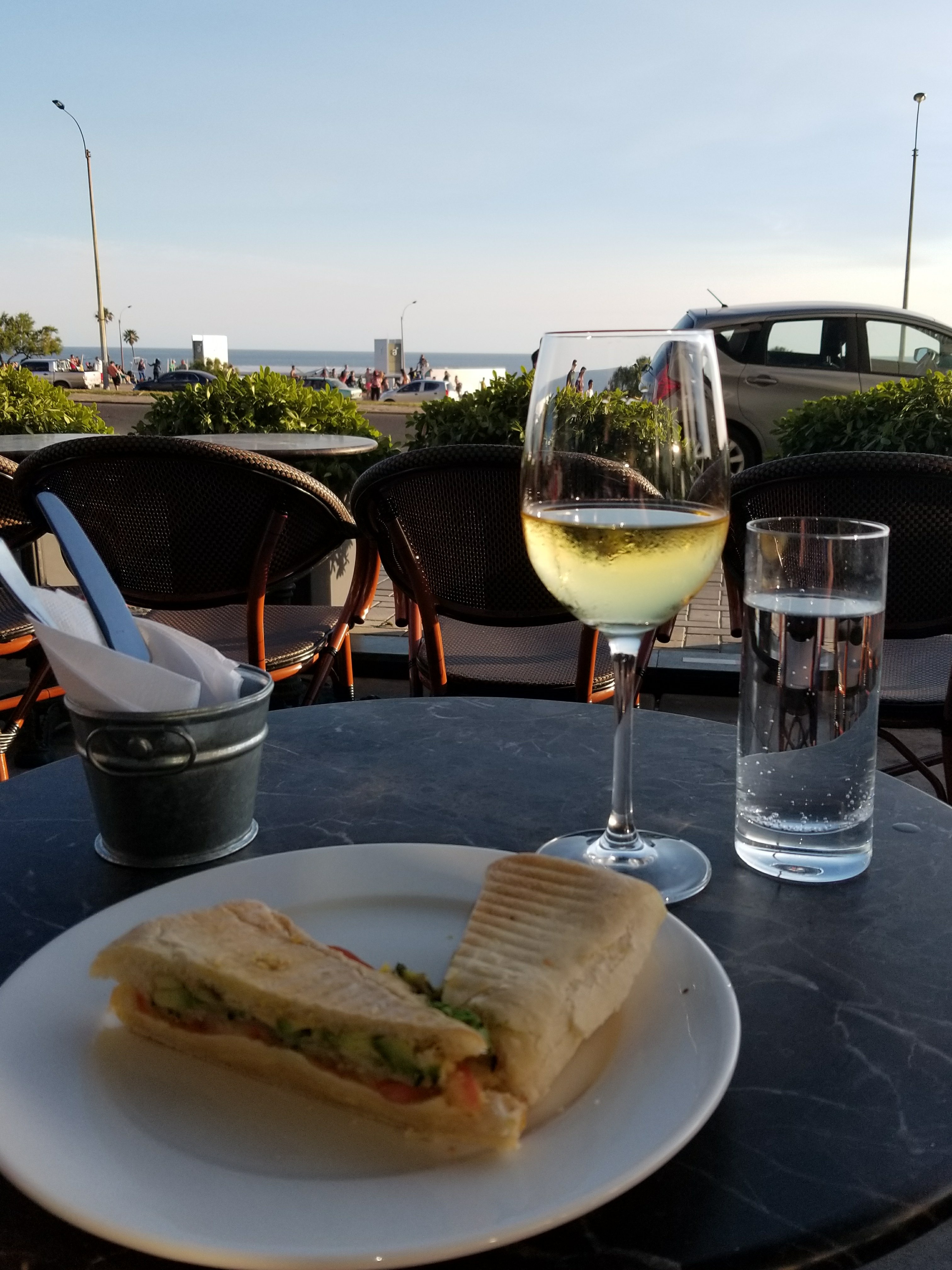
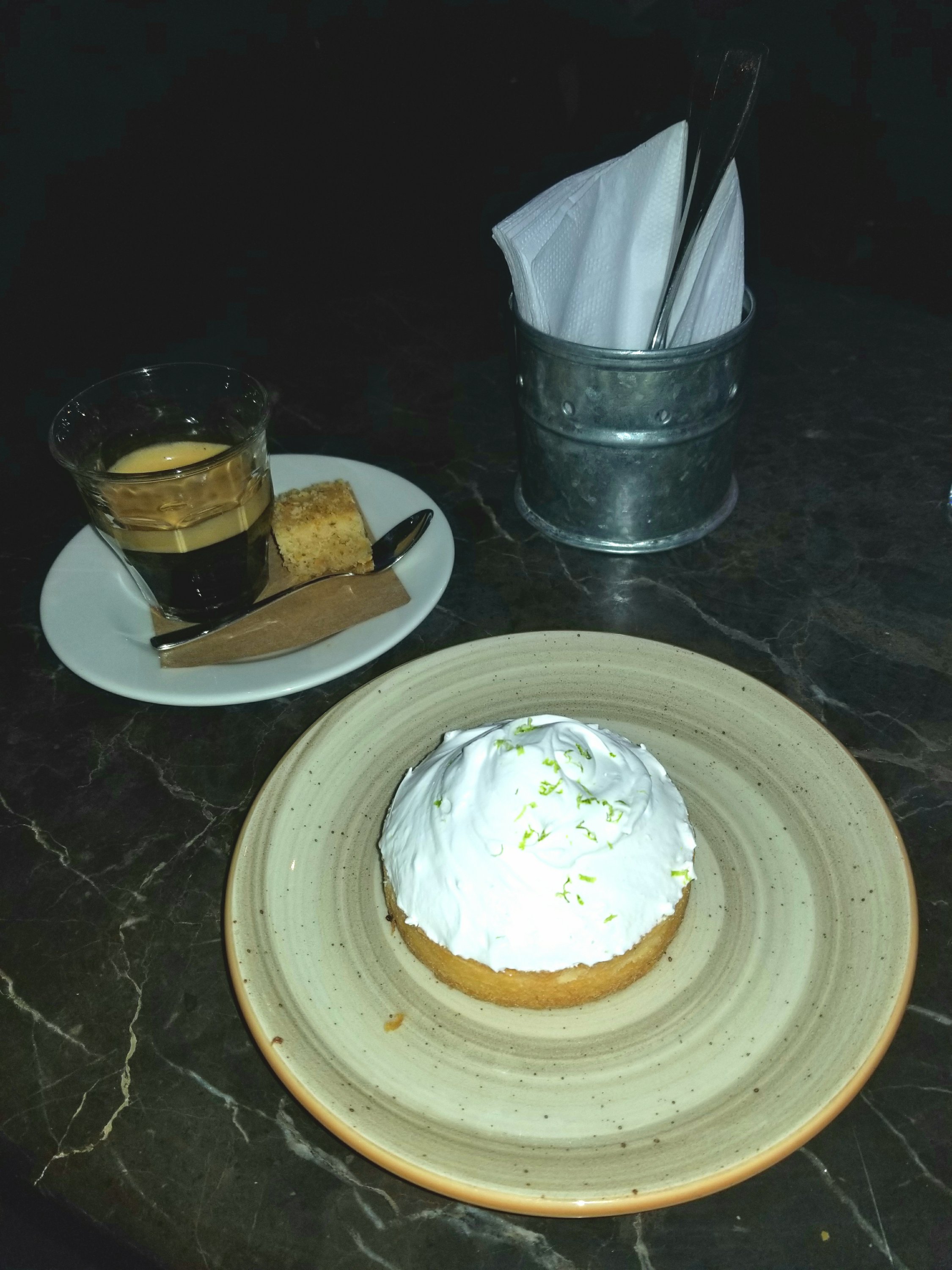
An afternoon like this begs to be extended, and the Hyatt Centric Hotel, where I’ve relocated for the business meeting portion of my Montevideo visit, offers just the place: a pocket-sized, outdoor patio, with seats facing the sea. Since dinner won’t begin for most Montevideans until 10ish, it’s a great spot for a drink or a snack or a sweet – or maybe all three.

The sun disappears behind the luxury apartment buildings, the traffic throbs past, blasting Spanish club music, and it’s time to put on a sweater against the oceanside evening breeze. But there’s no denying that summer has arrived in Montevideo- and this grateful Canadian is happy to be a part of it.

This post follows the morning version with the same title. You don’t have to read that one first if you don’t want to but this one refers to it.

I gave up hope of finding a sweet little place to eat lunch near the Days Inn about the same time that the cute Montevideo coffee shop of my imagination failed to materialize. With a sigh,  I joined thousands of Montevideans taking their lunch break at the Tres Cruces Mall food court.

At first I wondered if McHamberguesa might be on the menu, but I saw a sit down restaurant that might be my imaginary sweet little lunch place. After being ignored by the waitress, I defaulted to a takeout sandwich place for a ham and cheese croissant. It reminded me of an Irrelevant Show sketch that pointed out how airport croissants manage to maintain just the right blend of soggy and stale.

Back at the hotel, I asked the desk clerk where I  could find a dinner place within walking distance. “Near here? Nothing.”  He handed  me a card for a place in the downtown area.  But, in the Spanish tradition,  the restaurant didn’t open for dinner until 8. How to while away more than 7 hours until then?

I’m not sure why but I couldn’t accept that there was no place to eat near the hotel before 8 pm.  Maybe it was the realization that I’d be famished by then, or the unappetizing thought of spending the afternoon alone in my room. Whatever it was, I headed out once more from the hotel in the one direction I hadn’t explored that morning. 

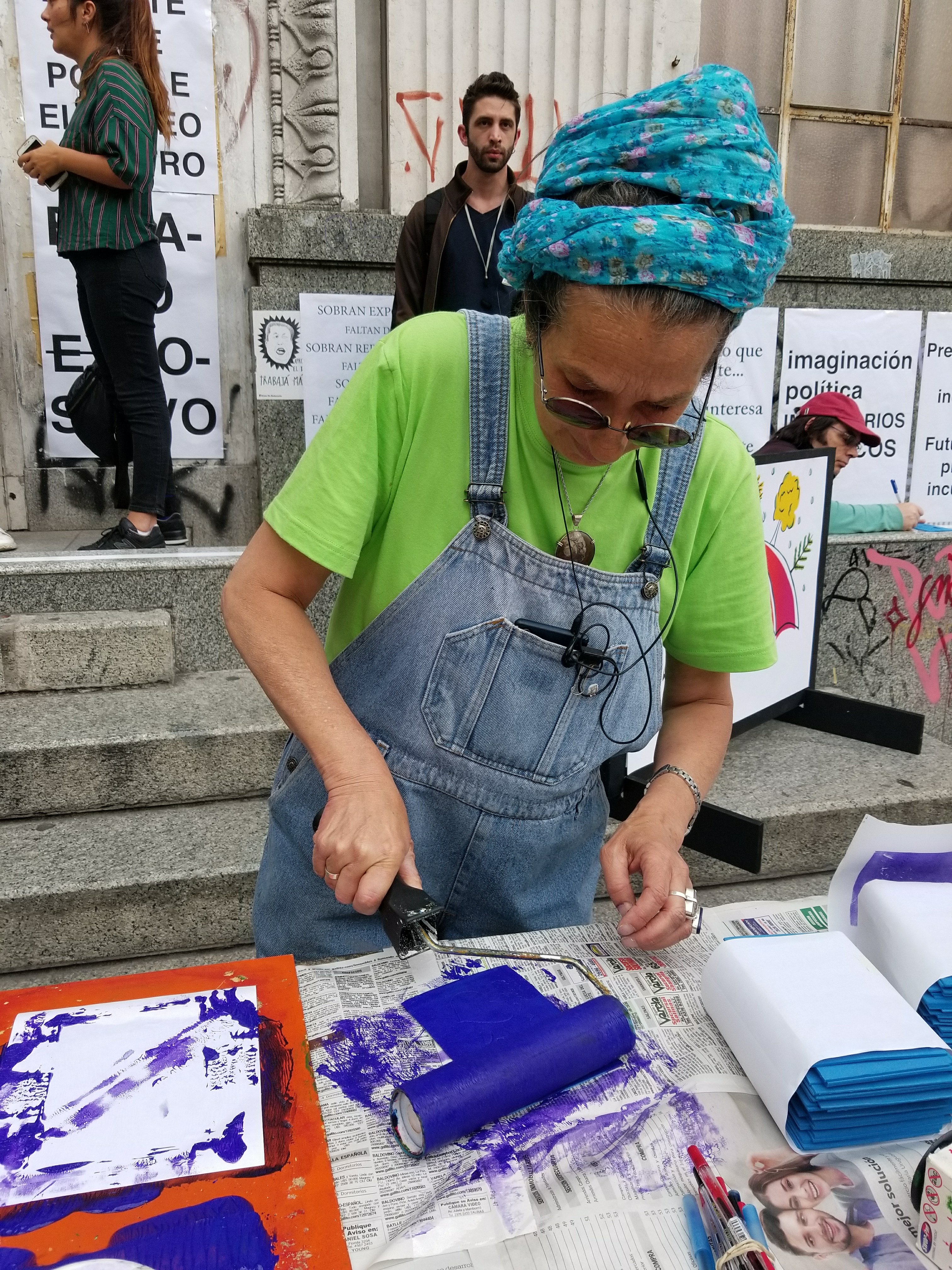
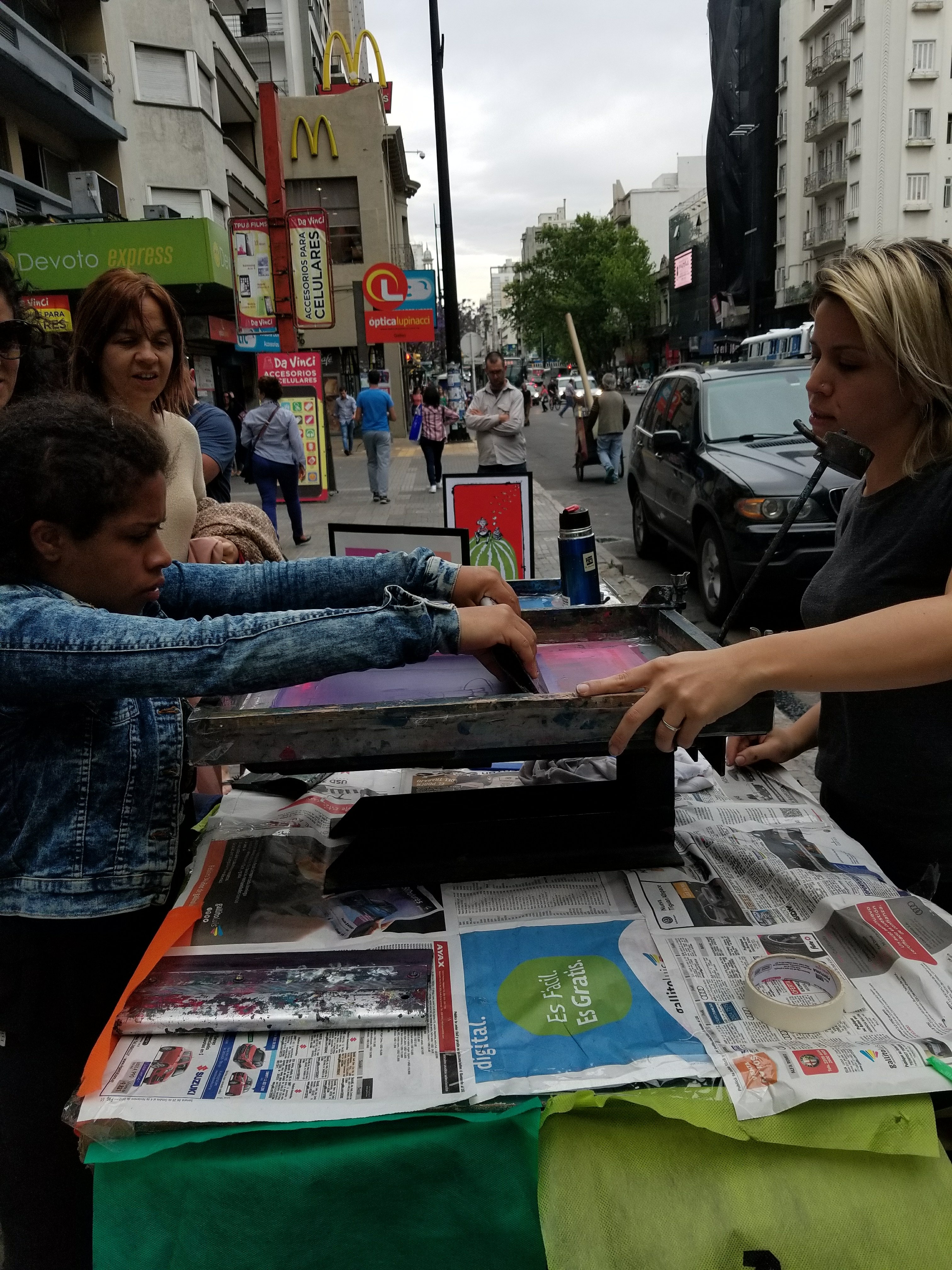
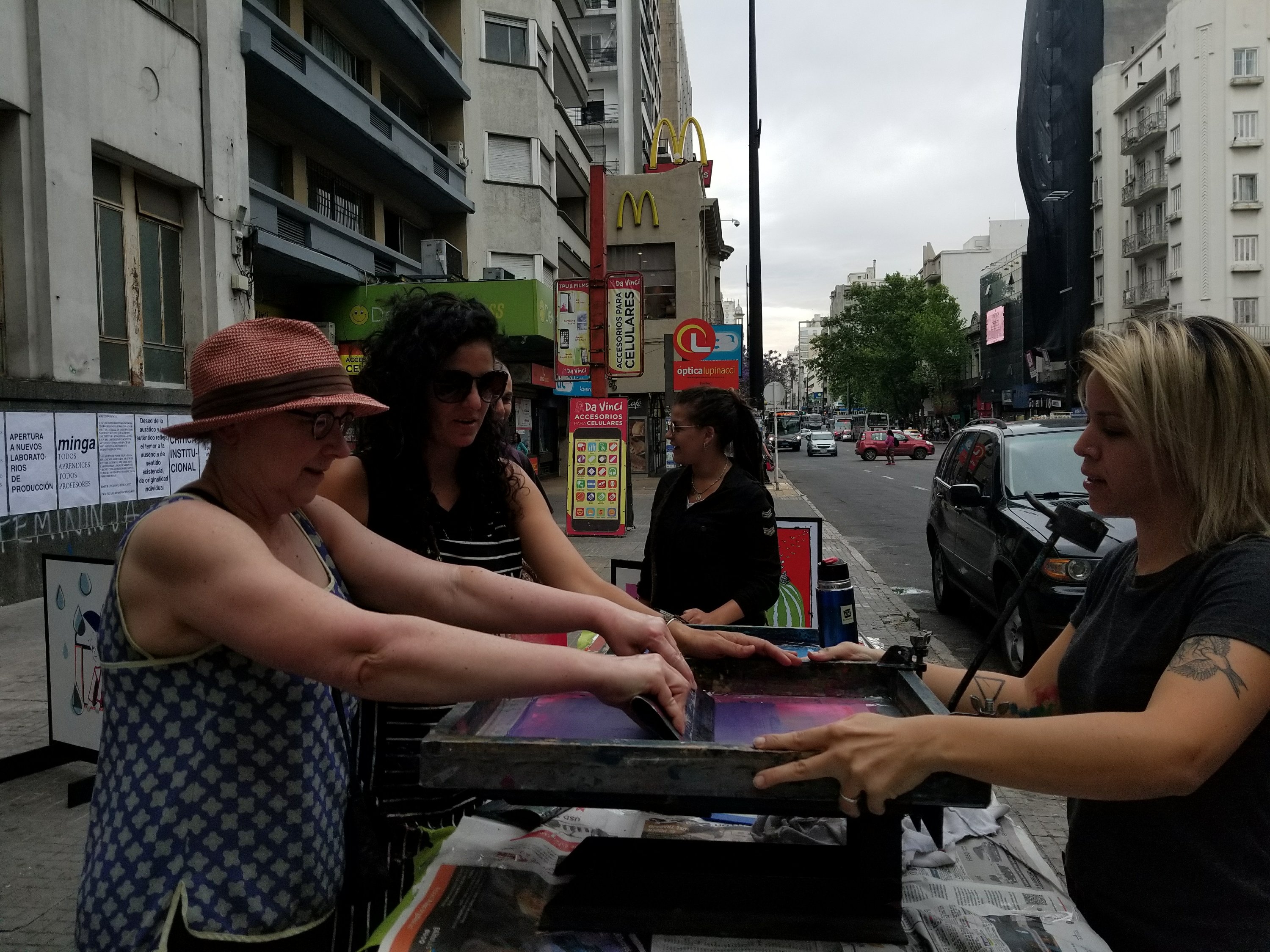
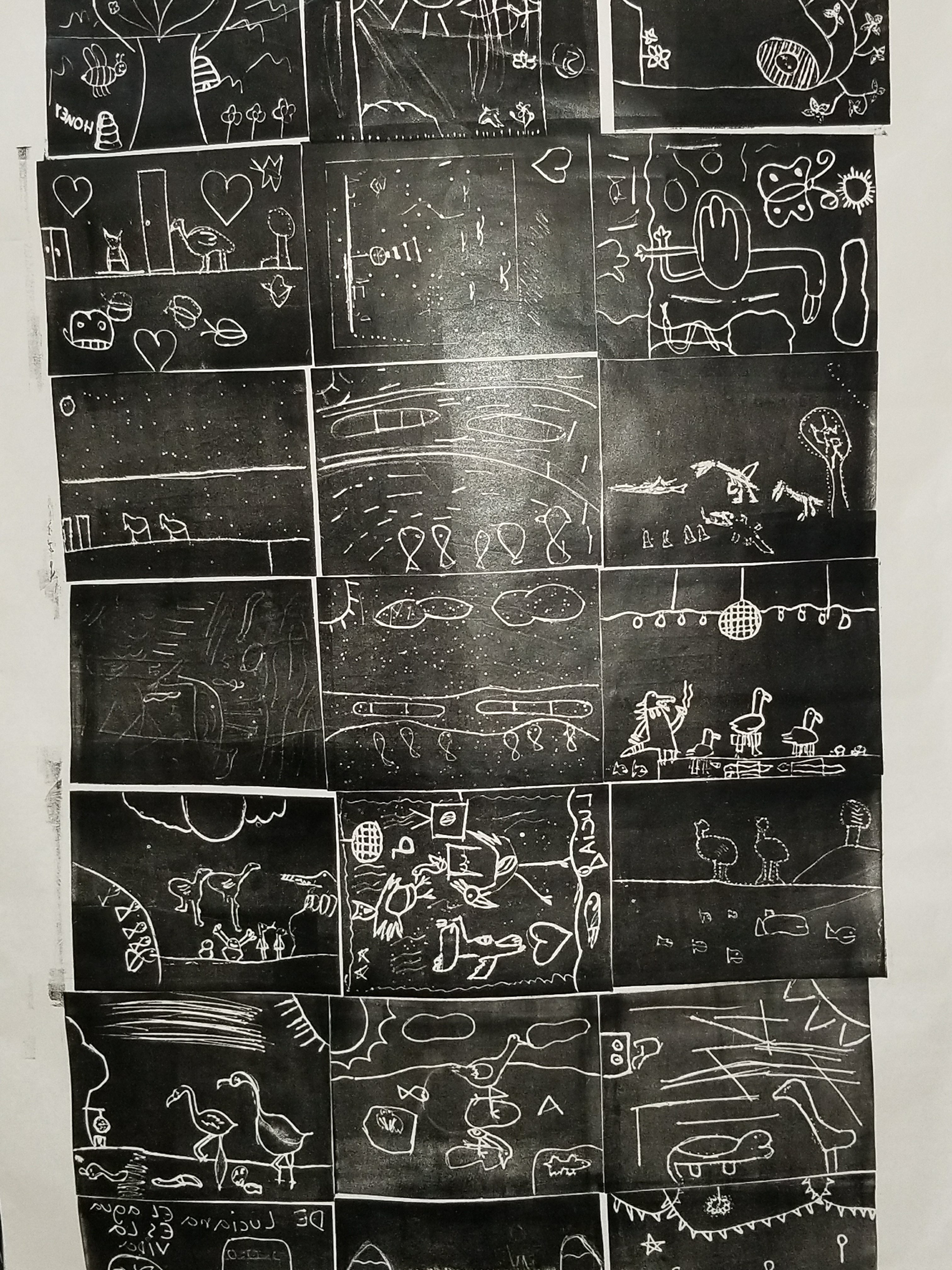
Among the pizza and beer joints that I  thought might do for an early dinner, I saw a crowd of people milling around what appeared to be a popup sidewalk print shop.

 A young man standing nearby spoke to me in Spanish but when he could see I didn’t  understand, he beckoned a female colleague over. “Would you like to make a print?”

She guided me through the drawing process and then production began.

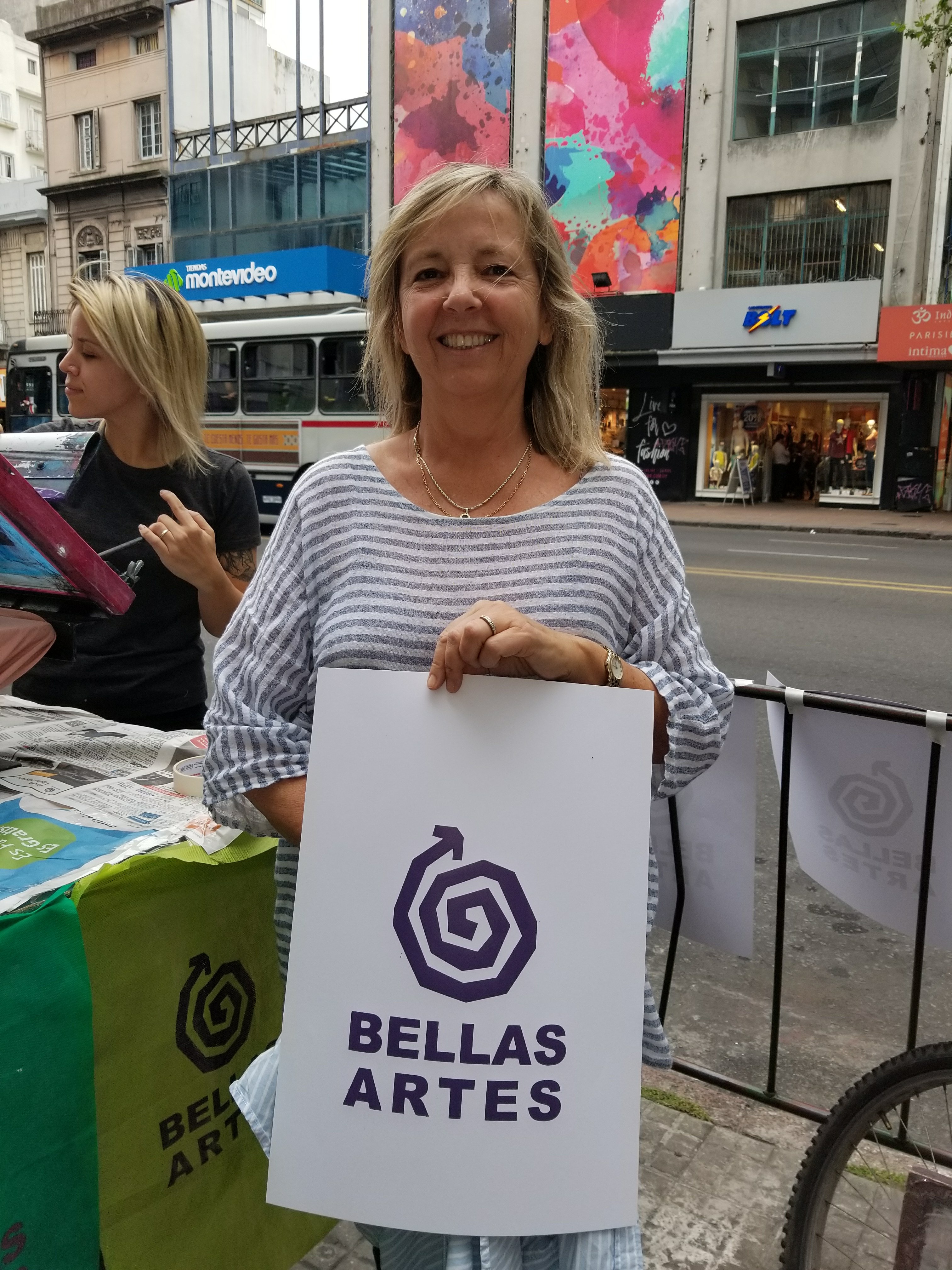
Happily, I had stumbled onto the open house of the Institution Escuela National de Bellas Artes, a visual art and music university.  When Helena, my English-speaking guide and an art therapist, heard that I had arrived from a Canadian university to teach teaching to instructors, I  got the full open house tour. 

I loved the focus on involving youth in the arts. One project involved exploring South American identity through literature and asking kids to respond visually to the stories. It also looked as though a few local youth had dropped by to express themselves in less formal ways.

I couldn’t resist one more printmaking try myself. With the expert assistance of two other faculty members, this one was more successful than the first.

While it’s true that my new adopted neighborhood was a little short on great eating experiences, my unexpected arts experience had left me feeling totally satisfied.

Thanks, Helena.

On my first morning in a new city, I like to get out of my hotel and explore the neighborhood on foot. Not only does this get me oriented to my surroundings, but I’ve heard that sun exposure helps to reset a jetlagged body clock, which I really need after yesterday’s  21-hour flight from Edmonton to Montevideo 

I’m being put up by my host university at the Days Inn, a not-bad hotel with a not-bad complimentary buffet breakfast. But I’d like to while away some time in a cute coffee shop, so I clap my hat on my head, put on my sunglasses and set out into the already-warm morning.

It doesn’t take long for me to realize that although I’m staying at a not-bad hotel, its neighborhood is a little farther down the not-bad scale. With the exception of the gigantic Tres Cruces Mall across the street, most of street level stores look a little down on their luck. I’m used to walking on uneven sidewalks in older cities but here I’m walking around entire missing sections. Graffiti is everywhere. There are more than a few people bedded down on the pavement or trying to make a little money selling a few cheap items. I don’t feel threatened because there are lots of people going about their Thursday morning business. But after walking first one direction and then another, I doubt that this is a neighborhood where a cute coffee place would set up shop.
This isn’t to say that I don’t see some beauty in all the rough edges. I just need to look a little harder to find it than I thought I would.

When I arrived at the Santiago de Chile airport to wait three hours for my flight to Montevideo, I’d already been underway from Edmonton for more than 15 hours. Eyes burning from lack of sleep, I thought the most I could hope for from this layover was an overpriced lunch and a nap on a hard chair with a view of the runway.

But I’d never been to Chile before, even for a few hours, so I couldn’t resist a little tour around the regional terminal before I found a place to flop.  Starbucks, Dunkin Donuts, and Ruby Tuesday’s were all open for business,  but, to my surprise, most of the other establishments appeared to be South American-owned.

I found a table at Vinum,  a wine bar that featured Chilean varietals and snacks. The  very busy sole server still took time to proudly show me the label on a bottle of Malbec before pouring me a glass. “I hope you don’t mind waiting about 10 minutes for your empanada,” she said. “That’s how long it takes to  heat.” No microwaves in operation at this place so the empanada’s flaky crust gave way under my fork to reveal a filling of tangy melted cheese and mushrooms.

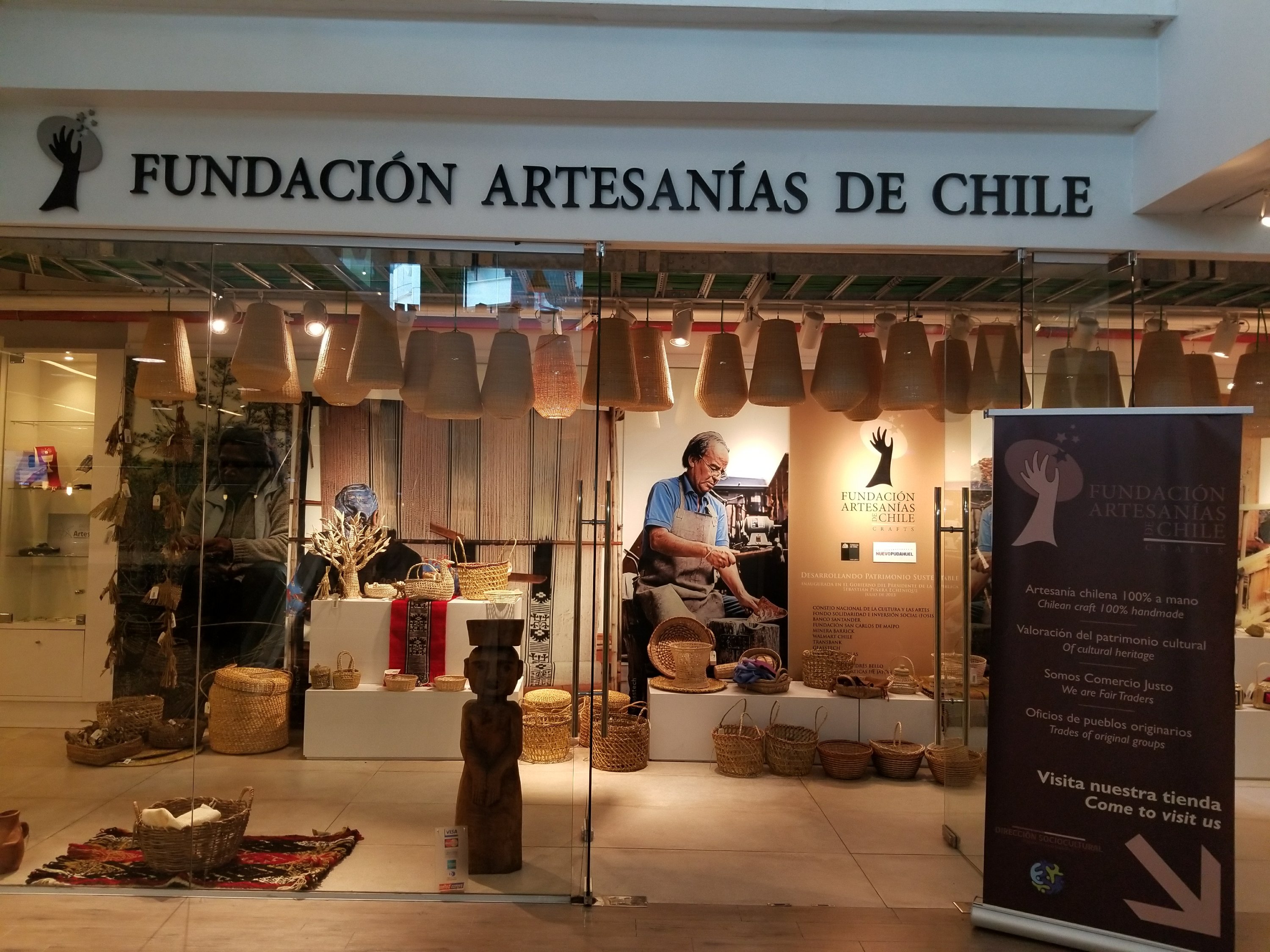
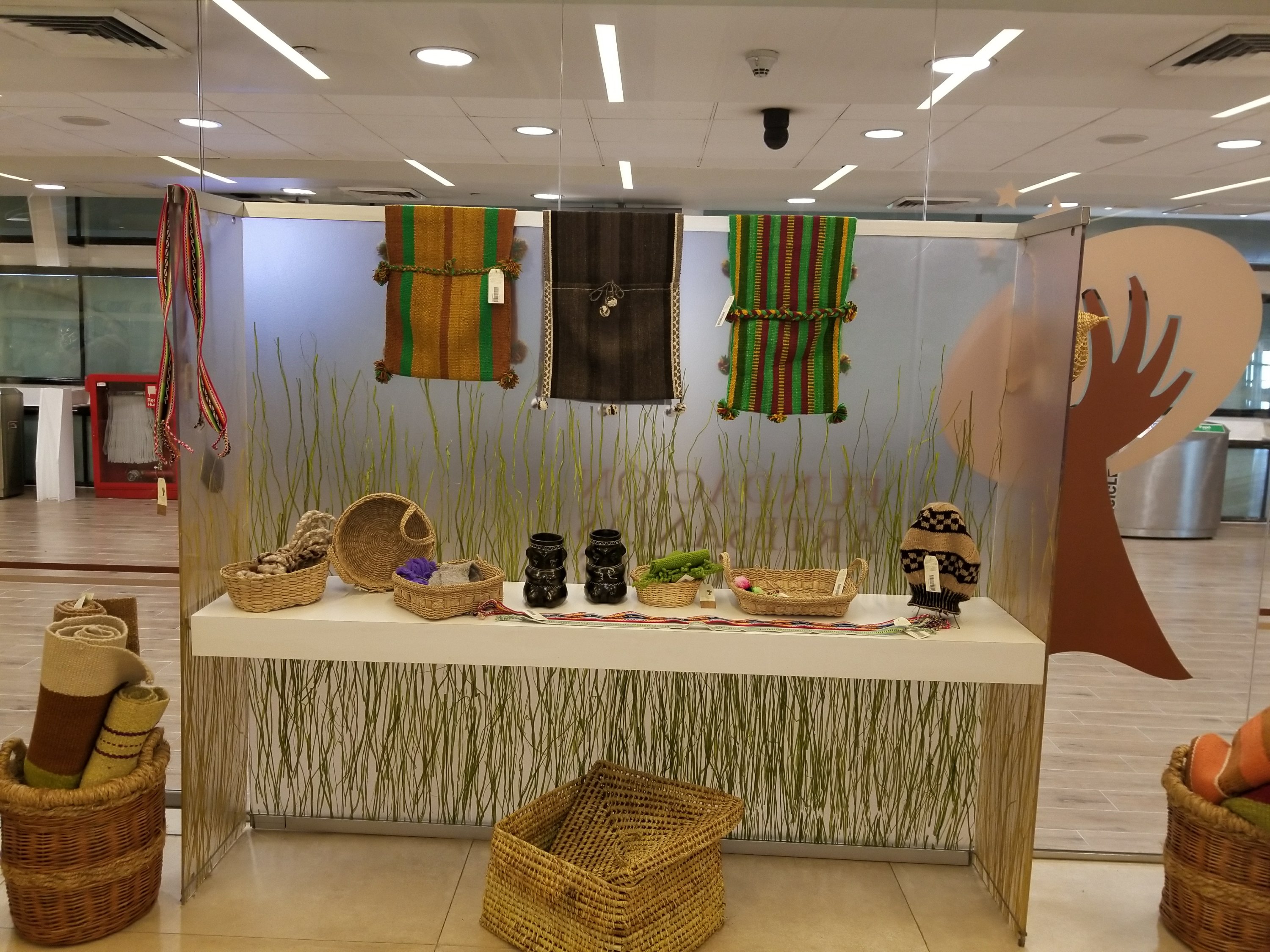
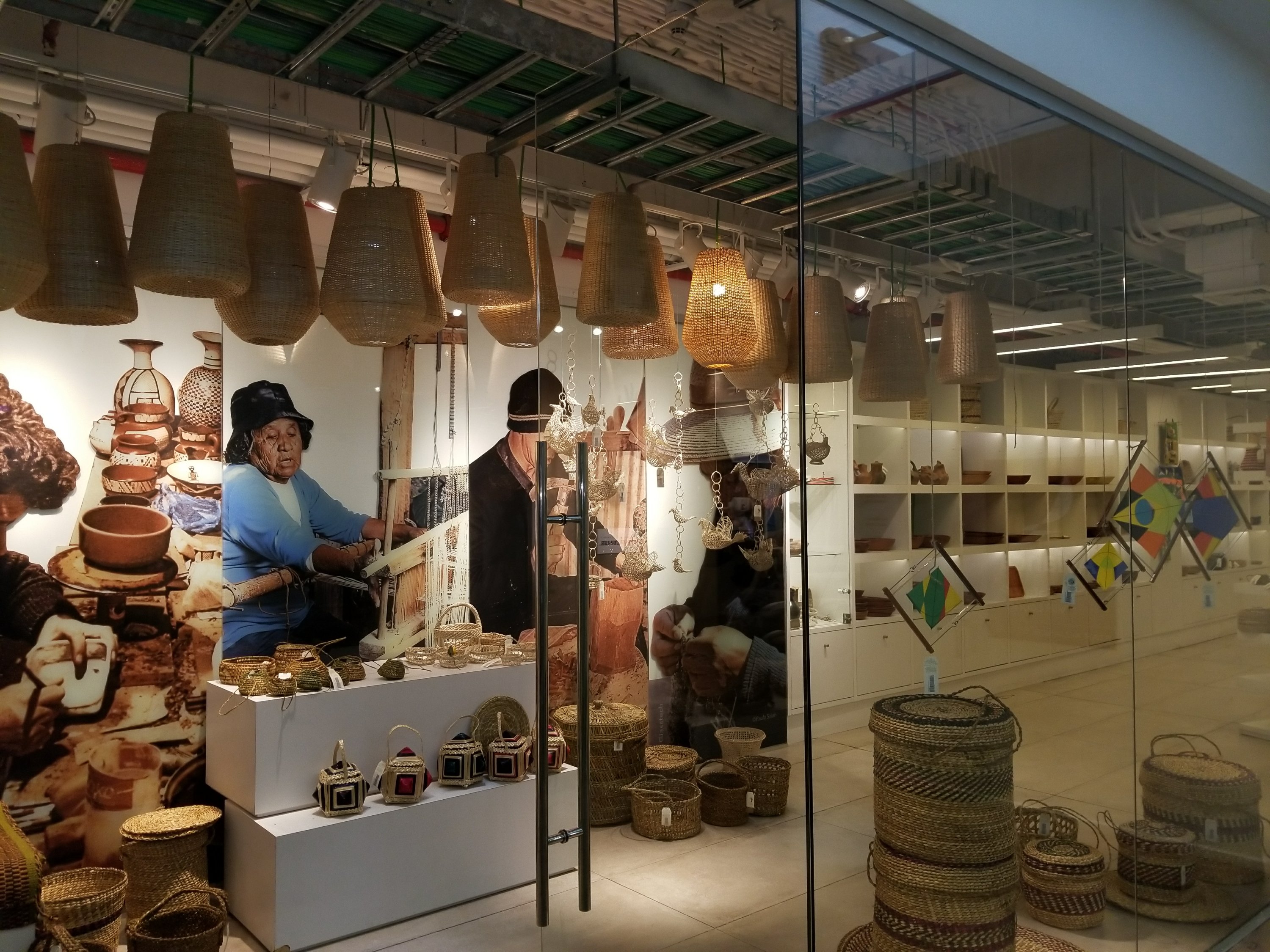
Fortified by the snack and the wine bar’s hospitality,  I visited the Fundacion Artesanias de Chile, a fair trade artisans’ cooperative, located down a few stairs from the hustle- bustle of the main level. I browsed the baskets and blankets, pottery and tapestries in welcome quiet. Although I didn’t buy anything, the shopkeepers welcomed me to take home a few souvenir photos.

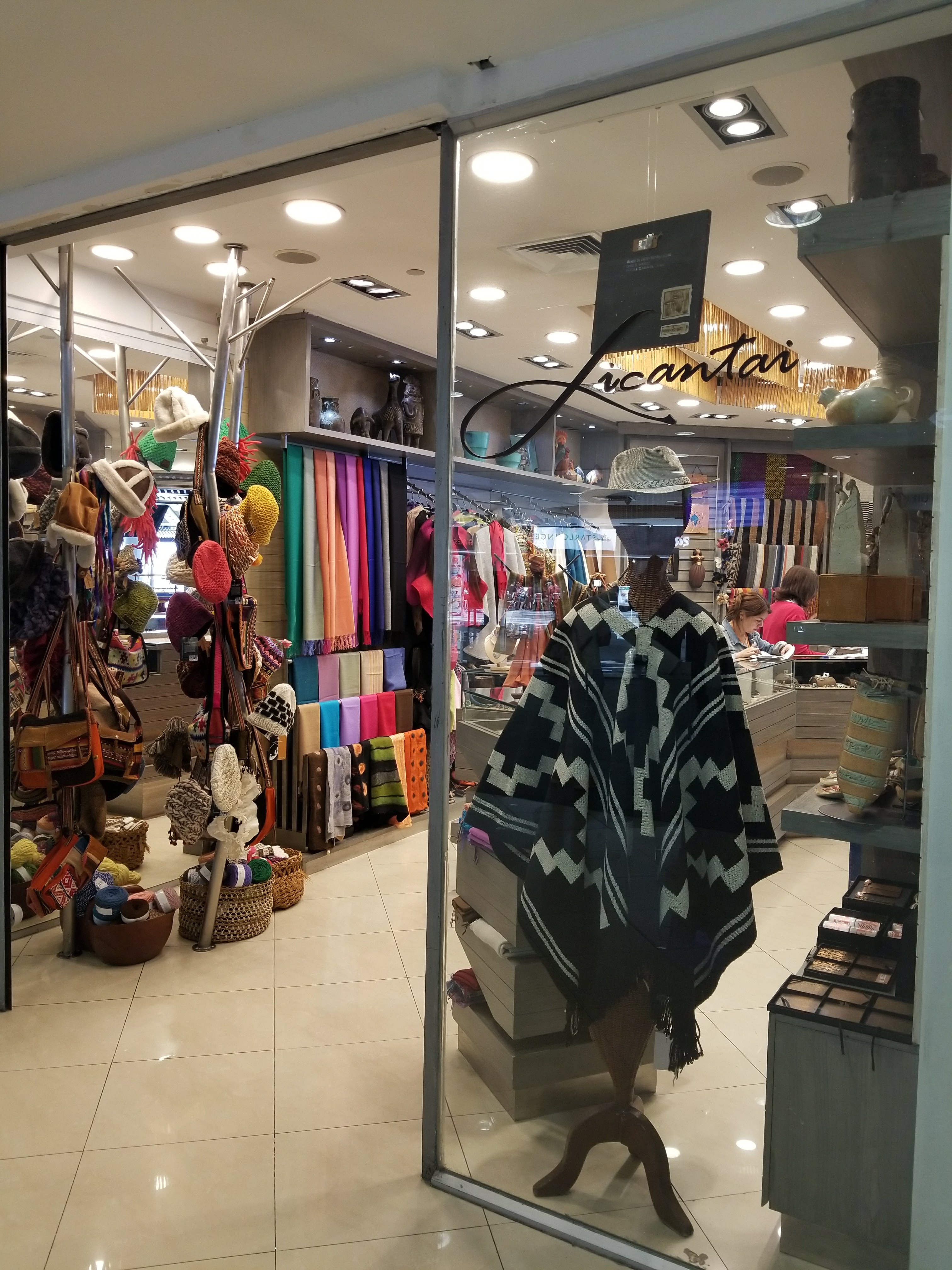
Time was passing quickly, so I thought I should track down the gate for my flight. But one more shop beckoned – Licantia, named for a local Indigenous group.

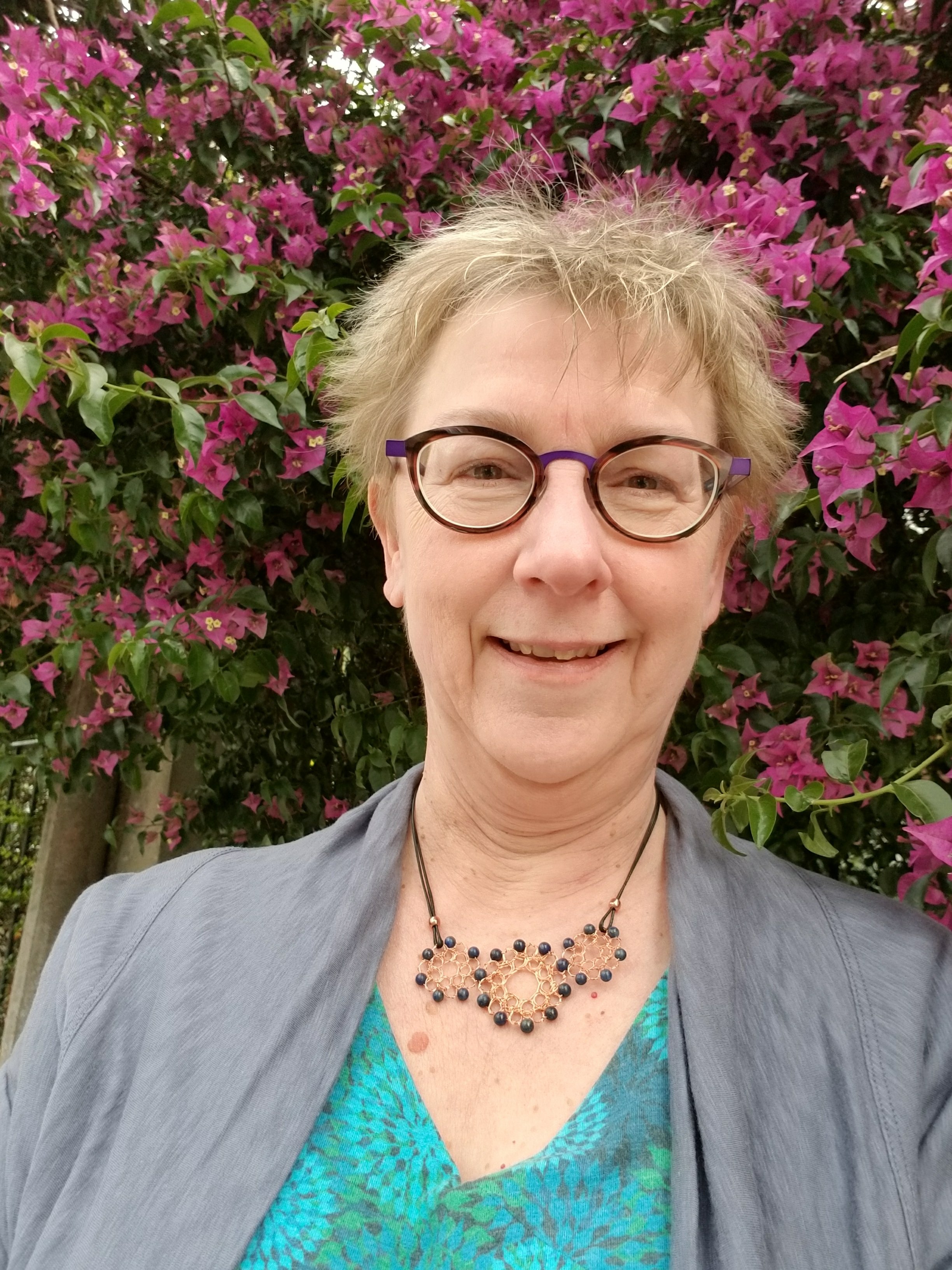
Attracted initially  by its rainbow display of scarves and hats, I took a peek at a glass case filled with handmade jewellery. I imagined one of the necklaces- a piece made from woven copper strands and inset with lapis lazuli stones- sitting in the neckline of the dress I planned to wear on my first teaching day in Montevideo. “One of a kind,” said the sales clerk, as though I needed more encouragement. Five minutes later, my find was wrapped and bagged and secure in my carryon.
Having made over my layover in the Santiago airport from a forced timeout into part of my vacation, I settled in happily to wait for my flight to Montevideo.