If you vacationed with your parents when you were a child, you might have fond memories of the kids you met in the campground play areas, the motel swimming pool, or the beach near the trailer park. You bonded with them for no other reason than they were kids too. You rode your bikes together, made up games in the afternoon and promised to continue them after dinner, got up the next morning to see if anyone new had arrived to join the gang. Before you knew it, your parents were packing up the car, and you were saying goodbye to your friends. Maybe you exchanged addresses, and promised to write. More often, you didn’t. And that was OK, because you’d had such a good time while it lasted.
As adults, these vacation connections don’t seem to happen quite so effortlessly. Maybe we’re too busy organizing the activities of our own families. Maybe we become a little more private or protective as we age, drawing an invisible line around us and ours. But, once in a while, given the right surroundings, and the right mix of people, those connections happen again. And when they do, they’re just as magical as they were when we enjoyed them decades ago.
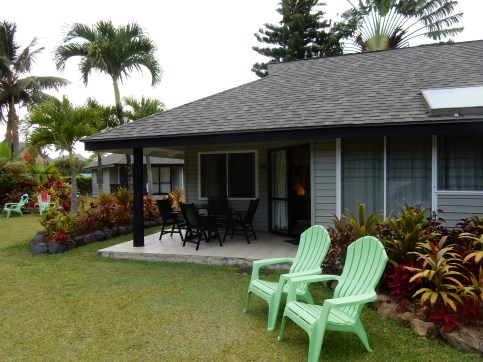 When we planned our trip to the Cook Islands last June, we hoped to raise our chances of meeting other travellers by choosing to stay at the Lagoon Breeze Villas. According to its website, “this expansive 4 acre lush garden property offers 18 spacious, stand-alone villas with a full range of rooming options and a home away from home experience. Lagoon Breeze Villas is an excellent choice for couples, families and groups of friends seeking a safe, secluded and self catering accommodation on Rarotonga.” We also noticed pictures of the communal, open air breakfast room, which became a happy hour “Tiki Bar” between 4:30 and 6 p.m.
After our ten hour flight from Los Angeles to Rarotonga, we realized that some of our airplane seatmates would be our Lagoon Breeze neighbors. On board the villa’s courtesy shuttle, we began to introduce ourselves: coincidentally, the first woman I met had not only grown up in my hometown of Edmonton, but had attended the same junior and senior high school. The rest of the gang on the shuttle were from Calgary, the Alberta city three hours south of us, so it wasn’t hard to establish a sense of kinship with them either.
Our first few days on Rarotonga, we mostly went our separate ways: renting cars and scooters and bicycles, wandering along the beach, exploring the island at our own pace. New travellers – from the Canadian North, the U.S., New Zealand, and Poland – joined us at breakfast every day, which became a time to swap stories about the adventures we were having, to pass on tips and recommendations, to sit over a second and third cup of coffee while we browsed the Cook Islands News, pointing out job opportunities and property for sale. At the end of the day, we repeated the experience, swapping out the coffee for fancy tropical drinks.
If you recall the campground kids whose company you enjoyed years ago, you might remember a leader-type: someone who had great ideas for the day’s activities, and made sure that everyone felt welcome and included. For us, that role was adopted by Jason Webb, the owner of Down Under Travel, the agency through which we’d booked our trip. Although he’d arrived on Rarotonga with a large posse of family and friends, he remembered to inquire about how our vacation was unfolding, and provided great suggestions for activities we could try. On Christmas Day, he and his cooked and hosted Christmas lunch, a festive affair of barbecued lamb, veal, and chicken, salad, baked potatoes, and strawberry pavlova.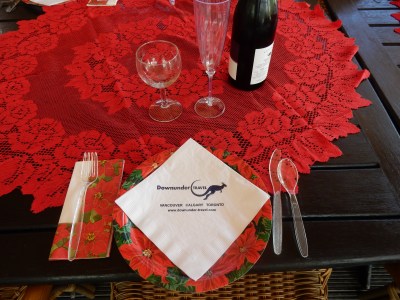
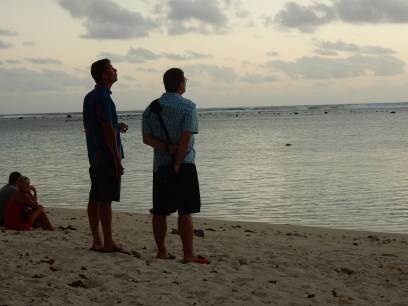
No matter where we’d been or what we’d done during the day, we all gathered on the beach shortly after 7 p.m. to experience the sunset together. Lugging beach chairs, and wine, kids and cameras, we crossed the road and settled in to wait for the show. The little kids poked around at the edge of the water. The older kids skipped stones or tried to whack down low-hanging coconuts. The rest of us looked at each other’s photos from the day’s adventures, and adjusted our cameras to capture that night’s show.
 Sometimes, we were treated to magenta and fire reds. Other nights, the shifting violet clouds took our breath away. Occasionally, the sun would dip below the horizon without any fanfare at all. Disappointing, but not always a reason to abandon the evening’s beach fellowship. We often lingered until the sky became a dark canvas for thousands of stars, not wanting the day to end.

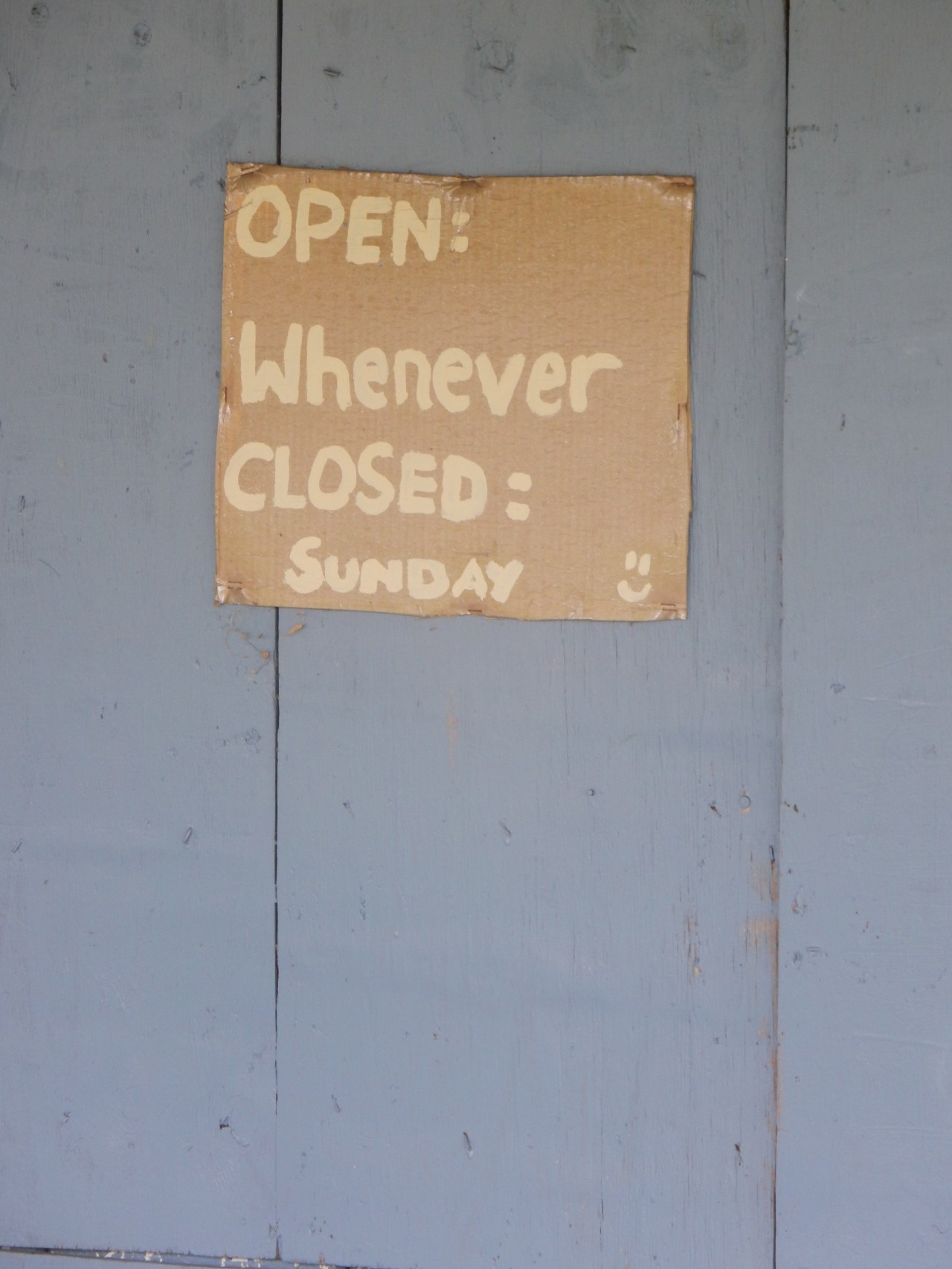
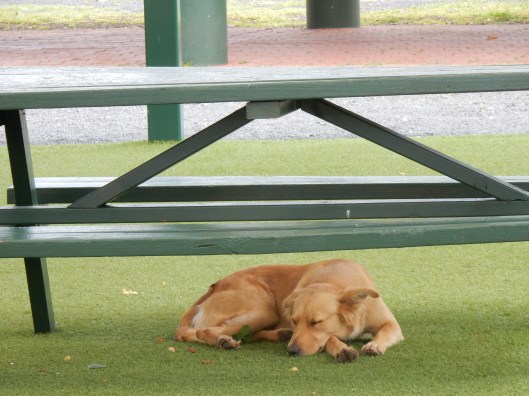 A couple of days after Christmas, I decided to explore the Cook Islands’ National Museum and Library, located on a side street in Rarotonga’s main town of Avarua. As I veered off the touristy main road that looped the island, I met few vehicles and even fewer people: the only sound came from the open doors of the nearby National Auditorium, where a man and woman were rehearsing a Polynesian song to the audiotaped chords of a ukelele.
 During our two weeks on Rarotonga, we often experienced Cook Islanders’ fluid relationship with time. Many local businesses had opted to close from well before Christmas until well after January 1, in spite of the influx of travellers with money to spend on souvenirs, restaurant meals, and tours. Not only that, but these closures were often unposted, or even subject to change. Our first week on Rarotonga, I wondered if the Saturday market would run on Boxing Day. “Of course it will,” one of the locals told me. “The market isn’t run by the government.” What I didn’t realize was that the market was only open until noon…or thereabouts. Some vendors were packing up by 11 a.m.”We need time to start cooking for Sunday,” one woman told me, as I hastily purchased a sarong.
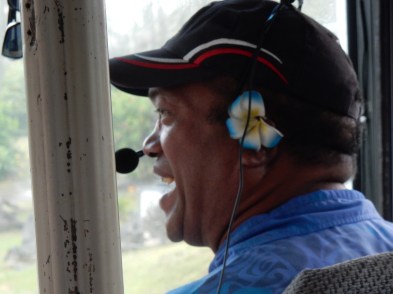 Even the two-bus, national public transportation system had a complex operating schedule, and we had to listen hard to the driver and compare notes afterwards to be sure we had the information straight. “Tonight, the anti-clockwise bus stops running at 4:30. The last clockwise bus leaves Cook’s Corner at 11 p.m. On Christmas Eve, no buses after 4 p.m. On Christmas Day, no buses run. Sunday, the clockwise bus runs between 10 a.m.and noon, and 2-4 in the afternoon. Monday, we get a day off. Back to normal on Tuesday.”
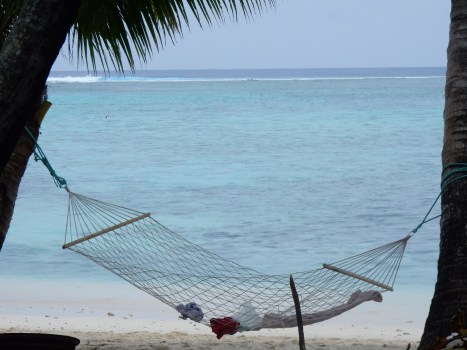 Although Rarotonga’s relationship with time could make a schedule-bound North American fume, we learned to flow along with the Islanders. After all, there were always good reasons for the closures. A business had enjoyed a particularly profitable year, so had decided to take some time off. Family was in town. There were feasts to eat and beaches to lounge on. In short, instead of letting time dictate to them, the Islanders were telling time how they wanted to spend it. And couldn’t we all use a little more of that kind of assertiveness in our lives?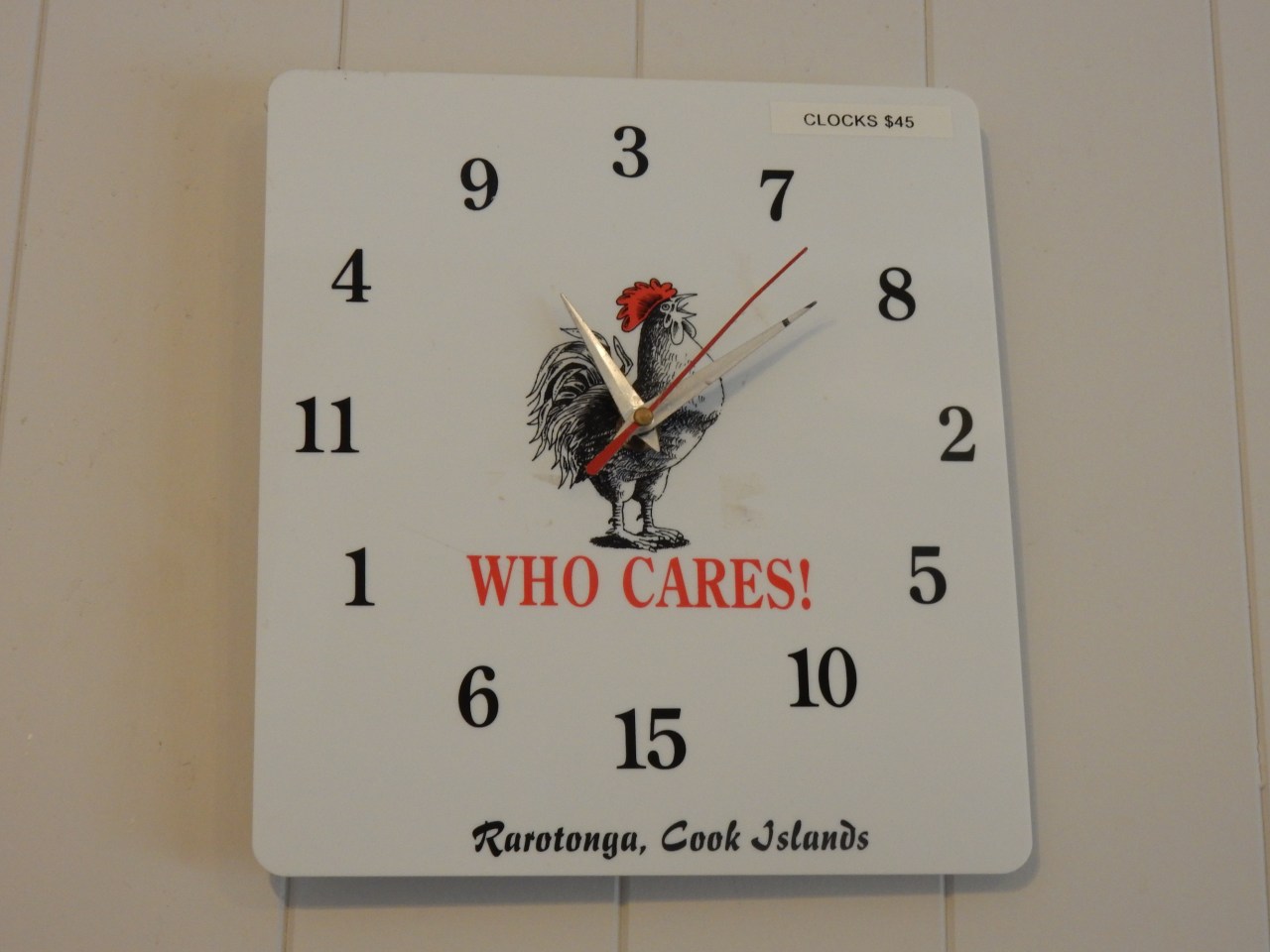
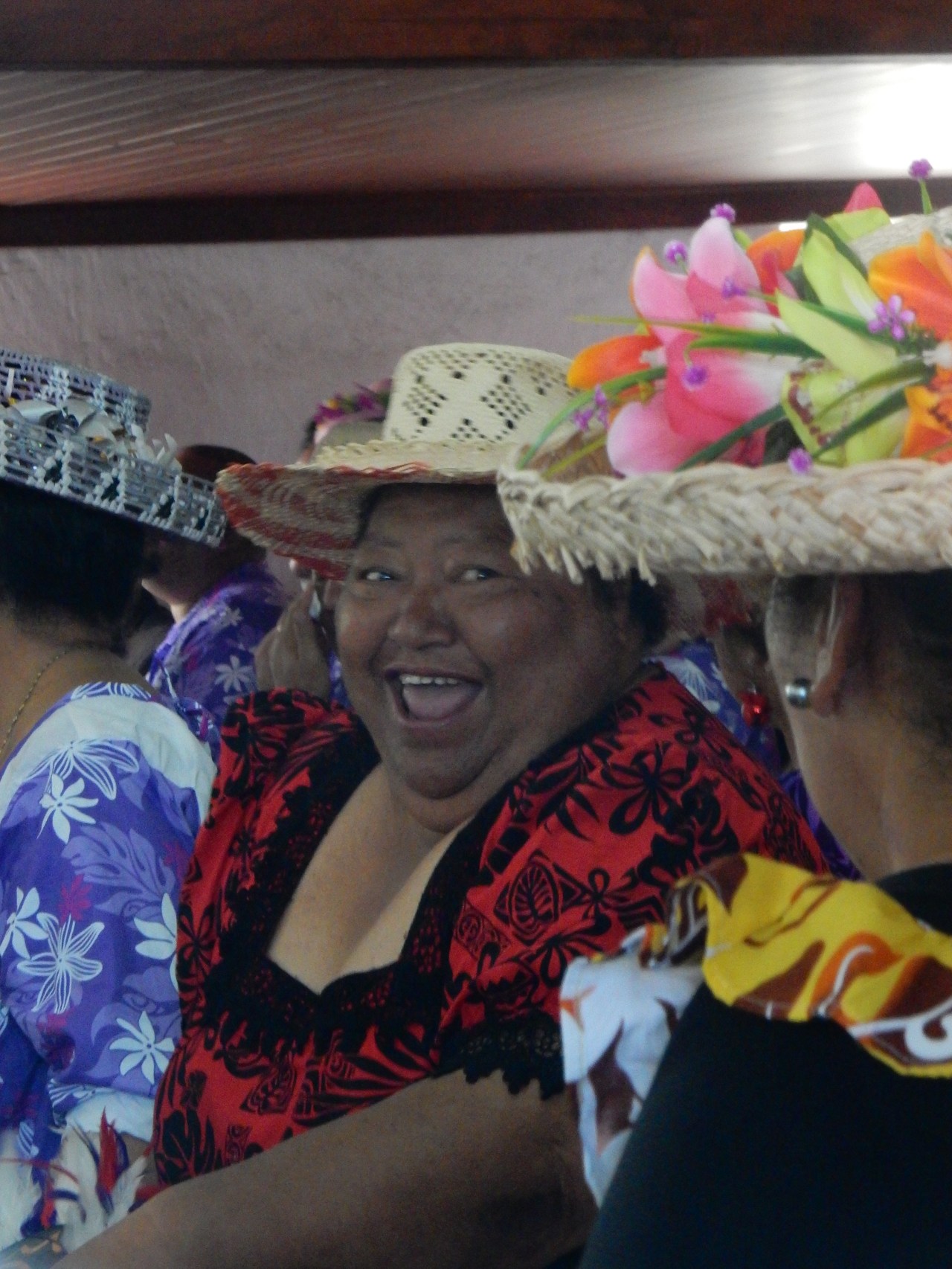
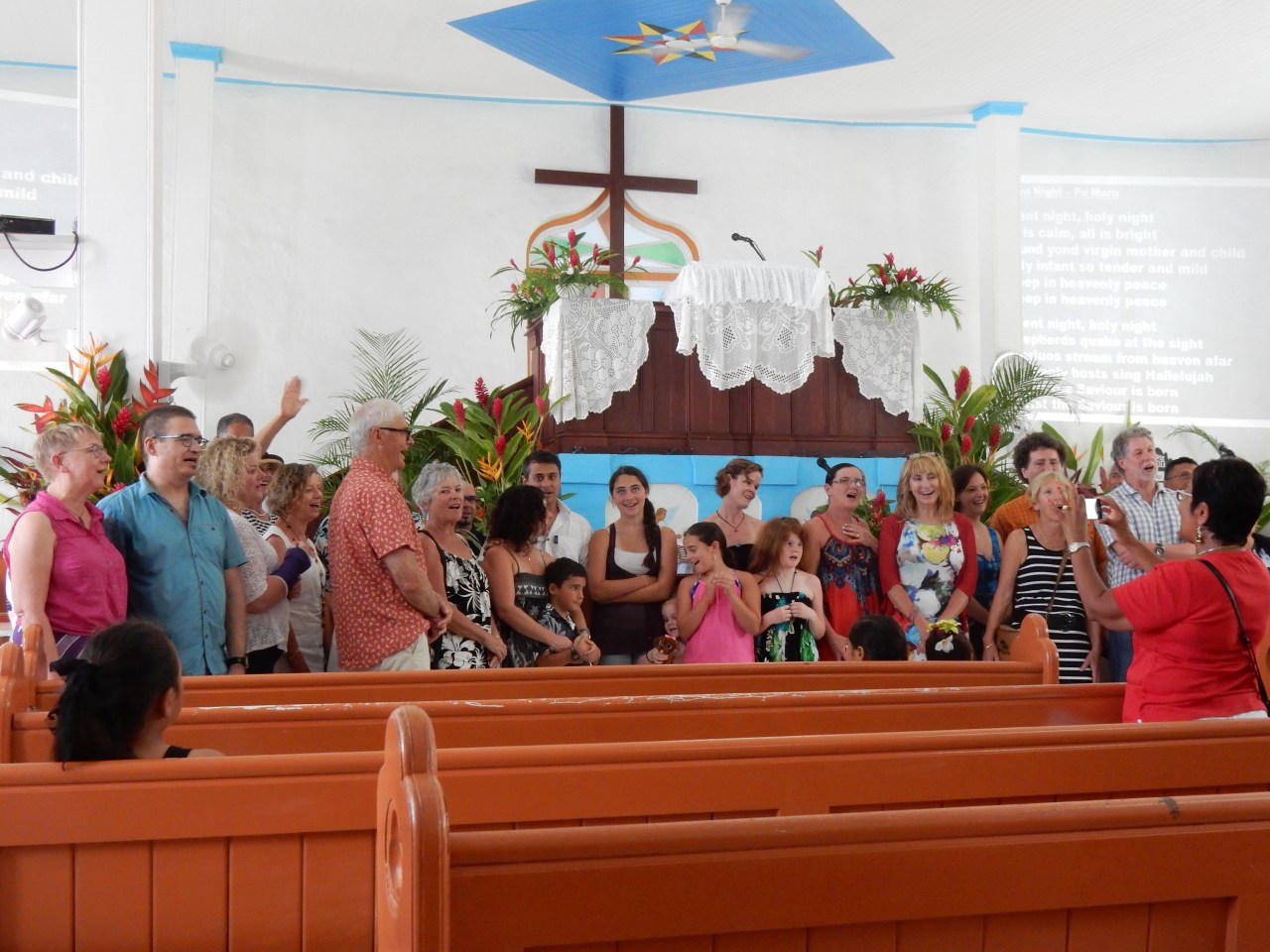
 On Christmas morning, I’m among the first five people to arrive at the Cook Islands Christian Church nearest to our Rarotonga villa. More than a dozen of us Canadians wanted to attend the 10 a.m. service, and we’ve only got one tiny rental car between us, so the car’s gracious owner has already left to pick up the next group.

 On the patio closest to ours, a father is having an earnest chat with his pre-school daughter.


 How’d ya like to stay up late like the islanders do?















































 Wise Woman Travel