Wise Woman Travel

Exploring the world from a female perspective

Sometimes, when my alarm clock drags me away from an especially vivid dream, its details stick with me – long enough to share the story with my husband as he shaves, to muse over while I make coffee, to accompany me to the bus stop. But by the time I’ve settled into my office and switched on my computer, the details have begun to  dissipate.By the time I dig out my lunch, I barely remember the dream at all.

Coming home from travelling has a similar effect on me. The peaceful contentment and delicious discoveries that I experienced when I was away are too quickly elbowed aside by humdrum home routines and familiar patterns. Bruce Kirkby, in a Globe and Mail article on returning from vacation, says that the “anonymity, freedom, and time” that characterize our lives on vacation lead many of us to make resolutions we’re determined to keep after we’ve unpacked our suitcases : “to live more healthily and love more deeply; to worry less and laugh more; to cleave clutter from our lives, homes, and hearts; to cut back on the Timbits.”

Five months ago, when I returned from teaching in China, I resolved to keep the sights, sounds, smells, and flavors of Changsha alive with frequent rambles through Edmonton’s thriving Chinatown. The neighborhood is only a ten-minute drive from my house, and parking is plentiful. I couldn’t wait to poke around the little shops, to hear Chinese spoken on the sidewalks, to savor the food I remembered eating in Changsha.20150425_144923

Now ask me how many times I’ve been to Chinatown in the last five months.

So when an old friend contacted me out of the blue last week and said he’d drive us anywhere in the downtown area for lunch, I said, “Do you know a good place in Chinatown?” Silly question.  My friend grew up in Qufu, a small city in northeast China. Even though he’s lived In Canada for more than 11 years, he regularly seeks out the flavors of home.

“I know a great hotpot restaurant on 97 Street,” he said.

DSCN1079Hotpot. Instantly, I saw the faces of the three generous graduate students from the university in China where I taught. They accompanied me to restaurant after restaurant, interpreting menus, ordering food, and ensuring I had a good time no matter where we went. Hotpot was their absolute favorite, and we ate frequently in hotpot restaurants throughout Changsha. Although each restaurant had a slightly different version of hotpot dining, four features were consistent: choosing a lot of food, cooking it at the table, talking, and laughing.  Hotpot earned a place in my heart for the way it helped me connect with the students, and a place in my tastebuds for the mouthwatering meals we cooked and enjoyed together.

So last Monday, my friend and I bombed through Edmonton’s downtown core in his right-hand drive Land Rover and pulled up at the back door of a restaurant called Urban Shabu.  As soon as I stepped inside, the mingled aromas of cilantro, ginger, and chilies transported me back to Changsha. The waitress showed us to a table for two, but before we could pull out our chairs, the owner recognized my friend and came over to say hello. “I see you’ve brought a new friend!” he said. “Please, come and sit at a bigger table.”

The waitress brought us green tea and menu cards, written in both English and Chinese. For $11.95, we could each choose any five items, and the broth flavor we preferred to cook them in.  After we had ordered, sipped some tea, and visited the dipping sauce table, our waitress was already returning with our food platters. She nestled our tureens of broth into their precut table holes and left us to begin cooking our lunch.20150413_123326
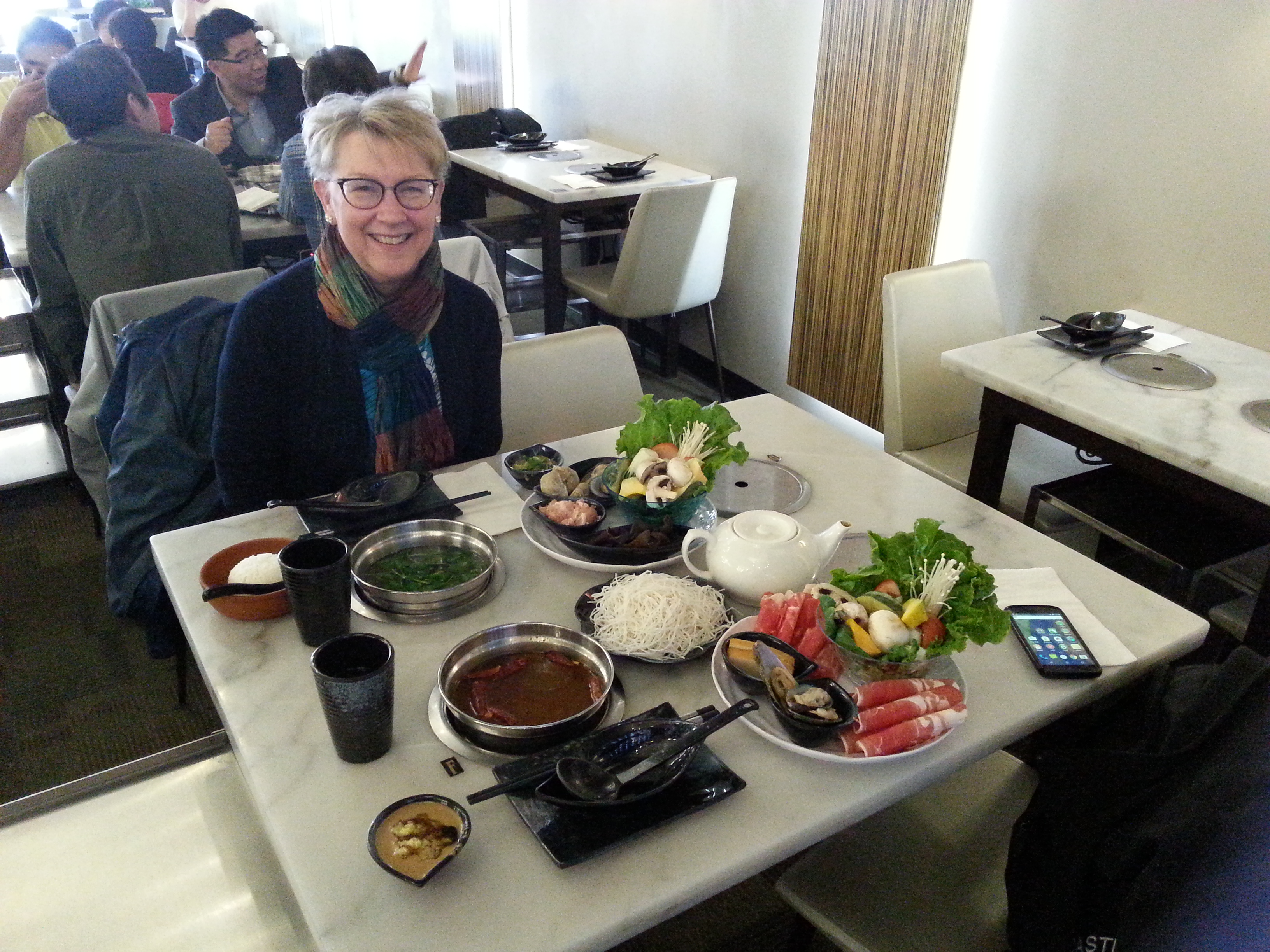
My friend told me to look under my end of the table for my cooking controls – an on/off switch, and a temperature gauge. Once I got my broth steaming, I plunked in various combinations of my chosen items –  mussels, shrimp dumplings, chicken, “black fungus” (a type of tree mushroom) , as well as the complimentary vegetables – tomato and white mushroom wedges, baby bok choy, and needle mushrooms, so-named for their tall thin stalks and pin-sized heads.20150425_175606
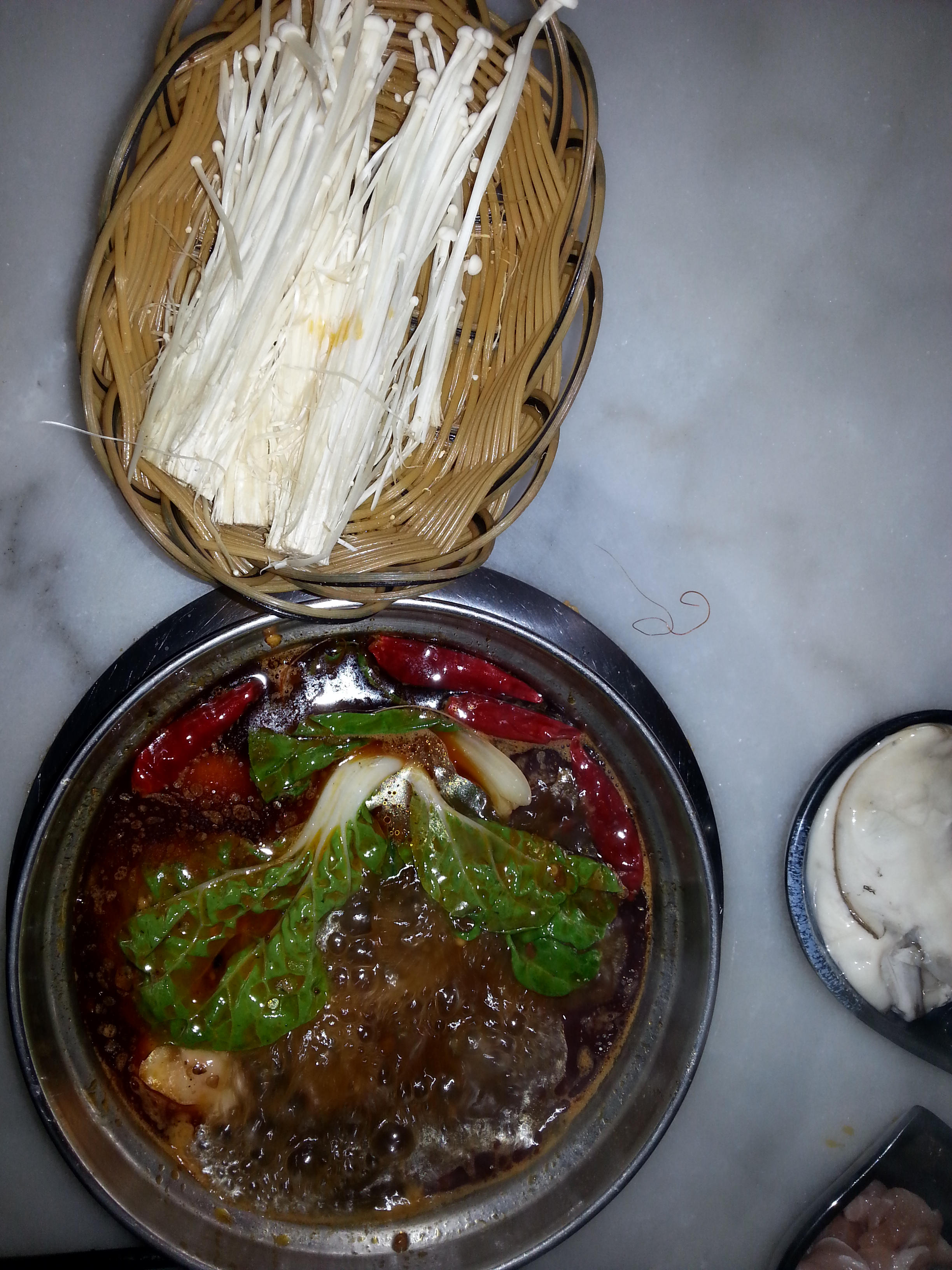
While we waited for our food to cook, we swapped stories. Hotpot dining is at least as much about talking as it is about cooking and eating. My friend told me about the red tape tangle he and his new wife are experiencing, courtesy of Canada Immigration. She is still back in China, and he has submitted a 600-page document to prove that they are actually married. I shared details of my new job, the one that took me to China, and is literally opening up a whole new world for me to learn about post-secondary teaching. We gossiped and giggled about the people we worked with in the three separate workplaces where we somehow ended up having jobs at the same time.

With more than half our food uncooked, I suddenly noticed that it was already after 1 p.m. “Hey, didn’t you say you had a meeting at 1:30?” I said.

“Yes,” he said, a little wistfully. “I guess we have to eat a little faster.”

We did eat faster – a little – but there was still time to enjoy the complimentary mango pudding and candies our waitress brought for dessert. My friend dropped me off at my building, and waved goodbye as he pulled out into traffic.

As I settled back into my work day, I realized that my hotpot lunch helped me to recapture a little of the freedom and time that were so plentiful when I was in China – and that made me resolve to visit Chinatown when I returned to Edmonton. Some resolutions are difficult to keep, but with the lure of another hotpot meal some time in the near future, I don’t think this will be one of them.20150425_144857 (1)

20150408_062419The little blonde girl and her littler, blonder brother are running hand in hand down the ramp of the Tropical Pavilion at the Muttart Conservatory. With six-year-old authority, she tells him, “And pretty soon it’s going to get a flower. And then it will stink like dead bodies!” Her face and voice light up with revolted glee.

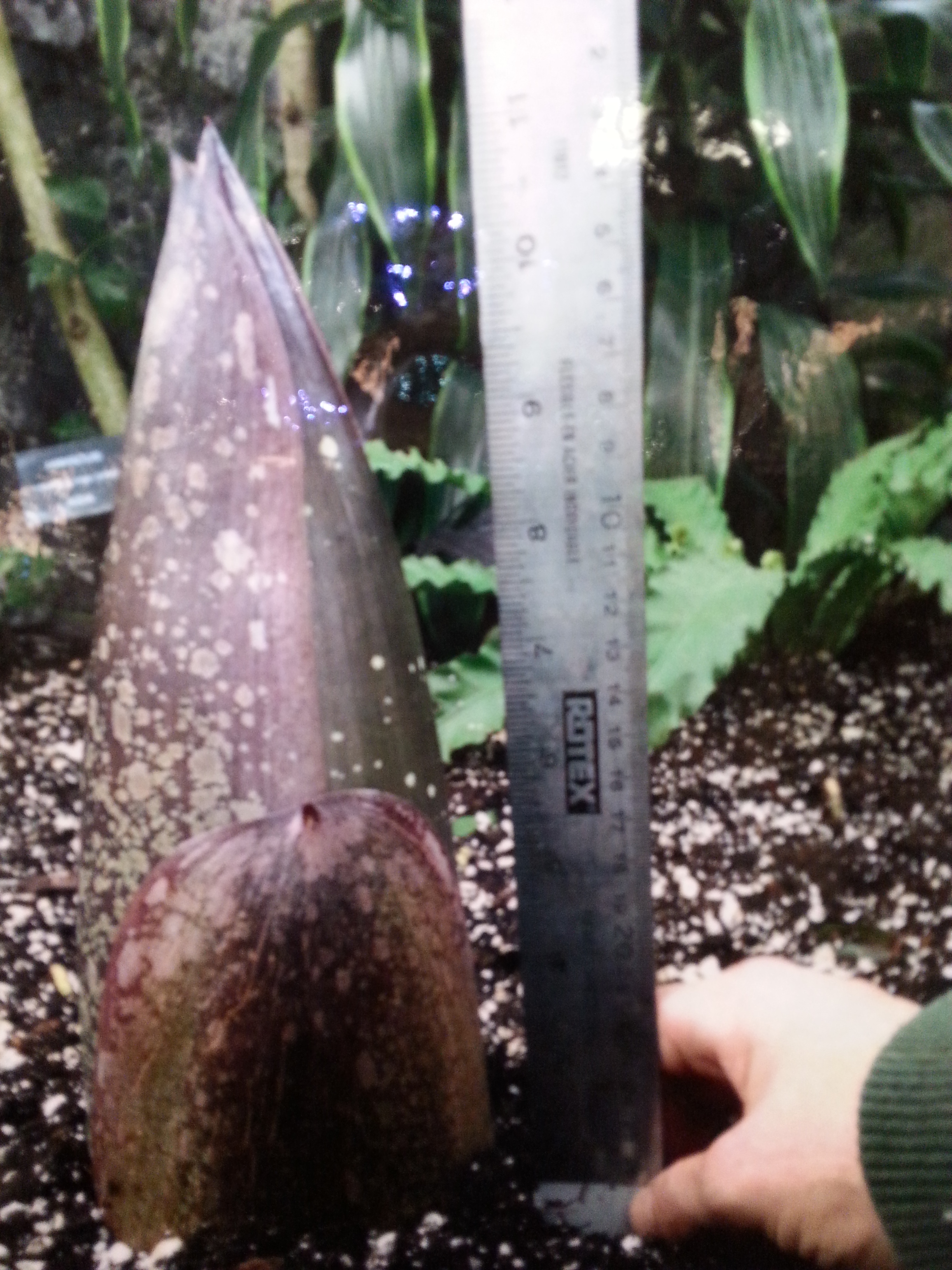
A lot of Edmontonians share her enthusiasm. For the last two weeks, we’ve been holding our collective breath for word that the Conservatory’s Amorphophallus titanum, aka the Corpse Flower, has finally opened her reeking blossom   Putrella, as she has been fondly named, bloomed in 2013, so her willingness to flower again so quickly has been a happy surprise: Corpse flowers can become dormant for up to 10 years between blooming periods.

20150408_060803Like parents thrilled by a sudden second pregnancy, the Conservatory’s Facebook page has updated us frequently on Putrella’s galloping growth – 4 inches one night, 3 inches the next. Yes, they assure us, the time lapse camera is already recording her progress, and they’re also monitoring her internal temperature.

Then comes the report that the protective sheath on the blossom has unfurled, a sure sign that the birth is imminent.  Edmontonians who are leaving town for the Easter weekend cross their fingers that the blessed event will be delayed, those who are staying home hope for an earlier announcement. We all know that when the bloom reveals itself, we only have 48 hours at the most to get to the nursery for a whiff of Putrella’s odoriferous essence. The Conservatory has already announced its doors will be open for the first 24 hours after Putrella gives birth to accommodate everyone who wants to share in the experience.

Finally, at 3 a.m. on Tuesday, April 7, it happens  By 7:15 that evening, the Conservatory announces a one hour wait time to get into their facility. I set my alarm clock for an hour earlier than usual, and cruise into the Muttart’s almost deserted parking lot at 5:30 the next morning.

“Busy night?” I ask the security guard at the cash desk.

“It was pretty steady until about 2 a.m.,” he says, shaking his head slightly. “Just starting to pick up again.”

The automatic doors into the darkened Tropical Pavilion drift open as I approach. I join a half dozen other people talking in low voices in front of the new mother, her alien beauty accented by white-purple spotlights. Two guides are answering questions, and offering to take pictures if people would like to pose with Putrella.

“Is it just me, or does she not stink as much as you said she would?” I ask one of the guides.

“The aroma comes and goes,” she says. “Sometimes, it depends on where you’re standing. Go over there and lean in.”

20150408_055127And, oh yes, whew, there it is, a smell that chemical analysis says includes the aromas of Limburg cheese, rotting fish, sweat socks, antiseptic, and mothballs. In the rainforest of her native Sumatra, Putrella would be attracting carrion-eating beetles and  flesh flies, their attentiveness assisting her to pollinate.

“If you’d like a break for your noses, folks, our feature pyramid has hyacinths blooming. Feel free to visit there before you leave.”

I take the guide’s advice, but somehow I feel strangely drawn back to Putrella. What is it about her that has attracted our attention? The thrill of a once-in-a-long-while experience? A way to indulge in a little socially acceptable morbidity? A sense of sharing in a community’s excitement?

As I exit through the Conservatory’s gift shop, I overhear a young woman enthusing to one of Putrella’s caretakers. “It’s so cool,” she said. “I just can’t stop talking about it. And I’m not even a plant person. But maybe I’ll become one!”

Dear 20150408_062610 (1)Putrella. If that’s the effect you can have on people, I hope you bloom again very, very soon.

That night, the 20-minute cab ride from downtown Changsha back to my hotel had been unusually quiet. Aaron, in his traditional place in the passenger front seat, was staring straight ahead, not chatting to the driver as he usually did. Claudia had her head down, flicking through her phone. I checked the time on my own phone as the cab pulled up in front of the hotel – 10:40 p.m.

Aaron gave some bills to the driver, and we piled out of the cab. As they usually did, Claudia and Aaron started to walk me up to the hotel entrance.

“No, no, you guys, you’ve got to go,” I  said. “You’re barely going to make it back to the university before your curfew. Go! Go!”

Their faces flooded with relief and they took off running into the warm night. It was  a 15 minute walk from the hotel to the university; if they ran all the way, they’d get there before the gates closed at 11 p.m.. If not, they’d have to swipe their identification cards to get in, a transgression that Aaron had told me would be “recorded.” He didn’t elaborate on what would happen next, but clearly, it wasn’t a black mark that he wanted next to his name. Ah, the complexities of attending a university run by the Chinese military.

DSCN0931I felt a little guilty that he and Claudia were in this predicament, because our Friday evening adventure had been my idea. Earlier in the week, we had been eating lunch at one of the grad students’ favorite restaurants – the Joy Store –  a Taiwanese-owned pizza and pasta place. While we were waiting for our food to arrive, I browsed a display of books and artwork, and, to my surprise, noticed a pamphlet advertising the Changsha International Jazz Festival. Since it was mostly written in Chinese, I took it back to the table to see if the festival might be on while I was in Changsha. “Oh, yes. it is happening this weekend,” said Claudia. “I think it would be cool to go. We’ll make all the arrangements.”

DSCN0982And so, Claudia, Aaron, and I ended up in the pulsing, crowded downtown core just as it was getting dark. After a lot of deking into nearby stores to ask sales clerks for directions, we finally found The Red Live Club, which had only opened its doors the previous year. Although jazz had been played in China as early as the 1930s, it had only re-emerged in Changsha in 2009, when a local musician and his entrepreneurial partner organized the first ever Changsha International Jazz Festival.

We lingered over dinner in the restaurant upstairs from the club a little longer than we should have, so by the time we got downstairs, and paid for our tickets, there were very few seats left. We finally found three together close to the stage, and settled in to wait for the show to begin. DSCN0980Claudia and Aaron hauled multi-lensed cameras out of their backpacks, and began to photograph the glowing neon signs and the waiting stage. Sound technicians bustled around, checking out the onstage equipment. A club volunteer stepped up to the microphone to ask everyone to put out their cigarettes at the request of the performers.

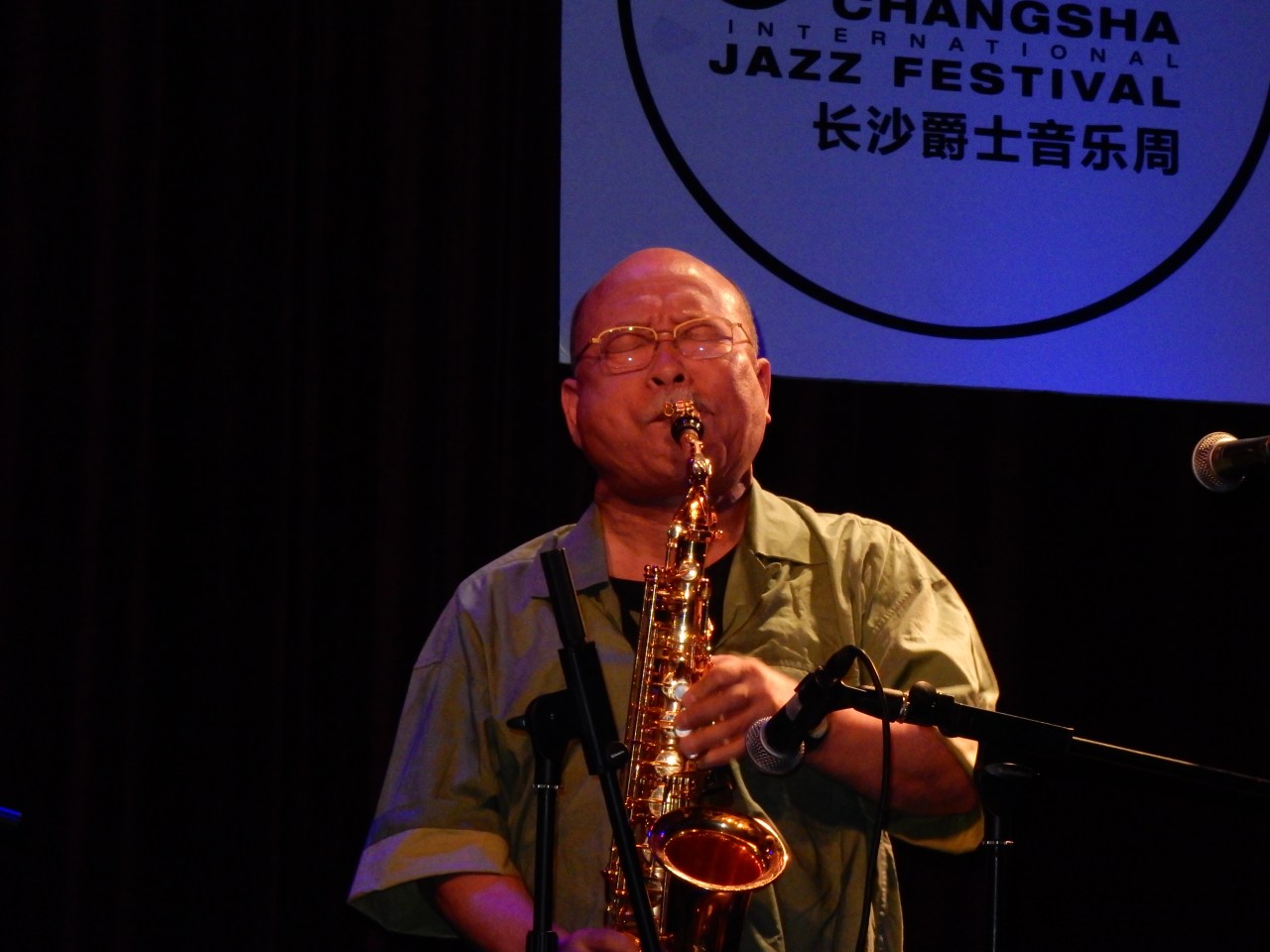
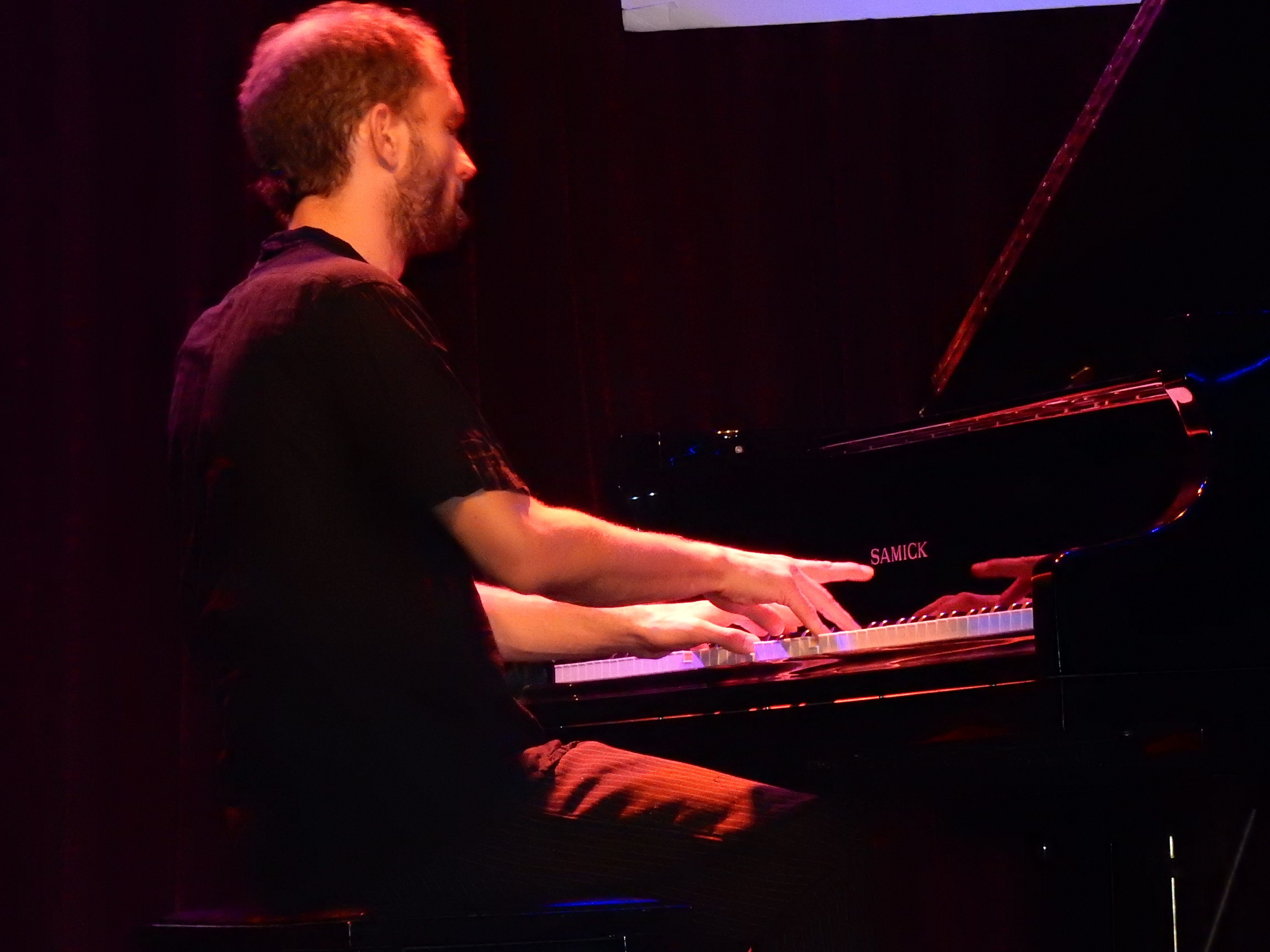
DSCN0988When Akira Sakat and Giovanni Di Domenico stepped onto the stage, the crowd greeted them with prolonged applause and hoots of excitement. The two musicians made a somewhat unlikely duo: Sakat, a stocky Japanese saxophonist in his mid-60s, and Di Domenico, a, lean, bearded keyboard player from Italy, easily 40 years Sakat’s junior.

Their music was free-flowing, an improvisational melee of sound bursts and splashes. DSCN0989Sakat’s saxophone groaned and shrieked. Di Domenico attacked the keyboard, and occasionally leaped up to reach inside his piano and pluck its strings.DSCN0994 I snuck a sidelong glance at Aaron and Claudia, wondering what they thought of this non-melodic sound escapade. I couldn’t read their faces, but as the musical set wore on, my own ears began to long for the gentler jazz of George Benson or Grover Washington.

The final selection featured Sakat’s voice as instrument. He  accompanied his whoops and squawks and growls with a string of monk’s bells. The number crescendoed to a wild climax of frenzied bell-shaking and shouts of eyes-closed ecstasy. At its end, Sakat thanked us all for coming, and disappeared from the stage.

DSCN0998

“So, what did you think of that?” I asked Claudia, as the house lights came up. She paused. “I think that everyone would have a different opinion of that music,” she said, diplomatically.

“I really liked the last song he sang,” Aaron offered, with a grin.

“Well, we don’t have to stay for the second set if you don’t want to,” I said. “We can go now, and you’ll get back to the university in plenty of time to meet your curfew. ”

“No, I want to stay,” said Claudia. “It’s my first time in a club. And besides, the second half is a performer from Changsha. I want to hear him.”

DSCN1000As if on cue, a blue-jeaned, ball capped, guitar-toting guy took the stage, and introduced himself in Chinese. His aching voice, soulful strumming and high cheekbones made me think of a First Nations country rock singer at a Canadian summer music festival. Claudia leaned over and said in my ear, “I like him a lot.” I smiled and admitted I did too.

At 10 o’clock, we agreed to call it a night and headed out to the curb to flag down a cab. As we stood there, cars and motorcycles pulled up and their drivers spoke a few words to Claudia, but she waved them off.

“What are they saying to you?” I asked.

“They are unlicensed drivers. They want to give us a ride. I tell them no, because they are not safe.”

But as the legal taxis zoomed by us, all of them already carrying other passengers, I saw anxiety creep into Aaron’s and Claudia’s faces. Aaron set off to see if any buses  were running at that time of night. He returned a few minutes later shaking his head. He and Claudia exchanged a few words, and apparently came to an agreement, because they flagged down the next gypsy cab that came our way.

The ride turned out to be perfectly safe, if a bit tense. And, yes, the two of them did make it through the university gates before they swung shut at 11 p.m. For me, it was an evening of coming to terms with cultural differences – 21st century college kids with curfews, a re-emerging Chinese jazz scene, ushered in by a Japanese-Italian partnership, and a Chinese country rock singer who could have been a member of Canada’s Cree nation. I’ve always travelled to have my pre-conceived notions of the world turned upside down, and that night, I wasn’t disappointed.

Two weeks into my China adventure, I finally experience what people in Changsha call a “good air” day. A few rainstorms had cleared the smog and significantly reduced the 30+C temperatures. Under cloudless skies, the sun warm on our backs without scorching us,  I walk with Mia, my grad student guide for the day, in companionable silence from our restaurant lunch to my classroom.

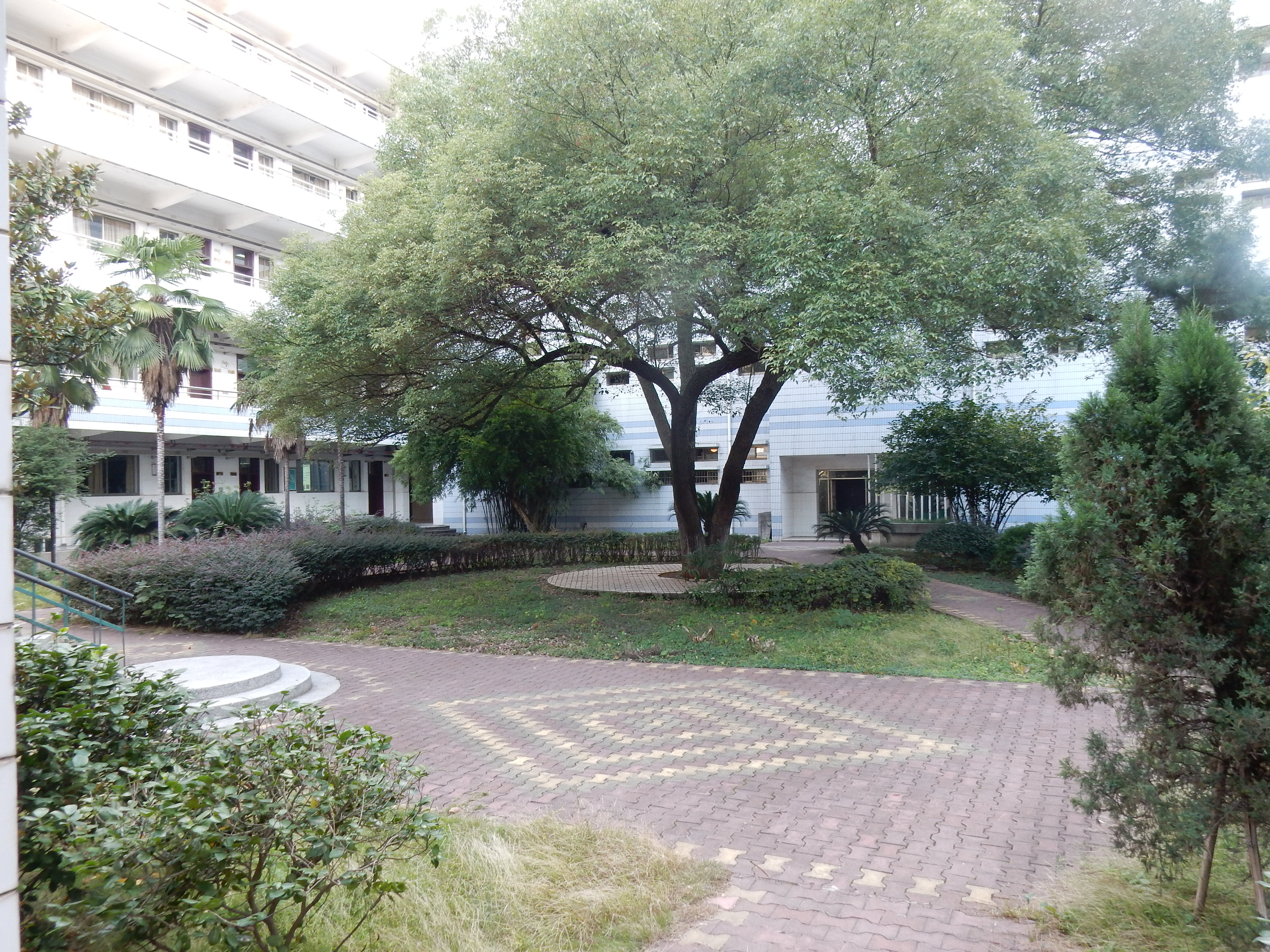
DSCN1370Campus is quiet, just a few students walking between buildings, and a couple of soldiers in forest green uniforms cycling past us. We head into the graduate student complex, and cross the small, slightly overgrown inner courtyard. In spite of its unkempt appearance, I marvel every day that I am teaching in a place where palm trees and clumps of bamboo shade my classroom.

Mia smiles a gentle goodbye and I push the already ajar classroom door open and tiptoe inside. I’ve arrived a little earlier than usual  so the classroom lights are off but a few students are already back from lunch. Some of them are reading on their laptops or listening to music through earbuds. They look up, surprised to see me, their eyes asking if I plan to start the class early. I shake my head, and hold a finger to my lips. I don’t want to disturb their classmates who are having a nap, a few stretched out across two chairs, others with their heads down on their desks. One of the men is snoring. His colleague, with a wicked grin, whips out his camera and snaps a picture of the open-mouthed sleeper, before resuming his own quiet reading.

I walk over to the open window and lean against the casement. A few hundred meters beyond the window, hidden by scrubby bushes, the 1 p.m. freight train from Beijing to Hong Kong thunders past, one of many we’ll hear during the afternoon. Several times throughout our session, the triumphant notes of a cornet will call to us, a sound which replaces class change buzzers in China’s military-run universities. As a teachers’ professional development course, we aren’t on the same schedule as the rest of the university, so our classroom activities continue in spite of the cornet’s warning.

One sound that does interrupt us is the daily concert of patriotic music, which blares over the loud speakers in the courtyard outside the classroom between 2:15 and 2:30. The same song plays every day at the same time, in every military-run university in China. One of my students never fails to get a few laughs with his comical imitation of the highly dramatic, female operatic vocalist.

But right now, it’s quiet. In a few more minutes, the nappers’ pre-set computer alarms will begin to sound. The rest of the students will return from lunch, greeting their colleagues and getting out their notebooks and their water bottles from their backpacks, offering me samples of whatever fruit or cookies they’ve bought on their noon breaks. Someone will help me get my PowerPoint presentation onto the screen and we’ll be ready to start another lesson.

While it’s true that I savor a few moments of classroom silence now and then, I enjoy student bustle more. Their conversation and laughter tell me that they’re engaged – with the lesson’s content, with each other, and with me. We become an energized community of learners – and, in teaching, it just doesn’t get much better than that.

DSCN1266DSCN1362

Mia and Aaron? Or Penny and Leonard?

Mia and Aaron? Or Penny and Leonard?

One evening when I was having dinner with the grad students, Mia and Claudia were badgering Aaron to think through his buddies for possible boyfriend candidates (they were speaking Chinese, but Claudia explained their general topic of conversation, if not all the details.)

“Aaron is asking what our requirements are,” she grinned.

“And what are you telling him?”

“We are saying we want someone tall, rich, and handsome,” she giggled (I guess “dark” is a moot point in China).

As I listened to them chatter and laugh, I was reminded of early episodes of the Big Bang Theory, so I started to describe the program to them.

“Oh, yes!” Claudia said. “We watch that show. Sheldon is very funny.”

(Some of my professor students were also Big Bang fans. One of the English language teachers told me that the program plays there with Chinese subtitles – can you imagine the complexity of that interpreter’s job?)

Once the grad students had exhausted their love quest conversation,  we finished dinner, and headed out of the mall towards the Xiang River.  Every Saturday evening in the summer and fall, Changsha holds a fireworks display, and I was lucky enough to be in town for the final show of the season. Changsha is internationally famous for its fireworks, exporting them around the world. The city also received the honor of  supplying all the big bangs for the Beijing Olympics.

It was a short but crowded walk to the fireworks viewing area. The six lanes of vehicle traffic between us and the river was at a standstill, so Aaron scampered between the car bumpers and reached the other side of the street with no problem.

But before Claudia, Mia and I had the chance to follow, the traffic began to flow again. And just as suddenly, fireworks lit up the sky. “Come on!” Claudia said, “The show is starting!”

She grabbed my right elbow, and Mia took my left hand.

“No, wait,” I said, “I don’t think it’s safe to….”

“It’s OK, Pam,” said Mia. “Don’t be scared!”

Before I could resist any further, they’d steered me halfway across the road. I stood between them, trying to make myself as small as possible,  wondering if we were about to star in a big bang episode of our own. The traffic whizzed within inches of us on either side. Finally, a monstrous bus pulled up directly in front of us and stopped, blocking our view of the fireworks and our path to the curb.

“This way!” Claudia yelled over her shoulder, finding a small gap between the back of the bus and the bumper of the BMW behind it. .

“There!” said Mia as we reached the sidewalk. “Now you are safe.”

I exhaled, and we plunged into the crowd. Aaron shouldered my backpack, and the three of them manoeuvred me into the best viewing position, closing ranks behind me. DSCN1088

What a show! Fireworks exploded in a massive bank of crimson, silver, gold and pink. The sky became a gallery of waterfalls, hairy spiders, spinning wheels, sun sparkles on snow. The colors arched, zipped, gyrated. And just when I thought the spectacle couldn’t go on much longer, another burst rocketed into the darkness.

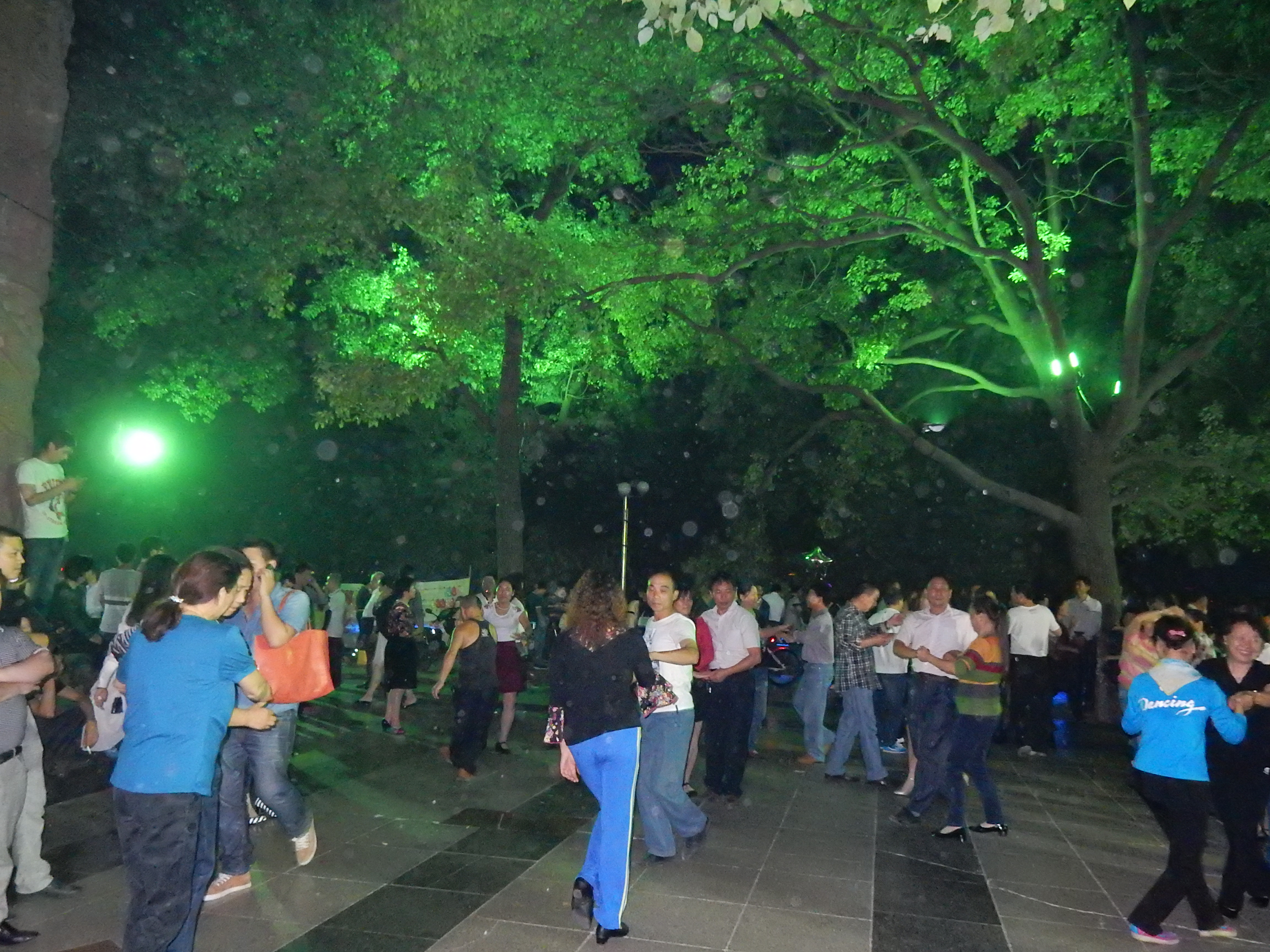
Twenty minutes later, we cheered the finale – grinning, wide-eyed, delighted – and made our way back through the crowd of balloon hawkers, trinket salesmen, and couples waltzing to music blaring from a loudspeaker. DSCN1094

Aaron spotted an empty taxi, and we piled in. Claudia shared her videos of the show with me, while Mia and Aaron flipped through their cell phones and talked across the back seat.

“We are already planning what to do next weekend!” Mia said.

Could anything possibly top that night’s big bang? I could hardly wait to find out.

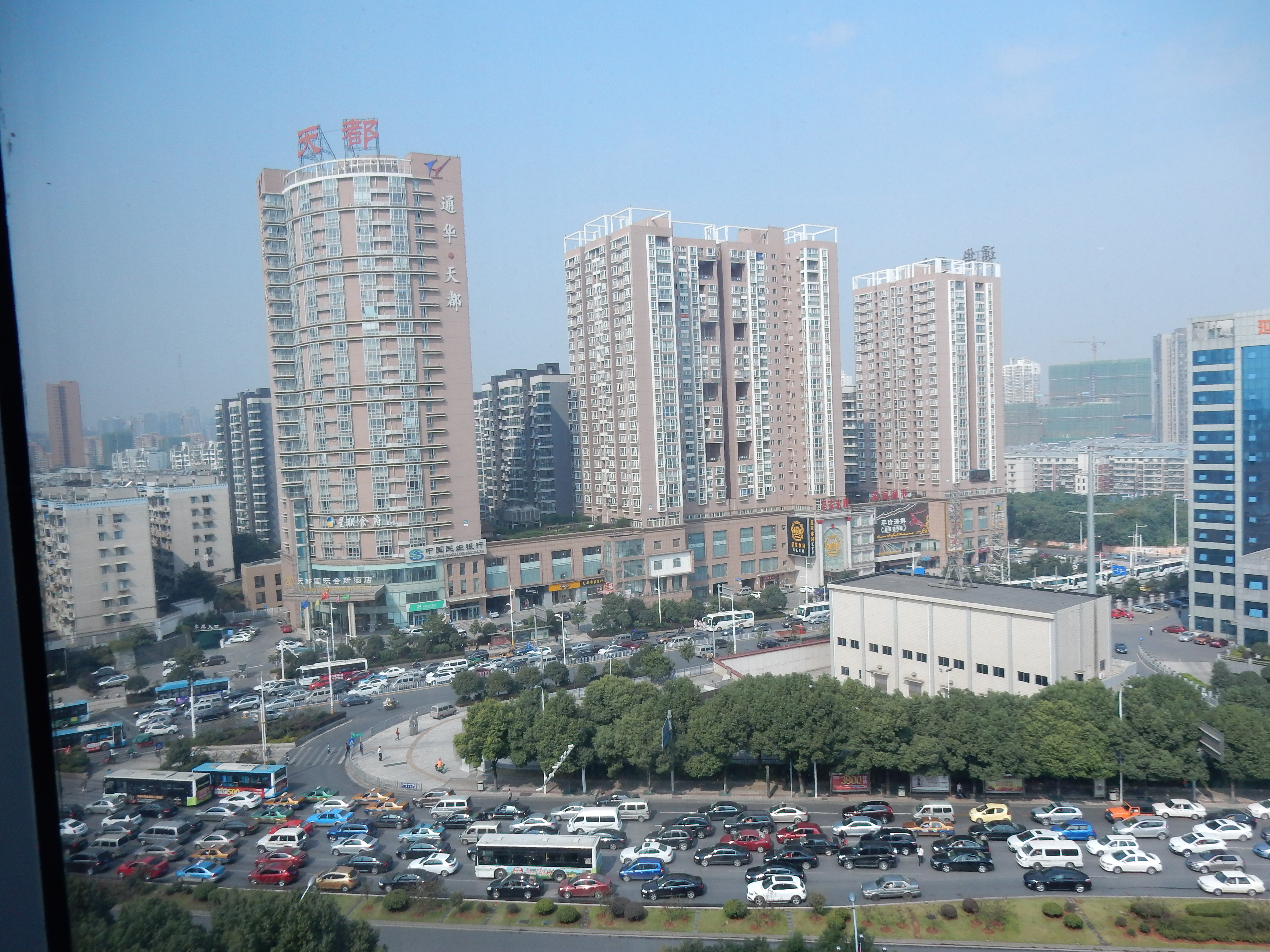
DSCN1001The first time I crossed the hall from my hotel room to visit my China teaching partner, Walter, in his room, I was kind of jealous. Not only was his room more spacious than mine, it was on the shady side of the hotel, and its view showcased Changsha’s bustling streets, affluent skyline, and urban greenery.DSCN1114

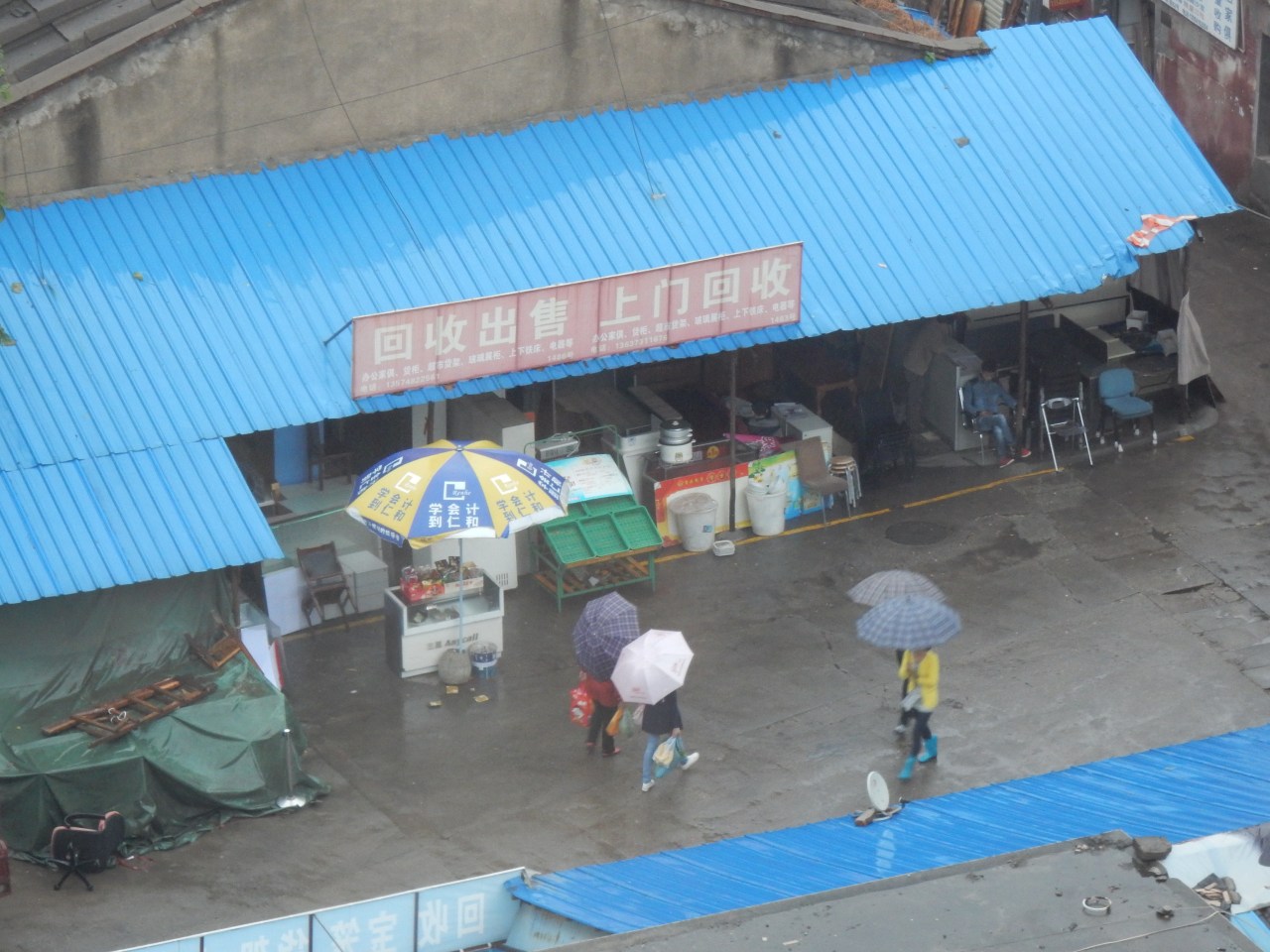
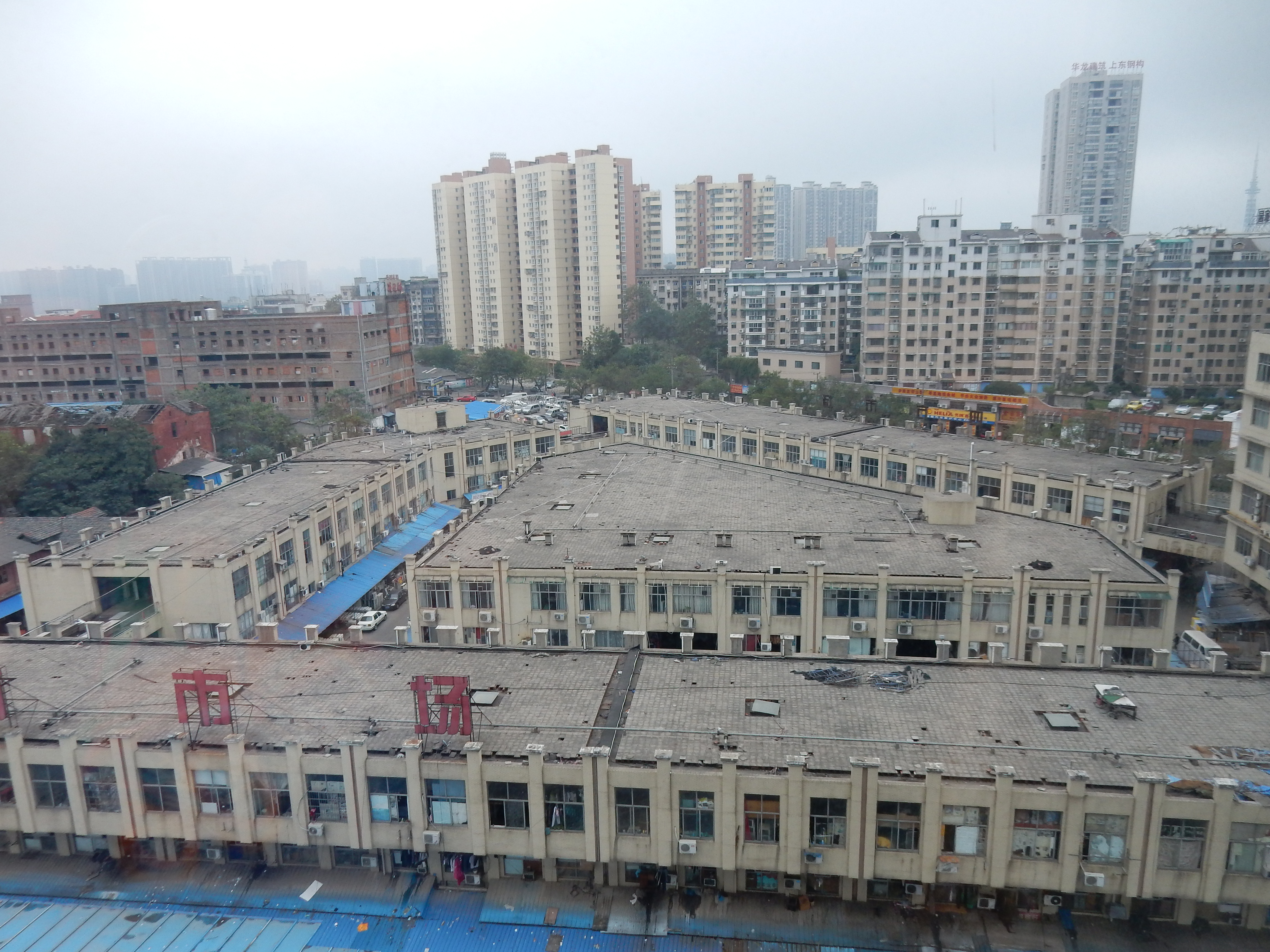
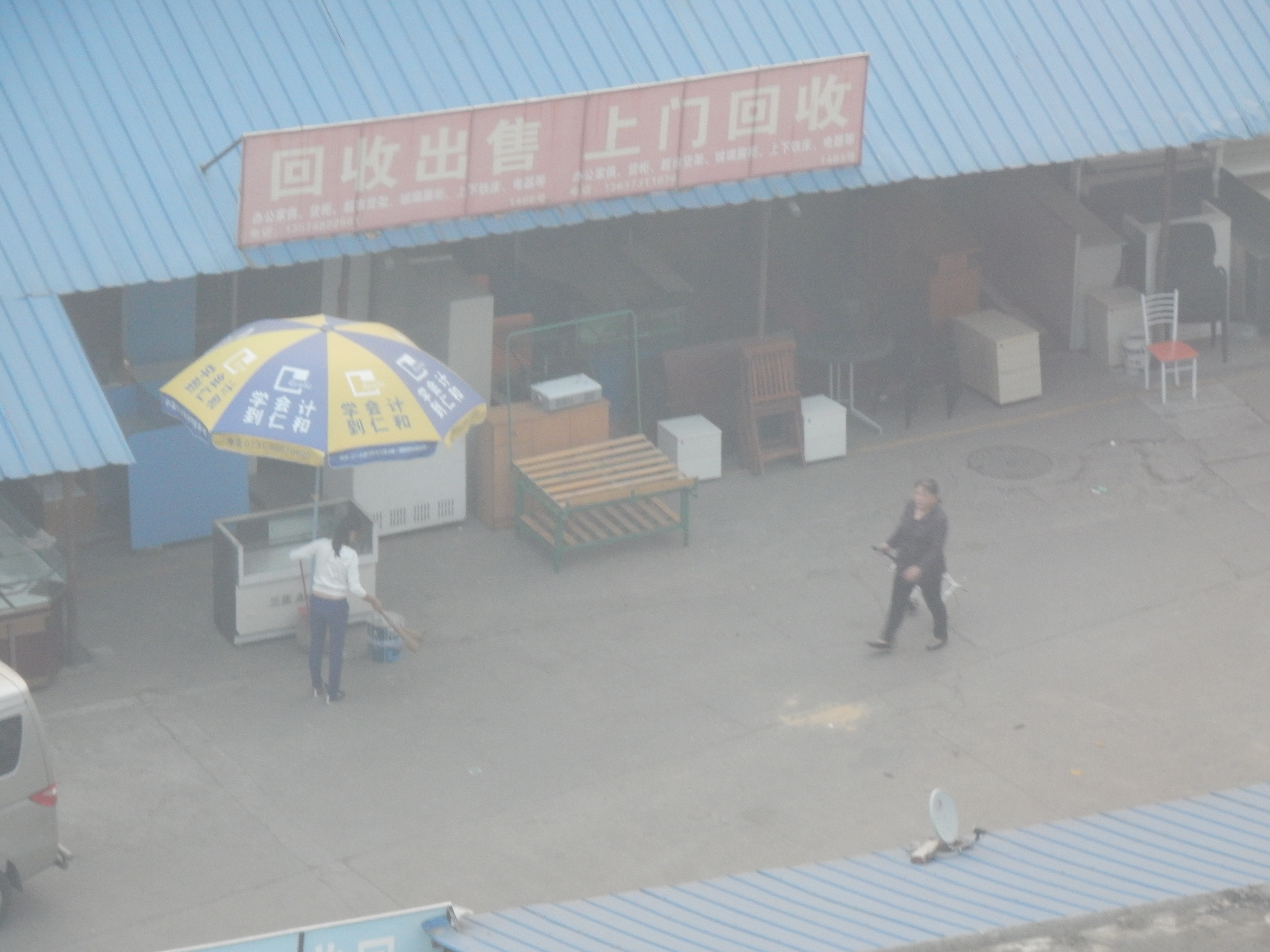
My digs, on the other hand, were at the back of the hotel, overlooking a 1950s style, light industrial area that sold used furniture. As soon as the sun awoke, and began its red-faced struggle to break through the  smog, the temperature in my room started to climb.

DSCN0851At 9 a.m, when the hotel switched off the air-conditioning for the day, assuming all its guests must already be at their business destinations, my room situation definitely over-heated.If I were lucky enough to find the woman who cleaned my room, I could mime that I was too hot, and needed the air-conditioning switched back on. If not, I lesson planned  in my lightest clothes and guzzled a lot of bottled water.

DSCN0850But, at some point during my stay, in spite of the industrial view and the maddening heat, my hotel room began to feel like home. In the morning, I pulled back the curtains and looked down nine stories to see women sweeping the streets in front of their businesses, often leaning on their brooms to chat. Men pedalled purposefully to work on rickety bicycles, dodging dogs who trotted from one garbage can to the next. Sometimes, I was treated to a quick fireworks display, which one of my students told me is a common way for Chinese families to celebrate birthdays, anniversaries, and weddings. And sometime during the morning,  I’d hear an ice cream truck-style version of “It’s a Small World,” its tinkling notes a reassurance that I had become at least a temporary member of the Changsha community.

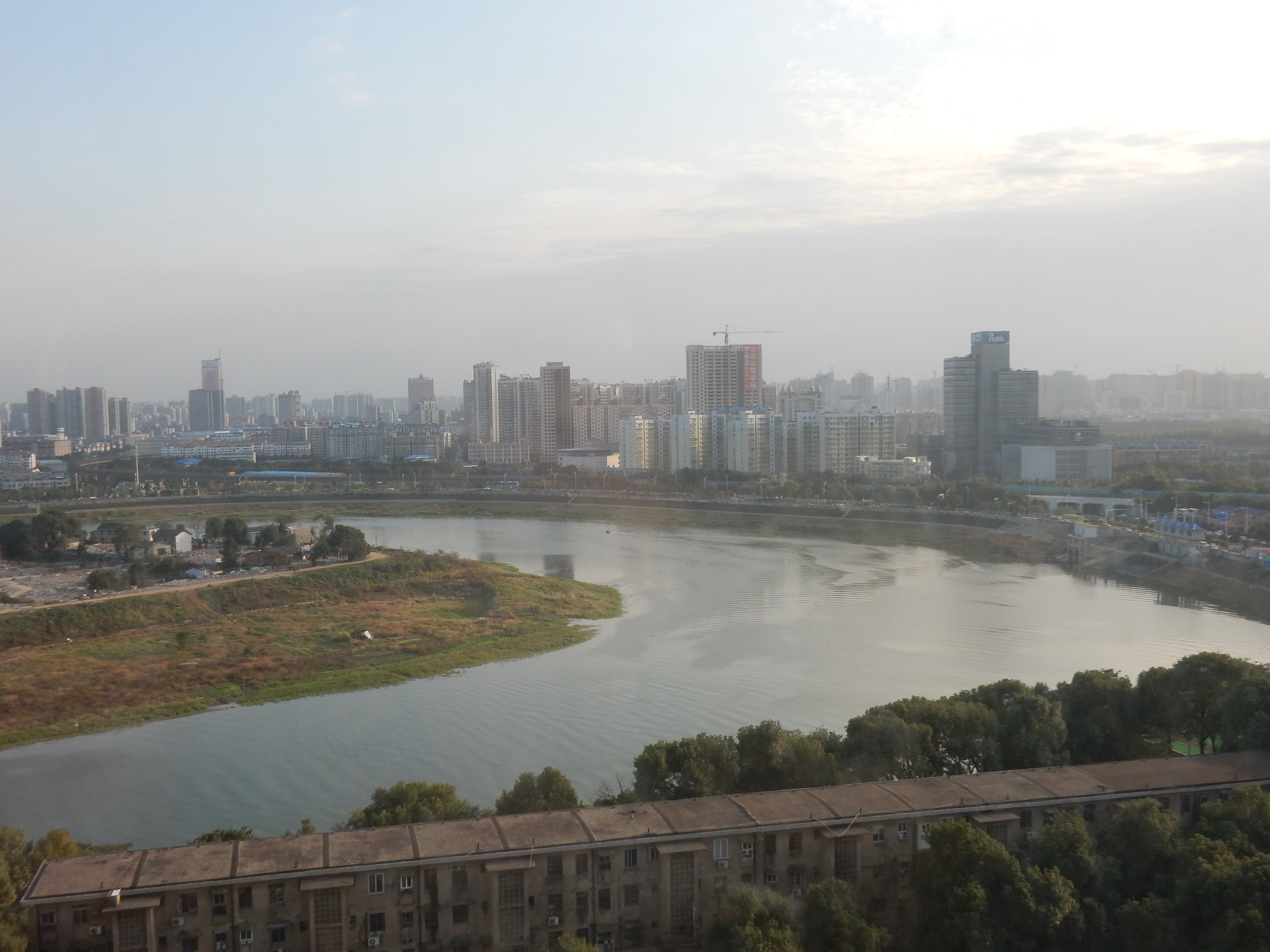
So when I returned from teaching one day to hear that Walter and I were being moved out of the hotel and into the university’s “foreign experts” apartment building, I felt a pang of disappointment.  “But our rooms are way nicer than here,” Walter enthused, showing me the pictures he’d taken during his afternoon tour. “We each get our own apartment. They’re huge, really quiet, and we’ve both got a great view of the river.”

Three days later, our grad student guides lugged our stuff out to the waiting university van, and we drove five minutes to our new residence. When we arrived, we discovered that the elevator only ran to the 11th floor, and we were on the 12th. We battled our suitcases and computers and bags of teaching materials up the stairs, and unlocked our doors.

“Wow!” said Mia, as she followed me into the apartment. A living room with a wide screen television, a kitchen, a bedroom, a fully-equipped office, and a bathroom sprawled out around us. A sunroom with a washer and dryer led onto a balcony which overlooked the river.DSCN1182

While the grad students made themselves at home on the white sectional couch, searching for an English language TV station for me to watch, I unpacked and took inventory of my new home.  I explored the kitchen first, and was dismayed to find a wok on the stovetop, with a half inch of oil pooled at the bottom, remnants of the last resident’s final meal. I pulled open the cutlery drawer and found forks with grains of rice stuck to their tines. Luckily, there was a dining room on the main floor where we could sign up for free meals. I already knew my name would be on that chalk board a lot.

The bathroom was in even worse shape. Not only were there no towels, soap, or toilet paper, but I found a large suspicious stain near the toilet and a used cotton swab on the floor. These sent me rocketing across the hall to Walter’s apartment. He too had been making not-so-happy discoveries – a thick layer of dust on all the shelves and in his closet, which sifted down onto the shoulders of his black suit when he hung it up.

We looked at each other in uneasy silence, each of us assessing the situation. Walter suggested that we get some lunch, buy the supplies we needed, and make the best of the situation. I wasn’t so sure.

After our shopping trip, the grad students and I escaped downtown for a movie and dinner.  I returned at about 9:30 that evening, looking forward to an early night. As I sat down on the edge of the bed, I landed with a surprising thwack. The mattress had all the give of a hardwood floor covered by a threadbare rug.

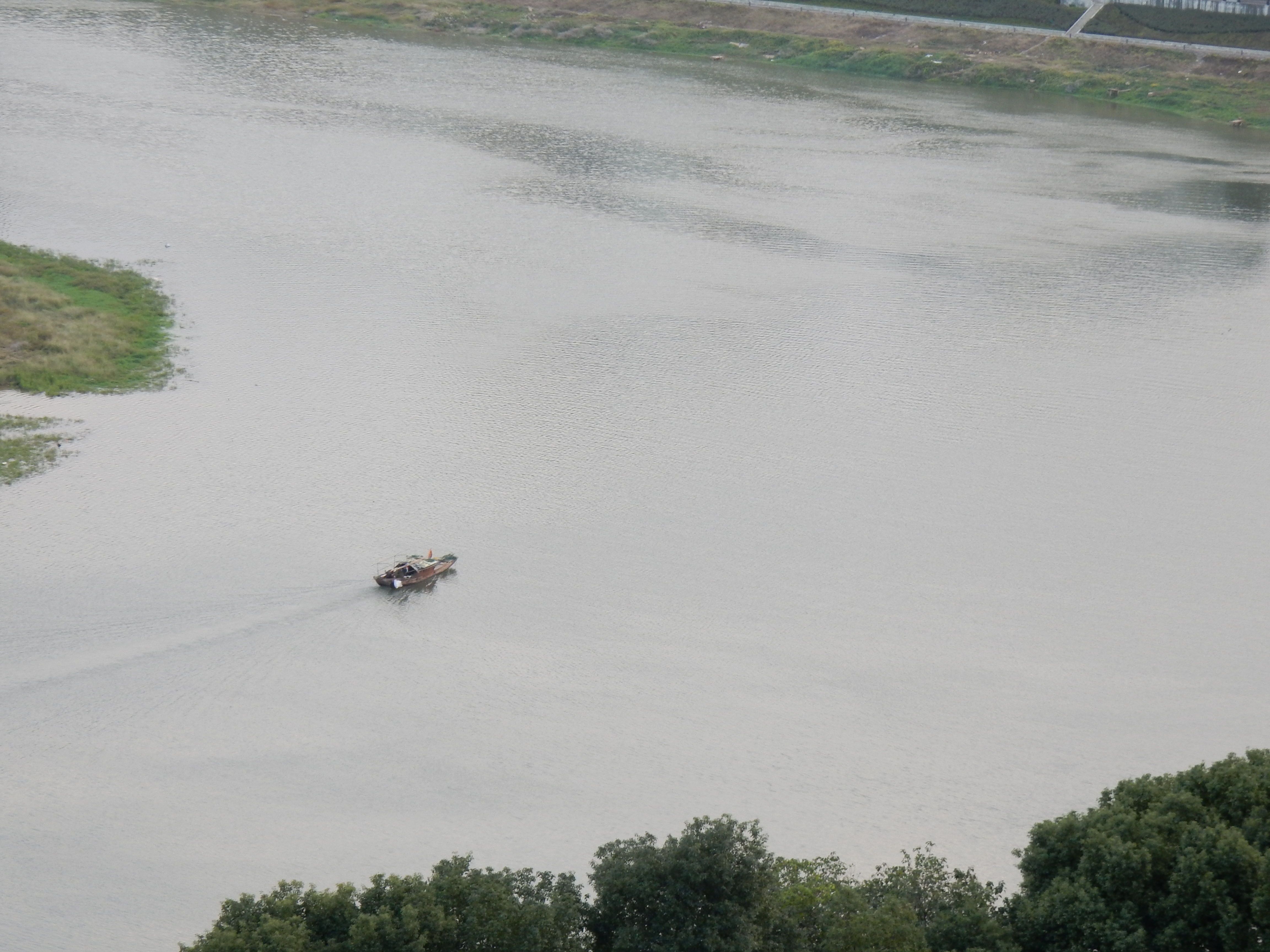
At 4 a.m., I conceded victory to the bed and got up, my back and hip complaining loudly. I whiled away the hours until daybreak with e-mails to Canada, a pot of black coffee, and some of the fruit I’d bought at a local market. Once it was light, I went and stood out on the balcony. Except for a small boat chugging up the Xiang River, there were no other signs of life.DSCN1185

Once I was sure that Walter would be up and about, I tapped on his door. As soon as he saw me, he knew something was wrong. Over another pot of coffee, we decided to let our university hosts know that our new accommodations were far from acceptable. They agreed to move us back to the hotel the next day.

The best surprise of all was that I got my old room back. The next morning, I opened the curtains and watched my neighbors hustle through the rain on their way to work. In spite of the change in the weather,  the tinkling notes of “It’s a Small World” had never sounded so welcoming. DSCN1115

When I’m at home in Canada, Sunday is grocery shopping day. As my husband and I trudge  up one aisle and down the next, filling our cart with food that looks the same as last week’s and last week’s before that,  I’m occasionally overcome by a feeling of irritated boredom. “Why can’t someone invent some new kind of food?” I ask no one in particular, although my husband feels since he’s standing next to me, it’s his job to answer.

“Well, what do you want?”

“I don’t know,” I grumble. “Something different.”

If you have ever felt a similar ennui with your day  to day diet, I have a piece of advice for you:

Go to China.DSCN0881 DSCN0879

During the four weeks I spent there, I lost track of the different menu items I tried. I rarely ate the same dish twice. If I did, it was because my first taste inspired me to return for a second – and a third.

Now, if I’m being perfectly honest, my relationship with eating in China didn’t start out that smoothly. When my teaching partner and I went to the hotel dining room, or to the restaurants in the immediate neighbourhood, we discovered the menus were written in Chinese only. Between our non-existent Mandarin and the servers’ lack of English, we rarely knew what or how to order. Sometimes, the menus contained pictures that we could point at,  but even then, we often ended up with dishes that bore little resemblance to what we thought we’d be eating.

After admitting these restaurant challenges to our grad student guides and the professors we were teaching, we began to eat like royalty. With their assistance, we sampled student hangouts near campus, hotel buffets, shopping mall restaurants, hotpot holes-in-the-wall, and even a few Western restaurants.  Our Chinese colleagues navigated their way adeptly through the menus, switching swiftly between English and Mandarin as they  asked about our preferences (seafood, yum; organ meat, not so much; spicy, a little), then discussed the dishes with the server.

Sometimes, this back and forthing went on for a very long time. When I asked one of the grad students about this, he said, “In China, the dishes appear on the menu by name only. There are many regional variations of each dish, so we have to ask about what ingredients are used in this particular version. Not only that, you never know whether the dish is enough for one or a family of five. And even then, when the dish finally arrives, sometimes we get a surprise!”

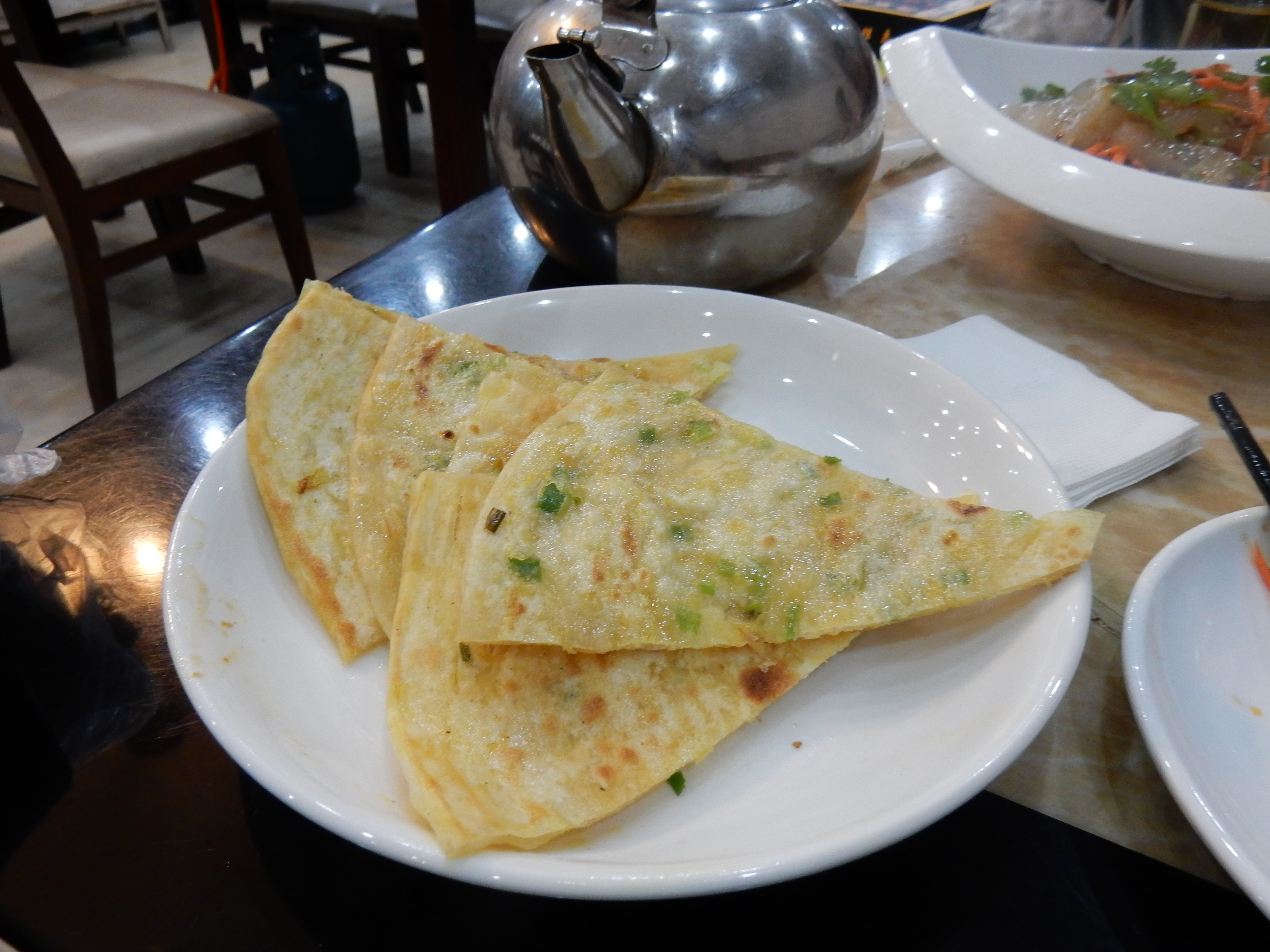
20141023_185406 DSCN1130 DSCN1006 DSCN1325More often than not, though, the surprises were pleasant. If I didn’t recognize the dish’s ingredients, the students would consult the translation app on their phones and show me the results: Lotus root. Spicy snake. Black tortoise jelly.  Bullfrog. Taro. Black rice purple potato bags. Stinky tofu. Green onion pancake. Needle mushrooms.

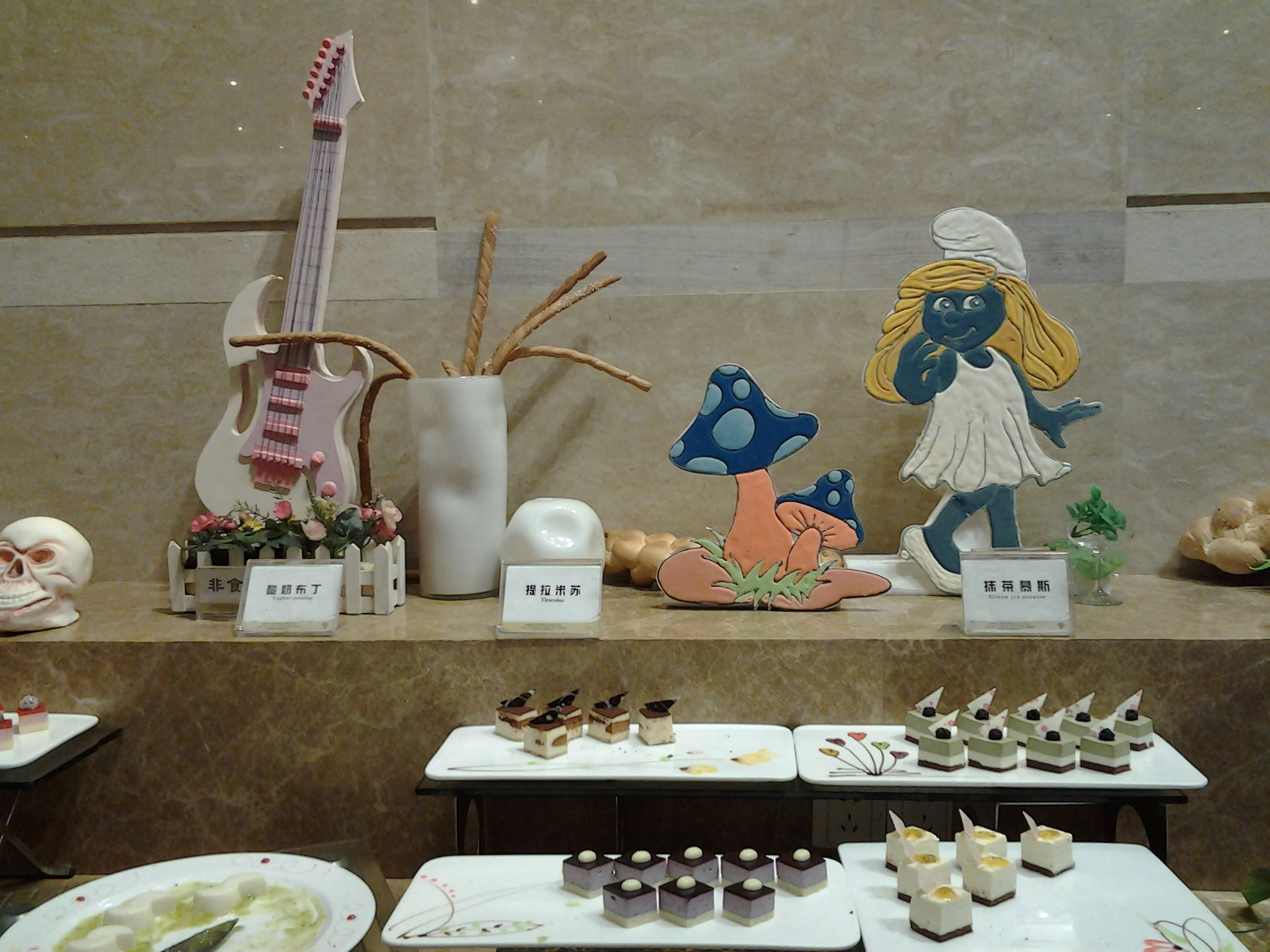
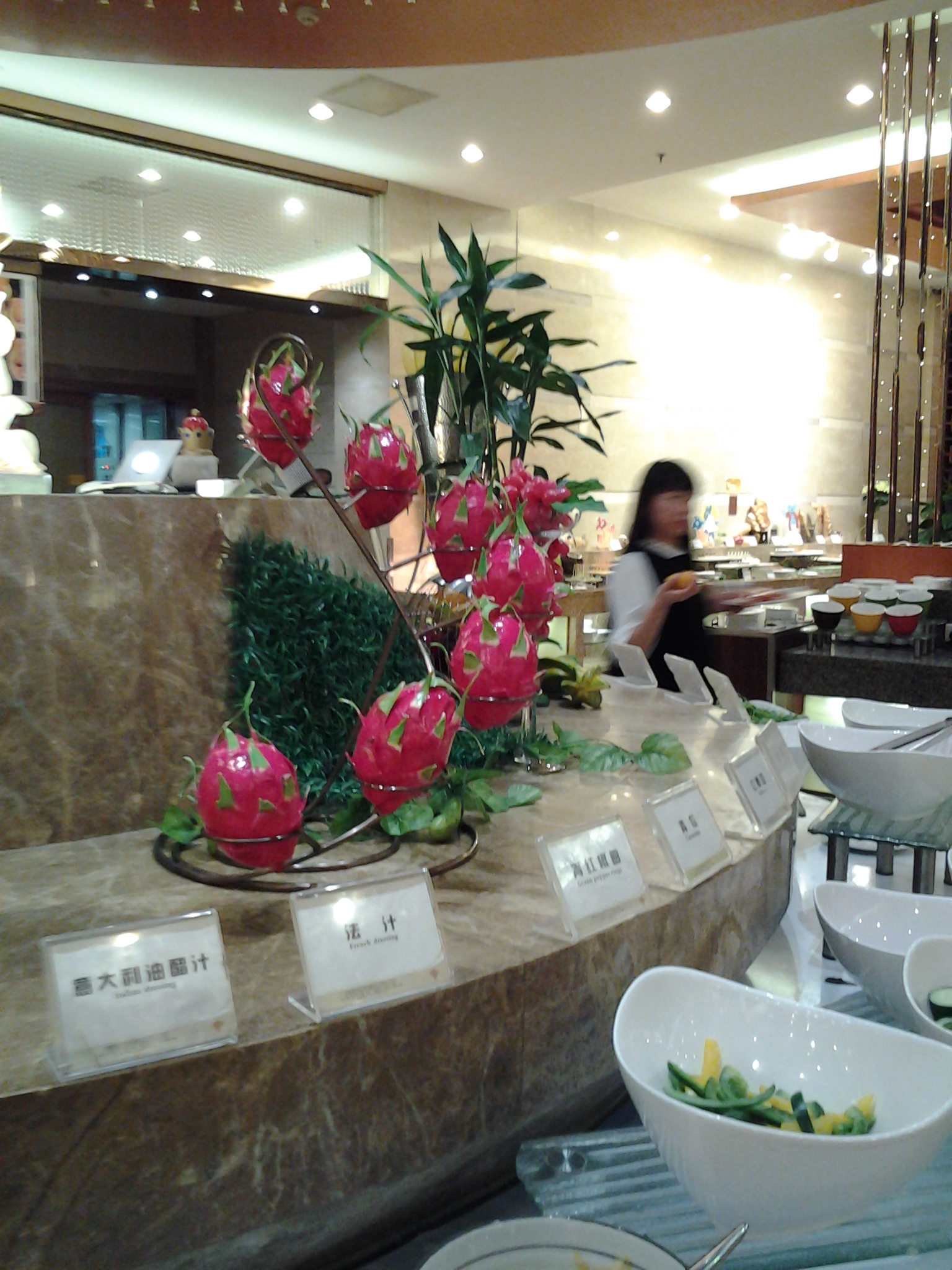
Often, our food selections were made even tastier by the environment in which we ate them.  Some restaurants took great pride in how they presented their dishes. One hotel buffet presented each food type as part of an artistic display. More casual restaurants provided small creative fluorishes, designed to make the food as pleasing to the eye as to the palate.

20141023_19090320141023_184220DSCN1245

One of my favorite eating styles was the hot pot, which allowed us to cooked our own food at the table.  The students took us to several different types of hot pot restaurants. One featured a large cooking vessel, full of boiling water,  in the centre of each table.  We chose the meat, seafood, vegetables, noodles, and dipping sauces from a large buffet, brought them back to the table, and dunked them in the water, regularly replenished by our server. At another hot pot location, we each had our own pot, which featured different flavors of broth. Although we cooked in the pot nearest to where we were seated, we sampled regularly from all the others.

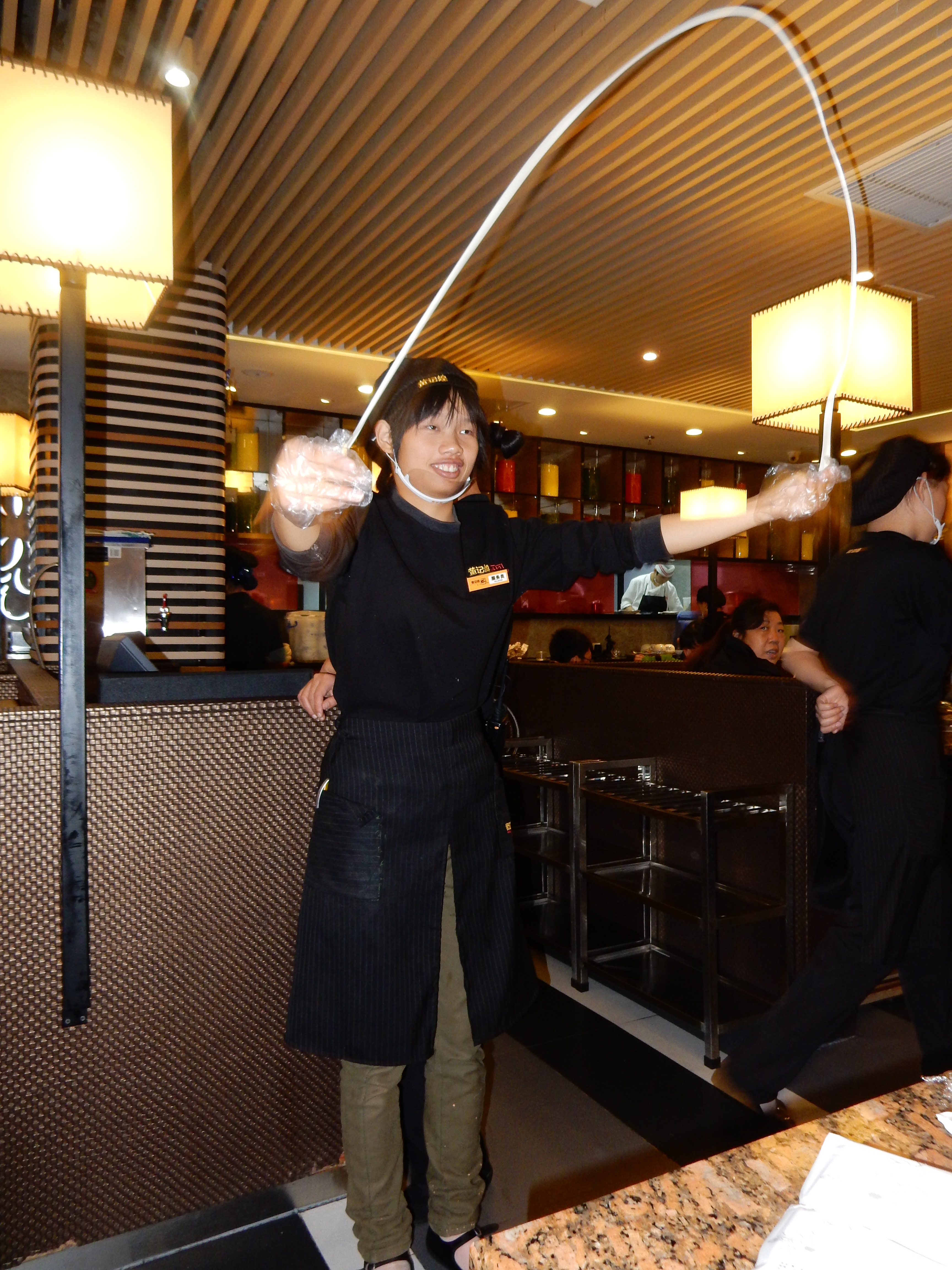
DSCN1079DSCN1228Once, in a shopping mall hot pot restaurant, our server prepared some of the dishes for us at the table. When it was time to put the noodles into the dish, the students said, “Get your camera ready, Pam!”  The server smiled, and removed a short, fat noodle from a plate. She stepped back from the table, one end of the noodle in each hand, and, arms wide, whipped it in front of her like a child’s skipping rope. The noodle stretched to at least ten times its original length! The server performed this trick several more times until she had enough noodles for the dish, then left us to enjoy her workmanship.


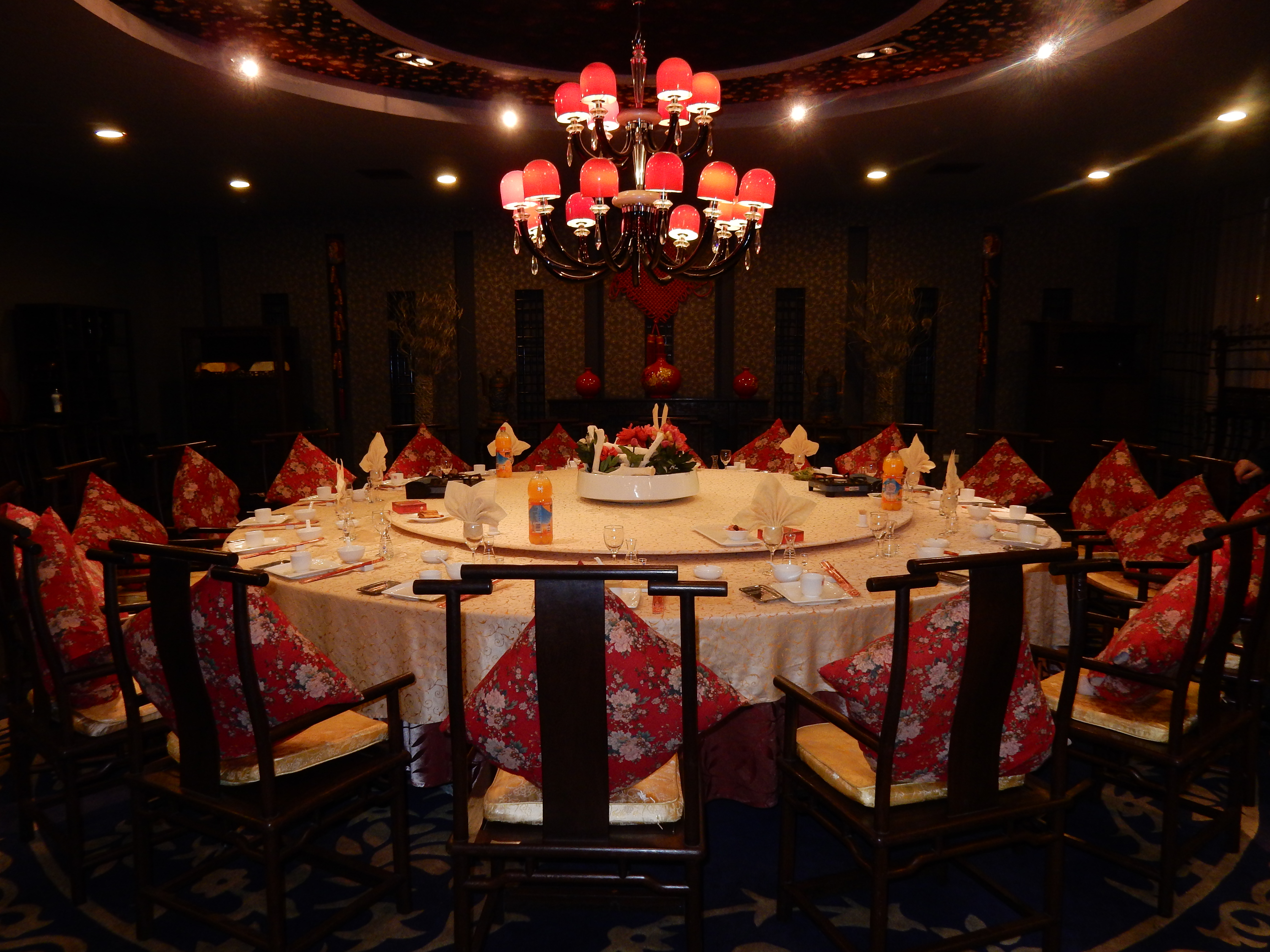
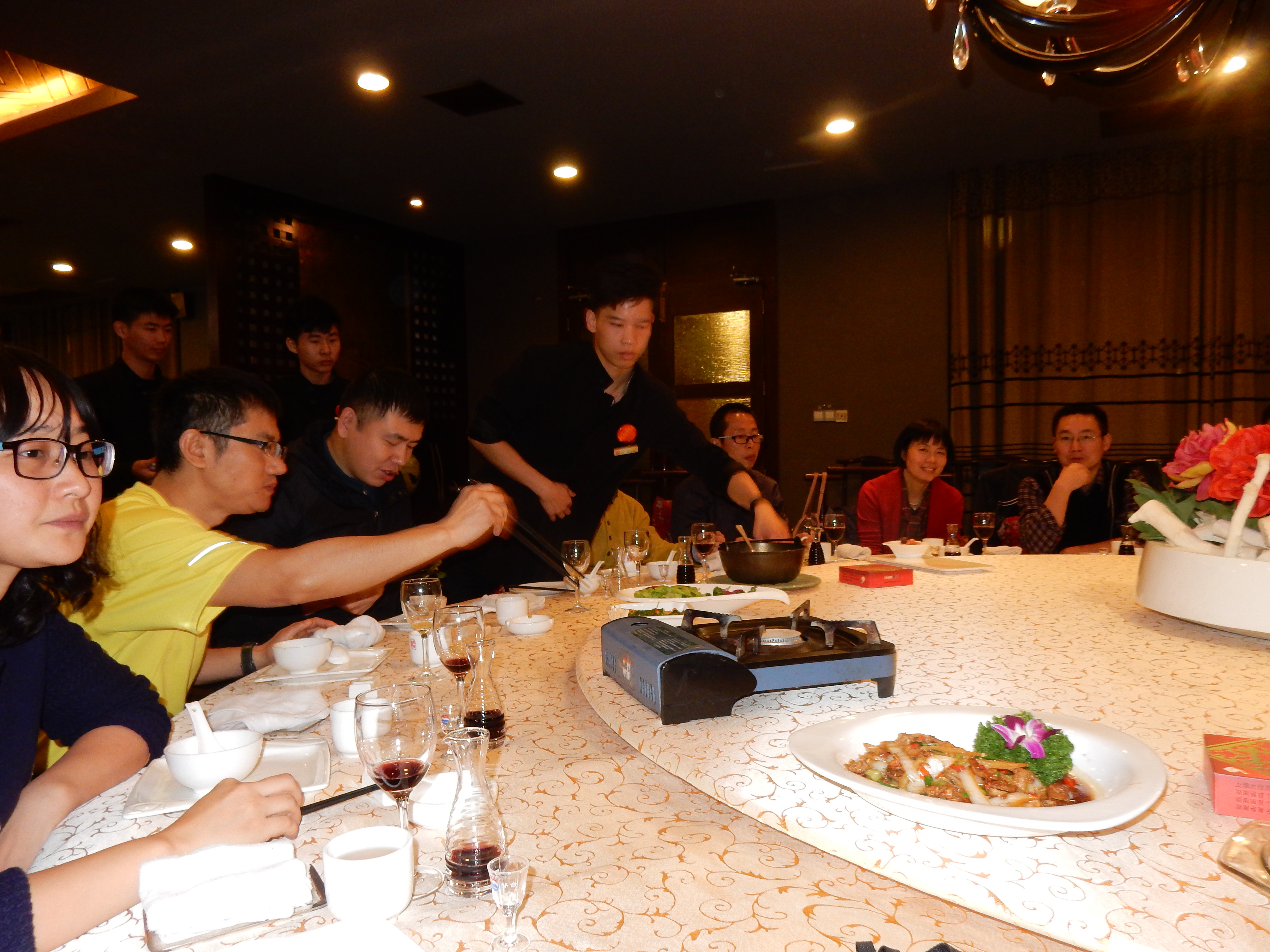
DSCN1430But my favorite feature of eating in China was the sense of connection that dining out inspired. People like to eat in groups around large tables, the better to accommodate not only more people but more food. The larger tables were often equipped with a lazy susan, where the server placed the heaped up platters. People spun the lazy susan and took a tiny portion of food with their chopsticks, rather than a large scoop. Sometimes, the person sitting next to me would place a morsel on my plate, which one of my students explained was a gesture of friendship. In between bites, there was lots of lip-smacking, wine- and tea-sipping, talking, and laughing.

DSCN1433It’s been almost two months since I returned home from China to the predictable foods and eating habits of North American dining. But, recently, I found out that one of the Changsha professors will be visiting my home city with a contingent of colleagues. Yes! An excuse to visit Chinatown, and re-experience the Chinese eating experience. But that’s three weeks away. Of course, all good hosts need to ensure quality control on their guests’ menus. I wouldn’t want them to go home disappointed….


This post is fondly dedicated to the memory of my uncle, Ed Wigmore. Although he was terminally ill while I was in China, he continued to follow my blog enthusiastically. He said the posts were very interesting to read, but that I hadn’t addressed one of the most important questions he had: How was the food?

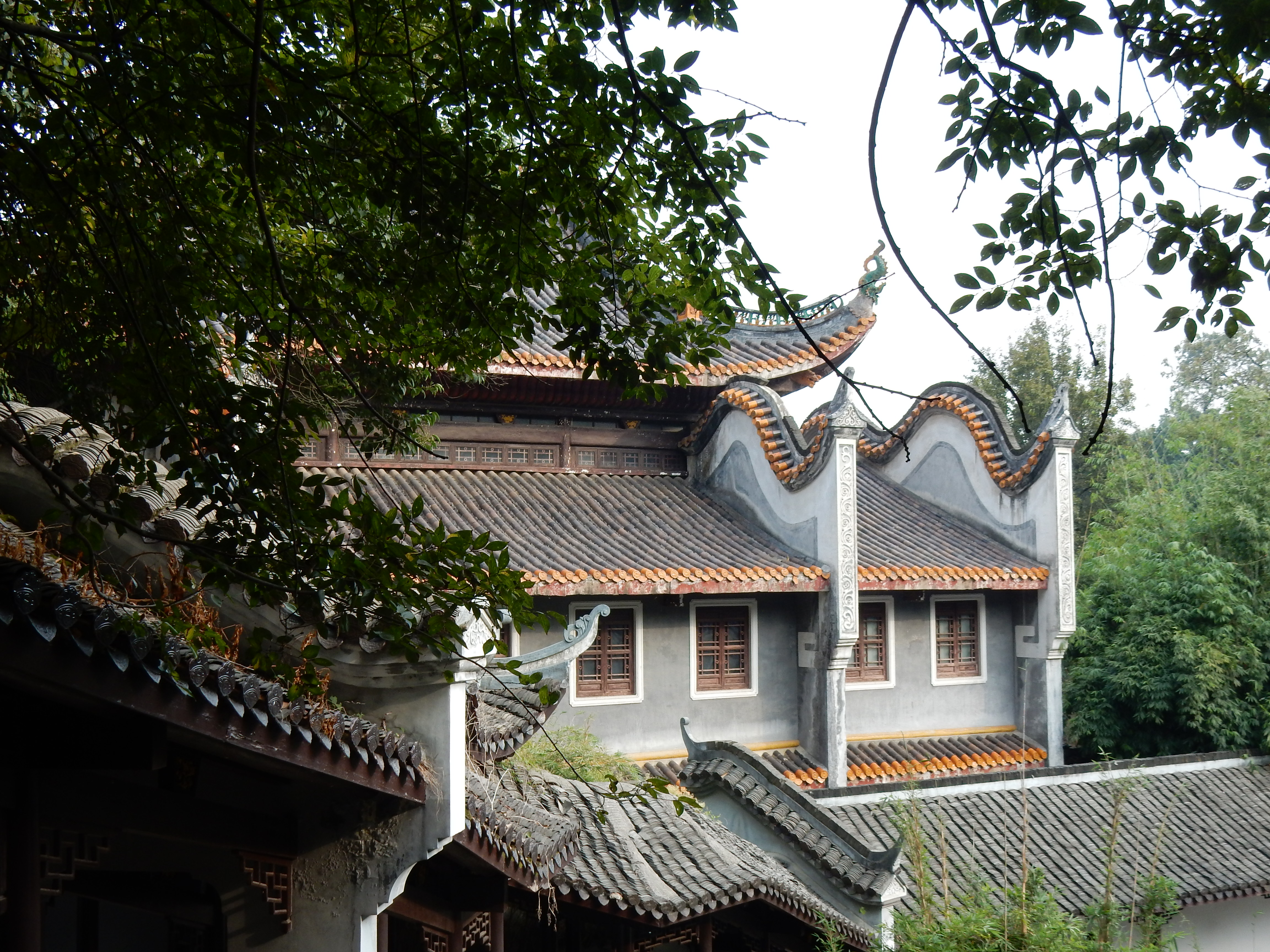
DSCN1050In 976 A.D., Zhang Shi and Zhu Xi, two leaders of ancient Chinese learning,  climbed Yuelu Mountain, located on the west bank of the Xiang River in Changsha. When they arrived at the summit, they built a platform and named it “Hexi,” which translates as “the splendor of sunrise.” The platform became the foundation for Yuelu Academy, one of four ancient academies of higher learning in China. It accepted students throughout the Song, Yuan, Ming, and Qing dynasties, eventually becoming Hunan University in 1926.

DSCN1059So, one Saturday, I joined Aaron and Claudia, two of our grad student guides, and thousands of other travellers intent on retracing the footsteps of those ancient academics, to explore the rebuilt grounds and buildings of Yuelu Academy for ourselves. Although hardly a mountain by Canadian standards, it was a healthy trek uphill, its way  lined by restaurants, stores, and trinket booths.

Once we reached the hilltop, the crowds dispersed a little, and we enjoyed the cool, quiet greenery and ponds that surrounded the academy buildings. Happily, the information signs were written in Chinese and English so I could read them for myself.  Claudia supplemented my learning by  listening in on the Chinese tour guide commentaries, and translating them for me when the groups moved on. DSCN1017 DSCN1069

DSCN1045

The Lecture Hall

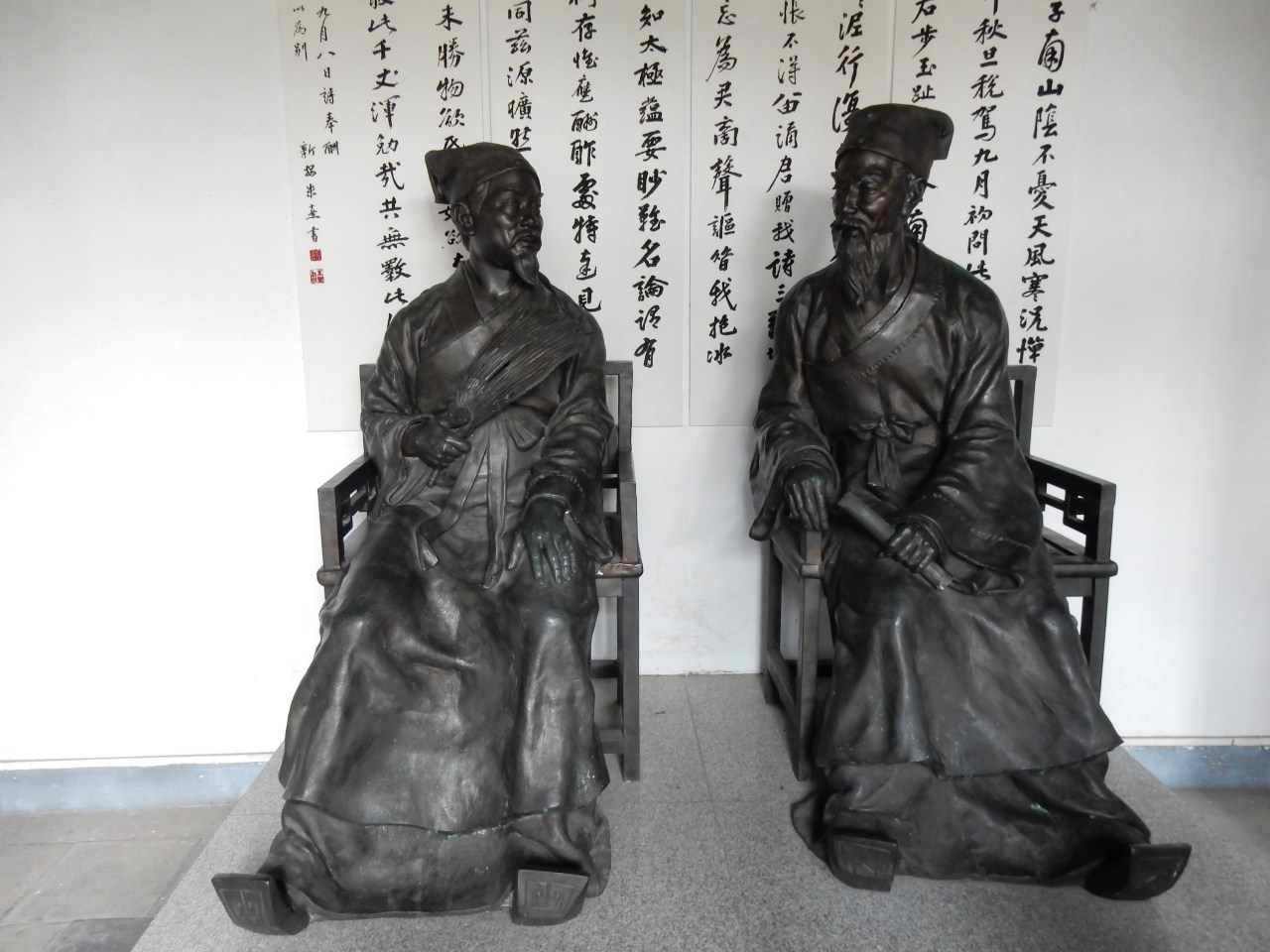
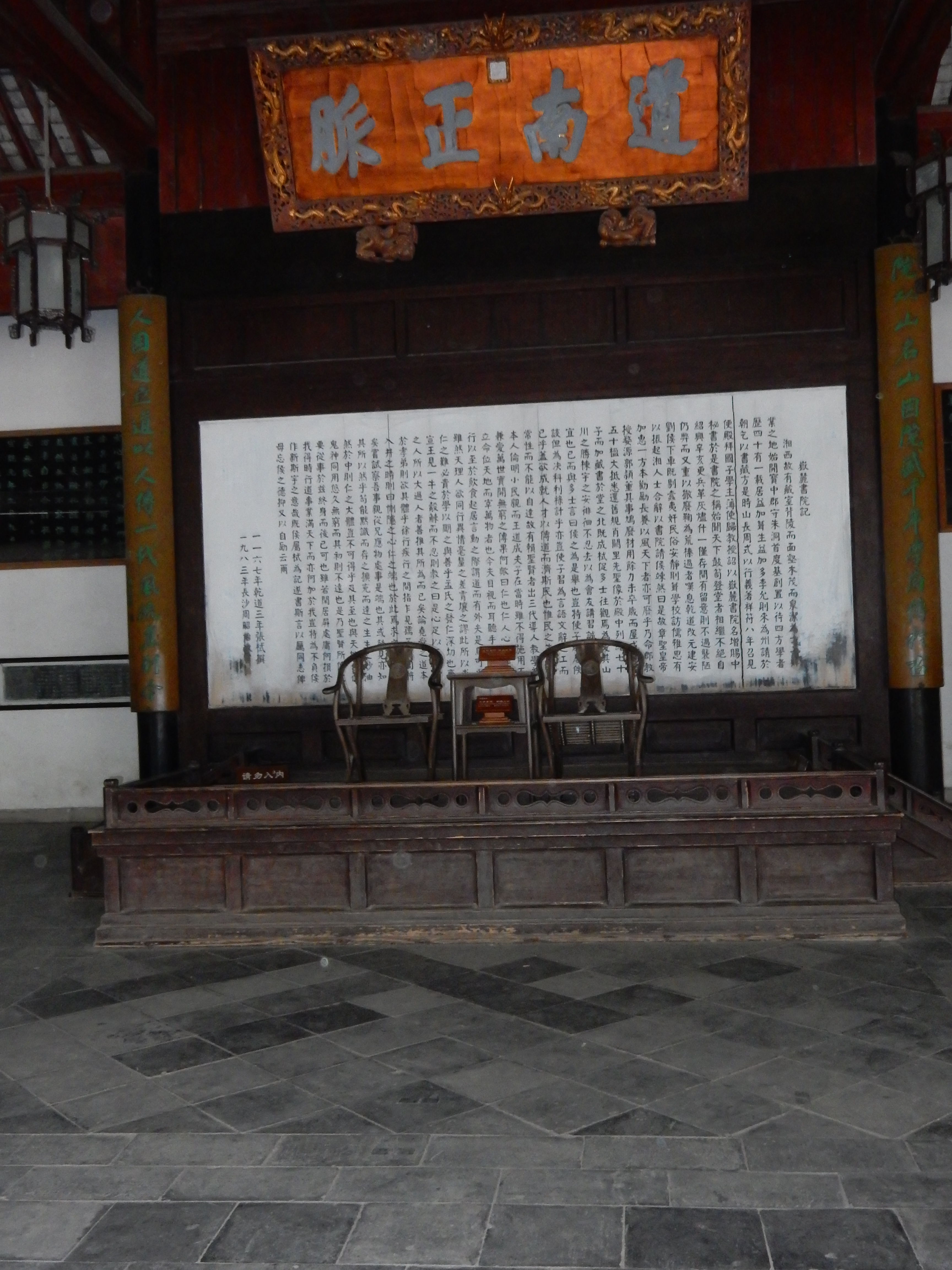
Although I learned  about many aspects of Yuelu Academy’s history,  the lecture hall fascinated me the most.  The lecturers sat in pairs on a raised platform. One wrote on a board behind their chairs while the other one talked. The students, or disciples as the information boards called them, stood up in the lecture hall, absorbing the words of their teachers. We couldn’t find out how long the lectures lasted, but I’m inclined to think the concept “mini-lesson” hadn’t been invented yet.
One of the reasons that Walter and I were asked to deliver the Teaching in English program in Changsha was to introduce the professors to lecture method alternatives. The vice-president of our inviting university emphasized that as long as lecturers relied on the direct transmission approach, in which students memorize information to pass an exam, China’s higher education system would struggle to develop creative thinkers or problem solvers.

DSCN0951In response to this request, I designed a variety of student-centred activities which would help the professors to experience other methods by which students could be introduced to and process new information. The professors participated in a panel discussion on motivation and engagement in higher education. which they delivered while seated at the front of the room. Many of the professors said this was a group work option they hadn’t considered offering to their students.

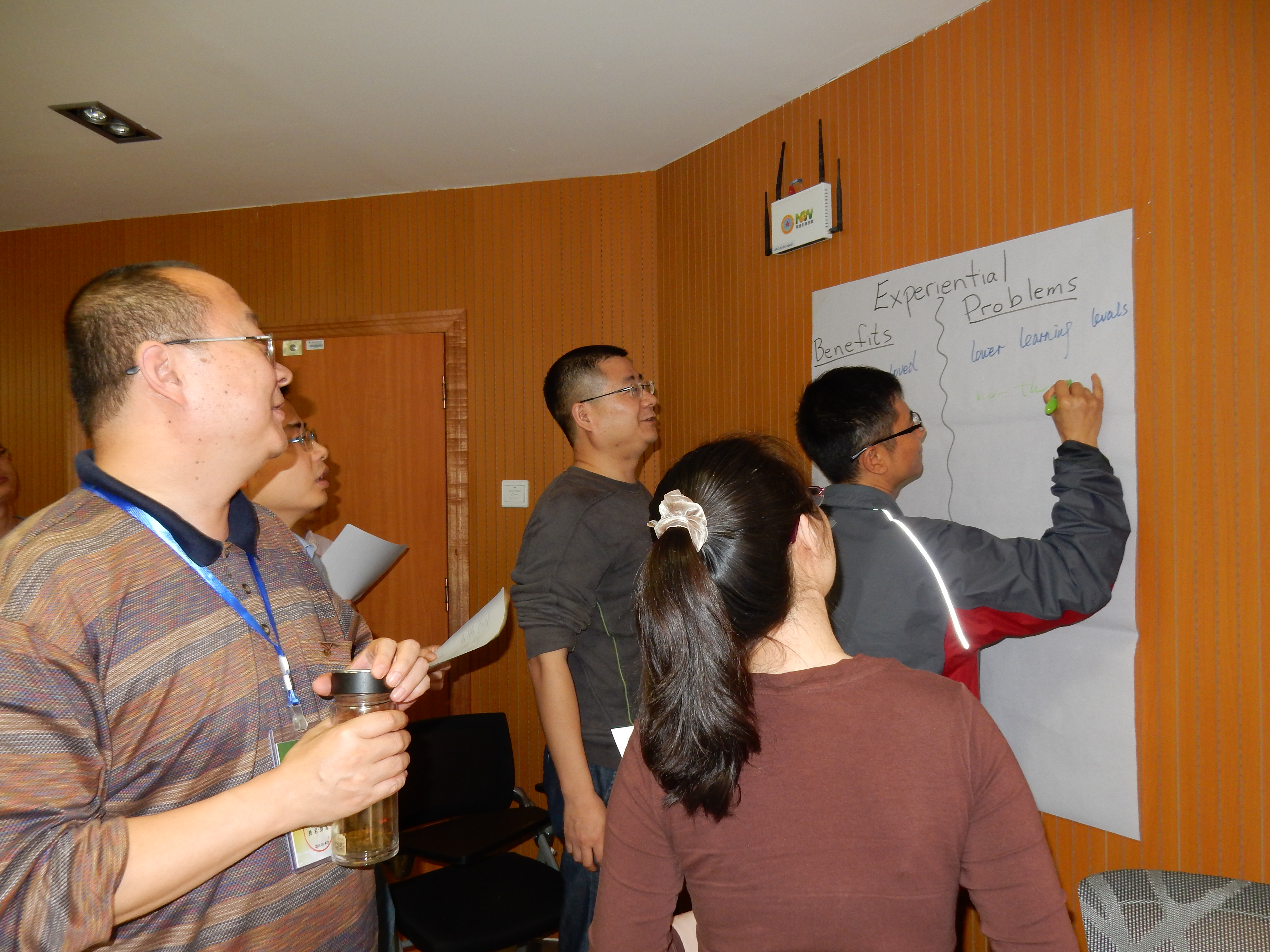
We also played a learning game called Four Corners to help them consider the advantages and disadvantages of various learning activities. In groups, they walked around the four corners of the classroom and added a pro and a con to each posted sheet, without duplicating what the group ahead of them had written. To add some competitive fun to the game, the last group to add a new comment “won” that sheet.DSCN1103

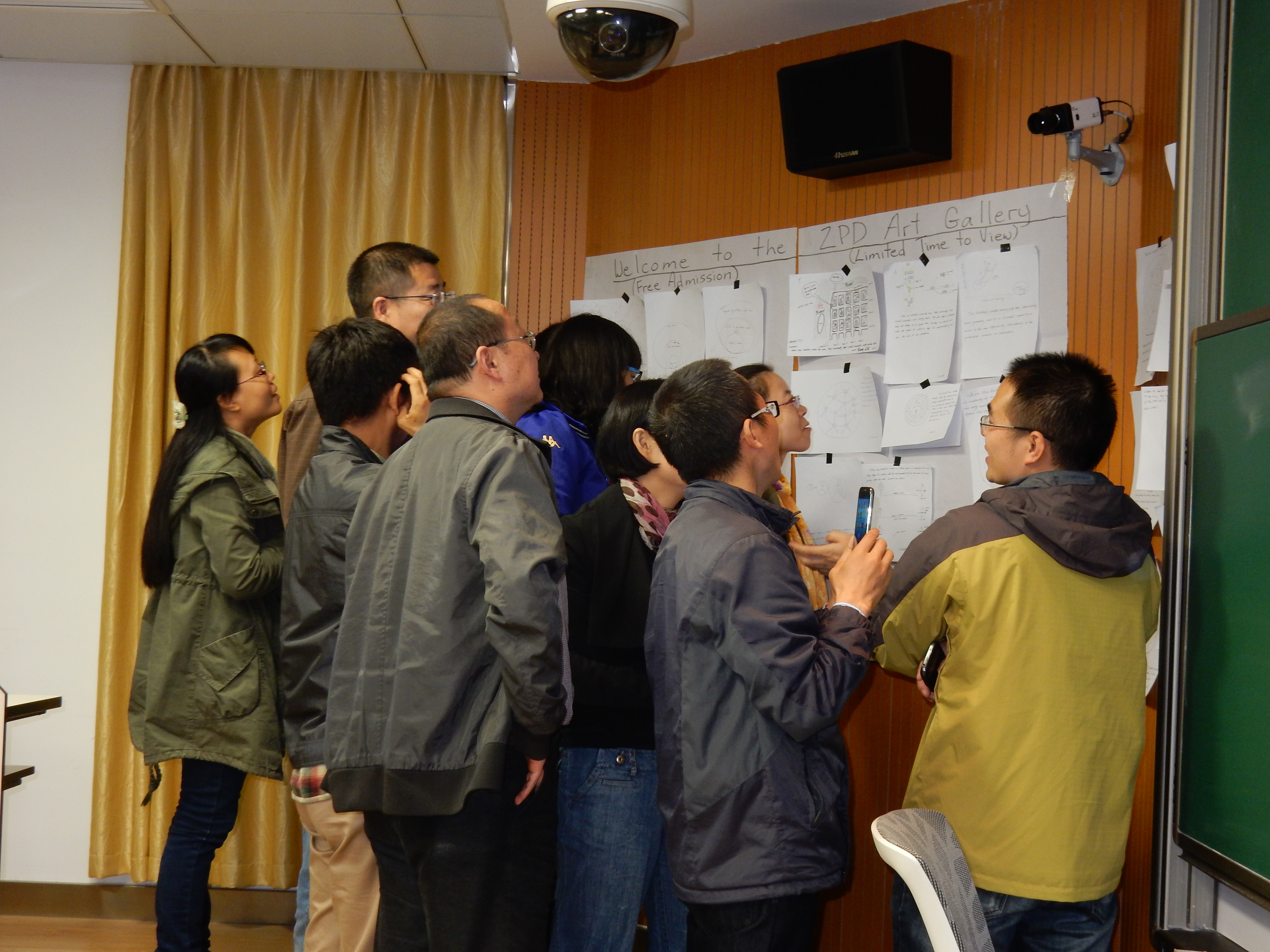
They also participated in a “sketch to stretch” activity. I asked the professors to choose one sentence from an eight sentence paragraph that described Vygotsky’s Zone of Proximal Development theory, which says that collaboration assists student learning. First, the professors individually sketched their understanding of the words, then I posted the drawings in an “art gallery.” When the gallery opened, they viewed all the sketches and asked each other to explain the meaning of their interpretive drawings.DSCN1195 DSCN1197 DSCN1198

Then, one day, a professor asked me two thought-provoking questions. “What is the purpose of student-centred activities? And what is my role as an instructor in a student-centred classroom?”

My visit to Yuelu Academy gave me a different lens through which to consider these questions. The activities I had been asking the professors to consider trying with their students pushed against the cultural mass of more than 1000 years of two seminal Chinese higher education traditions:  the teacher as lecturer, and the teacher as the sole expert in the classroom. Were my Western ideas about student-centred learning too tall an order for the professors to enact when they returned to their universities?

And so we discussed the question from a variety of perspectives over many days. I told them about my visit to Yuelu Academy and what I had learned there. One of the professors said that he too had visited the site. “I like this place very much because it is about Chinese higher education.” But a GIS instructor reminded his colleague that Yuelu tells the story of traditional Chinese higher education, rather than its present state. We discussed the pros and cons of the lecture method, and of student-centred, interactive methods. Which was better suited to produce the innovative, thoughtful problem-solvers that China needs, now and in the future?DSCN1349

I introduced the professors to the concept of the teacher becoming the “guide on the side” in a student-centred classroom, which meant they would give up at least some of their role as  “the sage on the stage.”  I also explained that they would be very busy in their new role, setting up a learning environment for the students: choosing engaging materials, arranging discussion groups and other instructional activities to get students thinking, and facilitating these activities rather than lecturing.

The professors considered all these ideas, debated them, tried to figure out how and when and  if to implement them in their daily practice. I knew that, ultimately, these decisions would be their responsibility. But from what I heard and understood of their discussions, I believe that there are some Chinese students who will be experiencing a 21st century “Hexi,”  as some exciting new learning opportunities appear on the horizon in their higher education classrooms.DSCN1179

On any sidewalk in North America, a blonde,  5’6″, middle-aged woman, and  a 6′ 2″ man with a grey moustache, attract very little attention from passersby. We not only blend in – we’re mostly invisible. But in Changsha, where few foreigners visit, my teaching partner Walter and I became minor celebrities.

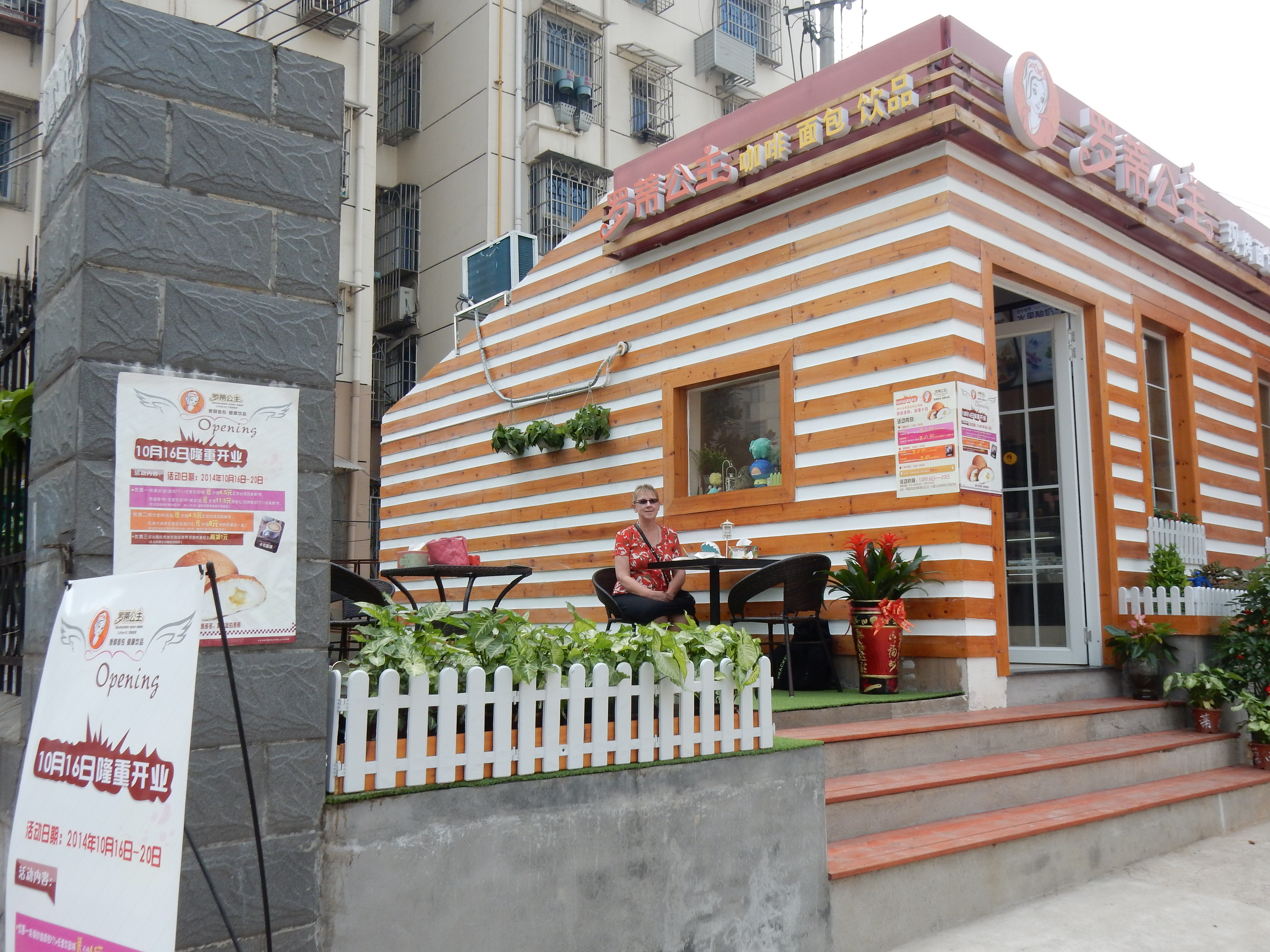
DSCN0834The first time we were aware of our heightened profile, we were sitting on the deck of the Roti Princess, a little local eatery that makes a pretty decent cappuccino. It was shortly after 12 noon, and many children from a nearby elementary school were going home for lunch. A pack of little boys approached the restaurant, stopped, looked at us and pointed, speaking to each other in excited Chinese. They began to giggle behind their hands and, like a litter of romping puppies, pushed and shoved each other up the steps towards us. Finally, the tallest of the bunch came a little closer and said to me, “Hello. What – is – your – name?”

I introduced myself and Walter, and asked for the boy’s name.  Then I said, “How old are you?”

The boy paused, and his forehead furrowed slightly as he accessed his elementary school English lessons. “I  am –  ten – years old.”

Our conversation produced shrieks of laughter from the little leader’s friends. After this short exchange, the group decided it had experienced enough bravery for one day, and toppled back down the stairs and onto the sidewalk, looking over their shoulders at us as they disappeared around the corner.

The Saturday that Aaron and Mia, two of our grad student guides, toured us through downtown Changsha, Aaron was approached twice by 20-something-year old strangers, who put a camera in his hands and said they wanted him to take a picture while they posed with us. The same thing happened with a young waitress in a restaurant a week later. I’m sure our smiles in those photos looked as bemused as we felt.

But my favorite experiences were with the mothers and grandmothers of Changsha’s youngest residents. All I had to do was smile in the direction of a toddler, and the child was urged to “Say hello! Say hello!” They never did, just looked back at me with puzzled, serious eyes. DSCN0847

These interactions always made me think of the scene in the Alastair Sim version of A Christmas Carol, when Scrooge discovers the ghost of Christmas present sitting in his drawing room. The enormous, bearded spirit booms, “Come in! Come in and know me better, man! You’ve never seen the likes of me before, have you?” Scrooge cowers, and admits he hasn’t. I imagine the residents of Changsha viewed Walter and me with a similar mix of curiosity and even a little fear. I can only hope that our smiles and our attempts at conversation trumped the strangeness of our appearance, and left a more lasting impression.