Wise Woman Travel

Exploring the world from a female perspective

Last April, I received an automatic WordPress message, congratulating me on my 100th blog post. Whenever I reach a milestone like this, I can’t resist a look at the path behind me and the road ahead.

My first blogging experience started in 2012, the night before my husband and I travelled to Provence. Friends had been asking me to e-mail them pictures and descriptions of the trip, which I thought might be kind of unwieldy. So I created an account with TravelPod, one of the first blogging platforms on the web. I had so much fun with that account for a couple of years, and received so much encouragement to keep blogging that I decided to create Magpie Learner on WordPress in 2013. This blog had an expanded focus on lifelong learning and the many ways it can be accomplished. I thought that travel would only be one of topics I would write about.

And, from time to time, I did write about other things – live theatre, books, and trying new recipes and restaurants. My friend and former teaching colleague Christie Robertson contributed a couple of guest posts, and so did my young friend Joshua Moorgen. But mostly, I still blogged about travel. First love, and all that.

This realization was part of a larger shift in my life. I have been a teacher for more than 30 years, all of them in the education sector. I still love teaching, but I began to feel restless for a change, so I started to explore the possibility of linking teaching to tourism. I found study after study that said solo female travellers are one of the fastest growing demographics in the tourism sector, but that many women still fear travelling alone. I had taught classes on this topic in the early 2000s and found them really satisfying.

So, I decided to take the plunge and start a new venture: Wise Woman Travel, a consulting service which will help women who long to travel overcome their fear of hitting the road on their own.  I’m building the website with WordPress, and hope to have it up and running by mid-October.

But how to say goodbye to Magpie Learner? She’s been part of me for too long – and so have all of you who have followed, liked, and commented. A quick e-mail to the good people at WordPress reassured me that a final farewell didn’t have to happen. While it’s true that I will give up magpielearner.com,  WordPress will migrate all my content – and all of you – over to my blog at wisewomantravel.com when I’m ready to open its doors for business.

So, this isn’t so long – it’s au revoir. See you over at my new place.
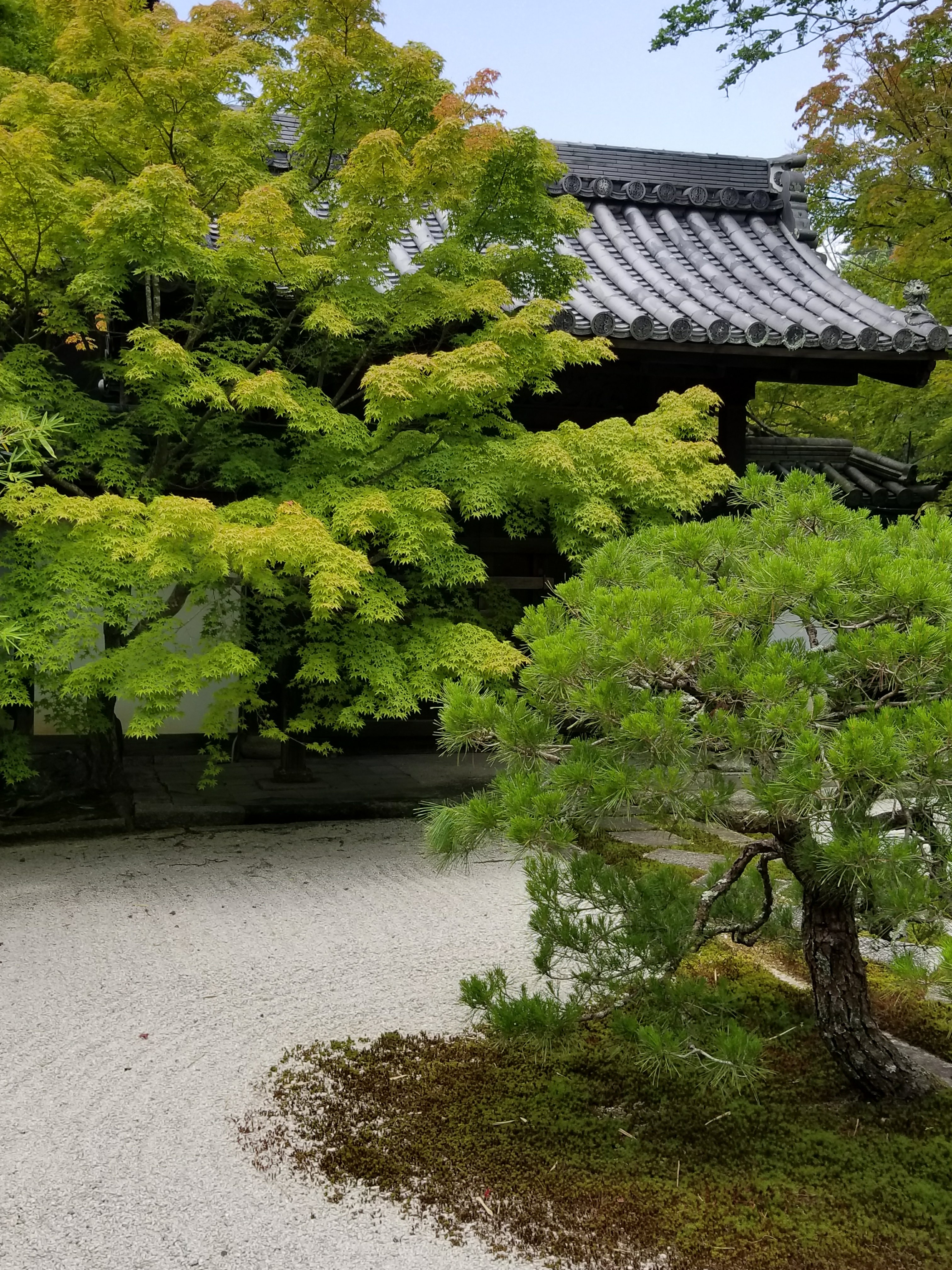
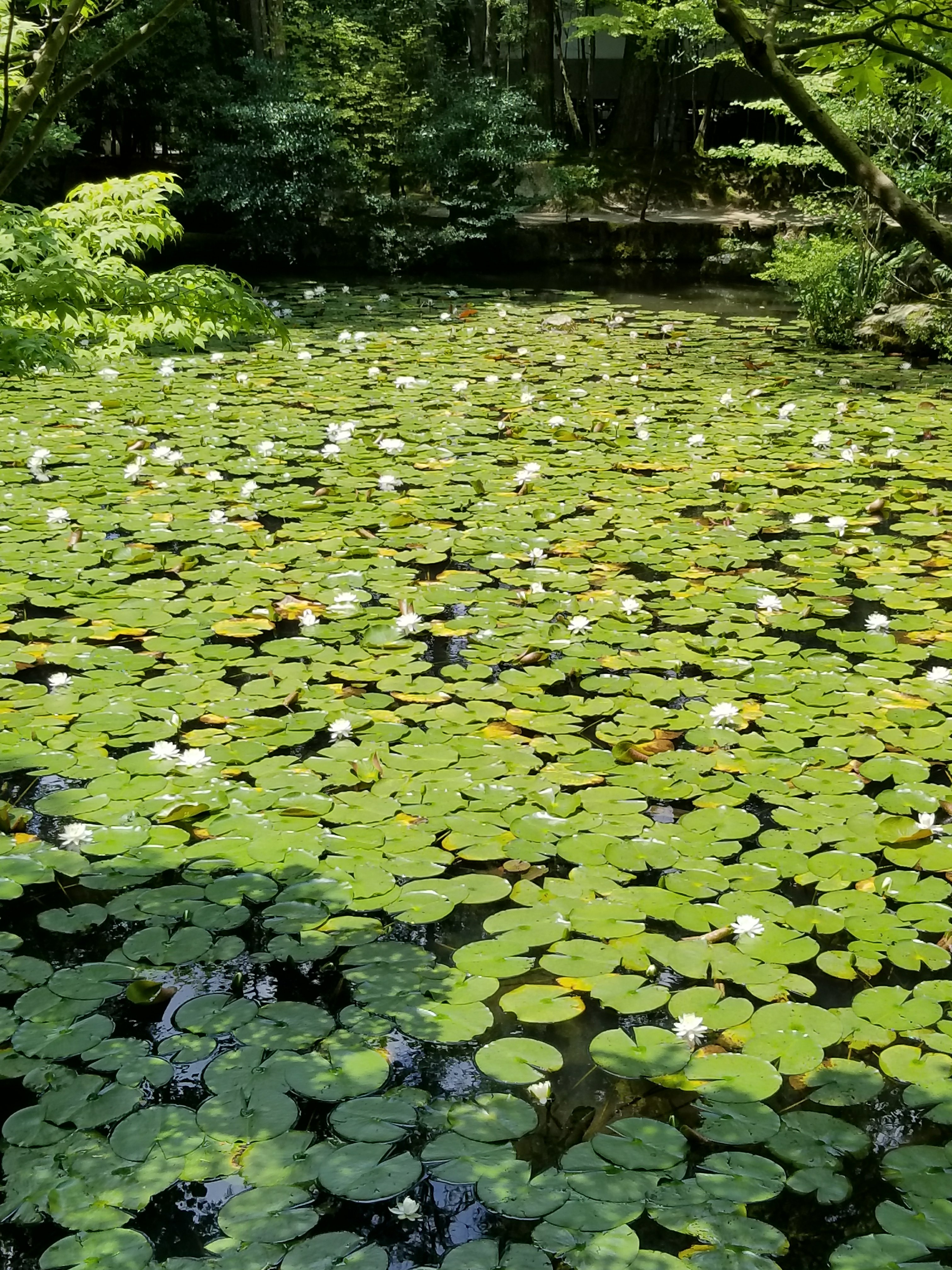
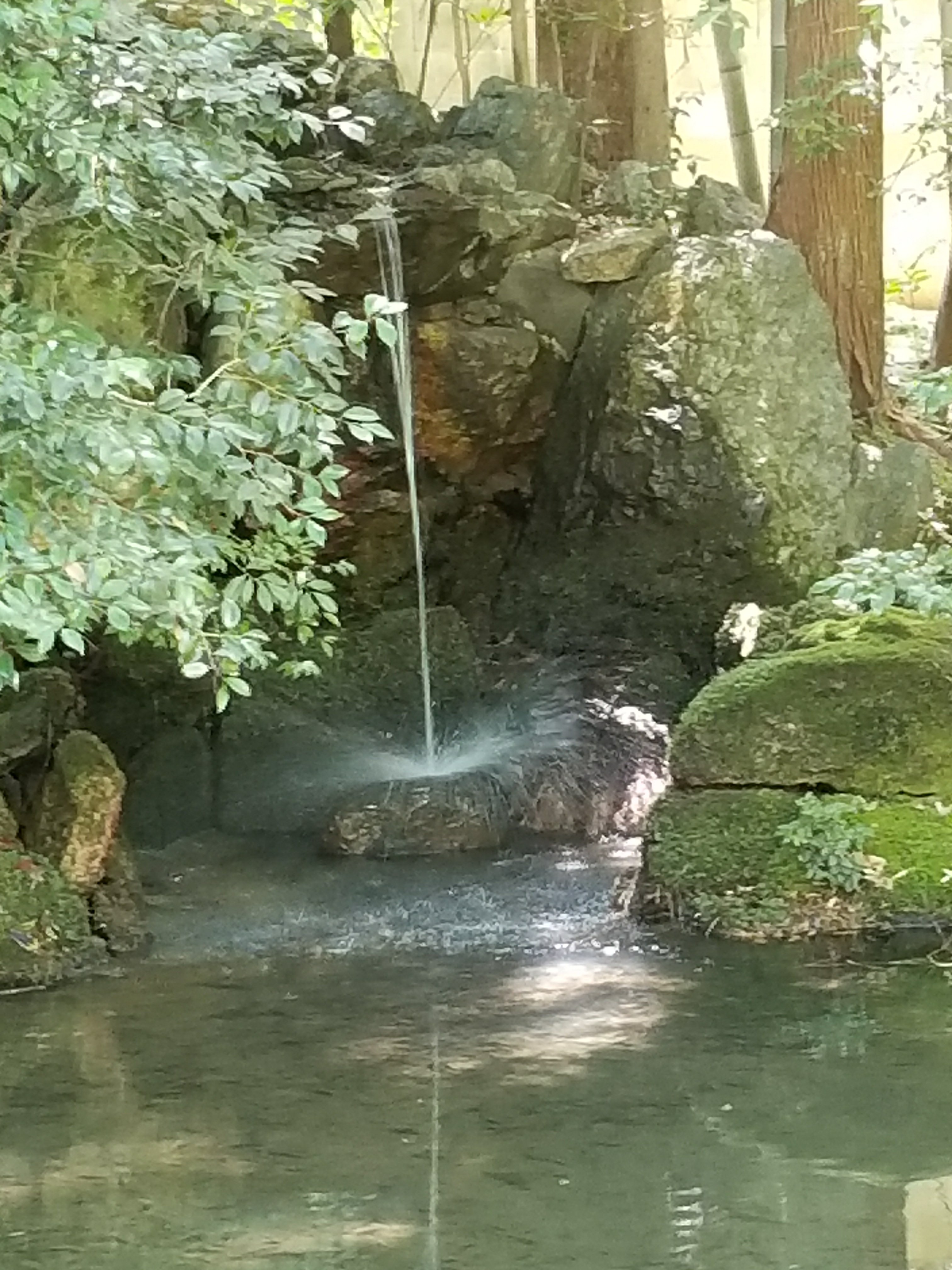
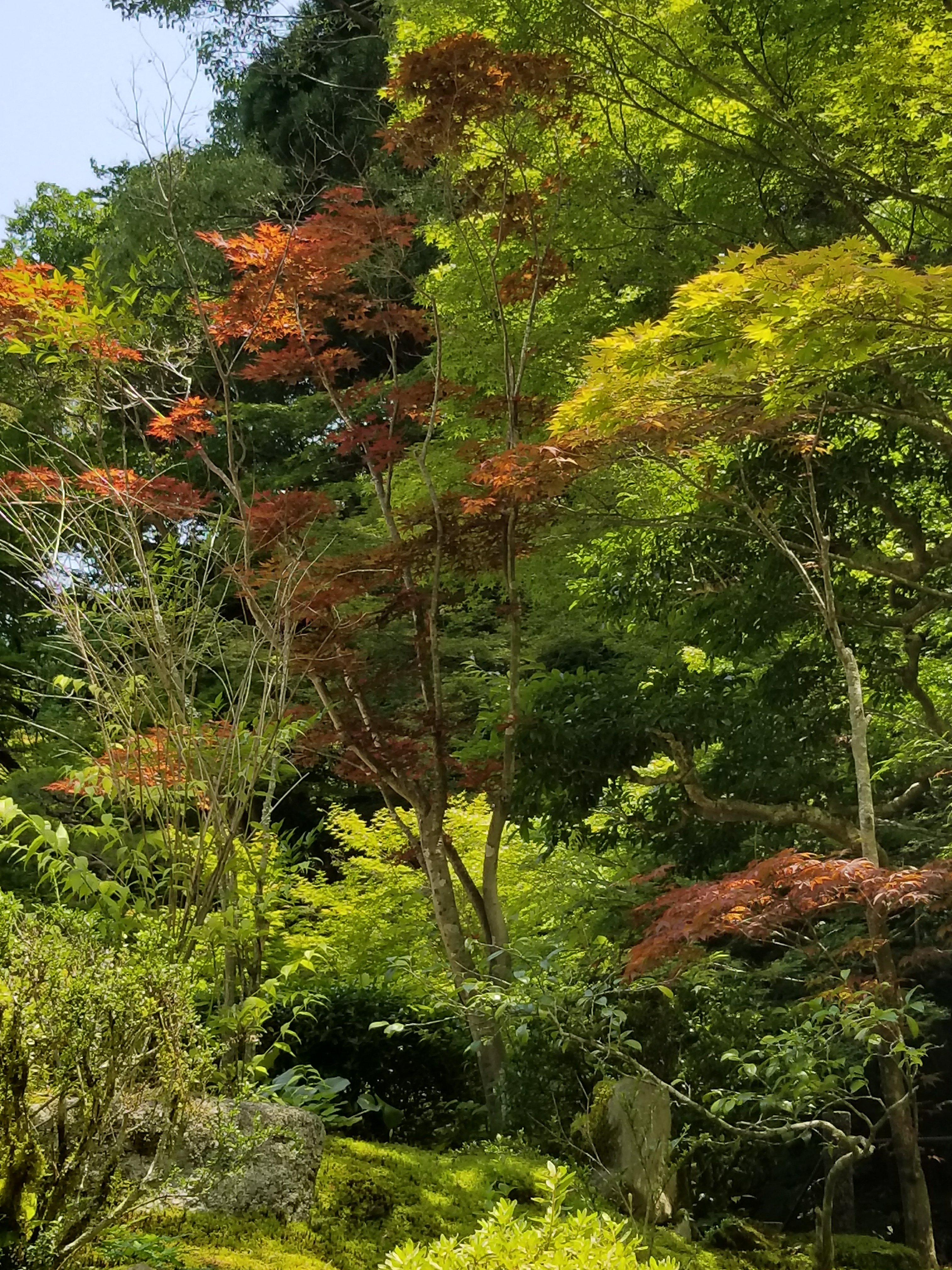
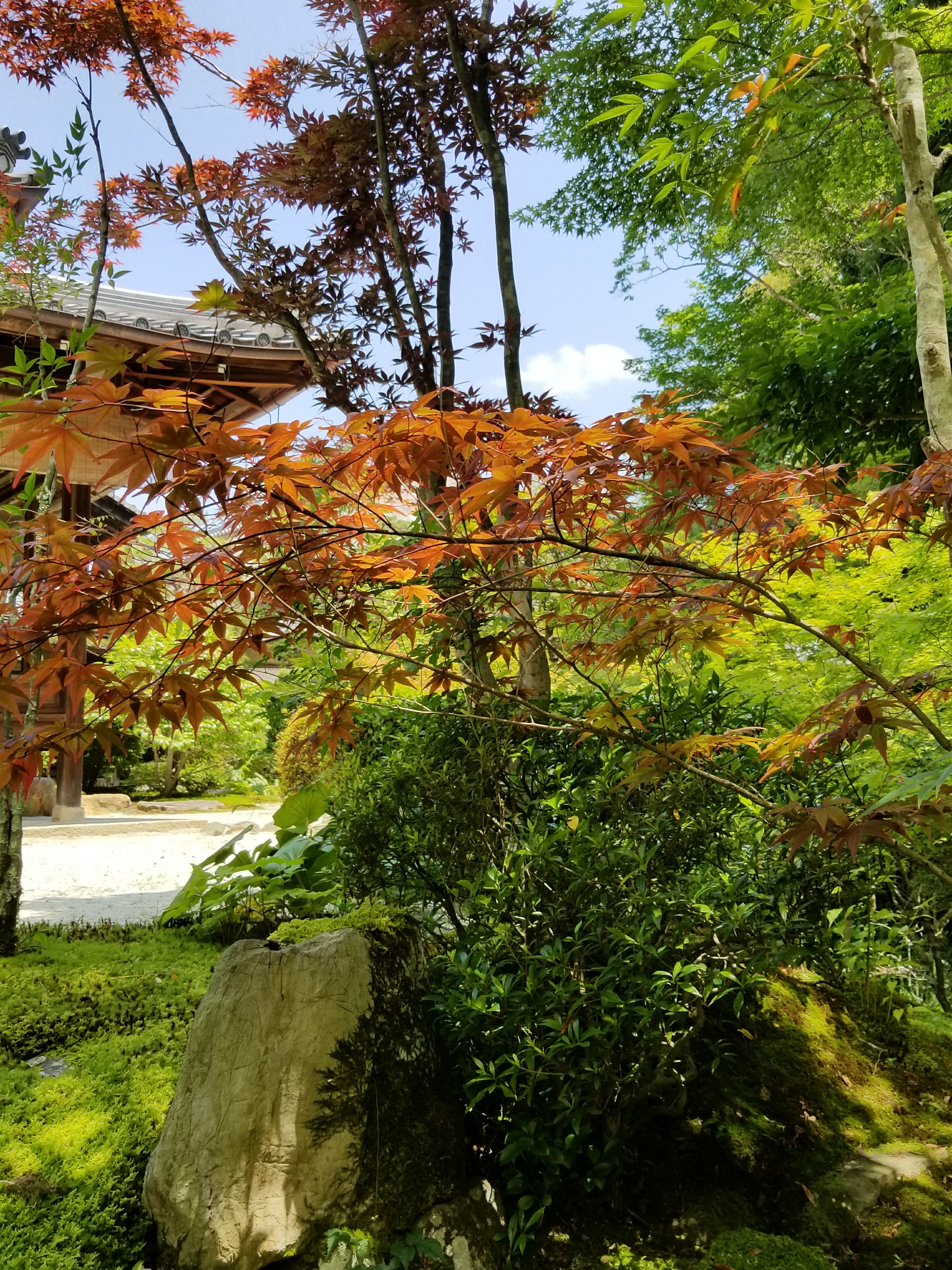
On my last day in Kyoto, I  realized there had been one major gap in my Japanese sightseeing itinerary – a visit to a Zen garden. When I  asked the hotel concierge for a recommendation, he didn’t hesitate. 

“Nanzenji. Very beautiful.”

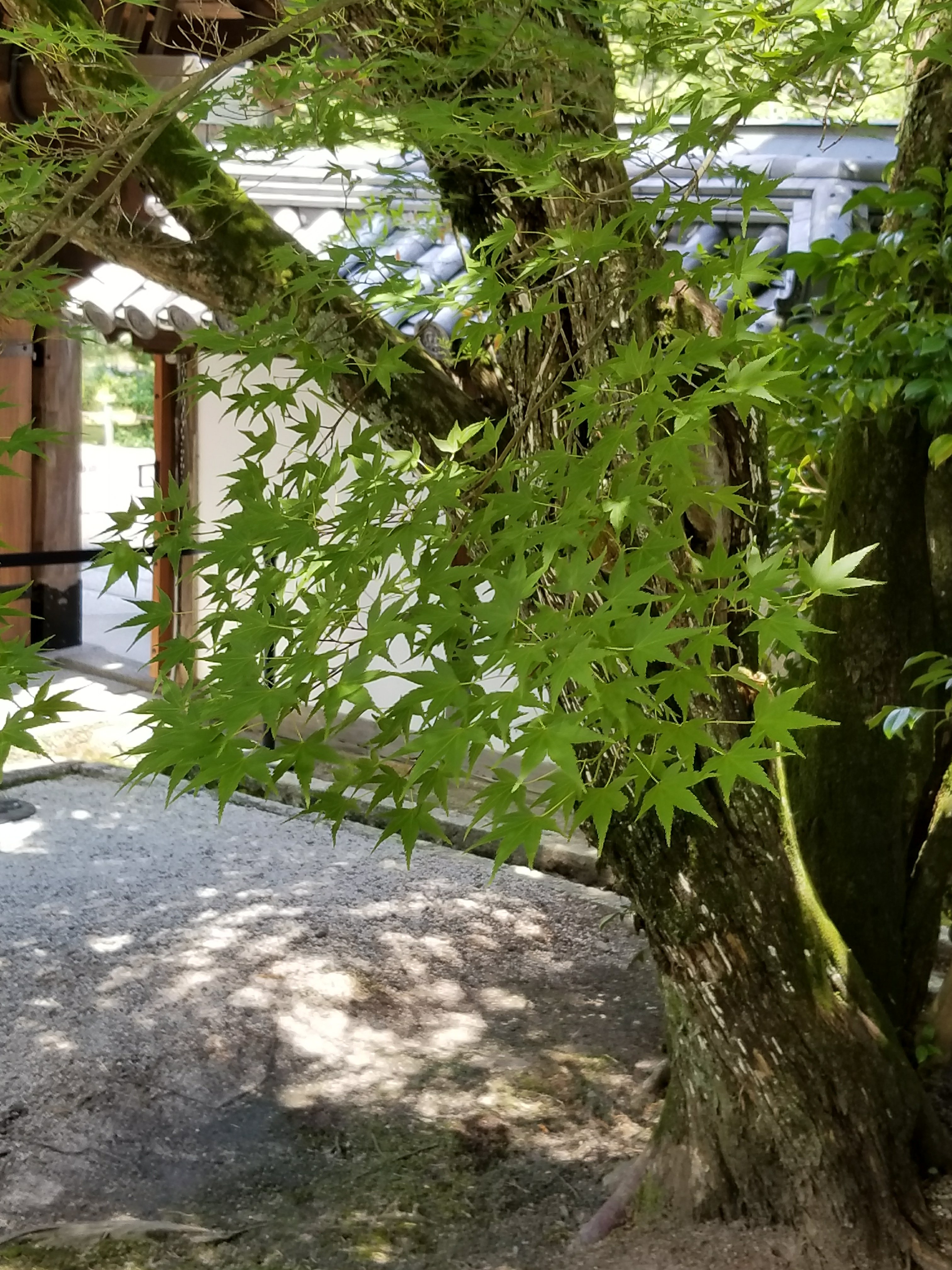
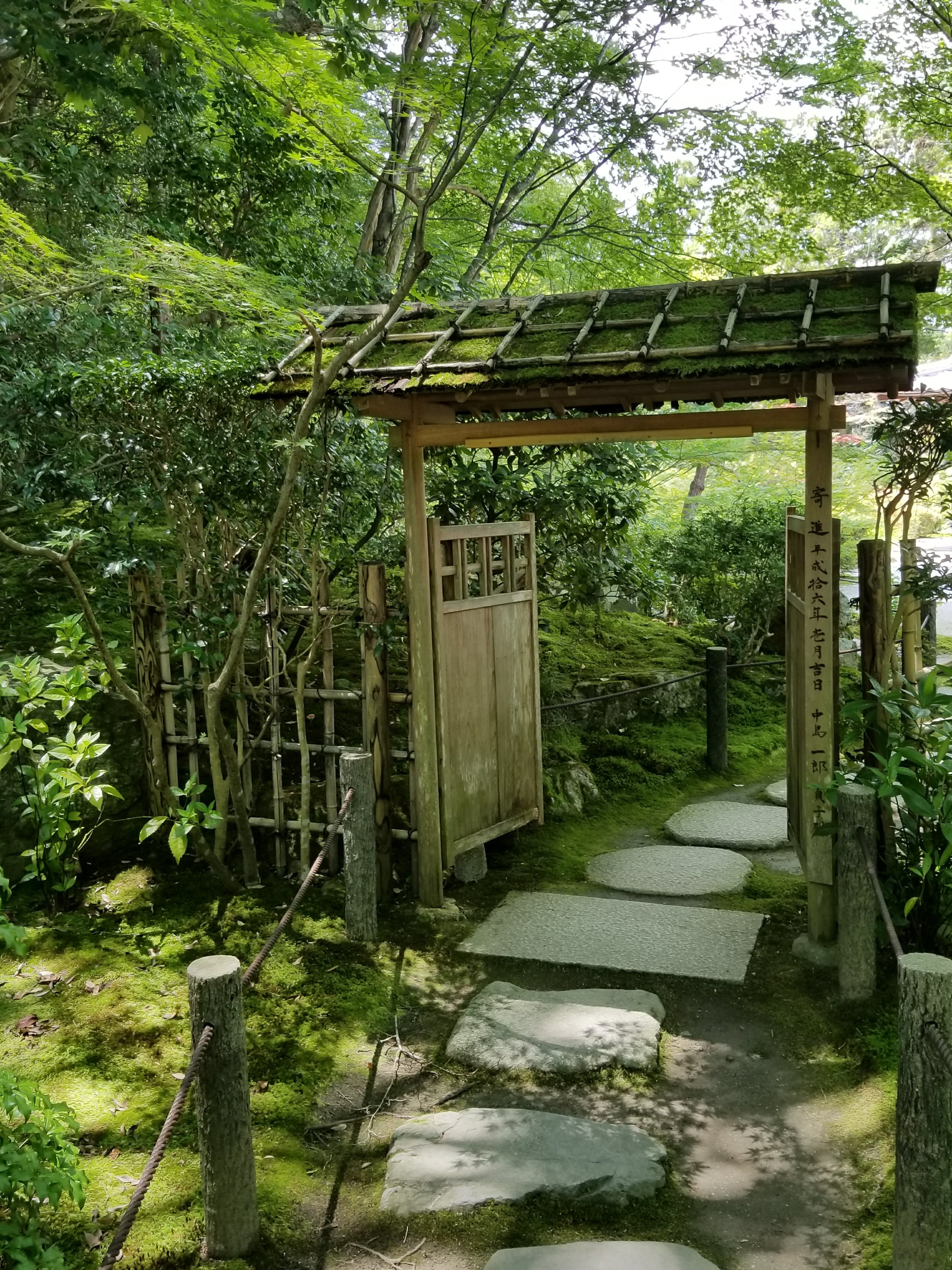
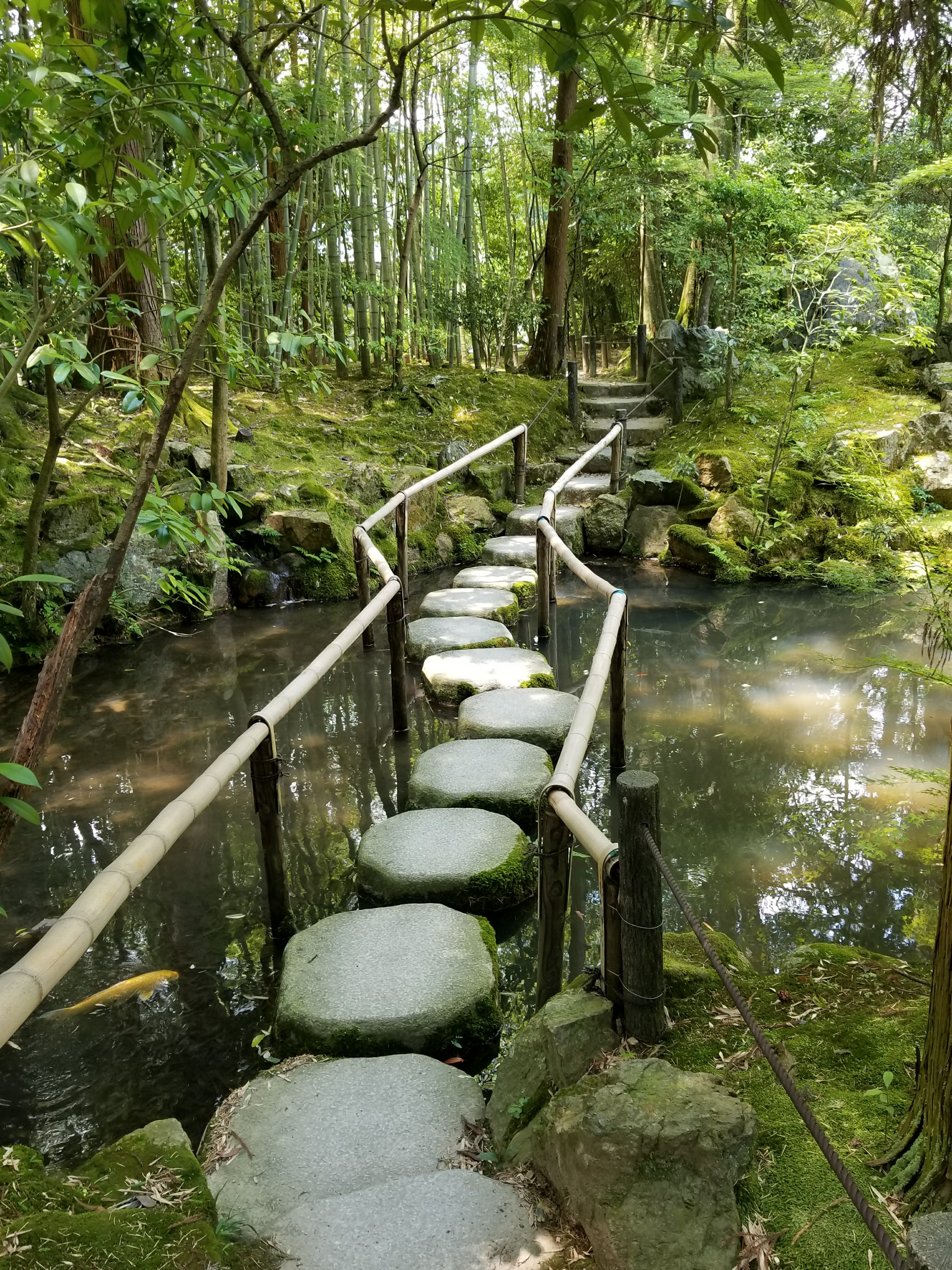
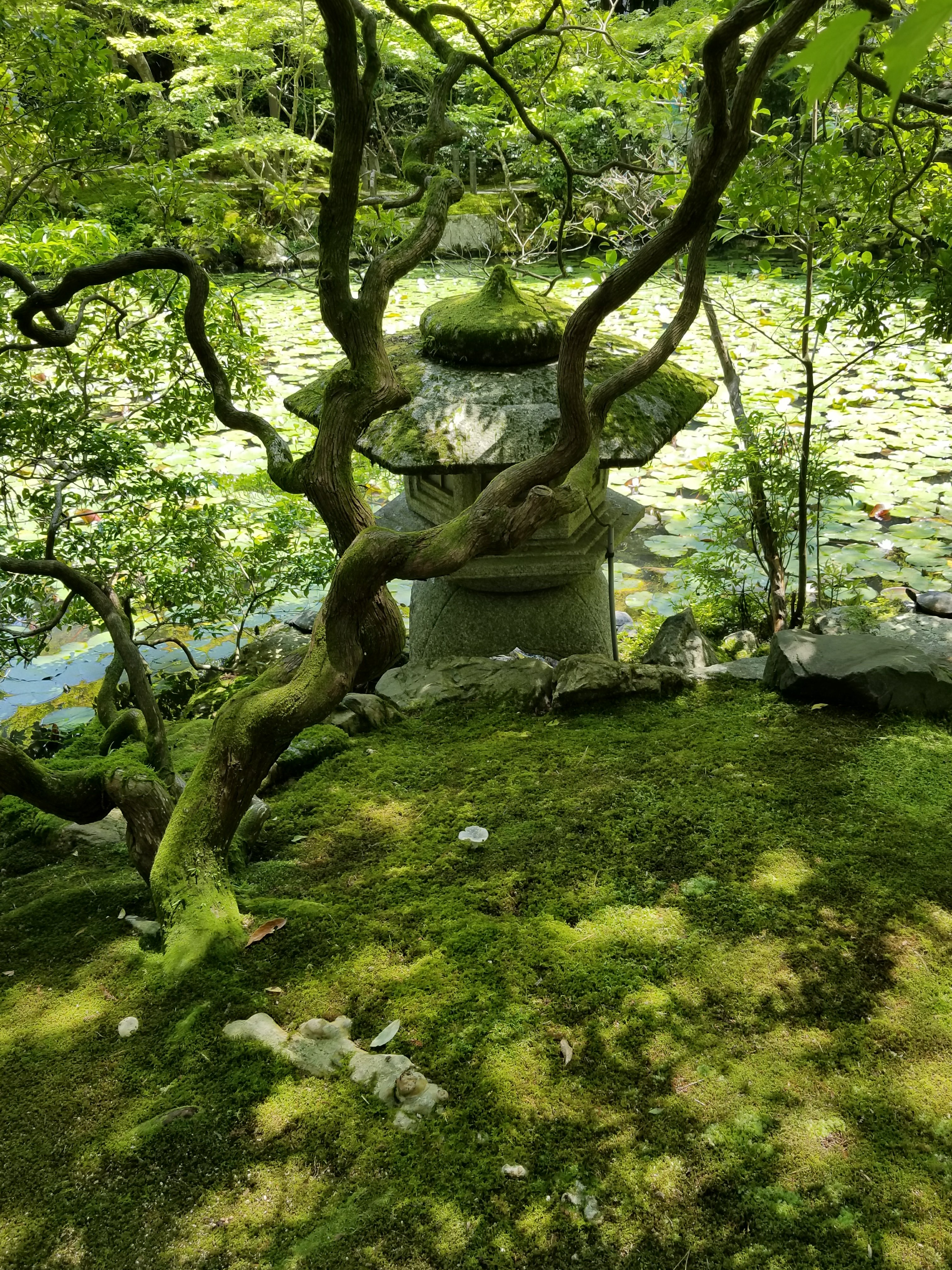
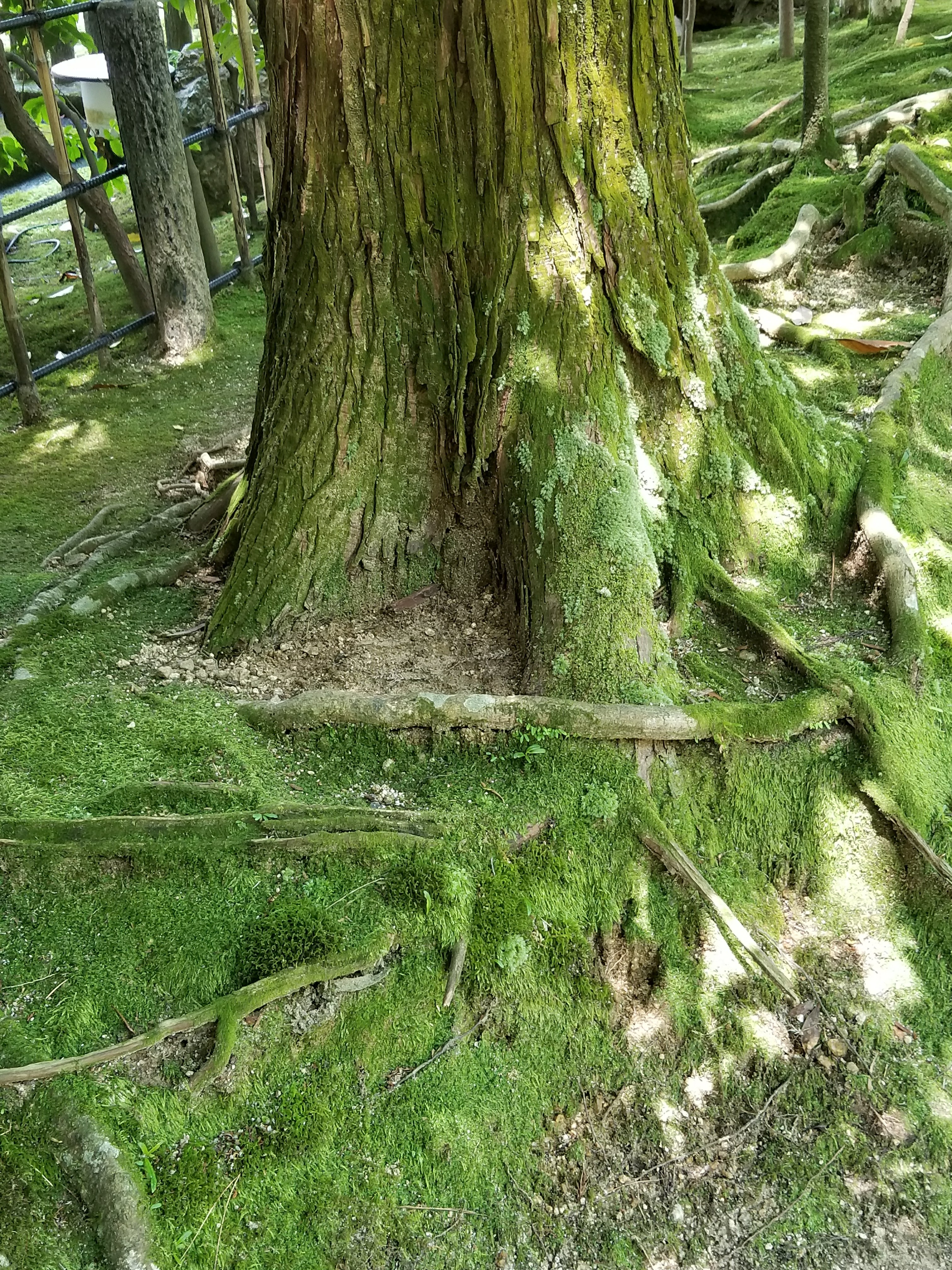
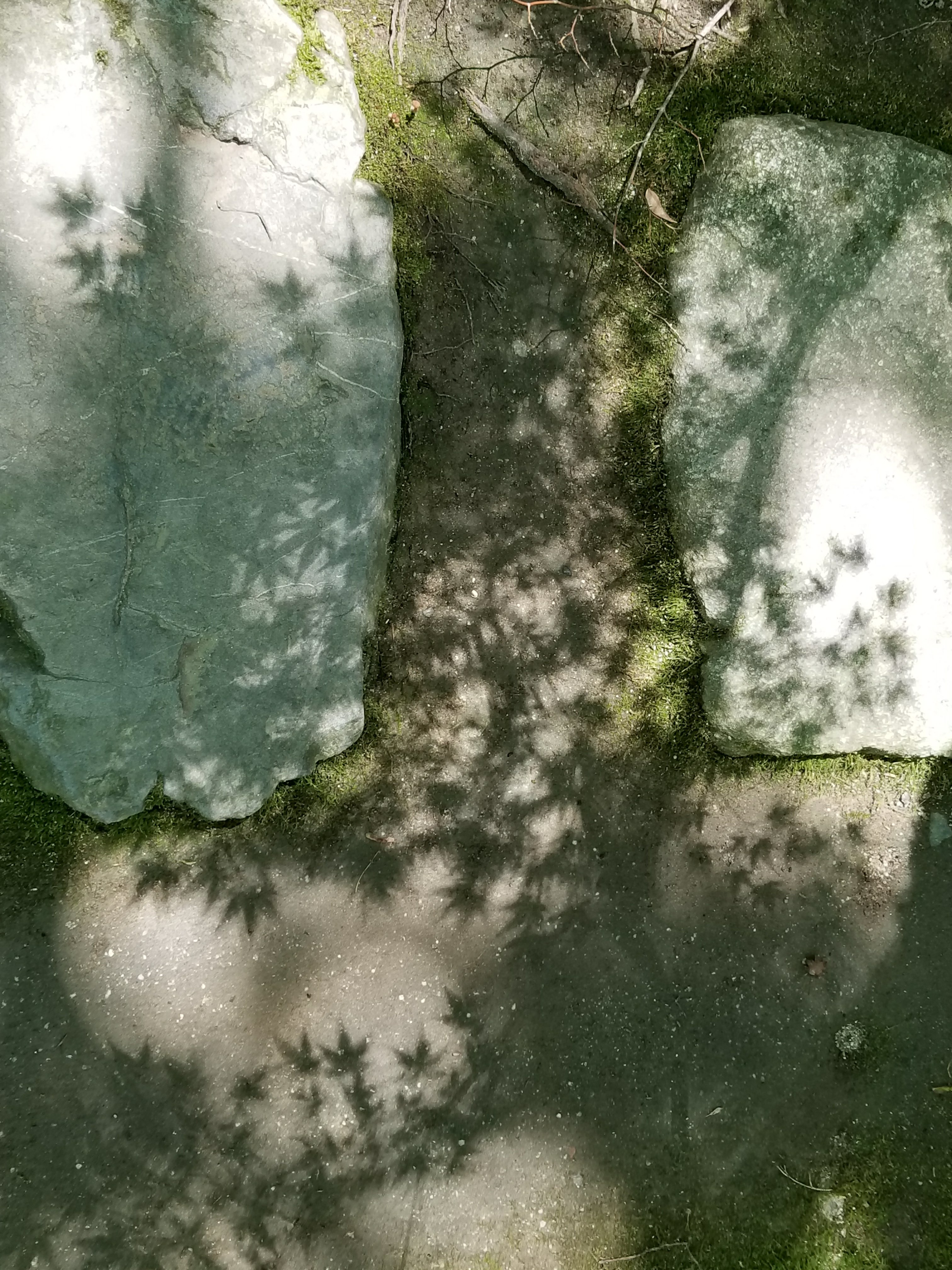
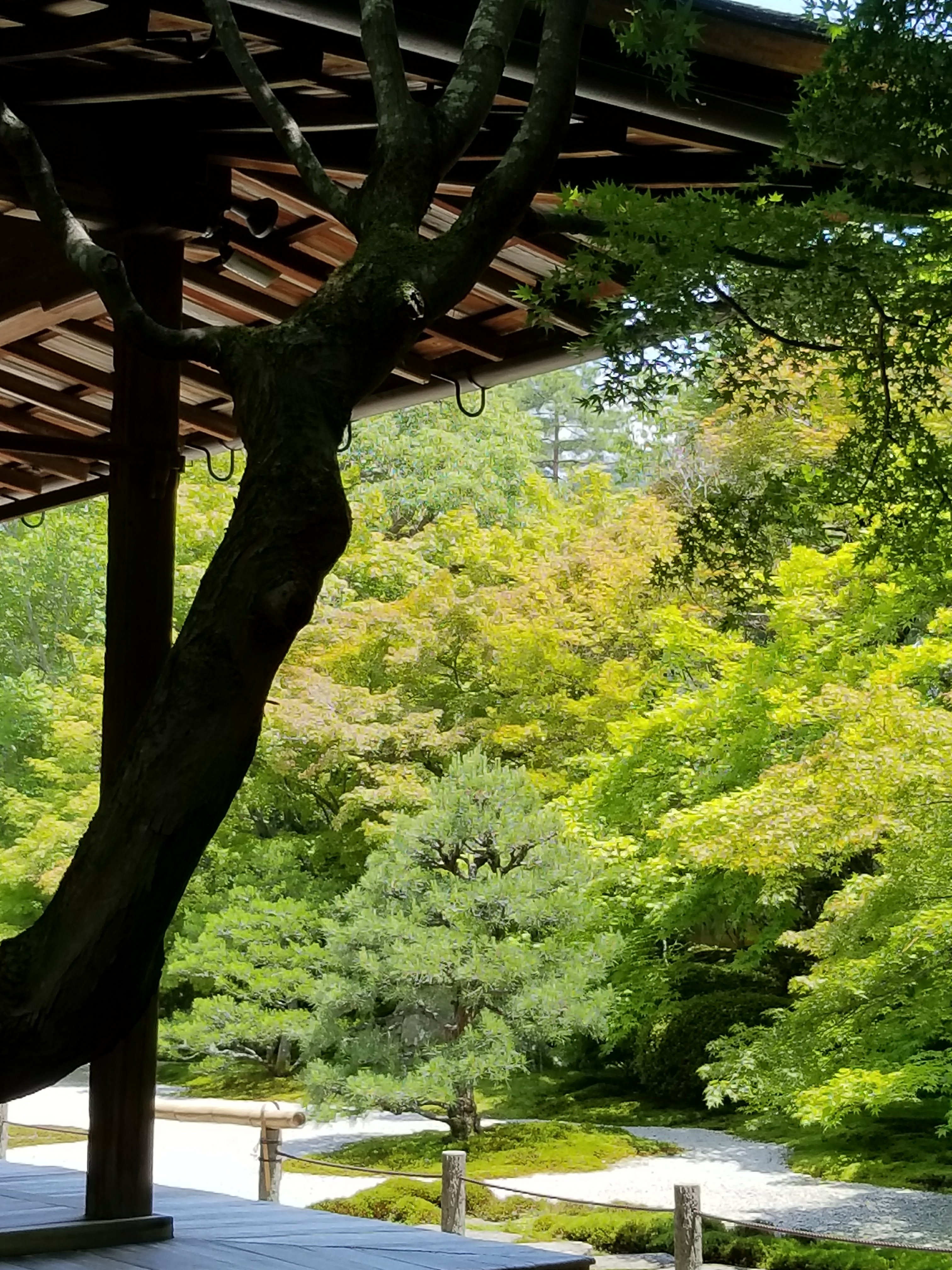
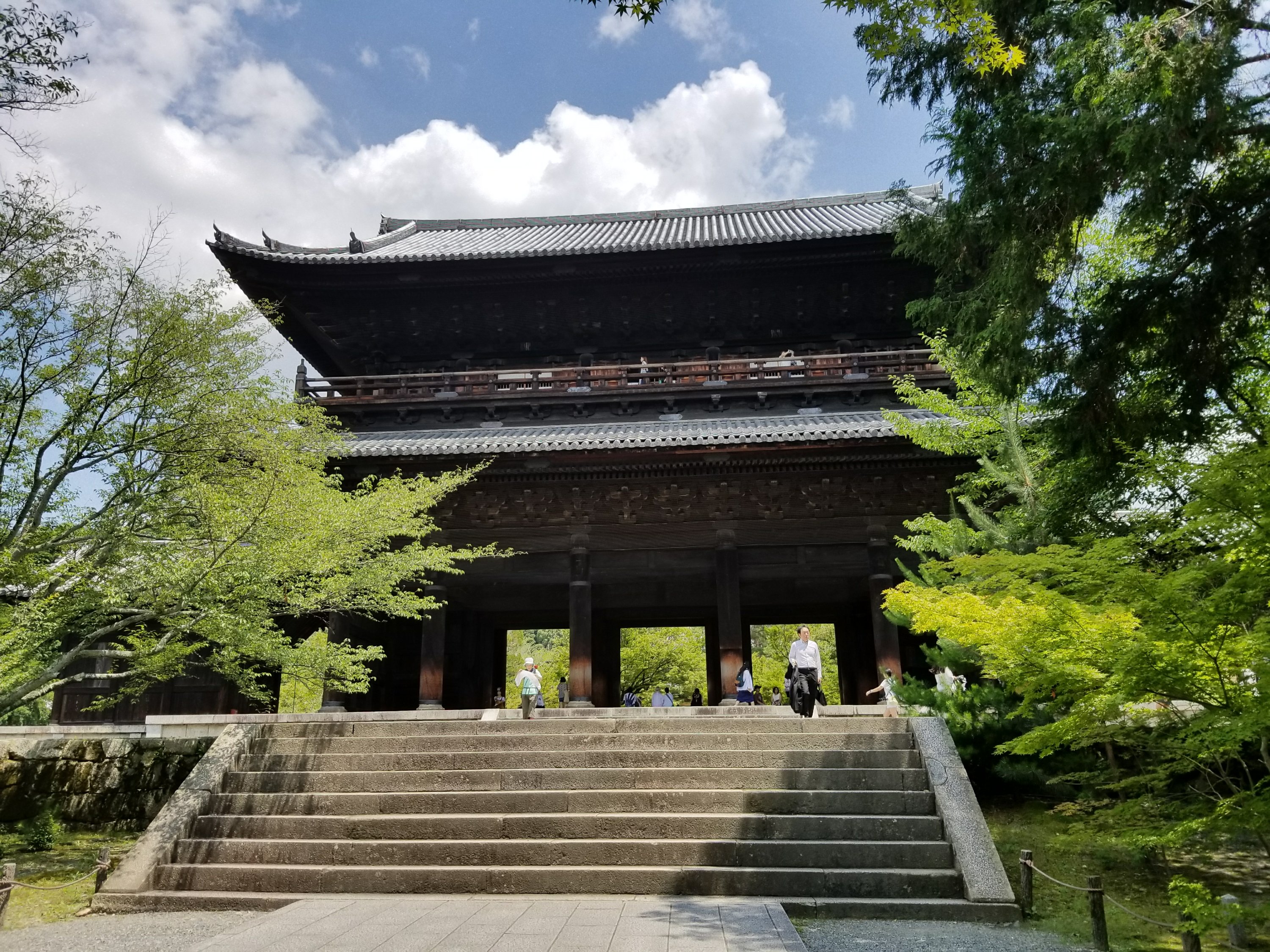
A quick taxi ride later, Nanzenji’s massive main gate came into view. I turned away from the people climbing the stairs towards the main temple, and instead headed to Ten-juan, a secondary temple originally built in the 13th century to honor the Zen master who assisted that era’s Emperor in his religious studies. The temple and its surrounding gardens were updated in the 16th and 19th centuries, but the brochure I’m handed at the ticket booth assures me that the garden retains much of its 13th century charm. 

The definition of Zen involves achieving a connection between body and mind through a state of focused attention. So I’ll stop my commentary here and let you wander around the garden on your own.

Twenty minutes ago, walking to the Kyoto Museum of Traditional Crafts seemed like a good idea. Google Maps had told me it would take 52 minutes to get there, a time length I  have easily walked back home in Edmonton.

But somehow I  forgot that Edmonton summer days don’t get to 34 C with 90% humidity. Unlike Kyoto, it  doesn’t sit in a valley, hemmed in by mountains on three sides. So now,  I’m pouring sweat and feeling as though I’ve bitten off more sidewalk than my feet can chew. What to do? Walk back to the hotel? Flag down a taxi to take me the rest of the way to the museum? Find a place for lunch and decide later? What I need is a sign.

ask me! cafe

9:00-16:00 sometimes 18:00 Sat, Sun

Tues close

Ask Me! anything about our city Kyoto

With selected coffee and cake

 light meals

Today’s Lunch

Spaghetti tomato & basil

As I  step inside the air-conditioned cafe, the coolness makes me close my eyes in grateful relief. Quiet classical music drifts among the empty tables and book-lined shelves.

 Hi, there,” I say to the steely-haired man behind the counter. “I’m trying to walk to the Kyoto Museum of Traditional Crafts. Can you tell me how long you think it’ll take me from here?”

He reaches behind him for a map and unfolds it to show me the route. “At least half an hour. And see those clouds?” He points over my shoulder at a towering white mass on the horizon. “We’ll have rain, maybe heavy rain, in the next hour.”

Well, then, I guess I’ll order your lunch special,” I say, taking off my hat and sitting at a table near the window.

As he cooks, we chat. He asks what brought me to Kyoto. I tell him about my university job at Wakayama. He tells me he did an architecture degree at Kyoto University and went on to a career as a Kyoto urban planner for more than 30 years, while maintaining his interests in arts and culture.

“Oh, so you’re retired now,” I say.

Thoughtful pause.

“I think I’ve started the next phase of my life now,” he says, smiling.

This resonates. As I sneak up on 60, I’ve been doing a lot of thinking about the next phase of my life. I’m not ready to retire, but the thought of doing something entirely new with my work life, possibly even transitioning my education background into the tourism sector, has been increasingly on my mind.

“So how long have you owned this cafe?”

“Two and a half years. And after I close for the day, I lead walking tours.”

“Walking tours? I  love walking tours! Are you doing one tonight?”

” Well, yes, but this one is for Japanese people who already know about Kyoto. I’m not really a tour guide. I’m more of a city interpreter.”

This catches my ear. A friend who owns a travel agency told me that walking tours are hot in the tourism sector right now and suggested this might be a way to marry and monetize my educational background with my interest in tourism and my status as a lifetime Edmonton resident.

” Well, how about tomorrow after you close?”

“Unfortunately, this is the only day this week I’m open. This month is the Gion Festival in Kyoto and I’m helping to build our community float for the parade next Monday. I also host a local radio program so….”

I’m beginning to see why my host doesn’t define himself as retired. This isn’t the first time I’ve run across this attitude to continued meaningful work in Japanese society. I took a walking tour in Kyoto when I  first arrived where we peeked into shops owned and operated by artisans well into their 70s and 80s.

By this time, my lunch is ready and my host leaves me to eat in silence. I take a look at his little advertising handbill to see what else I  could learn about how he does business. Two phrases catch my eye :

I can serve you some special stories with our select coffee and meals.

Serving up stories is one of my passions too.


Akihiro
Yamada –  Chief of shop

Chief of shop. After a lifetime of working for other people, that title attracts me.

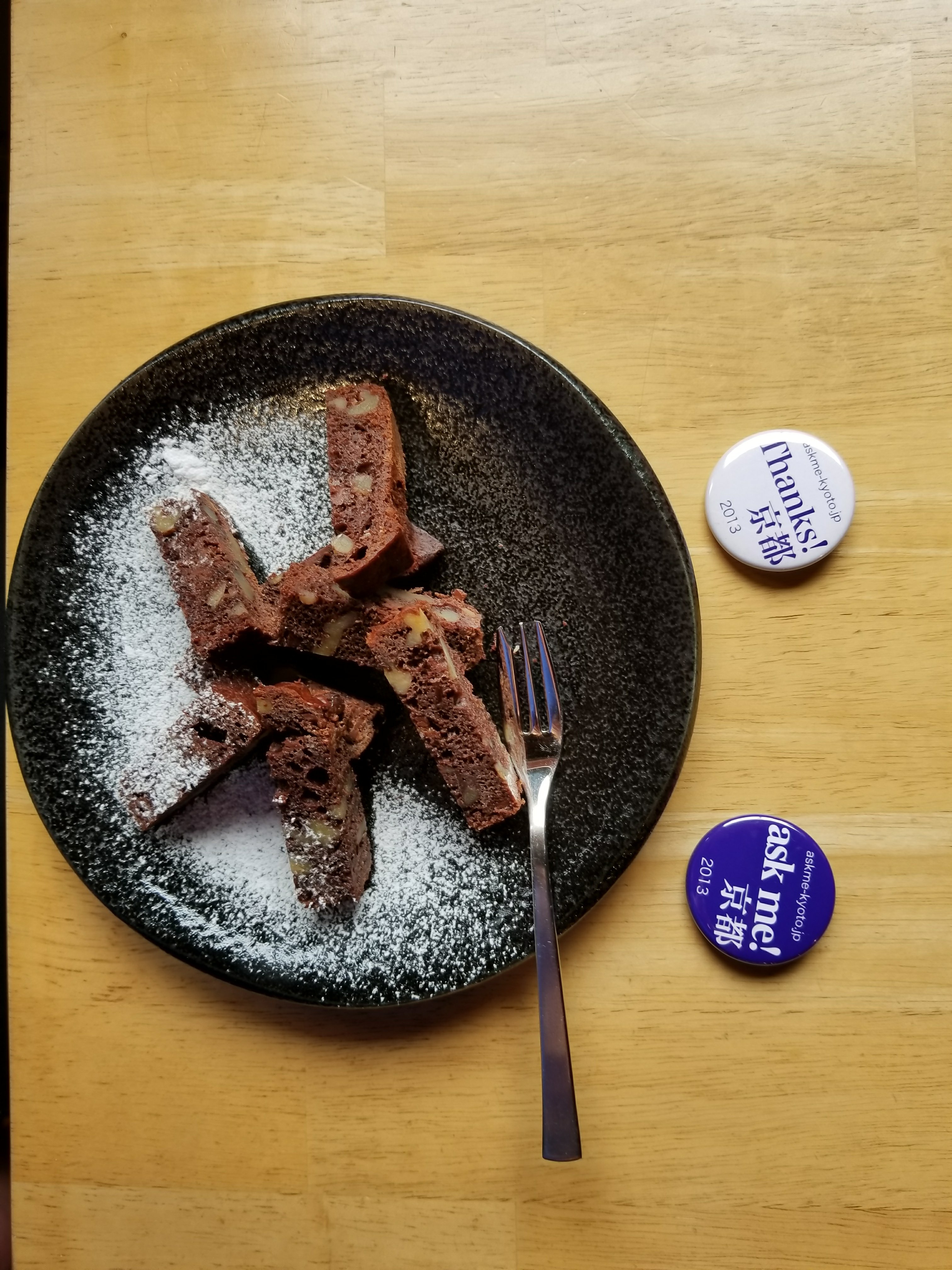
As Mr. Yamada clears away my now- empty spaghetti bowl, I  compliment him on the al dente texture of the pasta and order dessert. He tells me he also does all the cafe’s baking. “Making a cake is like designing a building,” he says. “You have to consider how all the ingredients will go together.”

” And make it user-friendly,” I add.

As I  tuck into the chocolate cake, I realize that Mr. Yamada’s talents extend beyond storytelling, walking tours, and user-friendly meals and desserts. Our conversation helped me to think differently about the next phase of my life, and consider the diverse ways I could put its ingredients together.

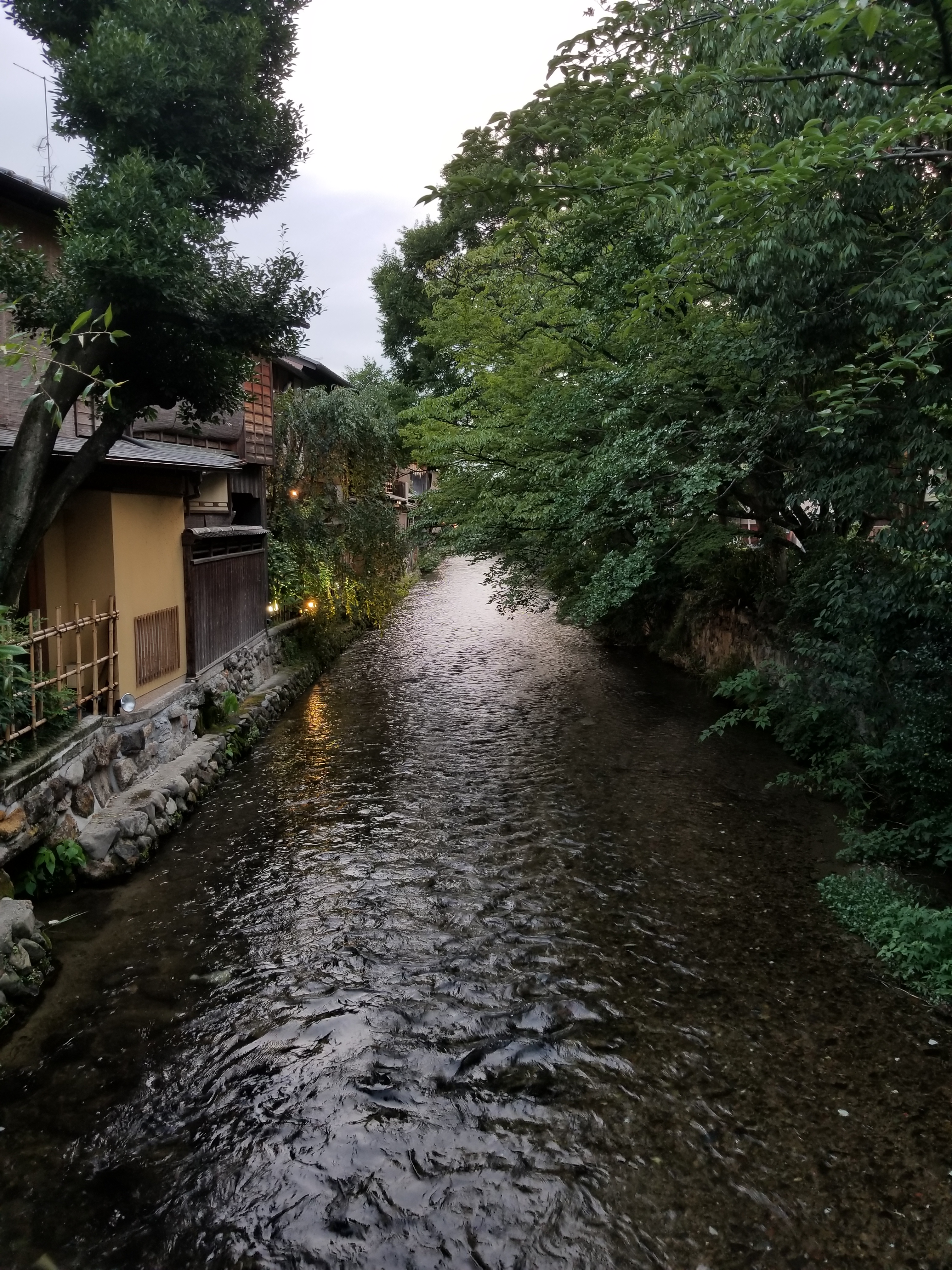
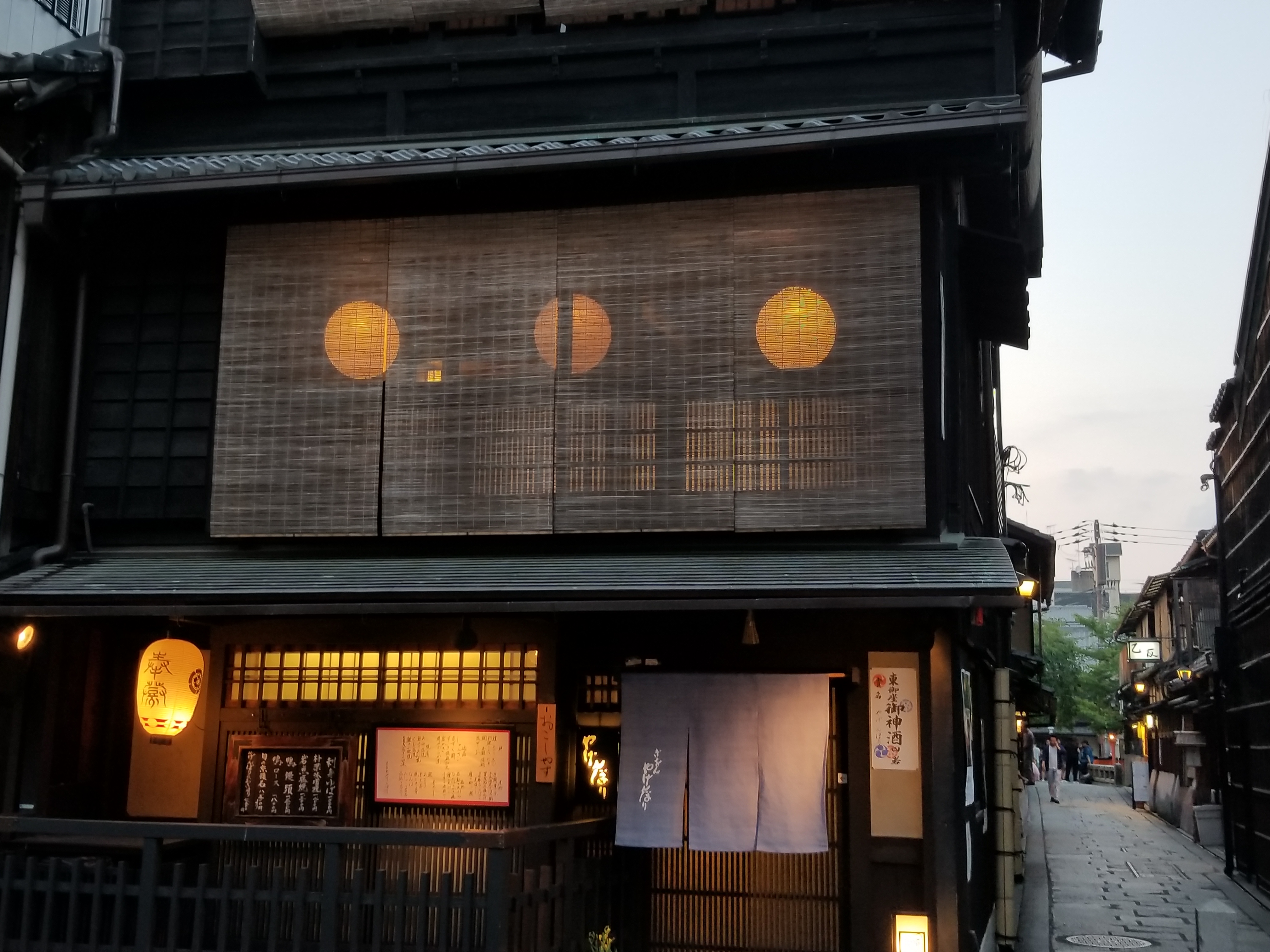
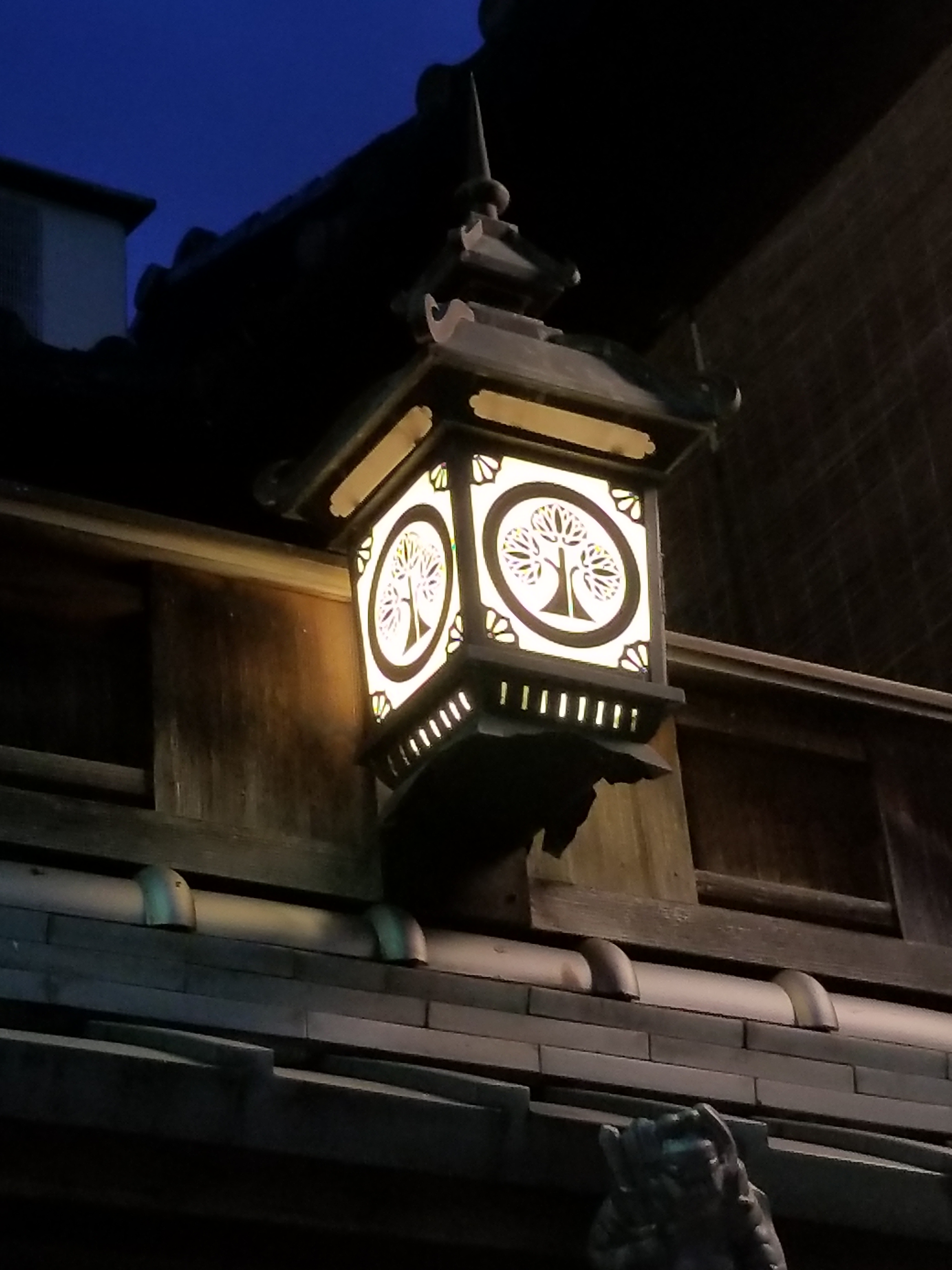
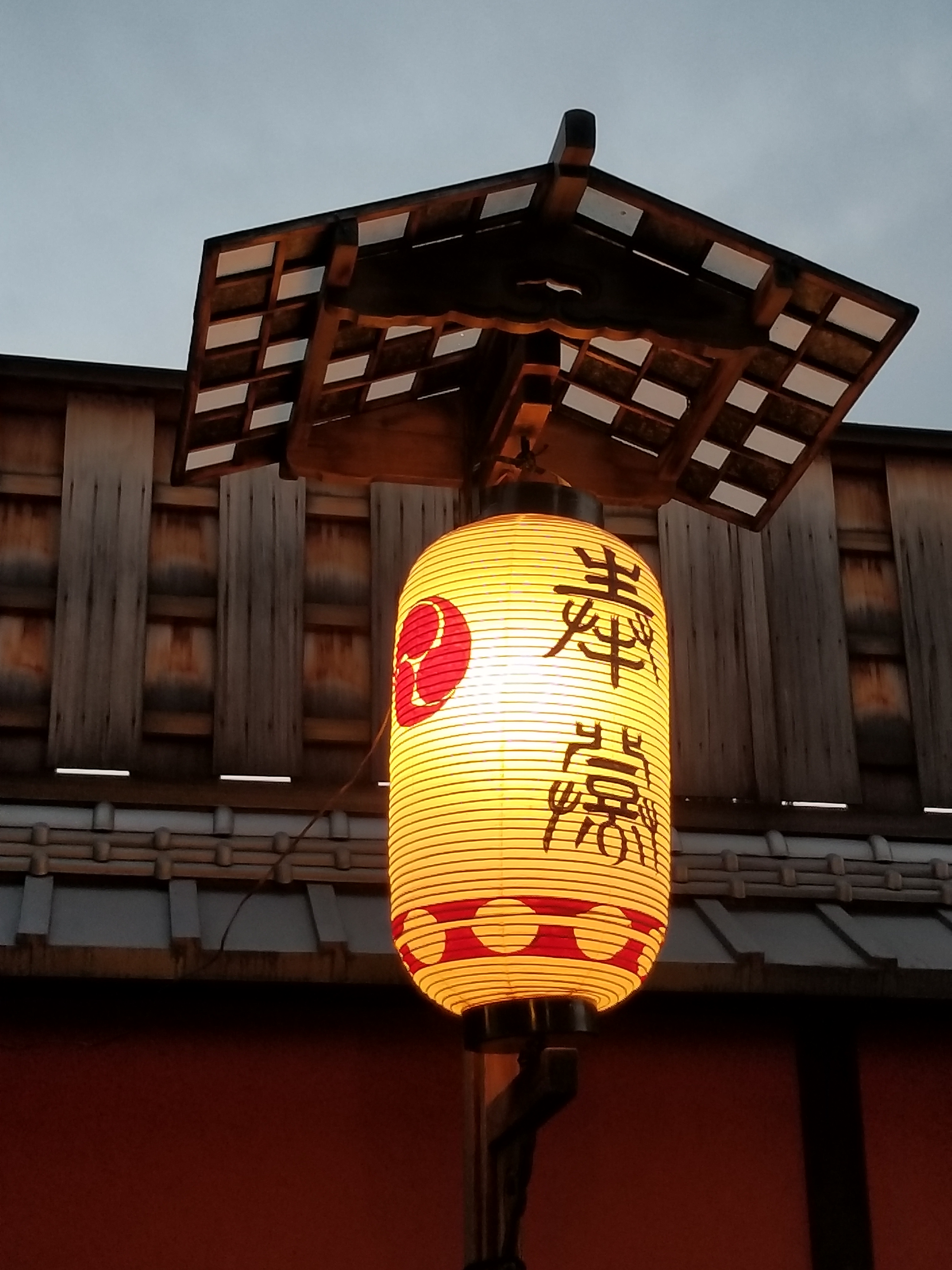
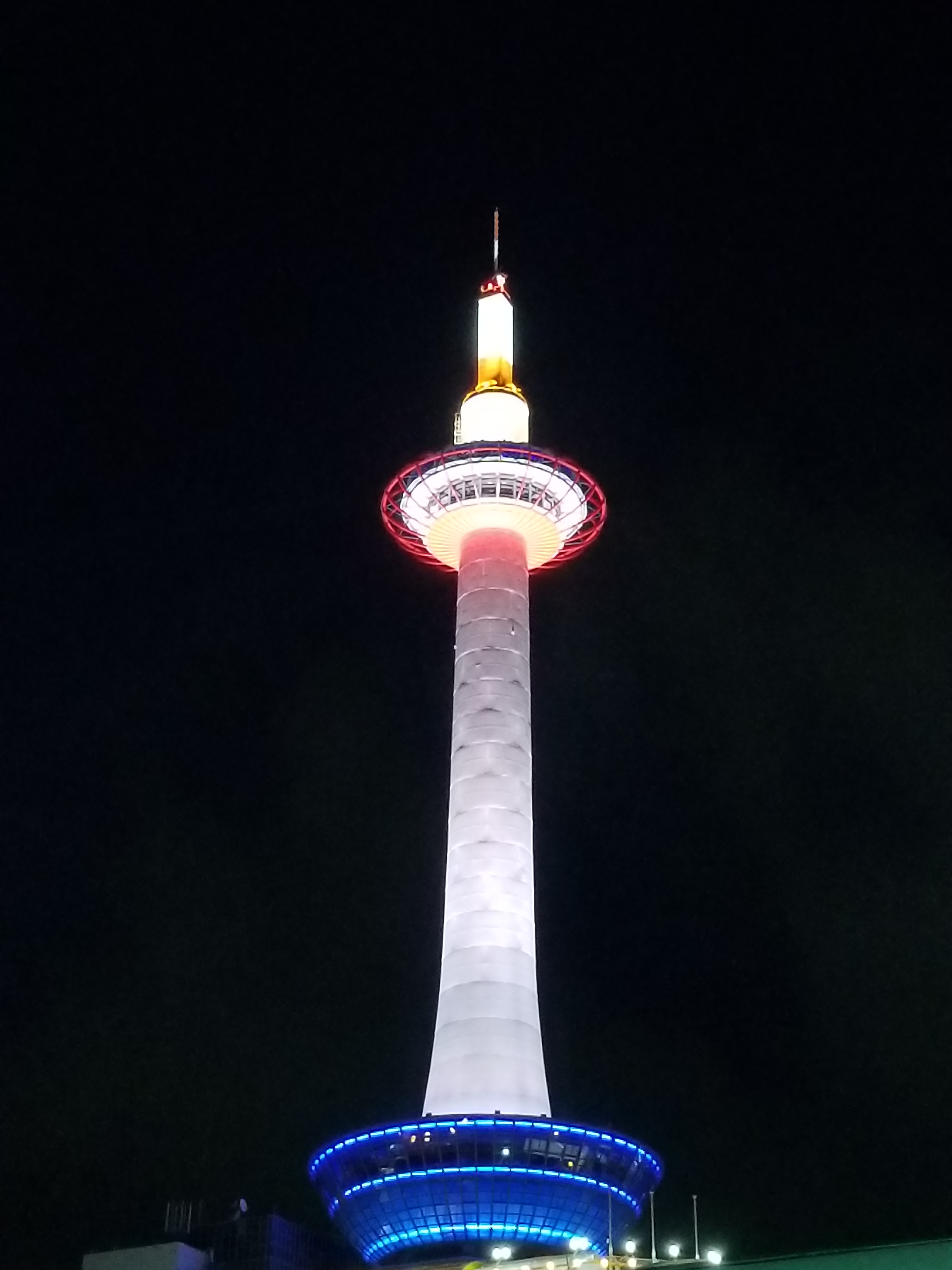
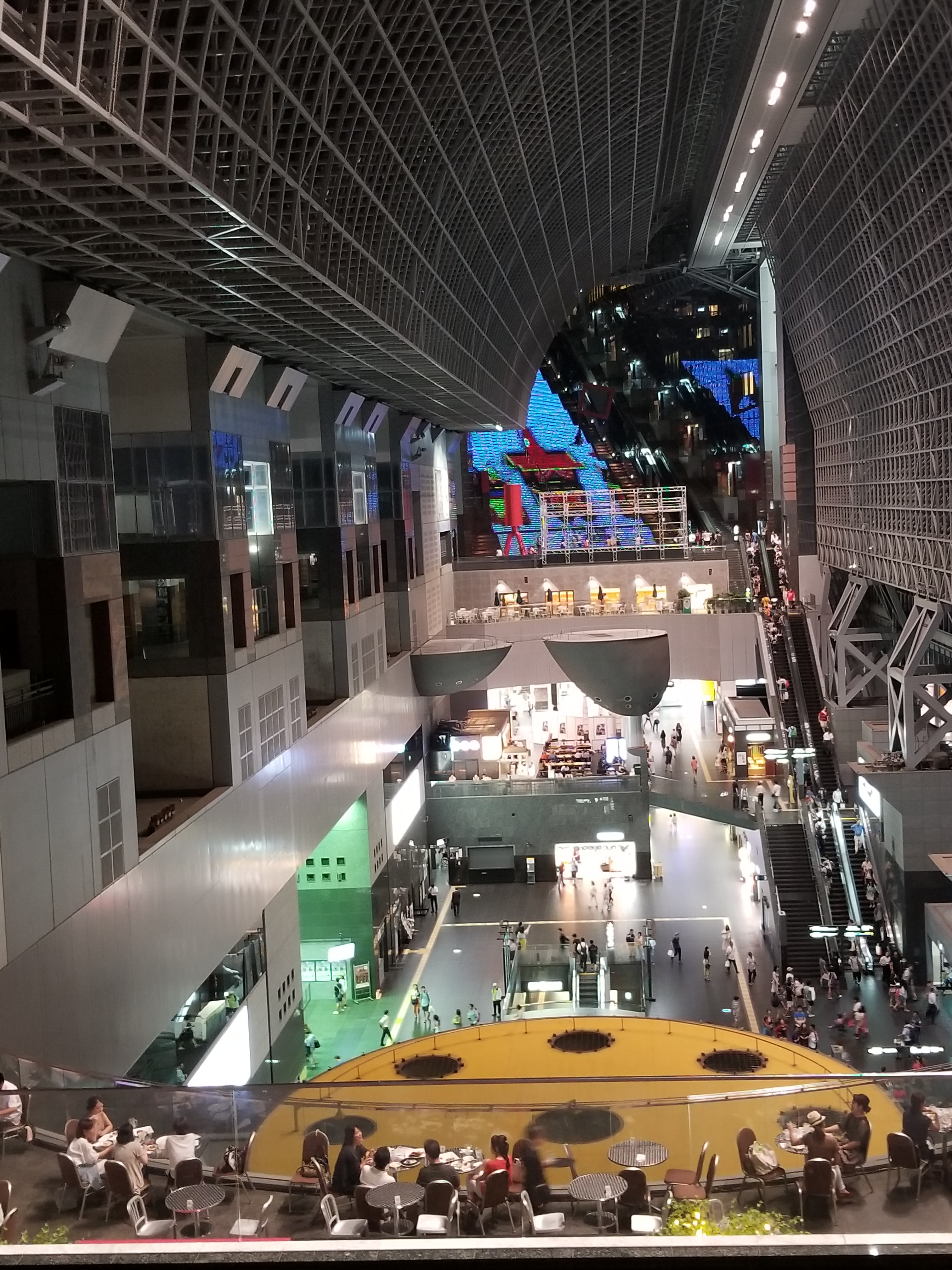
While a July day in Kyoto hums with cicadas, tourist bustle and summer heat, Kyoto after dark has a unique magic. The air is still warm, but the sun’s intensity is replaced by the glow of lanterns, neon signs, floodlit buildings, and people heading off to enjoy their evenings.

Come along with me on this evening tour of Kyoto.

Twilight along a stream in the Gion district

Gion restaurant

Gion lantern 1

Gion lantern 2

Kyoto Tower

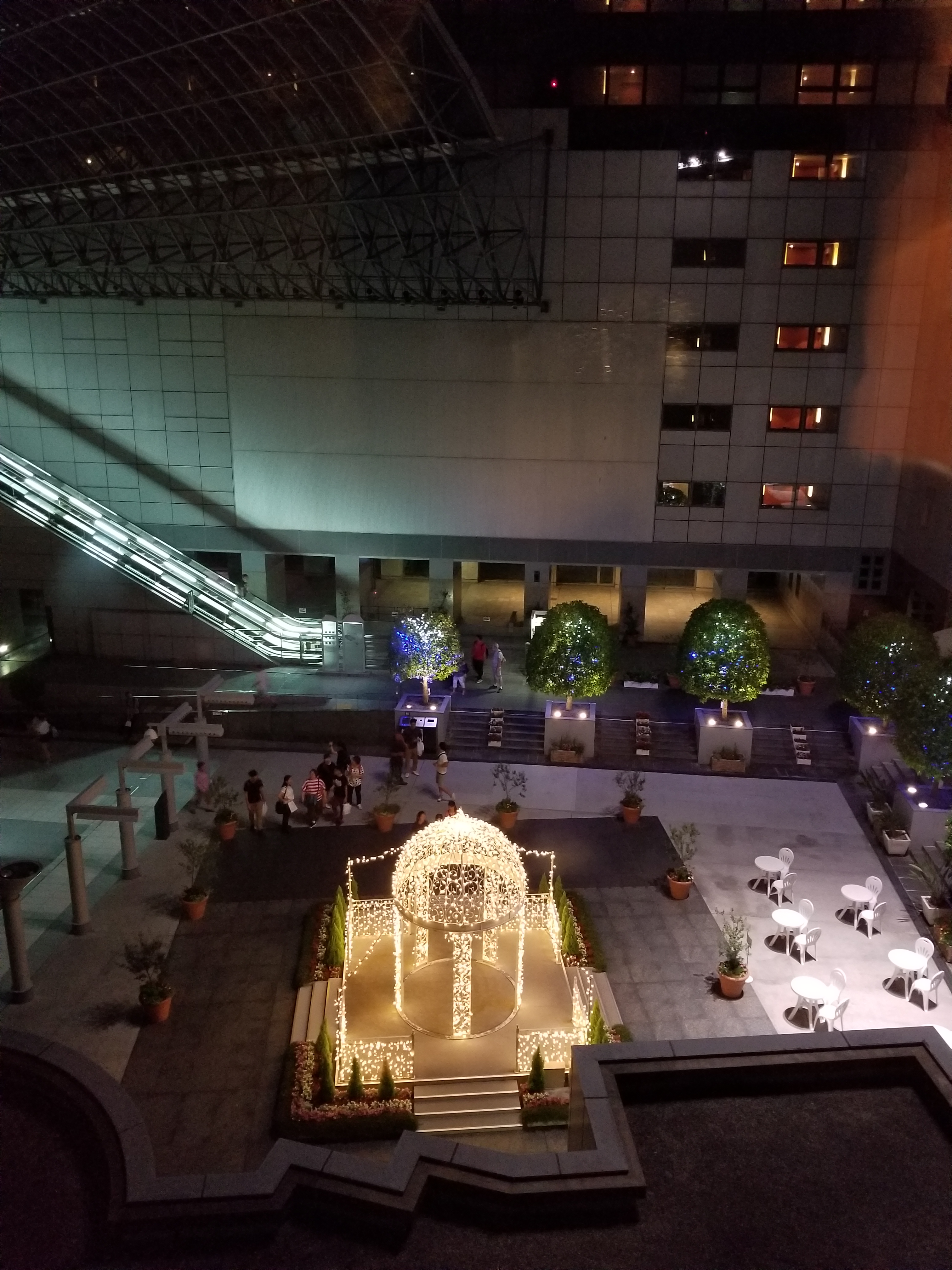
Hotel Granvia at the Kyoto Train Station

Enjoying a drink on the Hotel Granvia inside terrace

Wedding gazebo at Hotel Granvia

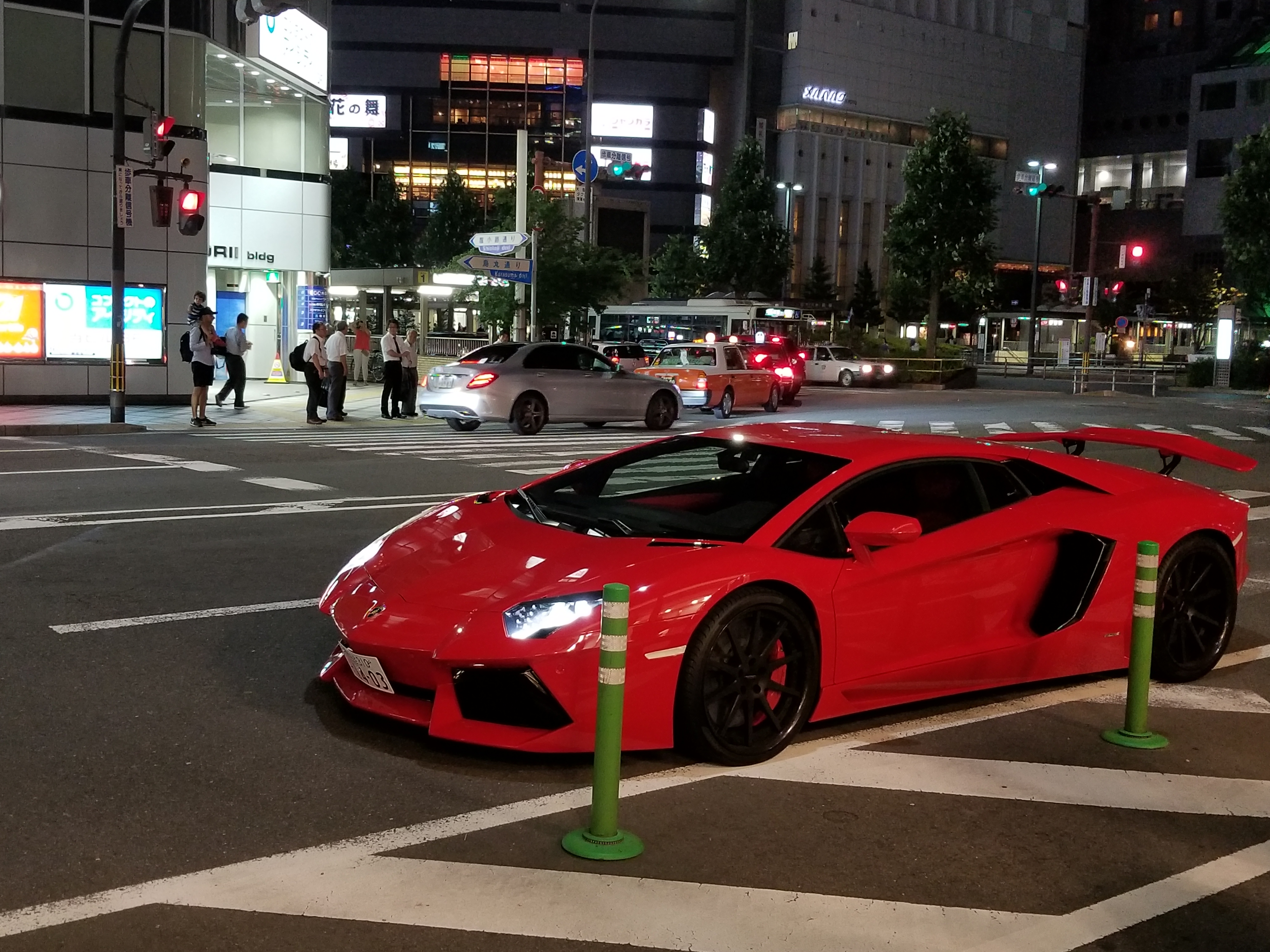
Looking for action

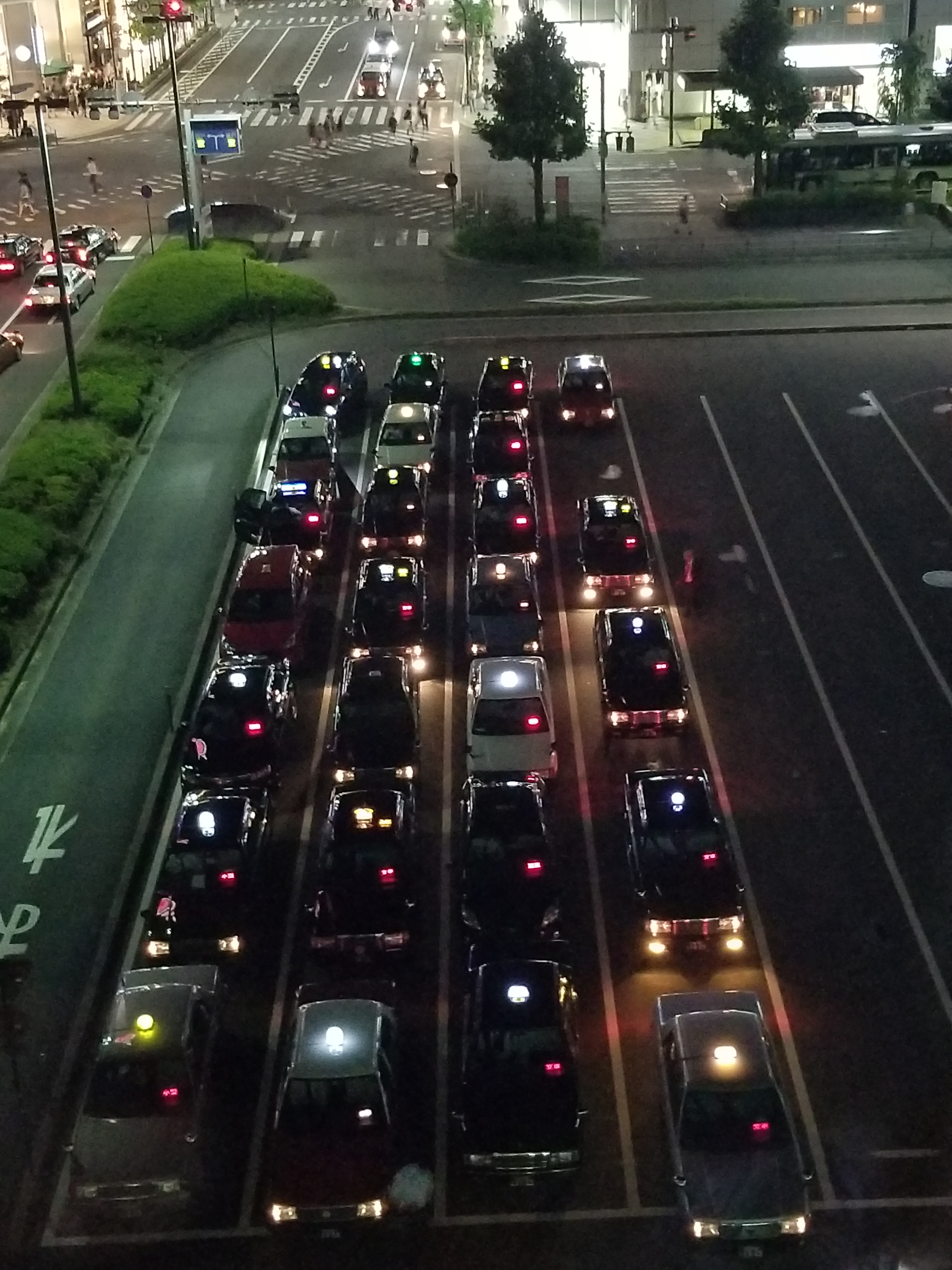
Taxi anyone?

And last but not least- a portion of Kyoto Station’s 20th anniversary light show on the 171-step grand staircase. The little guy at the end says it all!

I’m a huge fan of taking walking tours when I’m visiting a new city, especially when I’m travelling on my own. Not only do I get a street level view of the place I’m calling home for a few days, but I have the chance to mingle a little with the locals and hear stories and tidbits of information I’d never find out on my own.

I discovered Waraido Guide Network‘s 5-hour walking tour of Kyoto via my Fodor’s guide to Japan, but their pamphlets are at all the info centres in Kyoto, under the title Walk in Kyoto, Talk in English. Given the late July heat and humidity, I wondered if it was a wise idea to commit to  a 5 hour tour. But there were lots of stops along the way in shady spots and air-conditioned shops.

Maybe the heat kept people away the day of my tour, because only 5 of us showed up. This made it easy to interact with each other and with our guide Waka, a Kyoto native. Her knowledge of and pride in her city were obvious as our little group ambled around together, chatting, swapping stories, and asking and answering each other’s questions.

We began with a lesson on differentiating the angles of Japanese bows-  a 15° angle to say hello, 30° for greater respect (all the staff at my hotel have been acknowledging me this way), and 45° to show very deep respect or a sincere apology. “Now you’ll know how to interact with the locals youll meet on our walk,” said Waka.

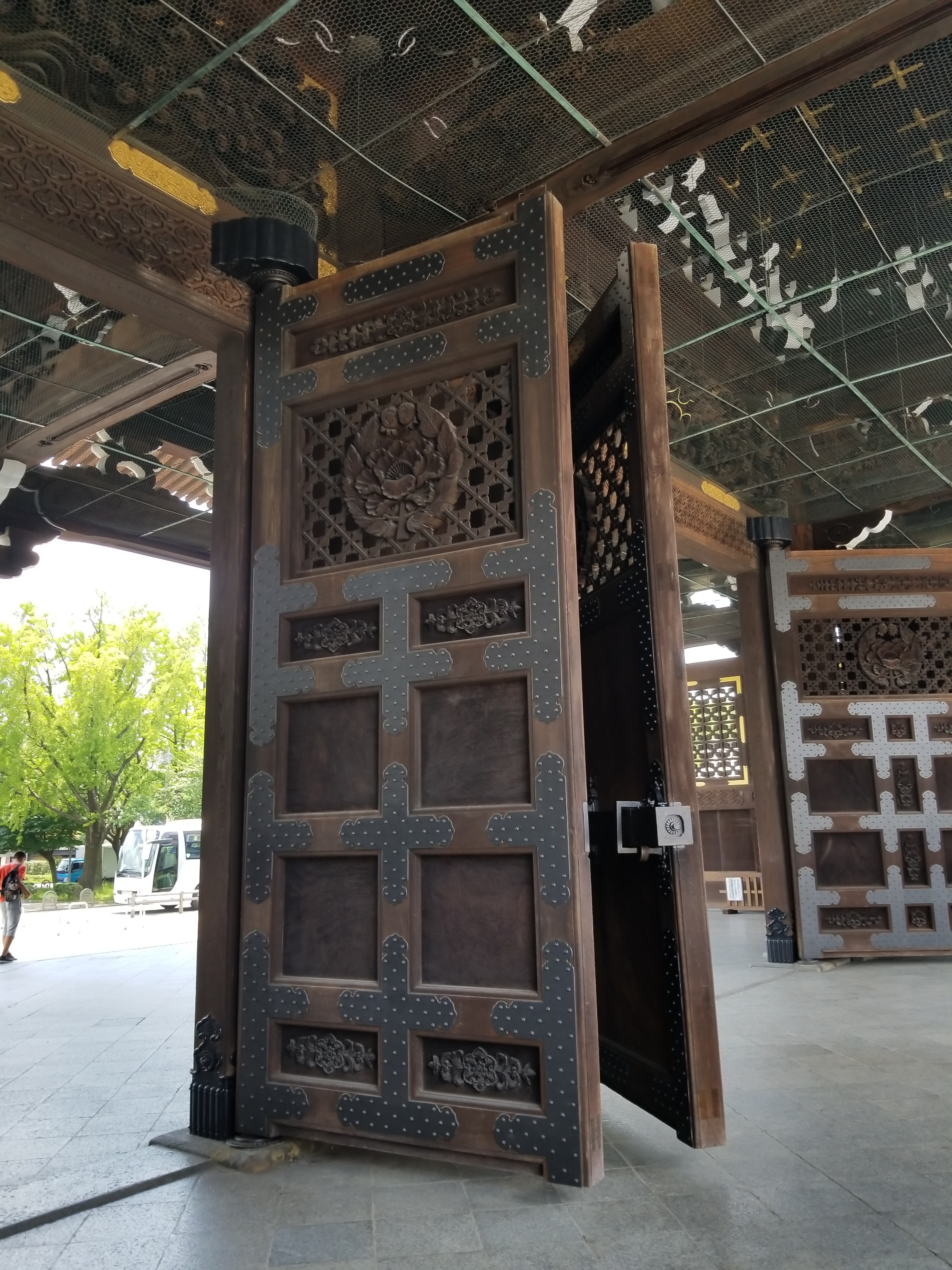
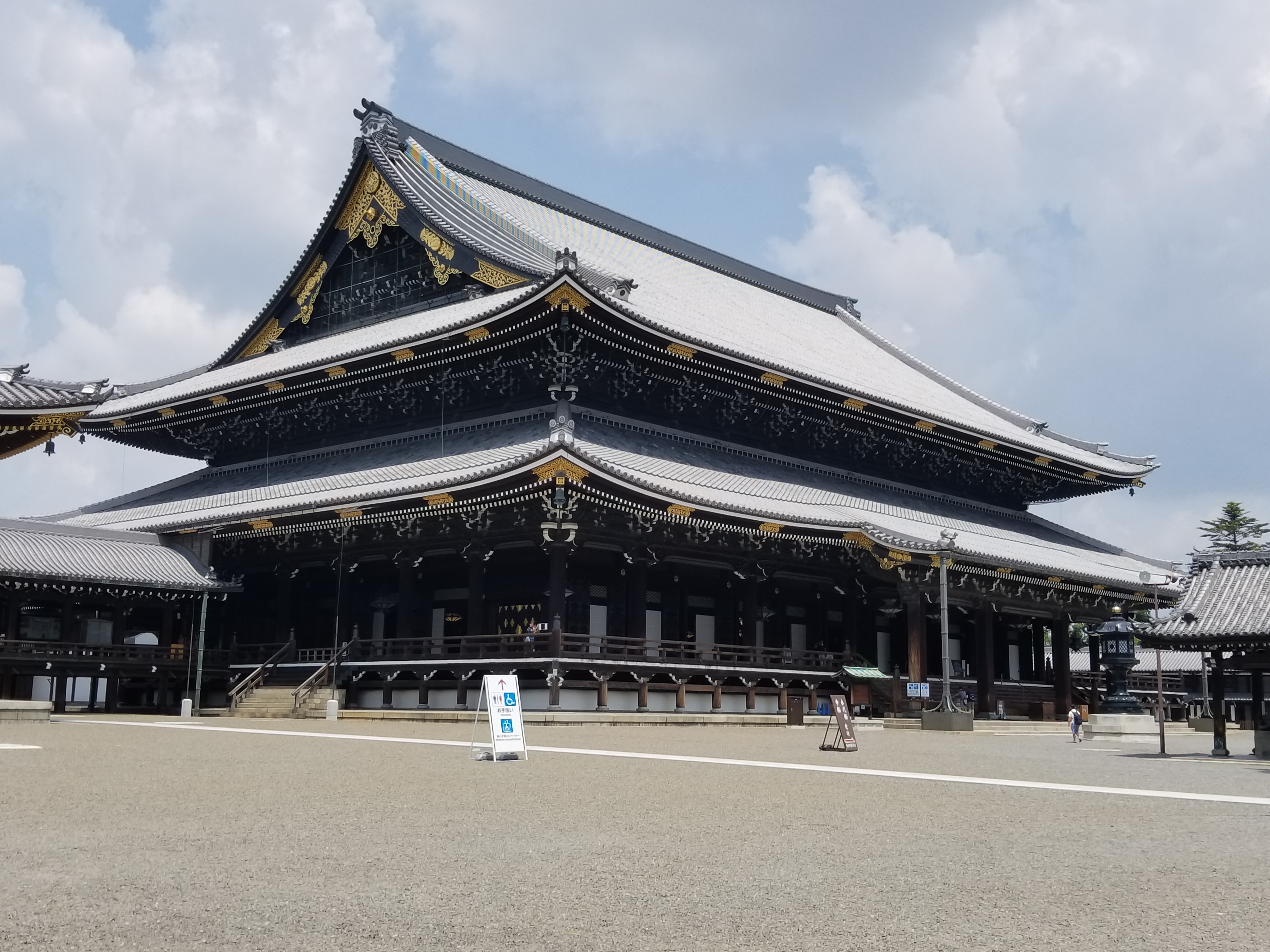
Our first stop was at one of Kyoto’s 1600 temples, Higashi Honganji, a massive wooden structure still attended by many Kyotoites every morning before they go to work. We slipped our shoes off before going inside and kneeling on tatami, the woven mats on which Buddhists offer prayers. A family was coming in with one of the monks for a memorial service and, to my surprise, we were allowed to stay to hear him say a sutra. 

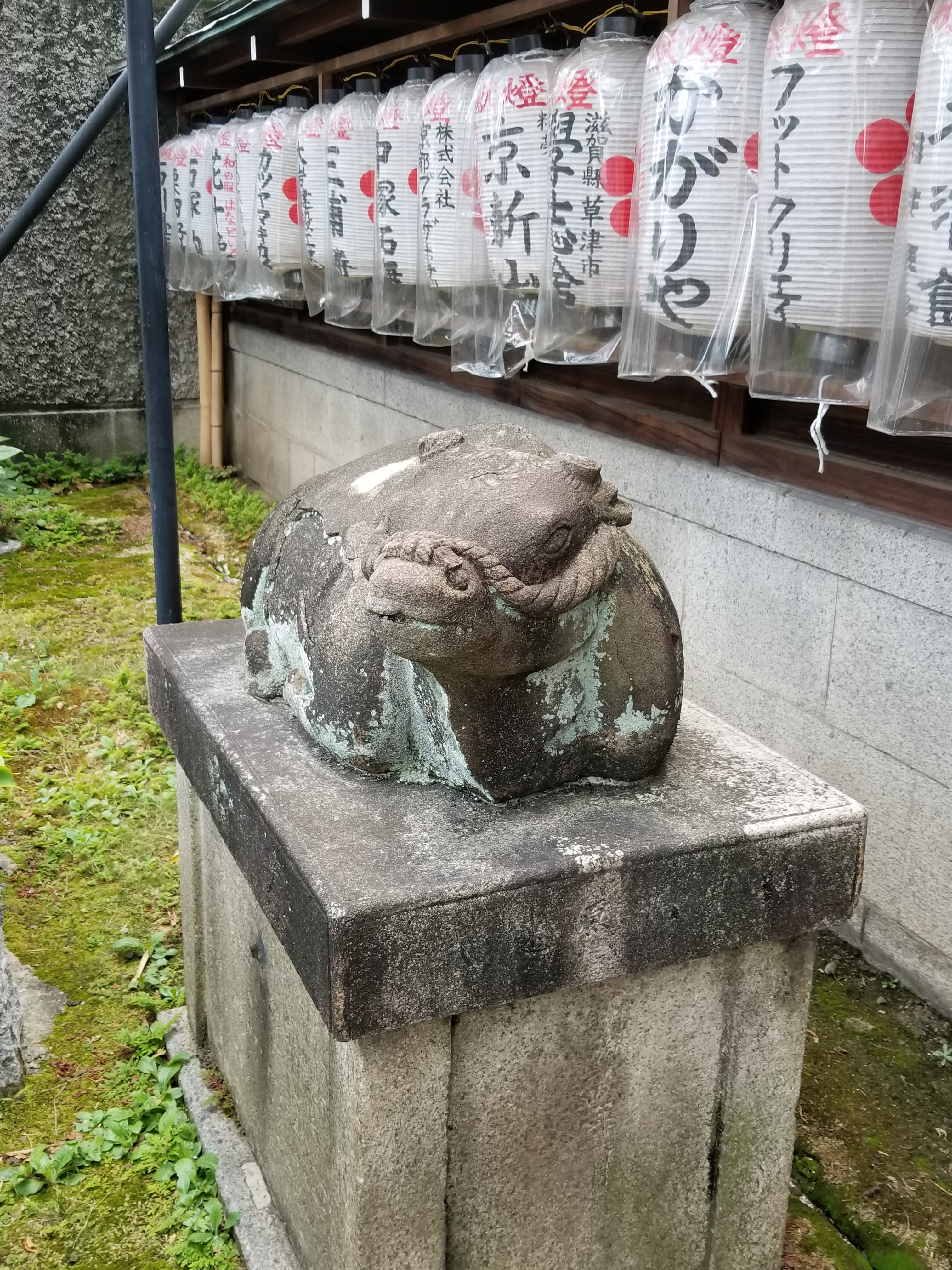
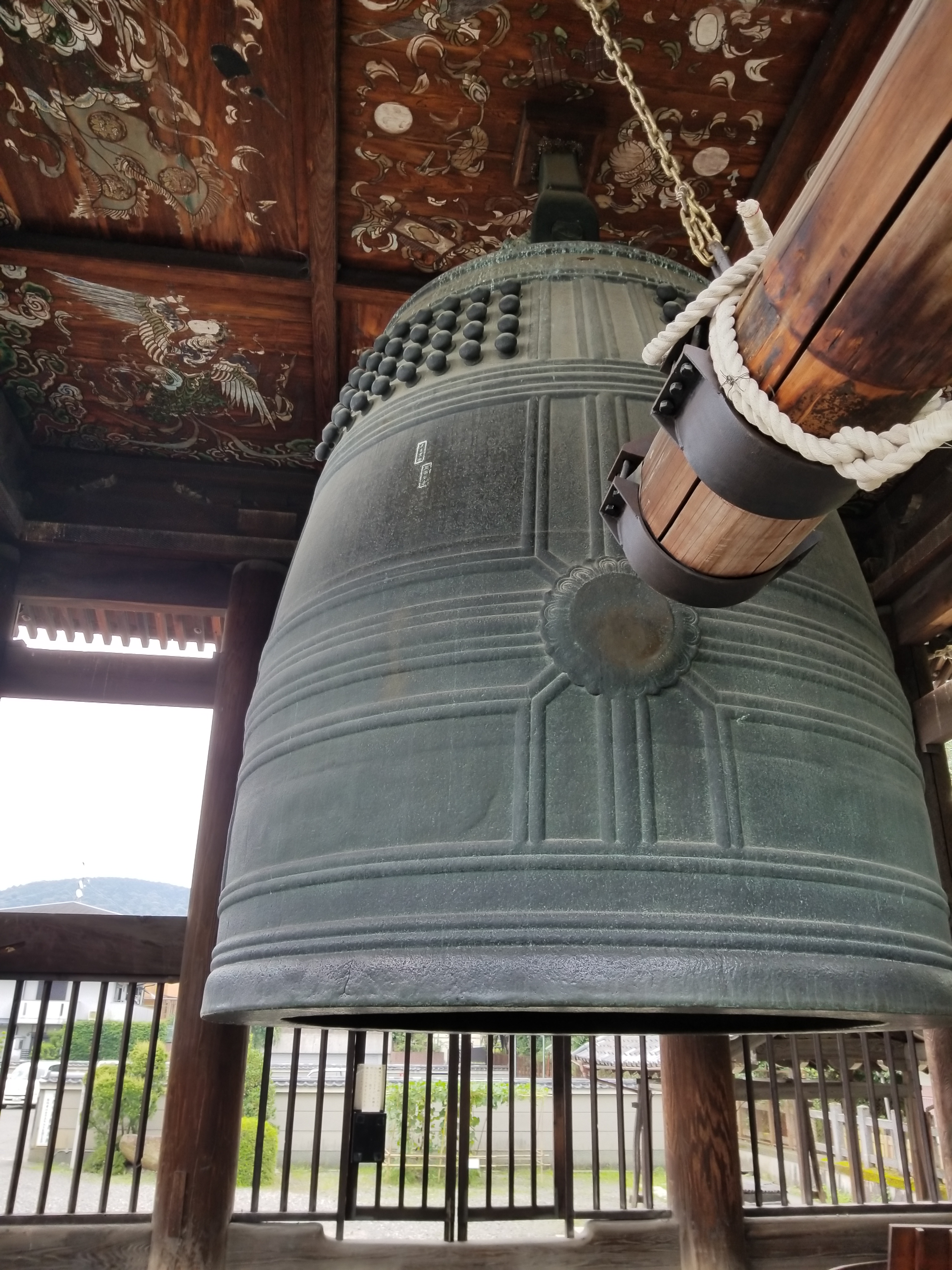
Spiritual beliefs of two main types are woven into the fabric of Japanese life. Buddhism is one, Shintoism the other. Shintoism is a form of animism, a belief that gods exist in and for every aspect of life. On our walk, we visited three Shinto shrines. The first is devoted to academics, which Waka told us is particularly popular among students taking exams. The second addresses women’s needs and gave us the chance to refresh our water bottles from a stream originating deep underground. The third features Japan’s largest bell, an 8-ton megalith that is struck 108 times on New Year’s Eve. The figure symbolizes the number of desires that Shintoism believes reside within us being swept away to give us a fresh start at the beginning of a new year.

One of the best parts of the tour route was that it wound through Kyoto’s narrow back streets, giving us a glimpse into cottage-industry workshops. Some had their doors open but no one was around. We peered into a quiet tatami making shop and a little tofu factory, owned by three sisters all over the age of 70. Waka told us that they get up at 2:30 a.m. every day to have their product ready to sell at a local market so their work day was finished by the time we visited later in the morning.

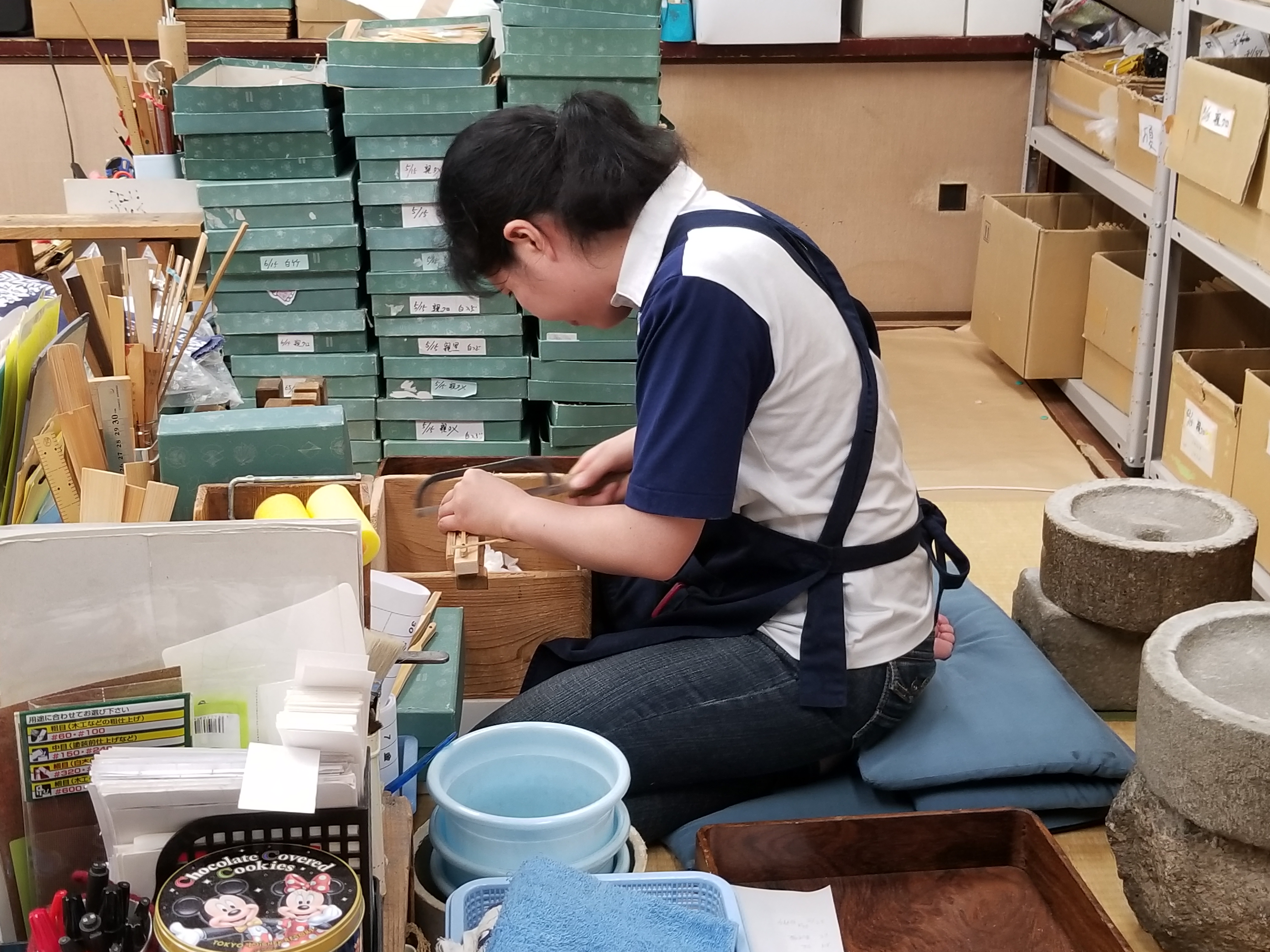
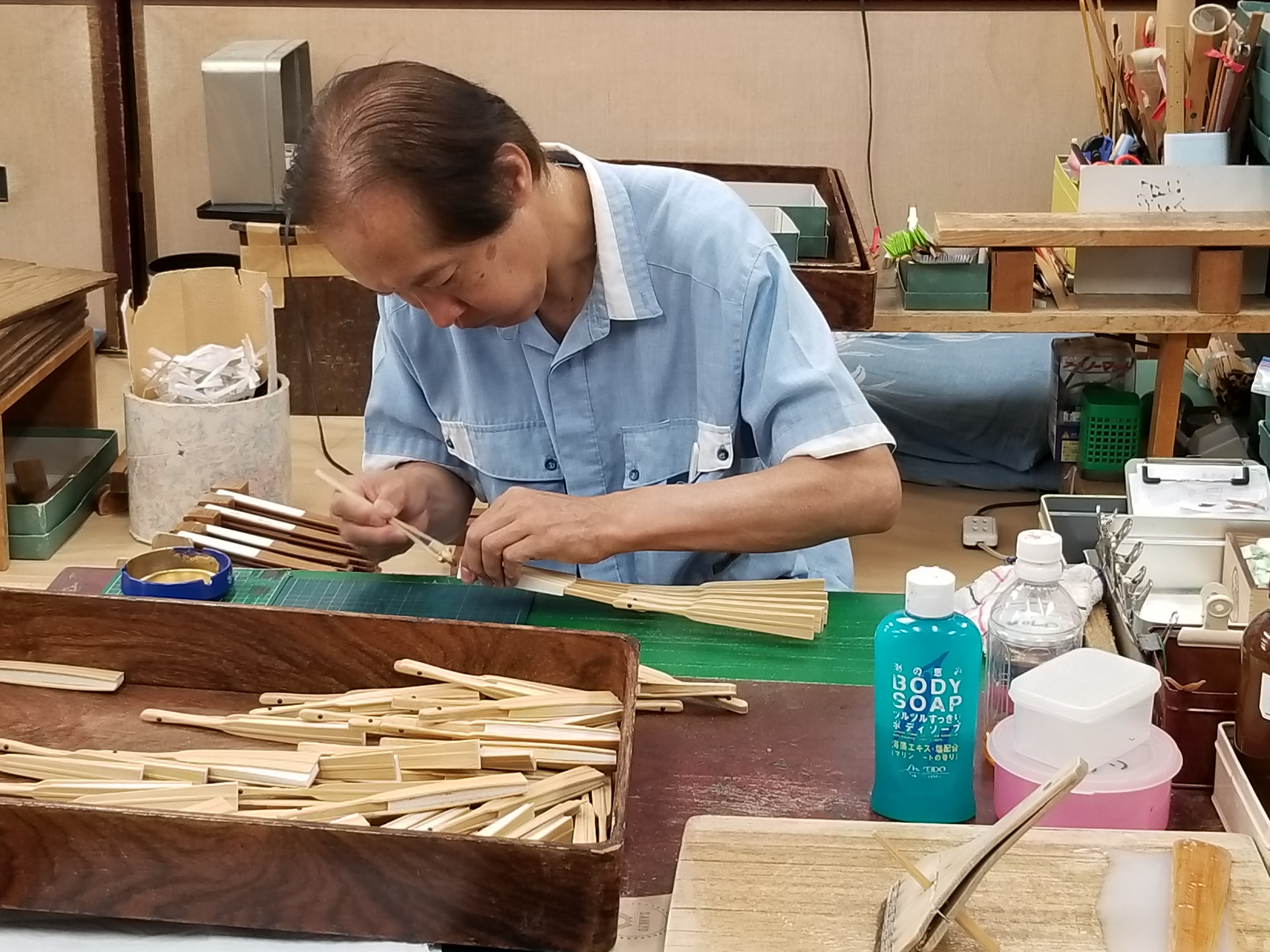
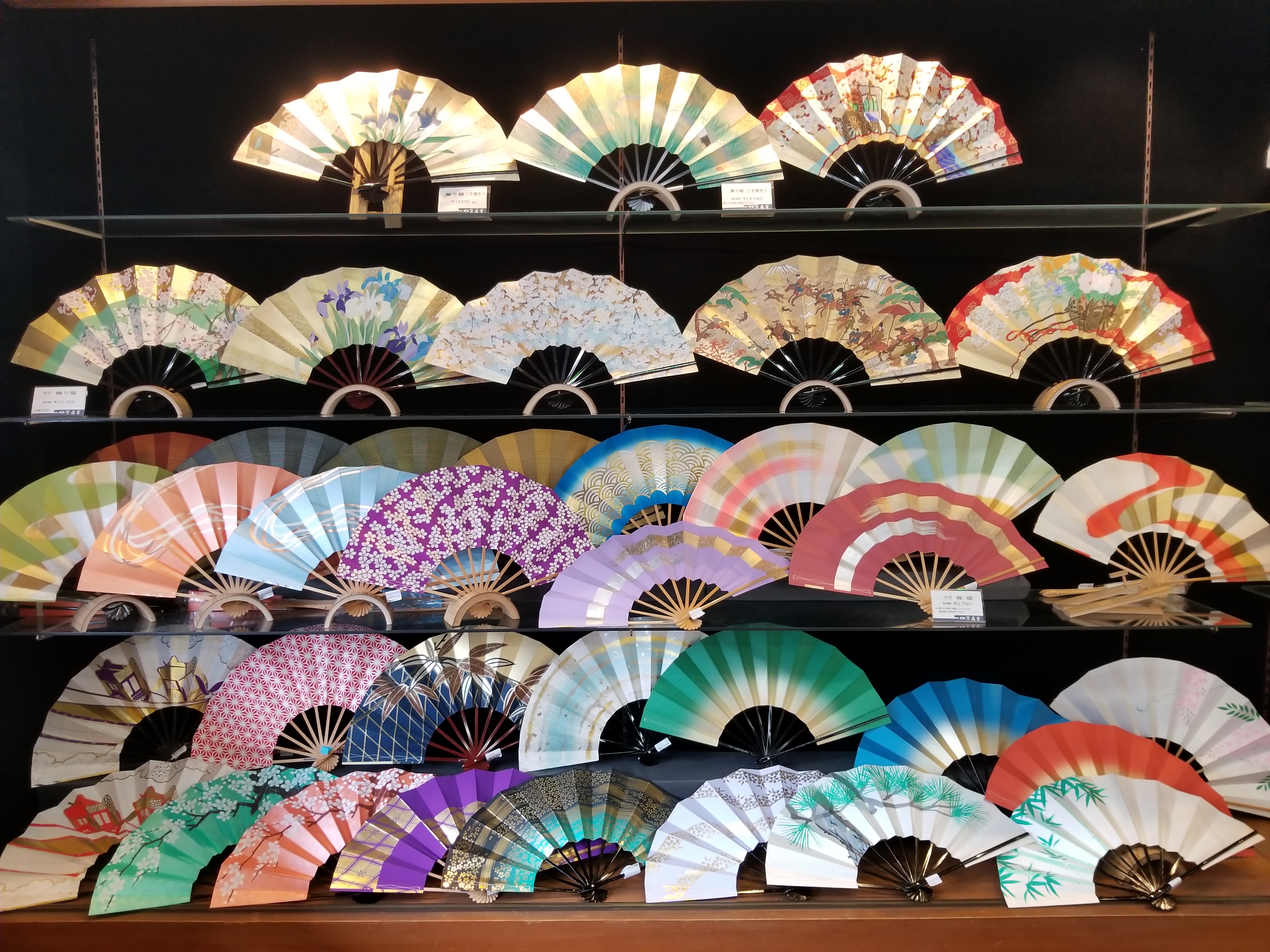
A fan making workshop, however, was humming with activity. Each employee is the most recent member of several generations of fan makers and has a specific job to do to produce the artistically functional products we saw in the front shop. 

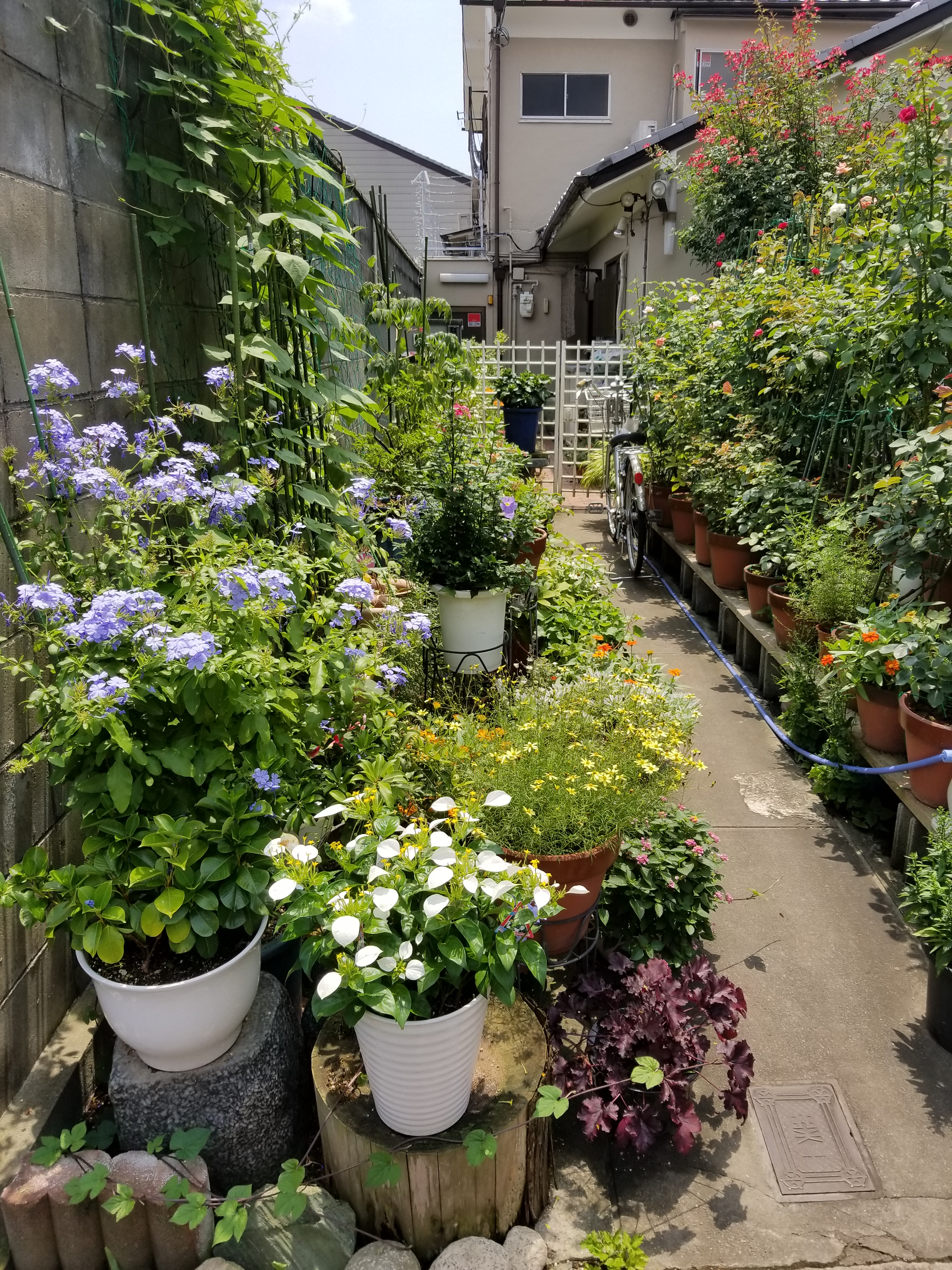
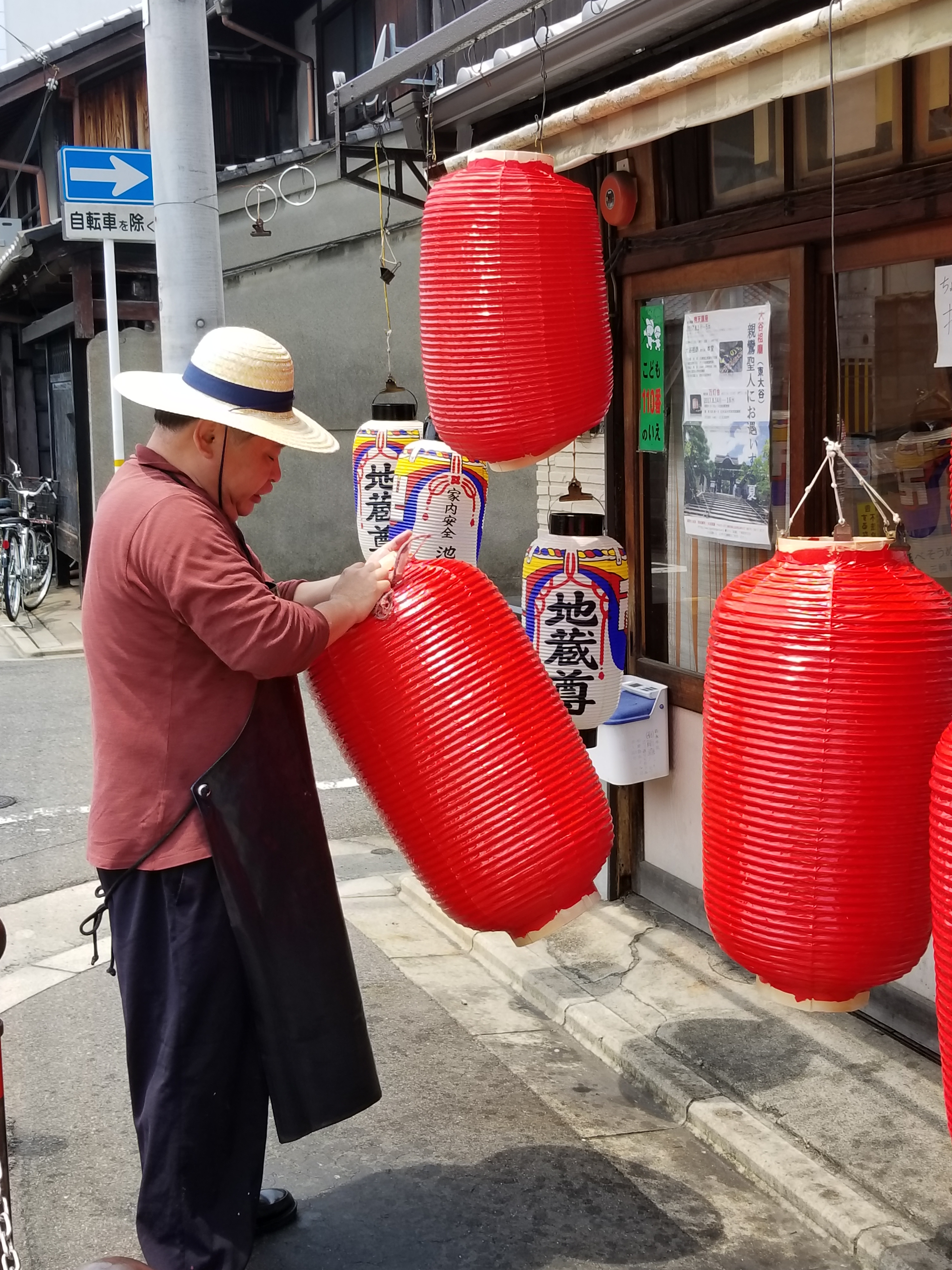
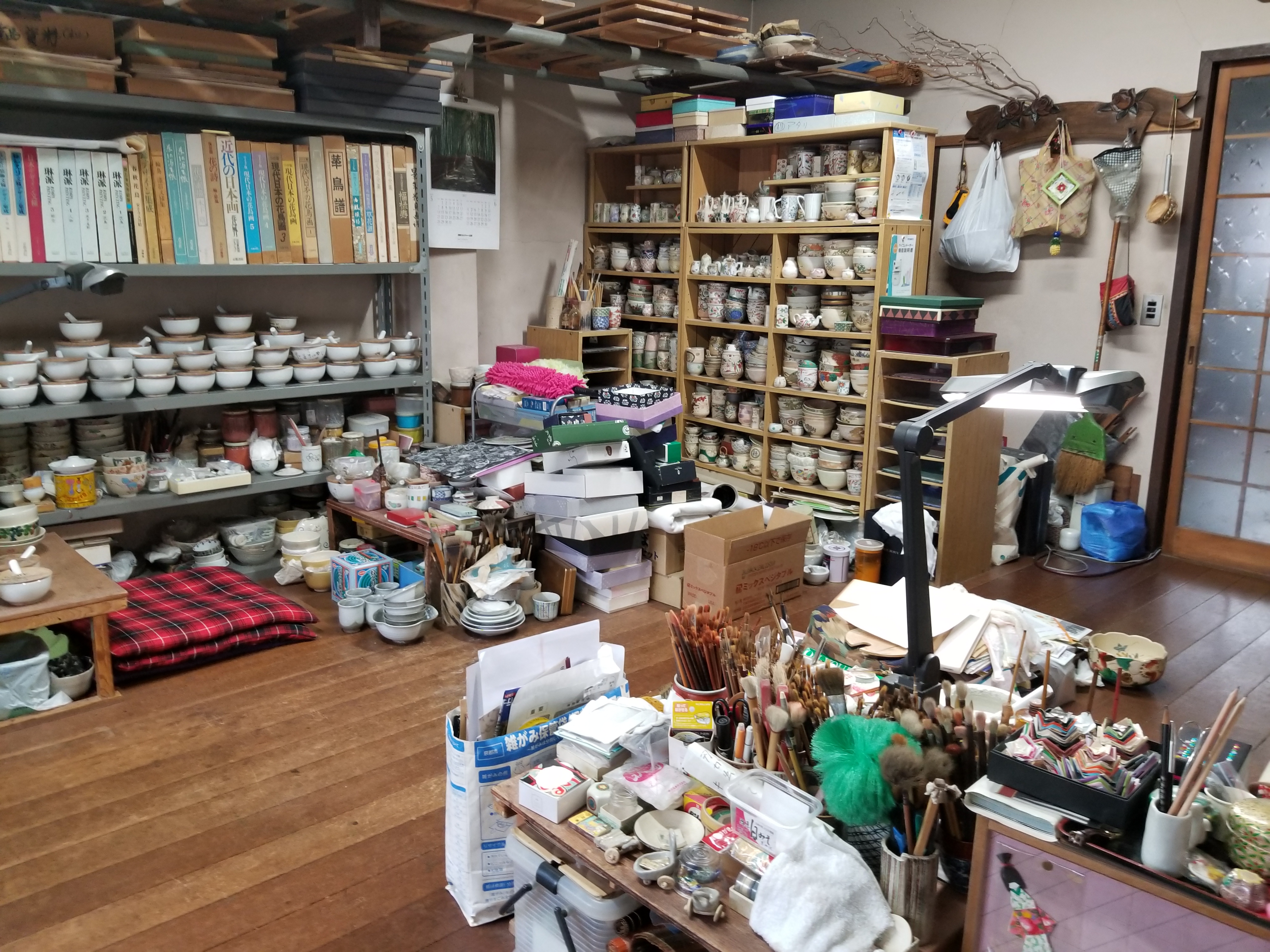
There were also some serendipitous sights for us to see. A local resident was polishing the lacquer on his lanterns for the Gion Festival, which takes place in Kyoto throughout July. A potter, a woman whom Waka told us is over 80 years old, bustled back and forth between her studio and a truck delivering the supplies she needed for her craft. A delightful urban garden welcomed us as we walked past.

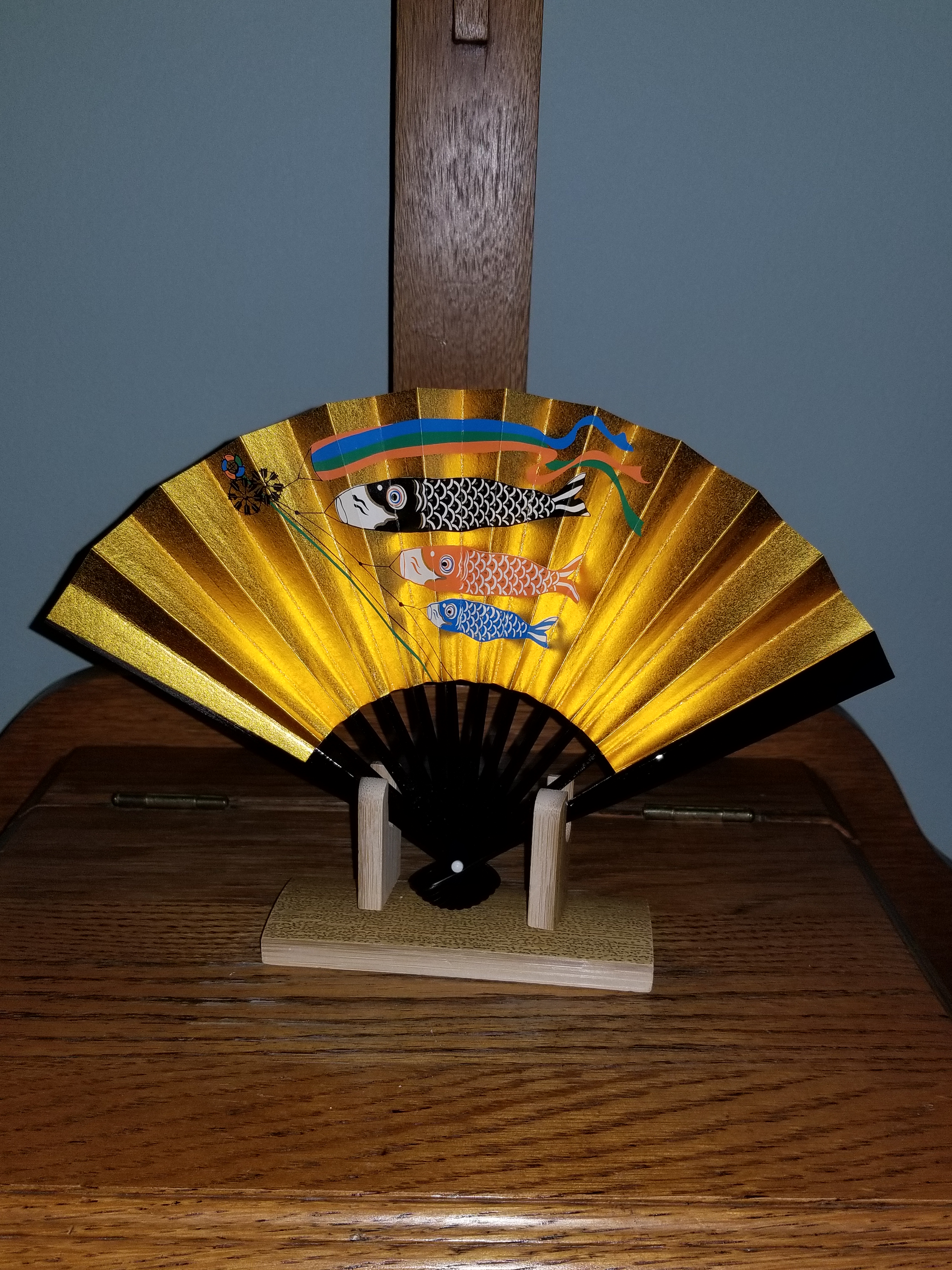
Unlike tours I’ve taken in other cities, this one gave me a taste of the daily working  lives of Kyotoites as well as the courage to explore more of the city’s little side streets on my own. With the help of the tour route map we received, I  was able to revisit the fan shop and choose a fan at my leisure. It’s now on display in my living room back home, a delightful memory of a delightful tour.

The students enrolled in Wakayama Studies, a course offered by the Faculty of Tourism at Wakayama University, got me intrigued. After I was invited to listen to their enthusiastic oral presentations about Wakayama Castle, I knew I  had to add the site to my must-visit list before moving on from my work commitment in Wakayama to vacation in Kyoto.

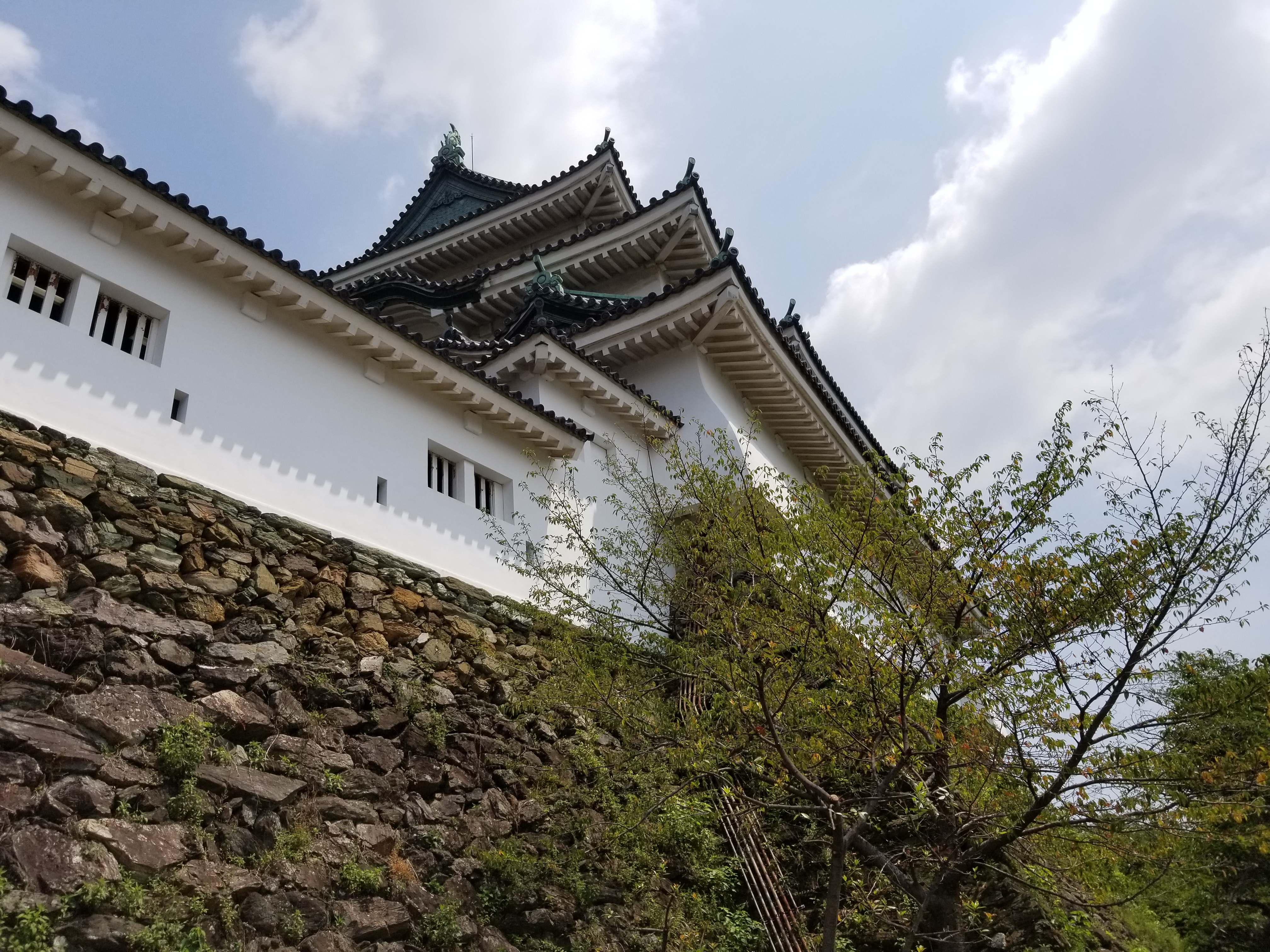
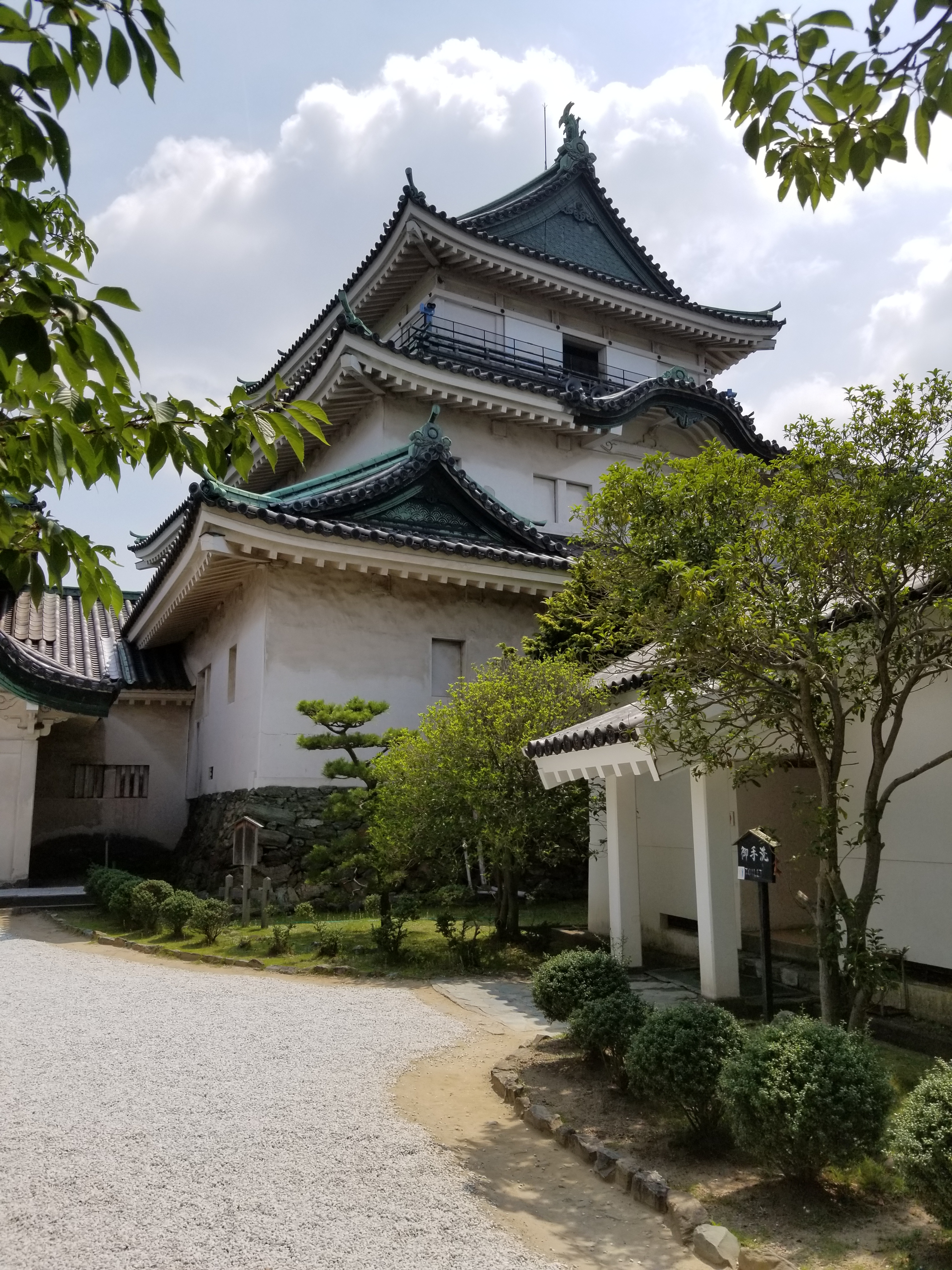
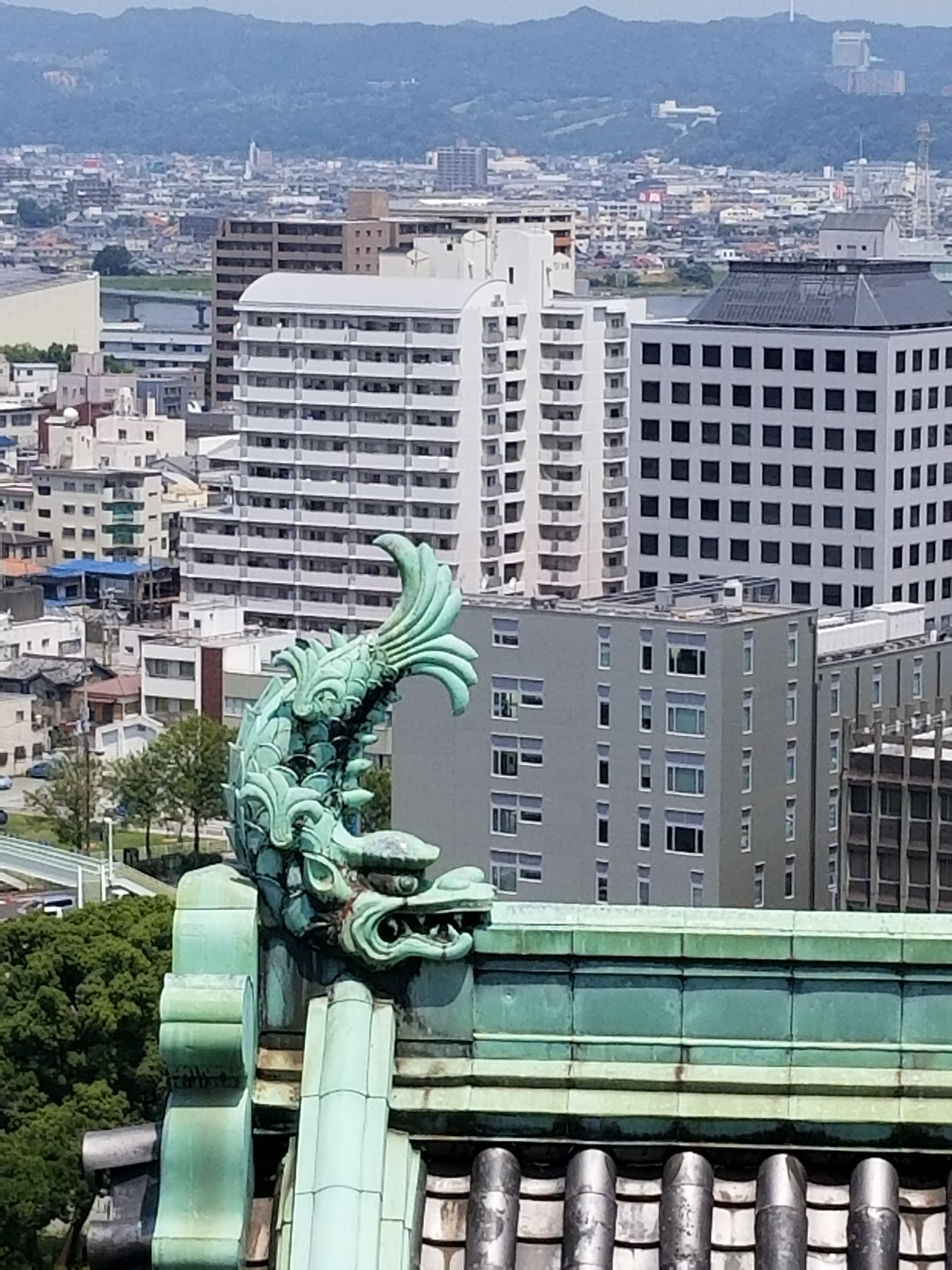
On a baking hot quiet Sunday, with the cicadas shrilling from the trees, I walked 30 minutes from my hotel and suddenly saw the Castle peering down at me from its strategic perch above the city. It’s had a turbulent history dating back to feudal battles of the 16th century and 17th centuries, and was completely destroyed by the Allies in WW II. Wakayama residents applied to have it rebuilt in 1958 using its original design. 

The day of my visit, I appeared to be one of the few non-Japanese visitors, and there weren’t even very many of them on site, making the visit a peaceful one. 

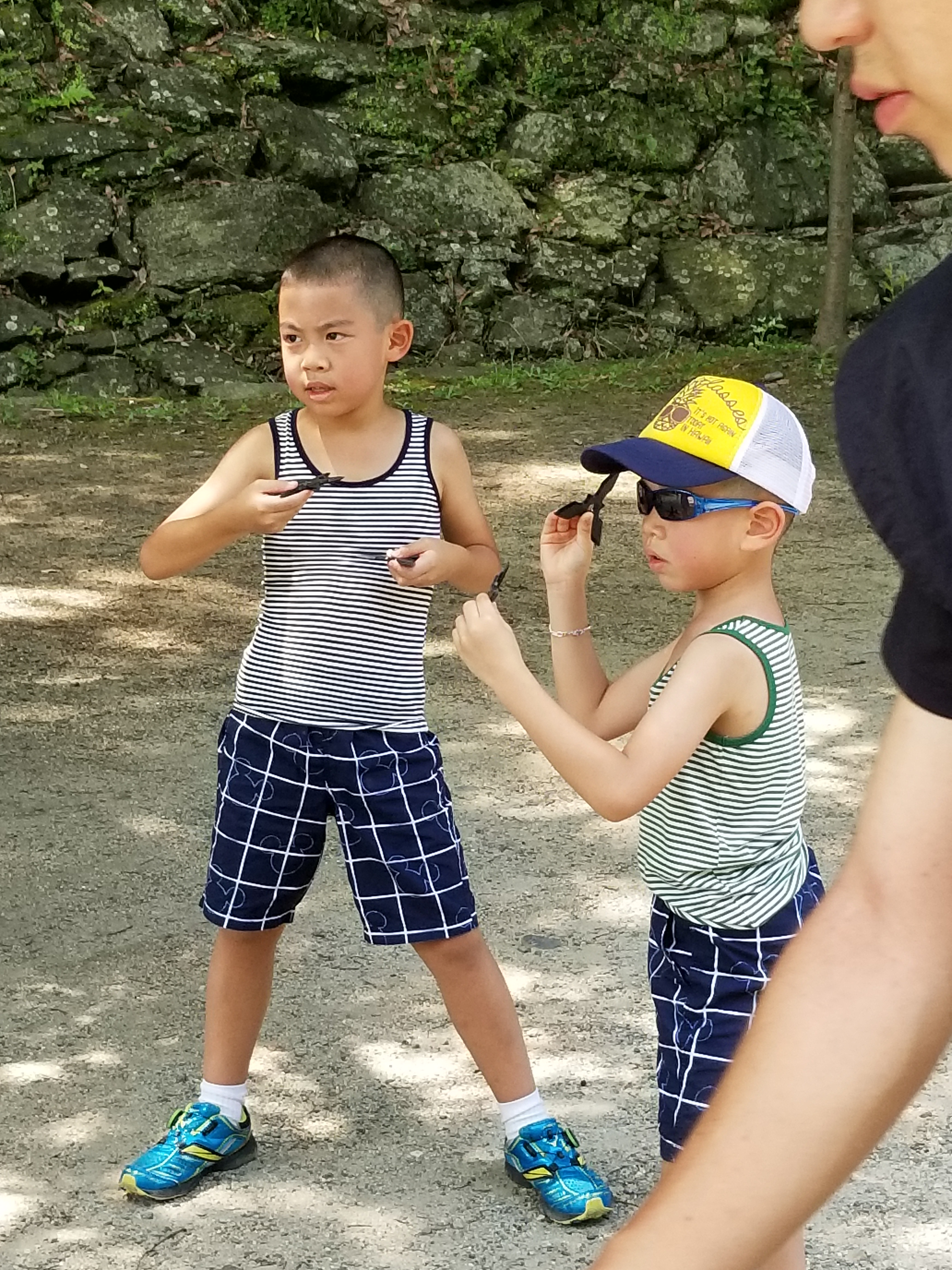
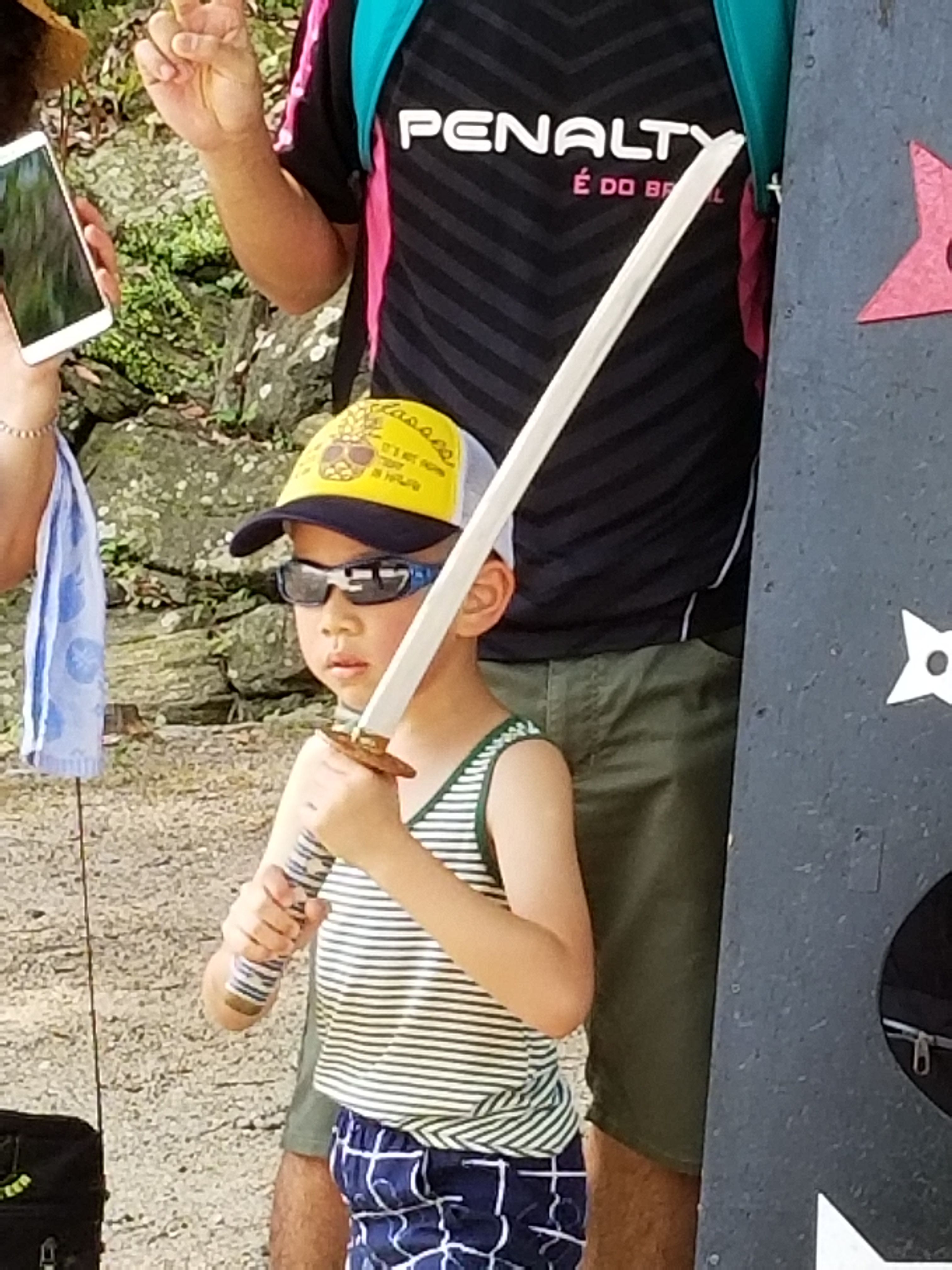
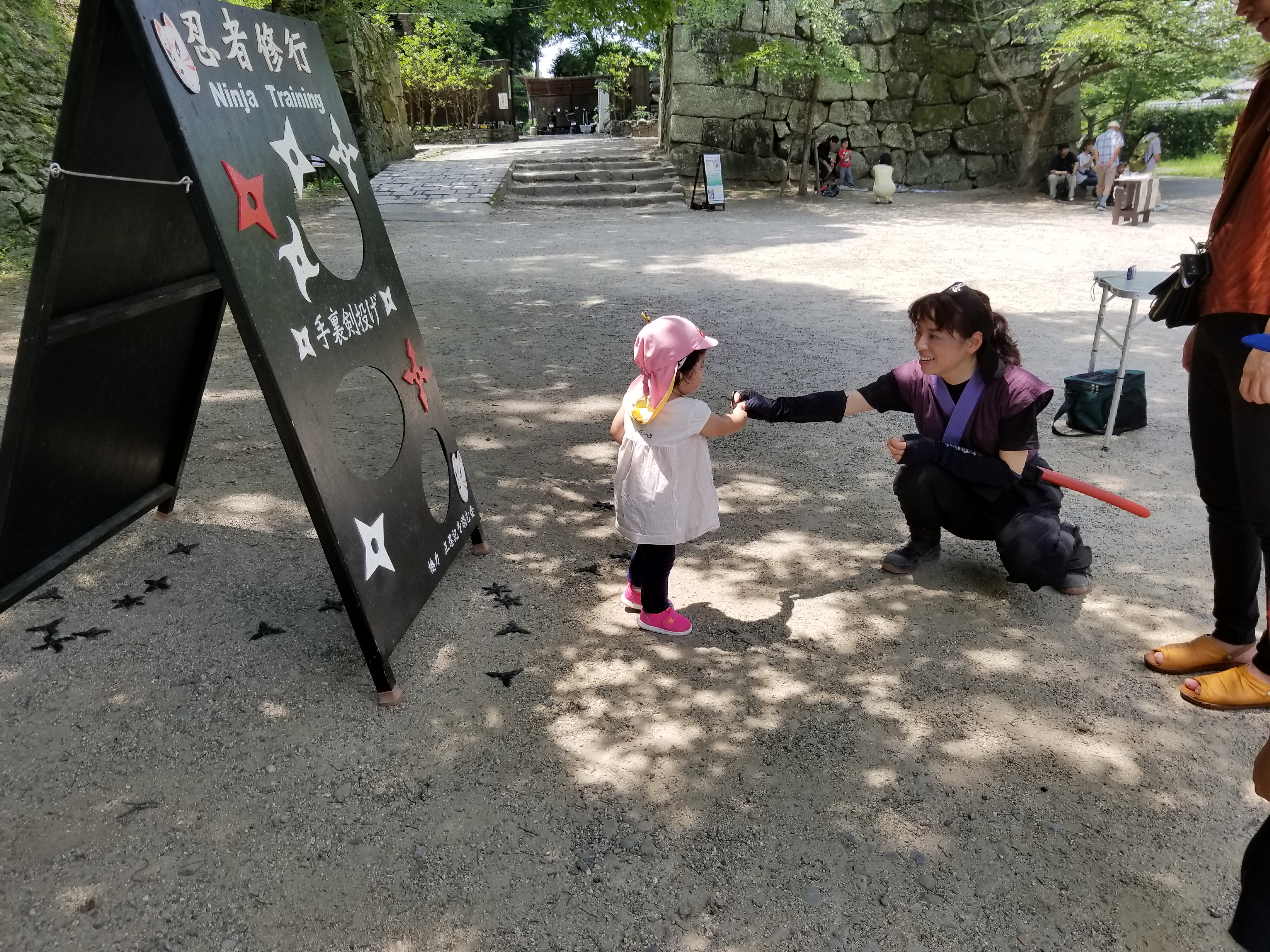
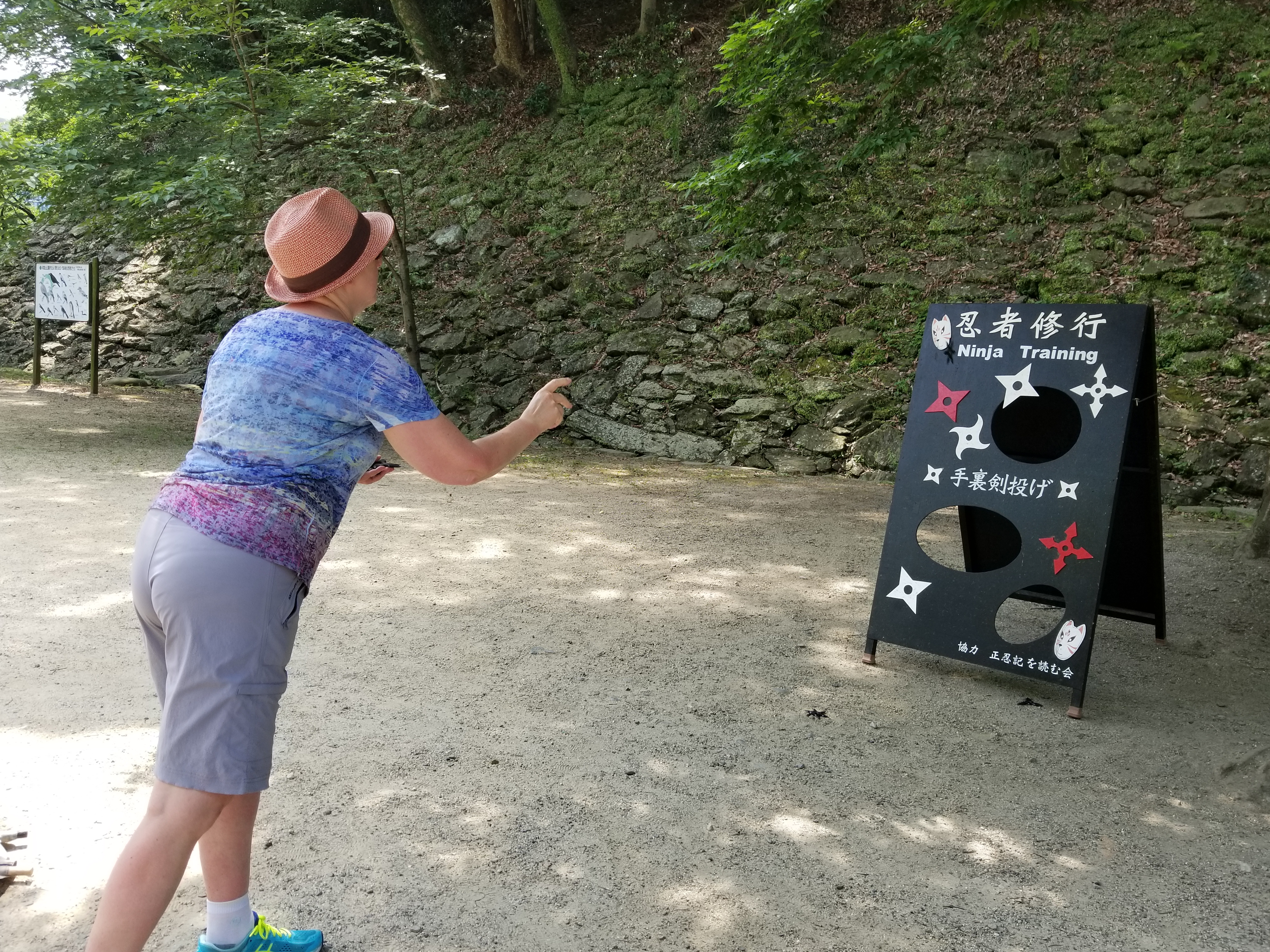
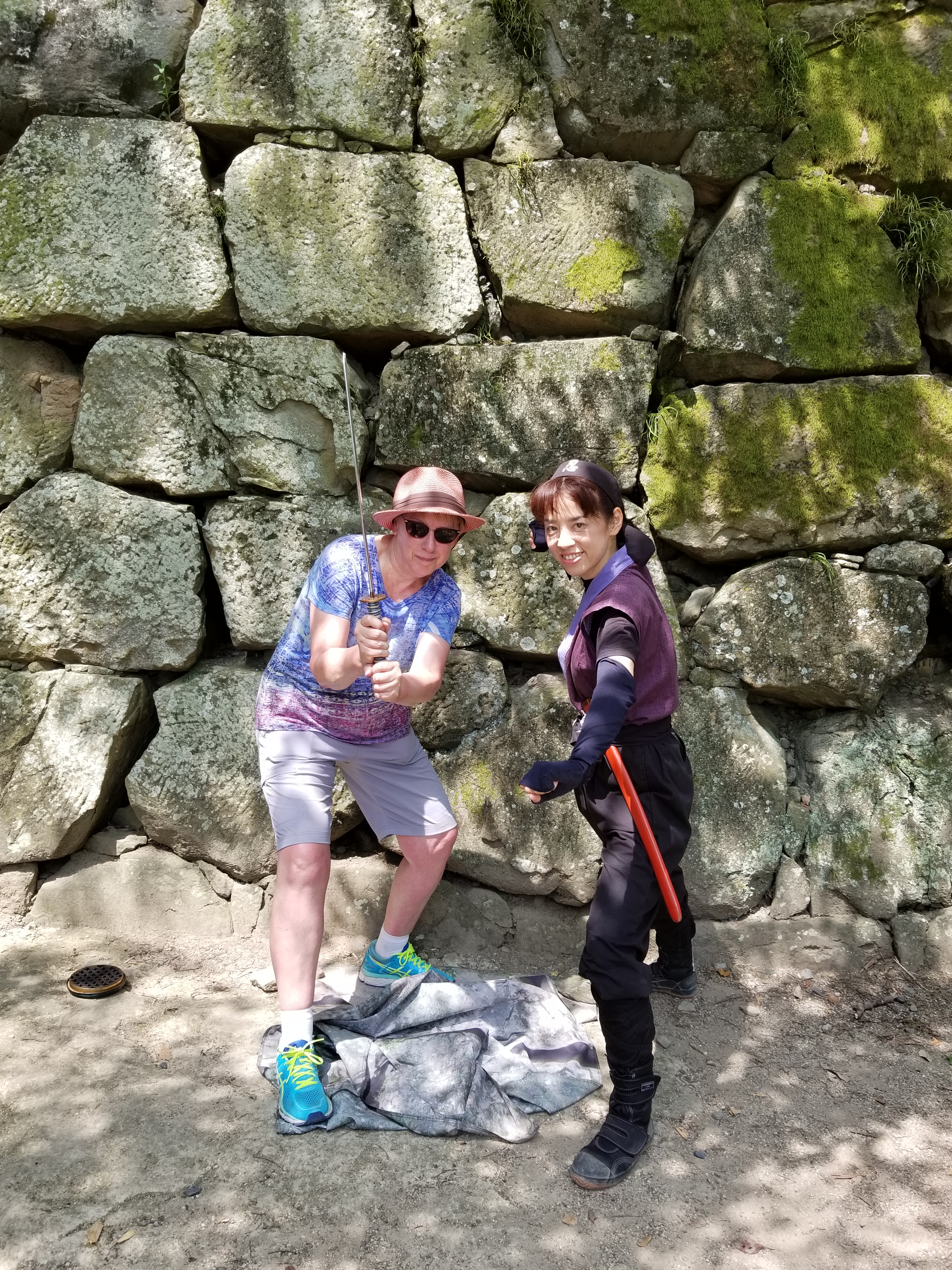
Just past the entrance, a not-very- imposing Ninja was offering training in the arts of star throwing, sword play, and camouflage. I decided to watch a few local experts to get a sense of the technique before having a go myself.

After deciding to stick to my job as an educator, I climbed up the uneven stone steps to explore the Castle itself. It’s not hard to imagine its feudal history even as its views mingle with those  of modern-day Wakayama City.

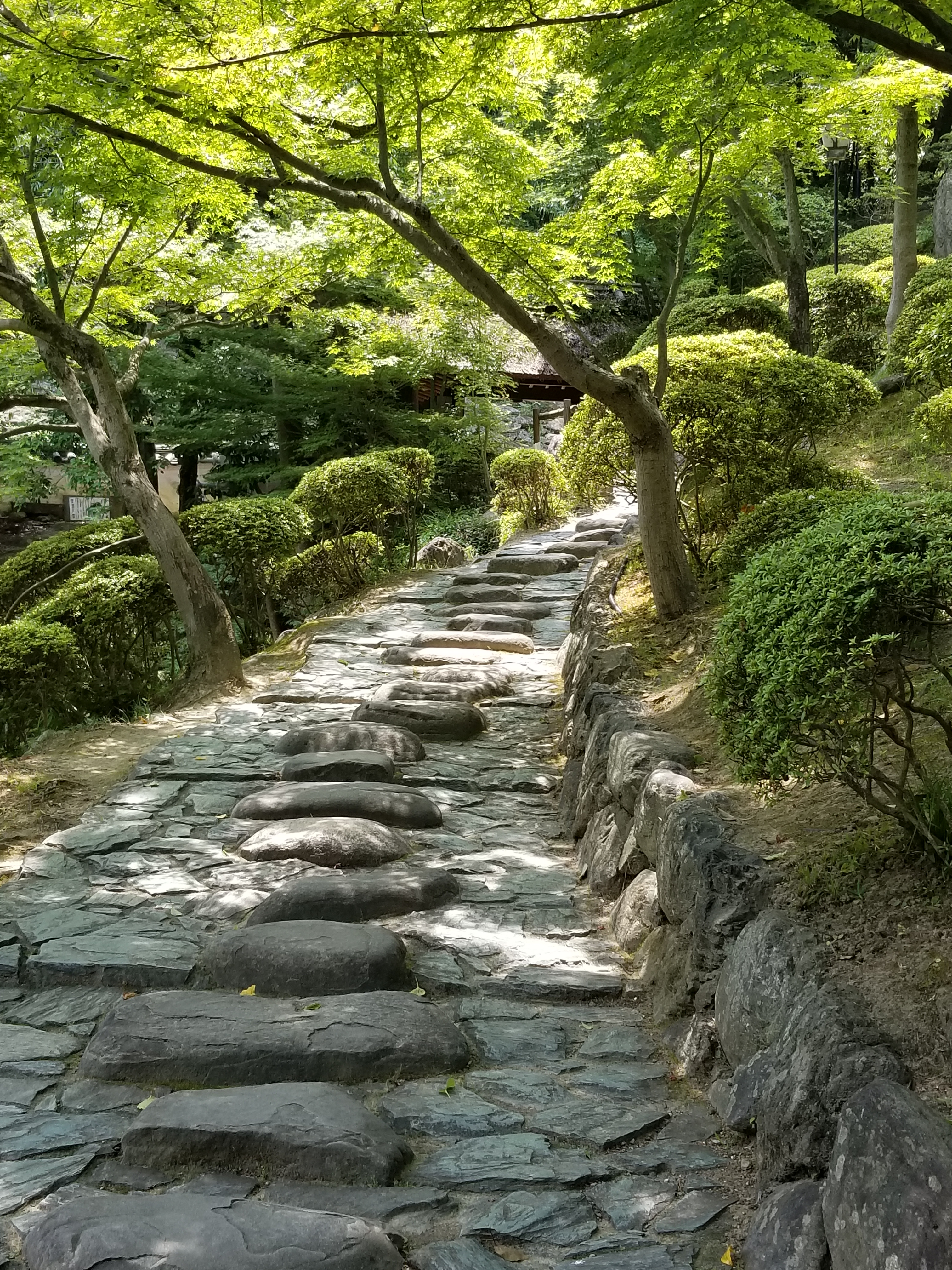
But there’s more to explore here than just the Castle itself. For a post-visit cool down, there’s a pleasantly shaded garden and pond to enjoy on your way out.

July 19, 2017

In Canadian contexts, using the word “old” to describe a building or place usually means you’re referring to somewhere with a few hundred years of history, sometimes much less. But in Japan, “old”  takes on a much weightier significance.

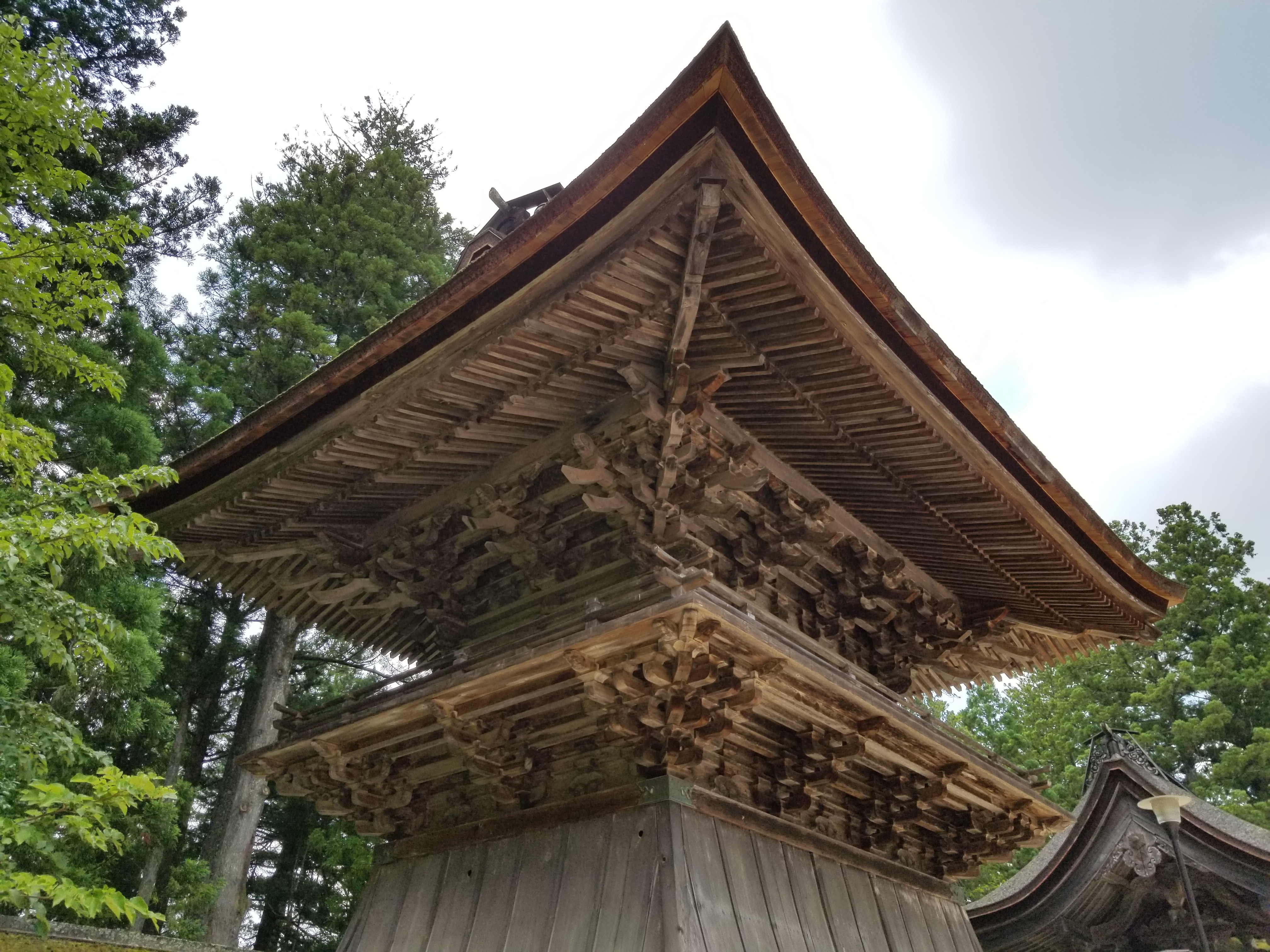
With my Wakayama University colleague Kazue at the wheel, we drove out of Wakayama City and climbed into the green highlands to visit Koyasan, a UNESCO world heritage site that dates back to 800 AD. The Buddhist monk Kobo Daishi Kukai established a monastery in the mountains where he and his followers could shut themselves away from the world to pray for peace and people’s well-being. Today, Koyasan attracts visitors from around the world, some for a day visit, others as a part of a longer spiritual pilgrimage.

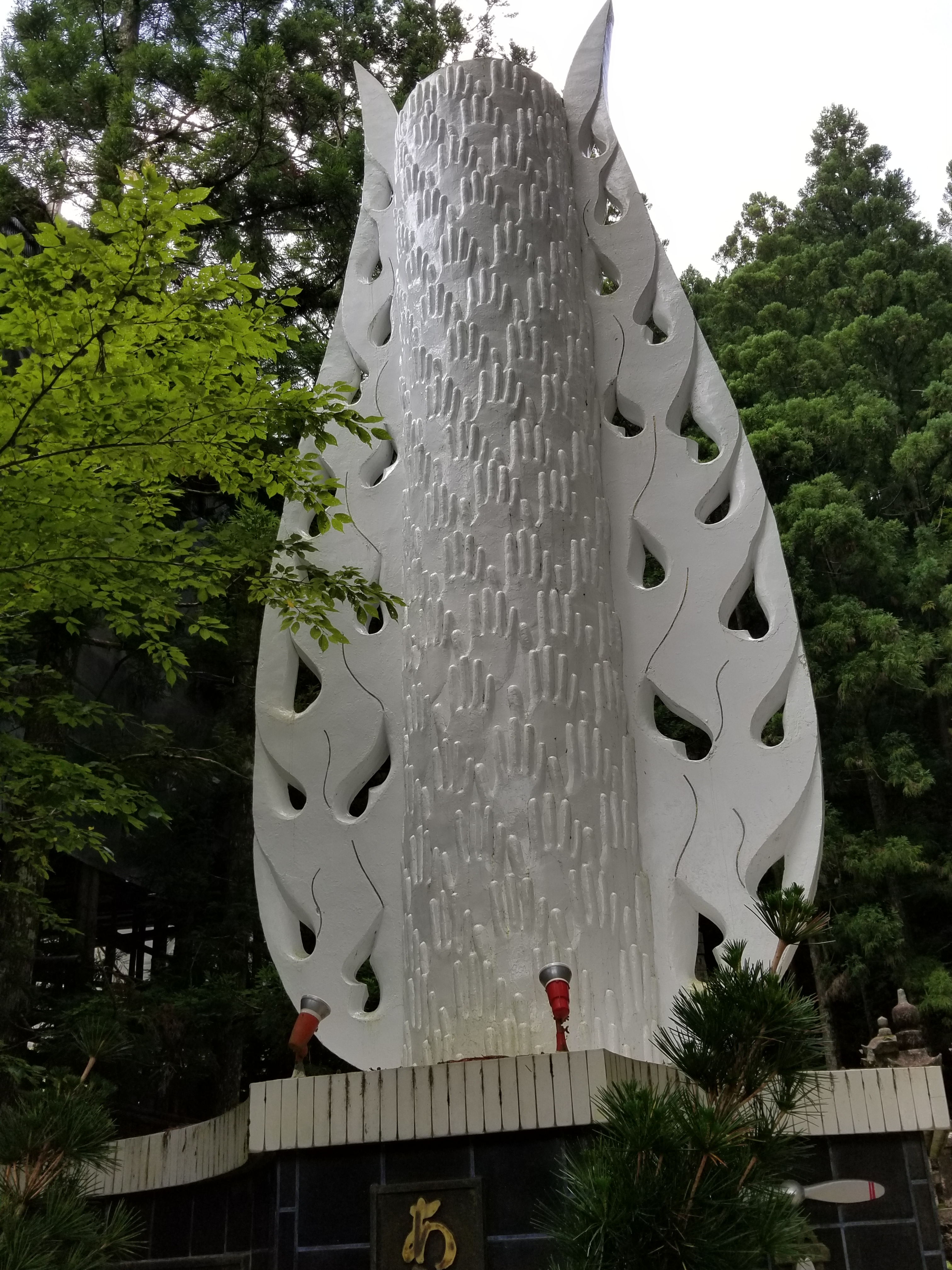
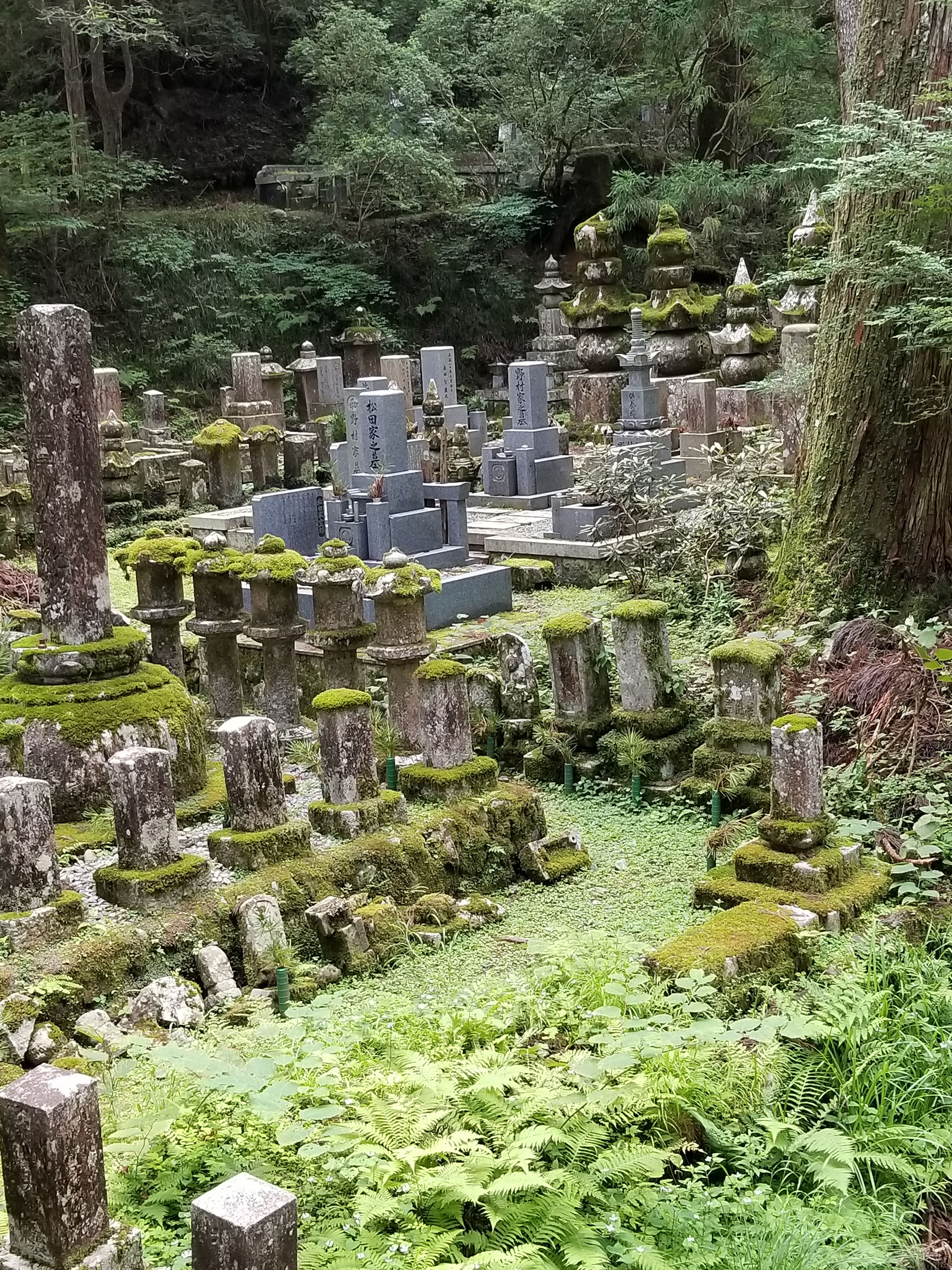
Koyasan is 15 km around with many interesting individual sights to tour. But we’re only there for a few hours, so we confined our visit to two areas- the Dano Garan complex where Buddhist monks train, and Okunoin, a sacred area that contains more than 200000 gravestones, memorial pagoda, and the  mausoleum of Kobo Daishi himself. He is believed not to have died but to have entered a state of eternal meditation to pray for the freedom of all living beings.

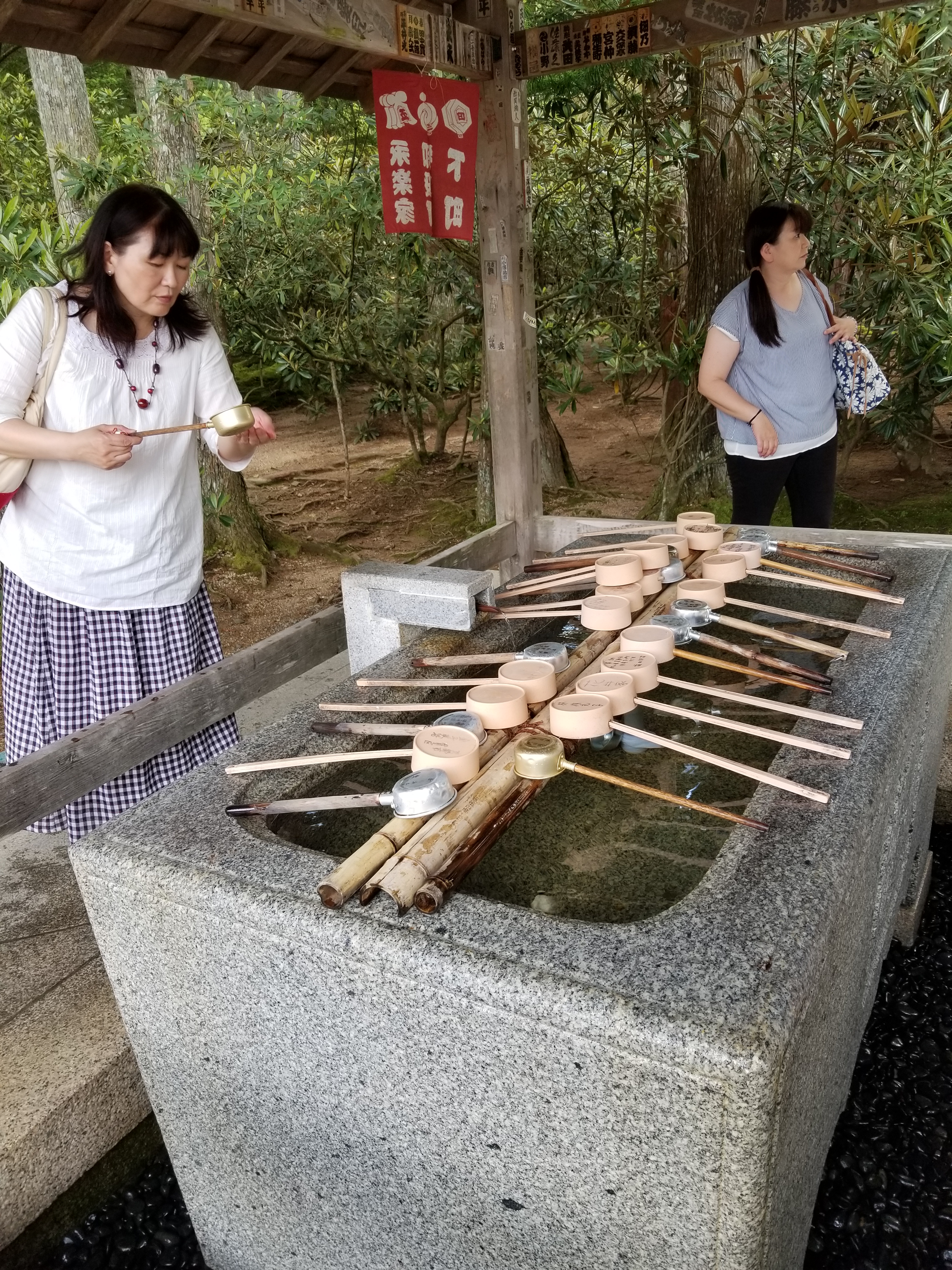
Before we entered the monks’ training area, we stopped at a purification well. Kazue showed me how to pour a dipper of water first over my left hand, then my right. Then I poured enough water into my cupped left hand to sip from and spit out before pouring the remainder of the water in the dipper back over its handle and replacing it for the next person to use.

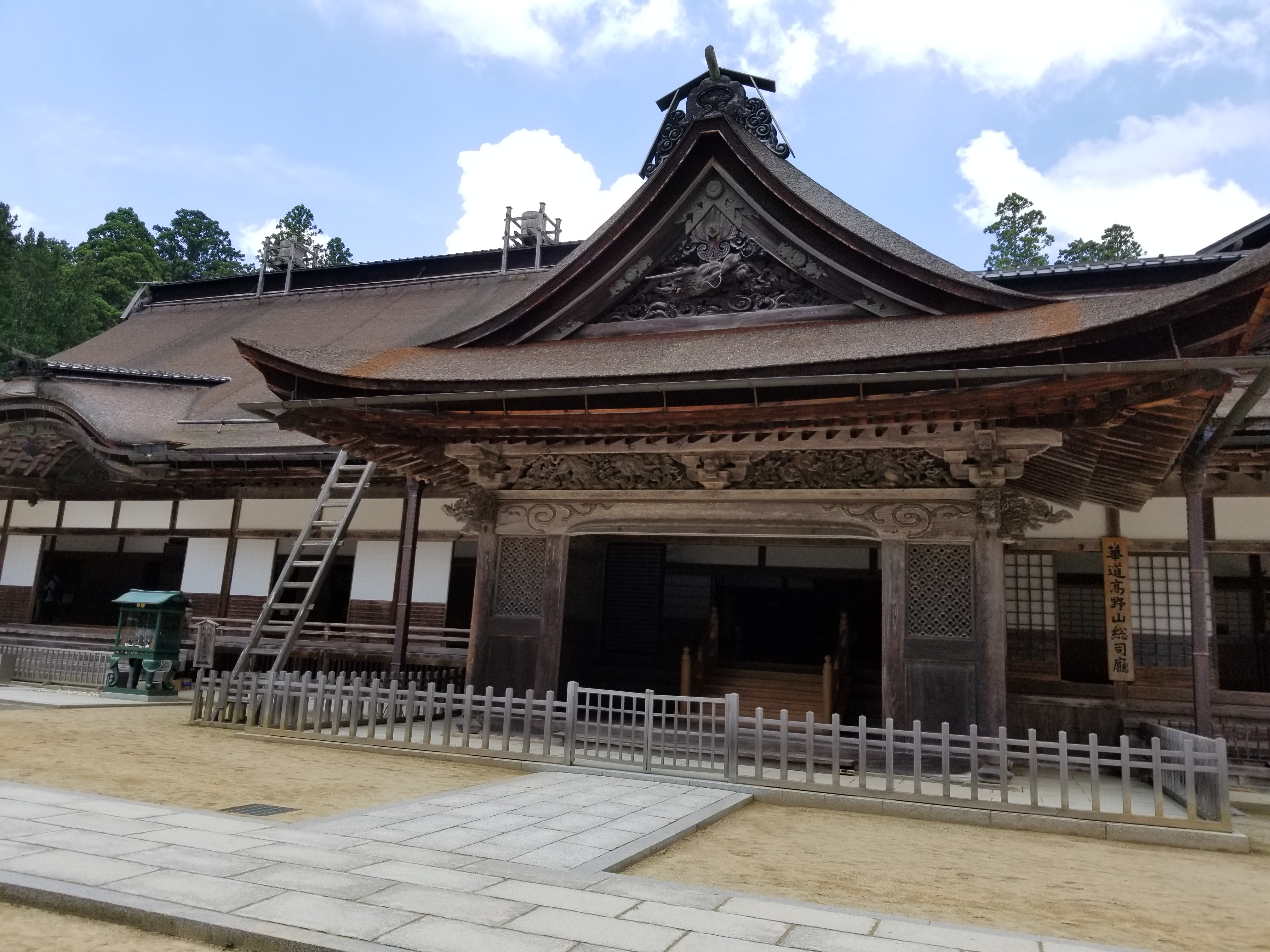
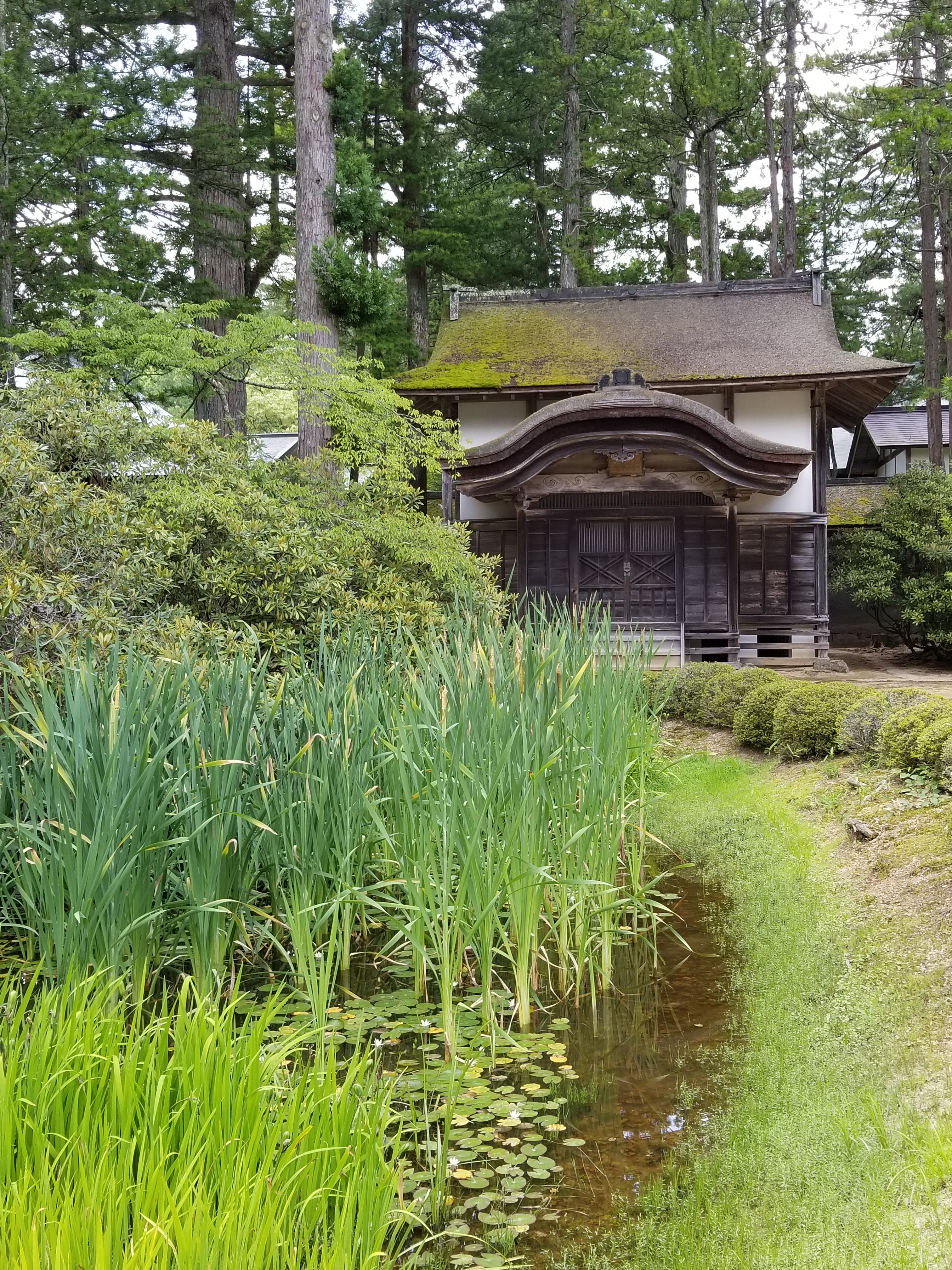
As soon as we entered the grounds of the monk’s training area, I sensed its peacefulness. Kazue pointed out that there is no artificial ornamentation on the buildings, a decision made to keep them in close relationship with their natural surroundings.

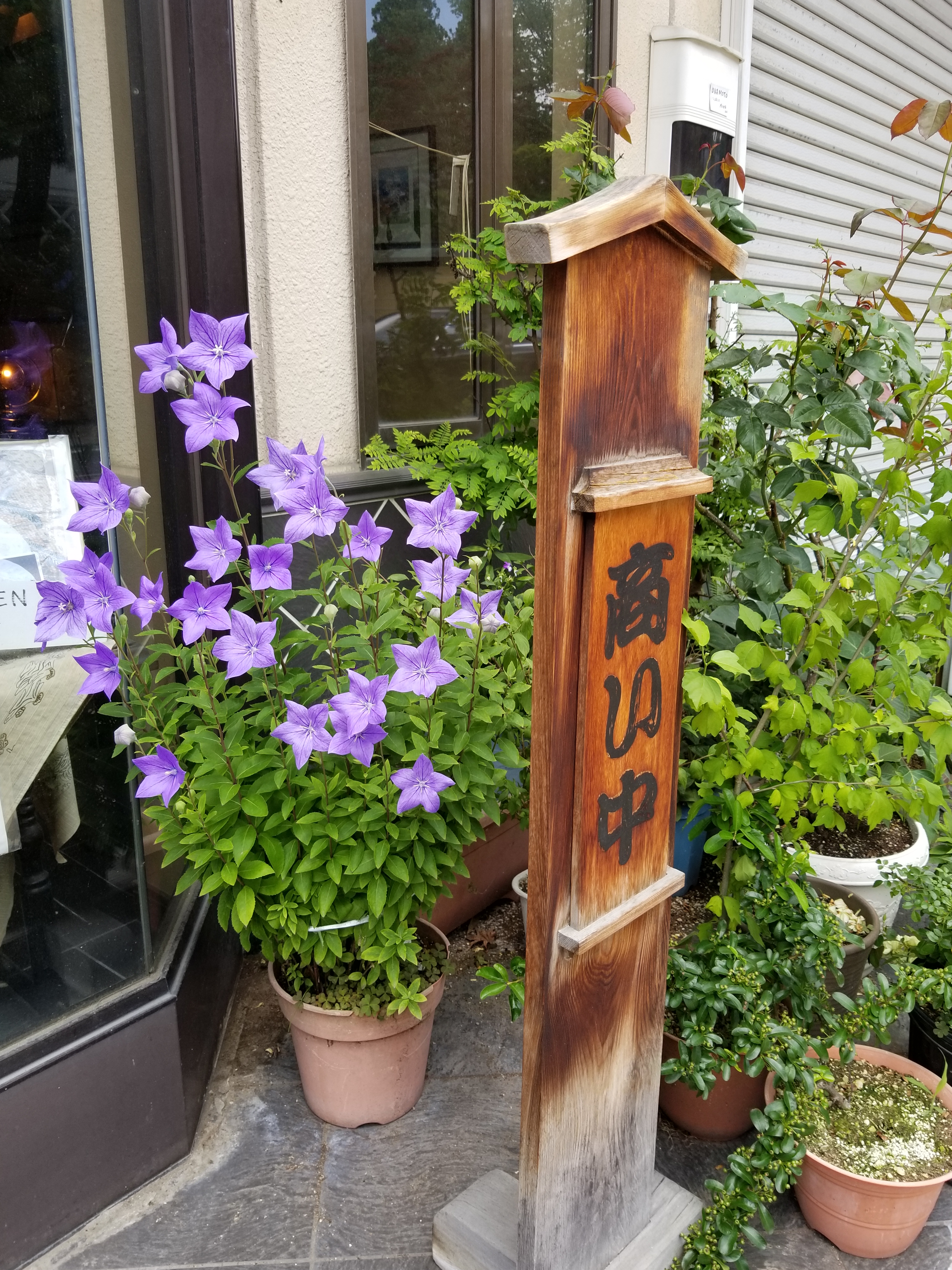
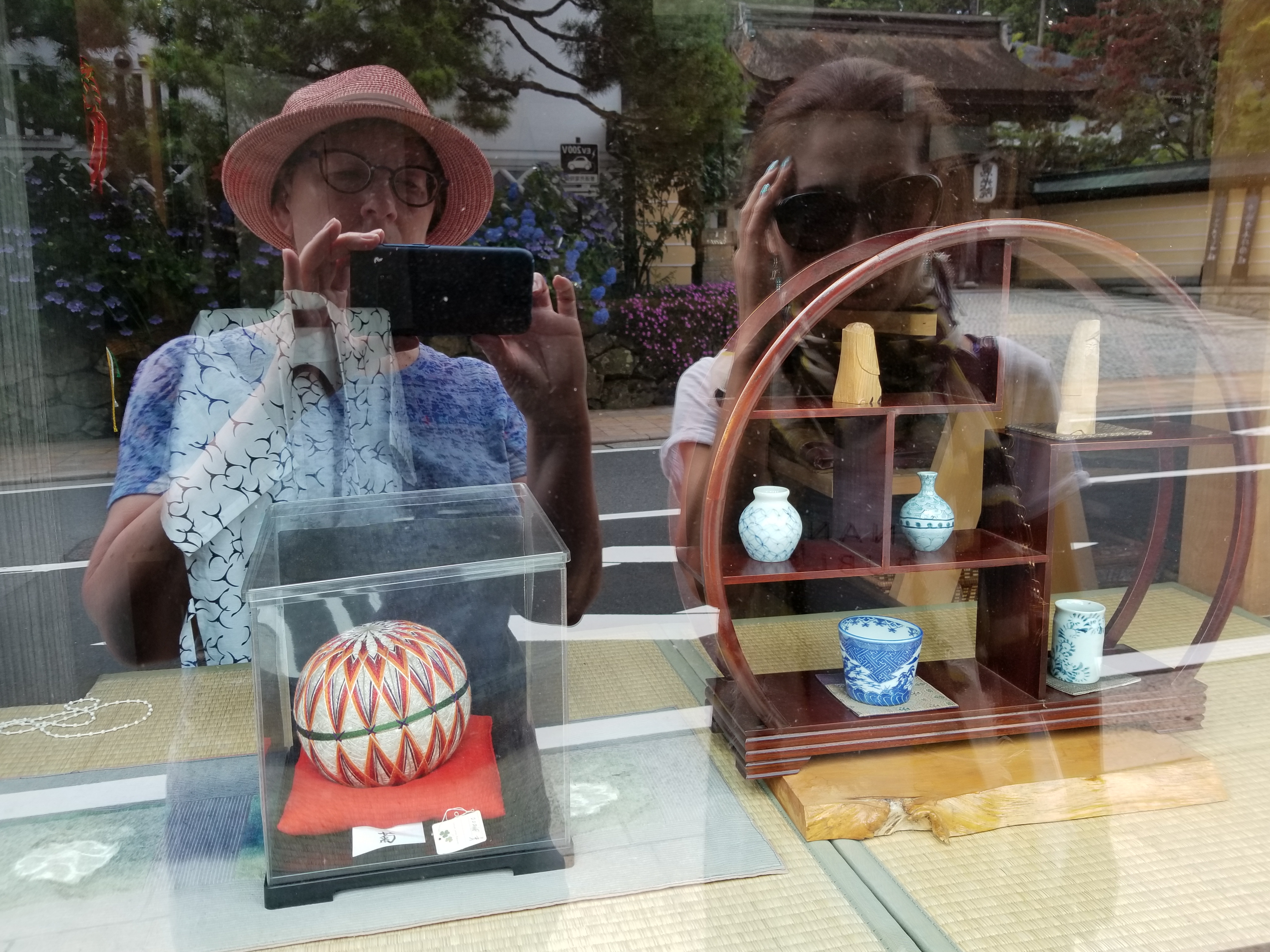
After wandering around a bit, we headed out to the main road, and browsed the quietly commercial sector of Koyasan, where shops and restaurants serve visitors’ more  worldly needs. But even here, an aesthetic grace matches the serenity of the spiritual areas.

Along the same street, we saw the entries to various shukubo, temples that provide guest lodgings. Originally intended for itinerant monks, they now provide rooms to travellers seeking an authentic Koyasan experience.

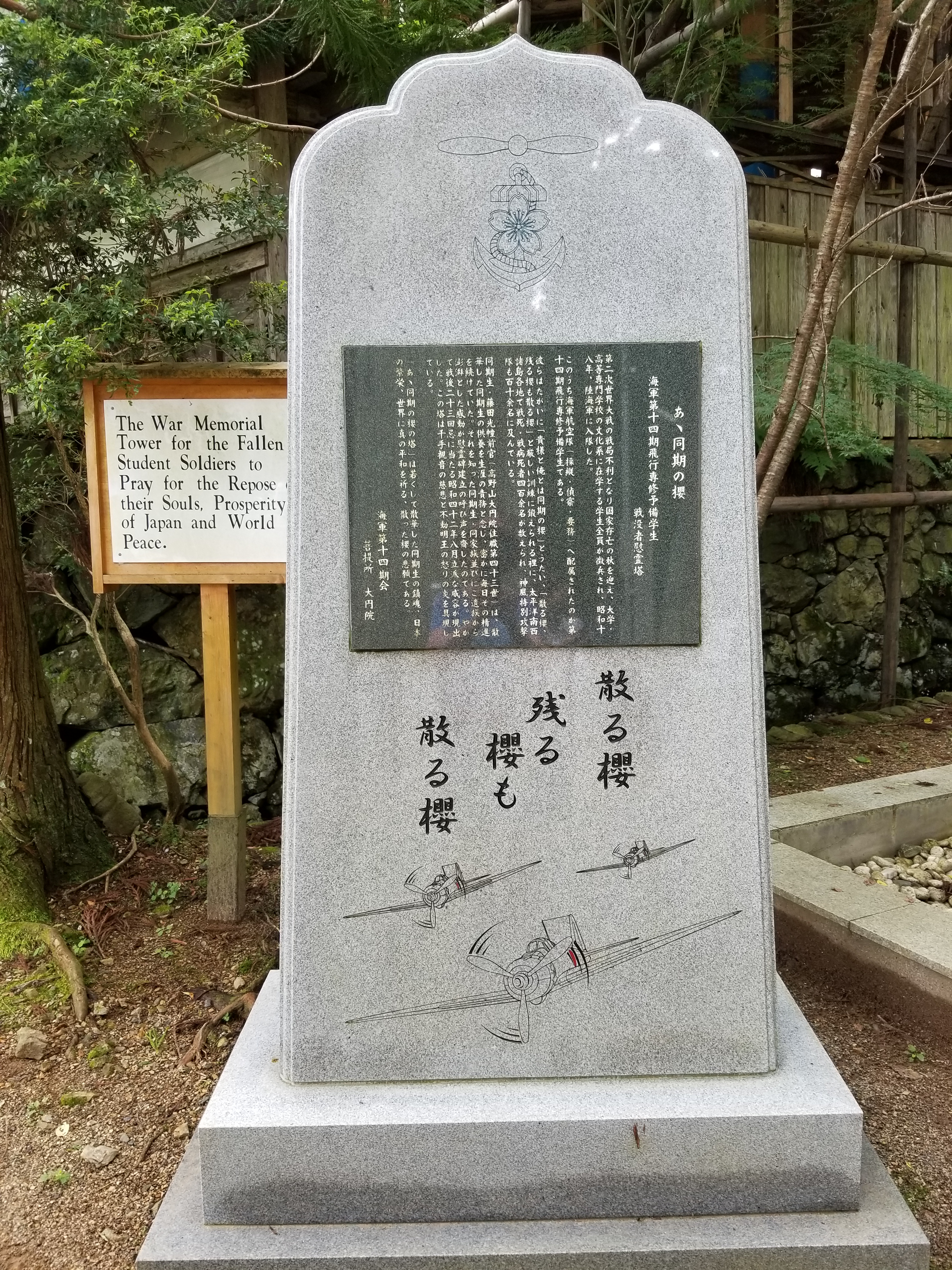
At the entrance to Okunoin, the sacred burial ground, we paused once again to purify. The first monument is dedicated to the “student pilots,” the World War II  kamikaze.

 After reflecting on this modern memorial, we stepped into the leafy coolness of a towering cedar forest. This is the final resting place of monks, feudal lords, shogun, writers and other Japanese historical figures; present day emperors of trade such as the founder of Panasonic; as well as common people, loved and remembered by their families.


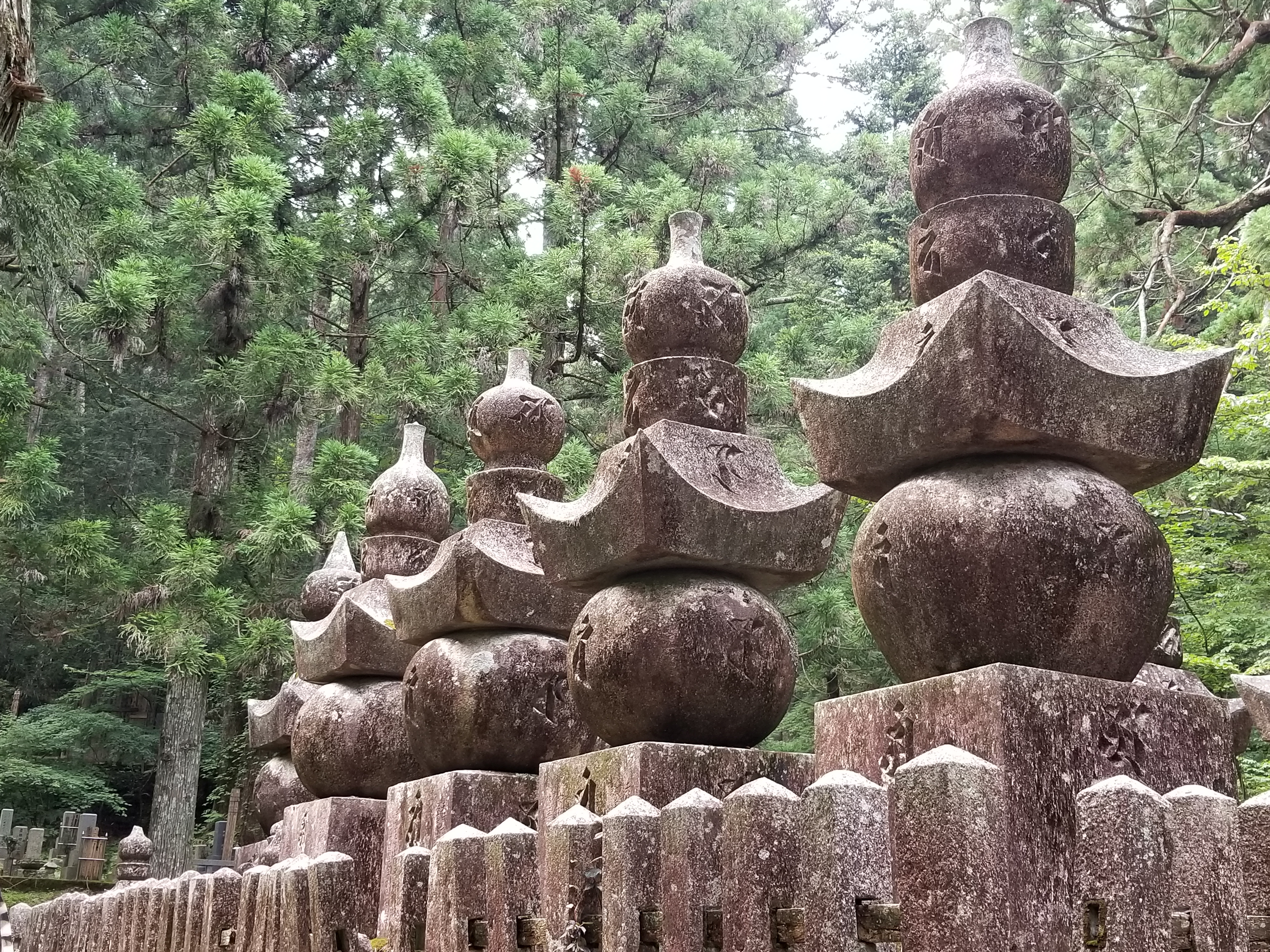
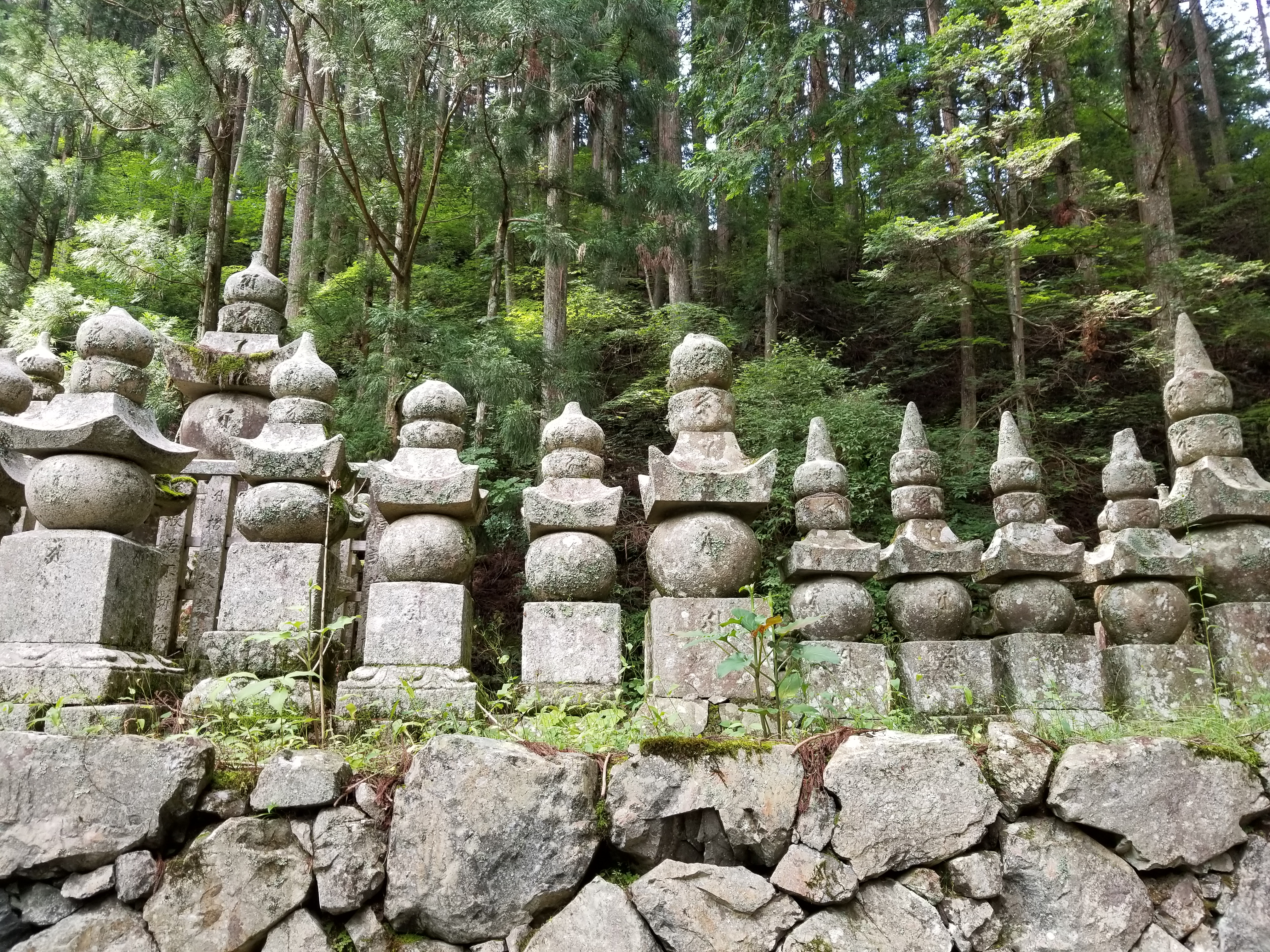
Along the pathway, there are some sights which, to my Western eye, appeared unusual. The first are the five-tiered stupa, memorial stones whose shapes and the Sanskrit letters carved on them represent the five elements taught in Buddhism- earth, water, fire, wind, and space. These are the components of the physical world and our own bodies that are not destroyed in death.
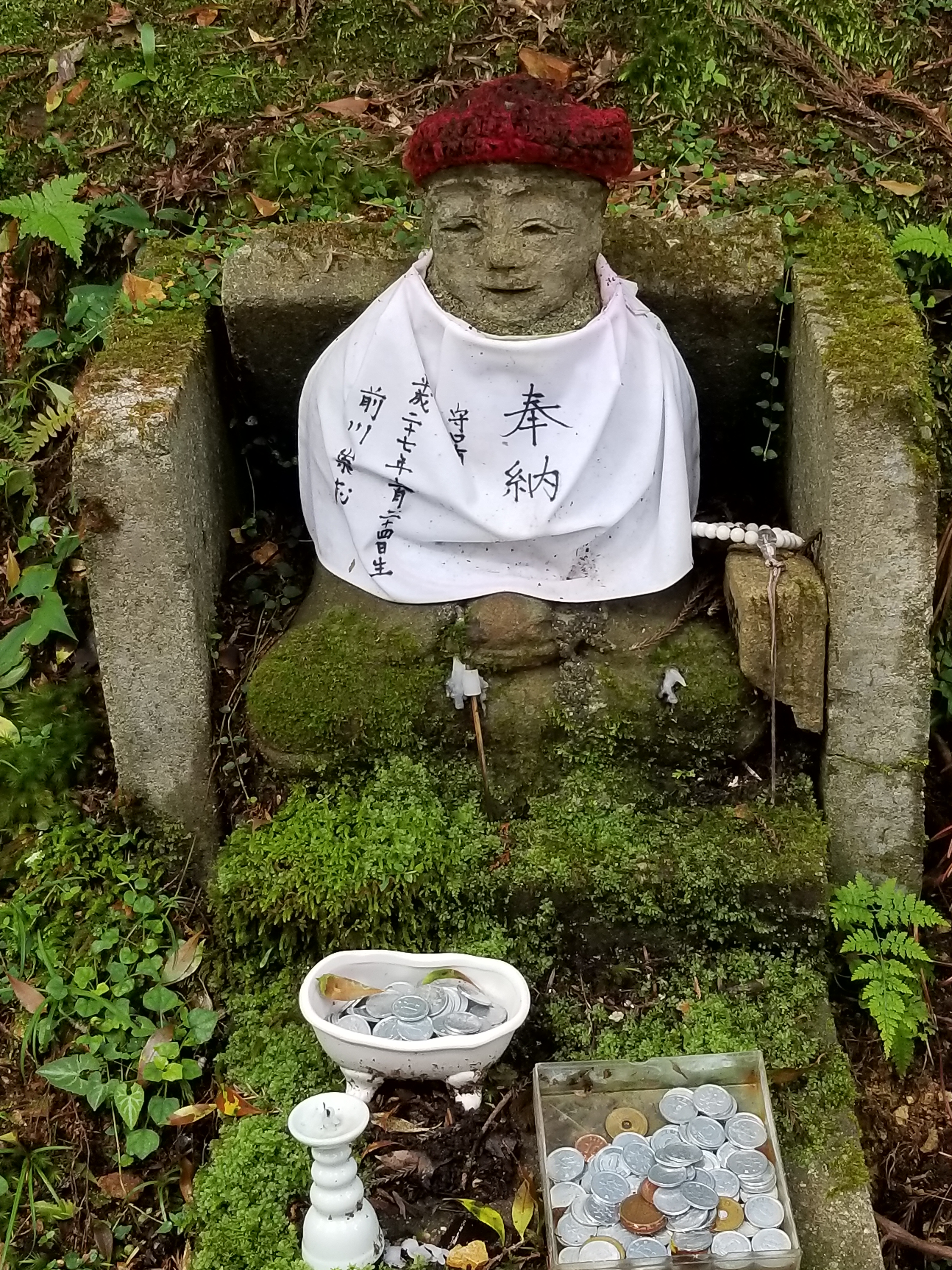
The second sight which seemed a bit unusual, even quirky, were some Buddhist statues wearing bibs. The bibs had been placed there by families who were praying for the protection of their lost children or for the long life of those who remain.


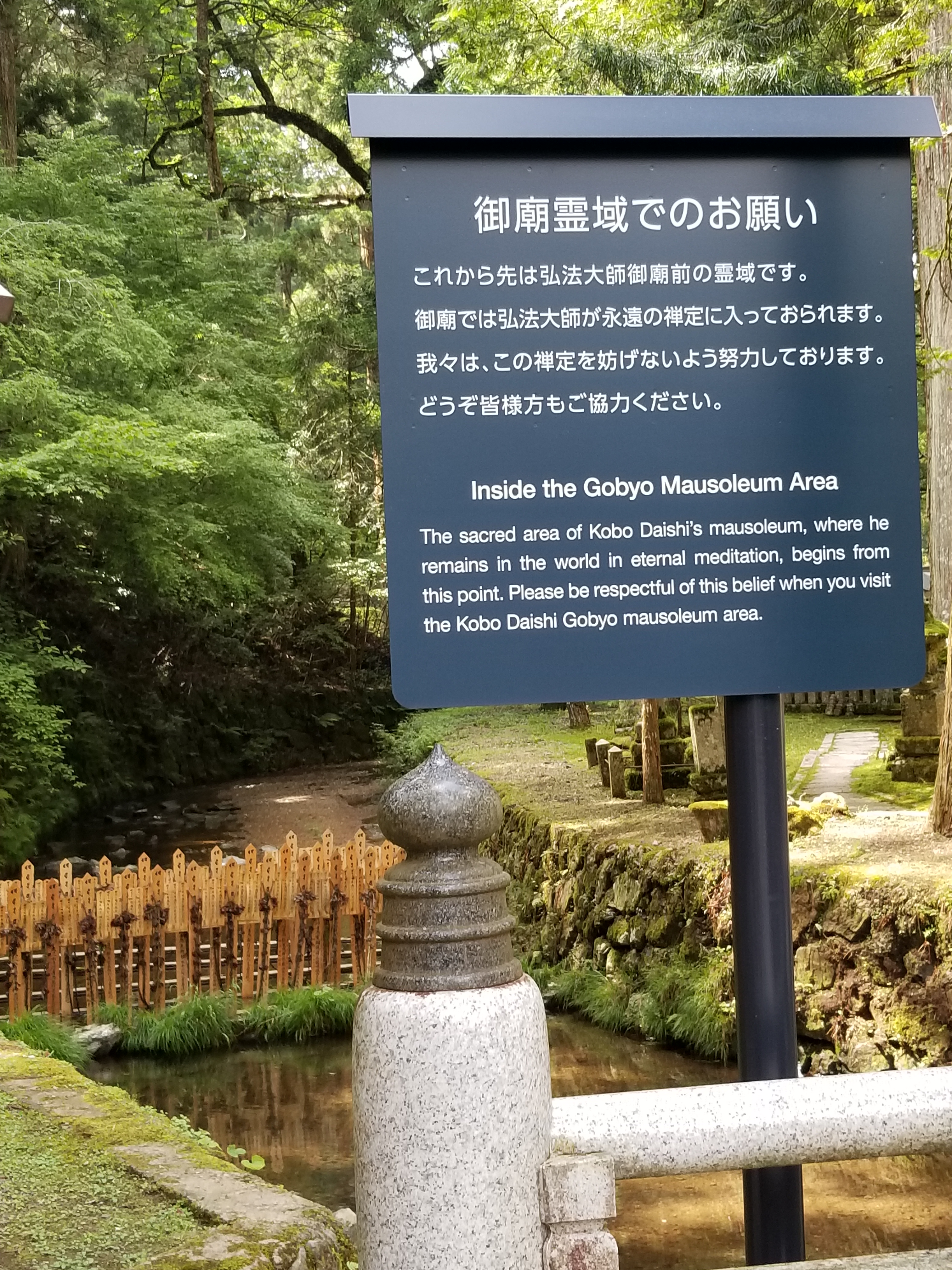
At last, we arrived at the entrance of Kobo Daishi’s mausoleum. No photographs were allowed in this area. Inside the mausoleum, candles flickered and the chanting of a solitary monk echoed in the darkness.

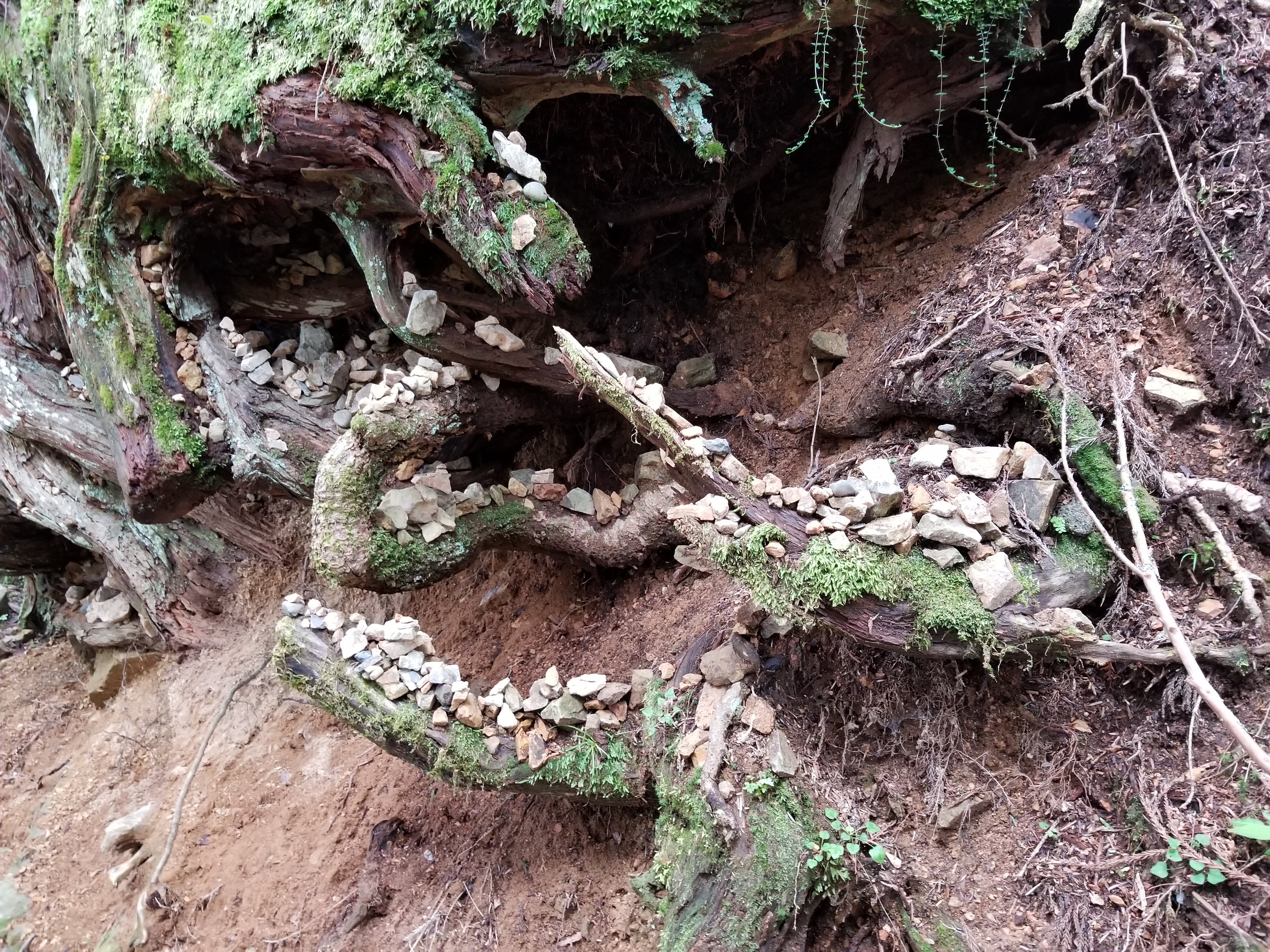
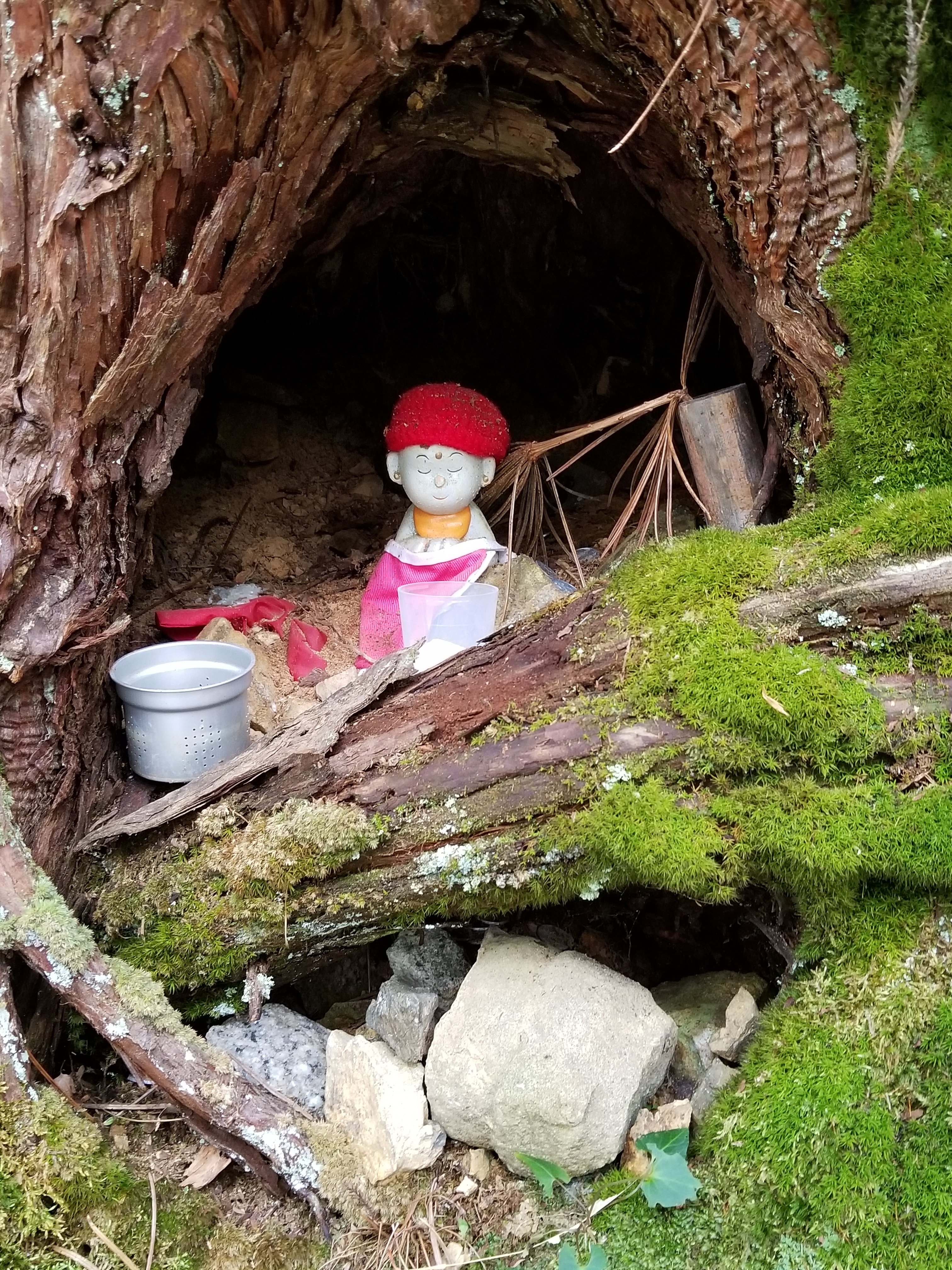
On the way back to the  car, there were still more sights to see. Some Kazue could explain to me: the stones lined up at the base of a tree are placed there for good luck.  But the tiny figure in a natural alcove remained a mystery to us both.

Maybe that’s the best reason to travel to a culturally complex destination. We make some fascinating discoveries, which include realizing that some things about the culture have such ancient roots that they will remain forever outside of our understanding.

If she’s being honest, every woman who travels on her own will admit there are times when her solo status on the road is not the awe-inspiring, joyous, freeing experience that many bloggers make it out to be.

This happened to me on Sunday night.

Two of my Wakayama University hosts  had suggested we meet  for Sunday dinner. Then, they got held up by the aftermath of their university’s open house and dinner became coffee. So, what to do on my own for my Sunday evening meal?

I  decided to go back to an Italian place near the hotel where I’d had really good pizza and beer for lunch earlier in the day (I’ve discovered that Japan does surprisingly good Italian). I’d eaten in the bar but noticed there was a much nicer upstairs section, so when I arrived for dinner, I asked the bartender to be seated up there.

“Only one? Better here,” he said,  and motioned me to a bar table near the cash desk.

If I’d  been in Canada, I  would have argued with him. It annoys me when I’m relegated to a less- than-quality table just because I’m dining alone. But realizing cultural sensitivity was the better part of valour in this case, I  plopped down, ordered pasta and a glass of white wine, and hauled out my phone.

When I  looked at my Facebook feed, I realized that everyone I know and care about back in Canada was fast asleep, and I suddenly felt very alone.  I even posted a message to see if any insomniacs might be awake and online. No one answered.

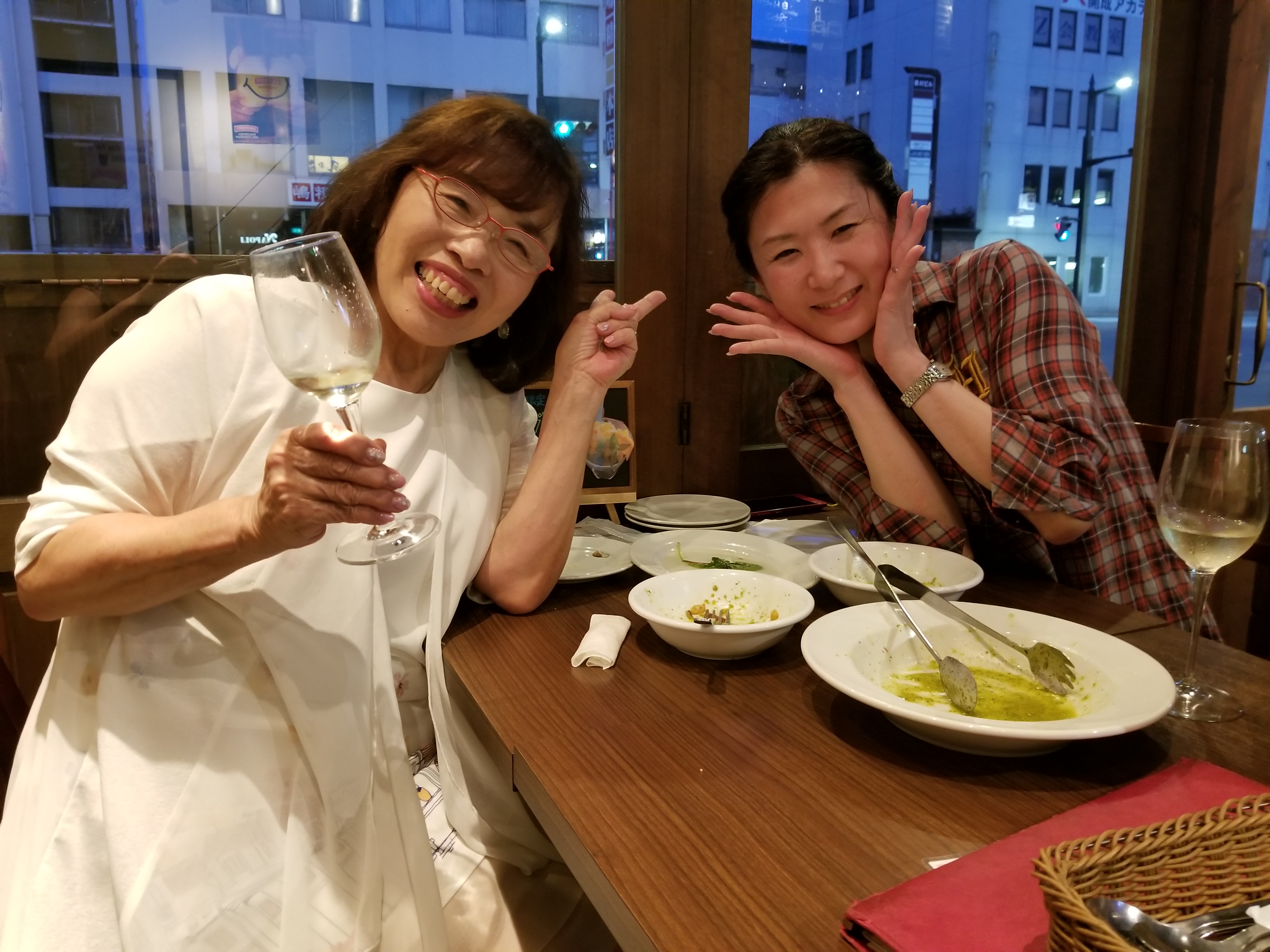
There was only one other table occupied in the bar, a pair of Japanese women chatting over a bottle of white wine. When I  glanced over, the older of the two smiled at me and raised her glass. I raised mine back.

“Do you speak Japanese?” she said. Not for the first time this trip, I wished I did.

“Why did you come to Wakayama?”

I told her about my work at the university and that I was moving on to Kyoto in the morning.

“Kyoto is very nice. Where are you from? Oh, Canada! I want to go there one day. My niece lives in Toronto.”
When my meal arrived, she toasted me again in Japanese. Just as I was about to say “Cheers!”, her younger dinner companion, smiling but silent until now, said it for me.
As I dug into my pasta, I realized I  didn’t feel alone anymore. When I left the restaurant to meet my coffee date colleagues, both women hugged me goodbye. These are the moments that every woman who travels on her own recognizes as the reason that, in spite of the inevitable lonely moments, she’ll be booking another solo vacation soon.

At 2:40 pm, a deep voiced chime which reminds me of our front door bell back in Edmonton tells students at Wakayama University they’ve got ten minutes to get to their next class. As they dribble past me in two and threes, I stand in the hallway and peer at my class observation itinerary. The next class I’m  scheduled to sit in on is a Japanese Studies class, taught by Dr. Keiko Takehana .

I’m on day two of a five day needs assessment tour of classes being taught in English at the Faculty of Tourism Research. What I see and hear will help my department and I at the University of Alberta to figure out how we can best assist the Wakayama instructors to teach their subjects in English. English-medium instruction, as it is officially called, is a major component of many universities’ internationalization initiatives in countries where English is neither the first language of the instructors nor the students.

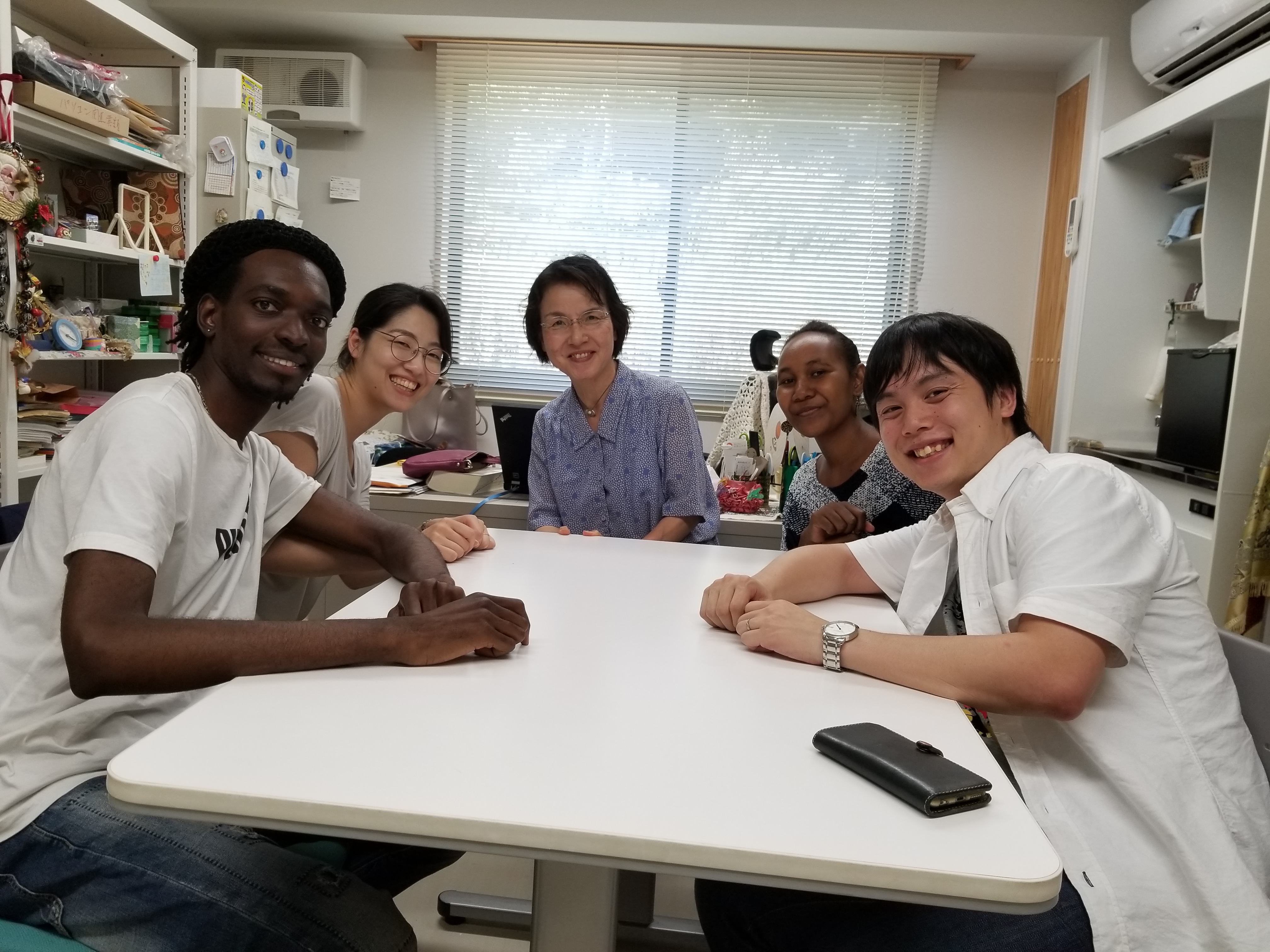
Japanese Studies is a graduate level class with only 4 students-2 from Japan, 1 from Gabon in West Africa and 1 from the Solomon Islands. Im surprised to see the class is being held in the professor’s office rather than a classroom. She welcomes me warmly when I arrive and asks me to make myself comfortable. I settle in at the back of the office on a comfy white couch while the students sit at a small table in front of the professor’s desk.

Today’s lecture begins with an explanation of the historic role of Korean ambassadors in Japan and continues with discussion of Japan’s newest World Heritage sites. Dr. Takehana offers generous time and space for the students to ask questions, provide each other with answers, and bring their own experiences to the discussion. She encourages a quieter student to give input and helps out when someone searches for the correct English word. Throughout the discussion, she listens attentively to what the students have to say, is genuinely curious to hear more of their stories, and laughs with authentic joy at their jokes. Who wouldn’t want to use English to express themselves with such an appreciative professor for an audience?

The 90 minute class rushes by. After the students leave, Dr. Takehana and I settle in to talk about English-medium instruction. During our conversation, I find out that not only does she have a background in linguistics but also a passion for Japanese culture. She is a master of chanoyu, the art of the tea ceremony, which has existed in Japan for 500 years. Then, she gives me two gifts: a book on the tea ceremony which she has recently translated into English, and an invitation to stay for tea with her.

I glance at the time and realize I’m supposed to be meeting with three grad students who want to talk to me about their experiences of learning in English. “That’s fine,” says Dr. Takehana. “Please come back when you are finished.”

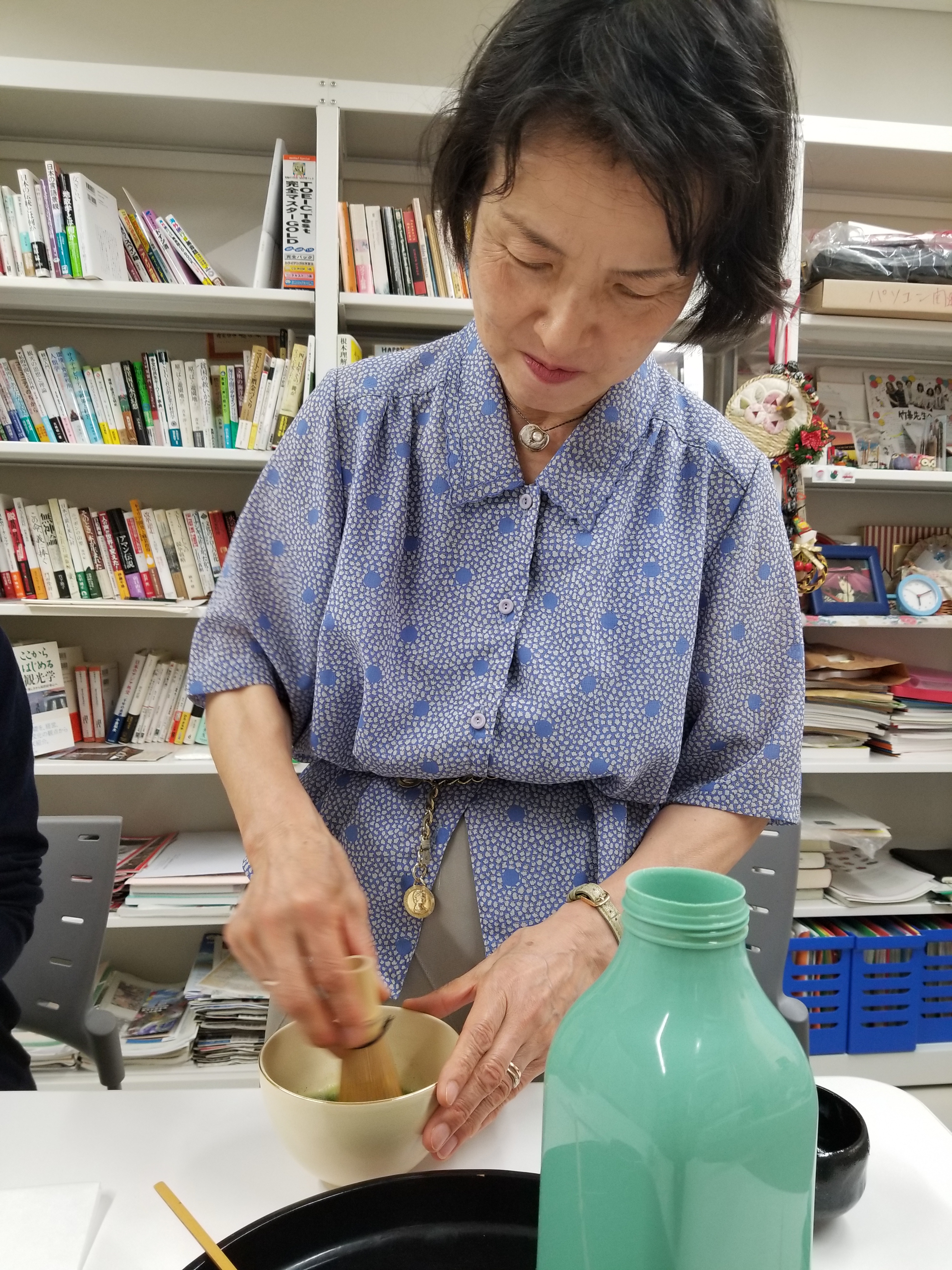
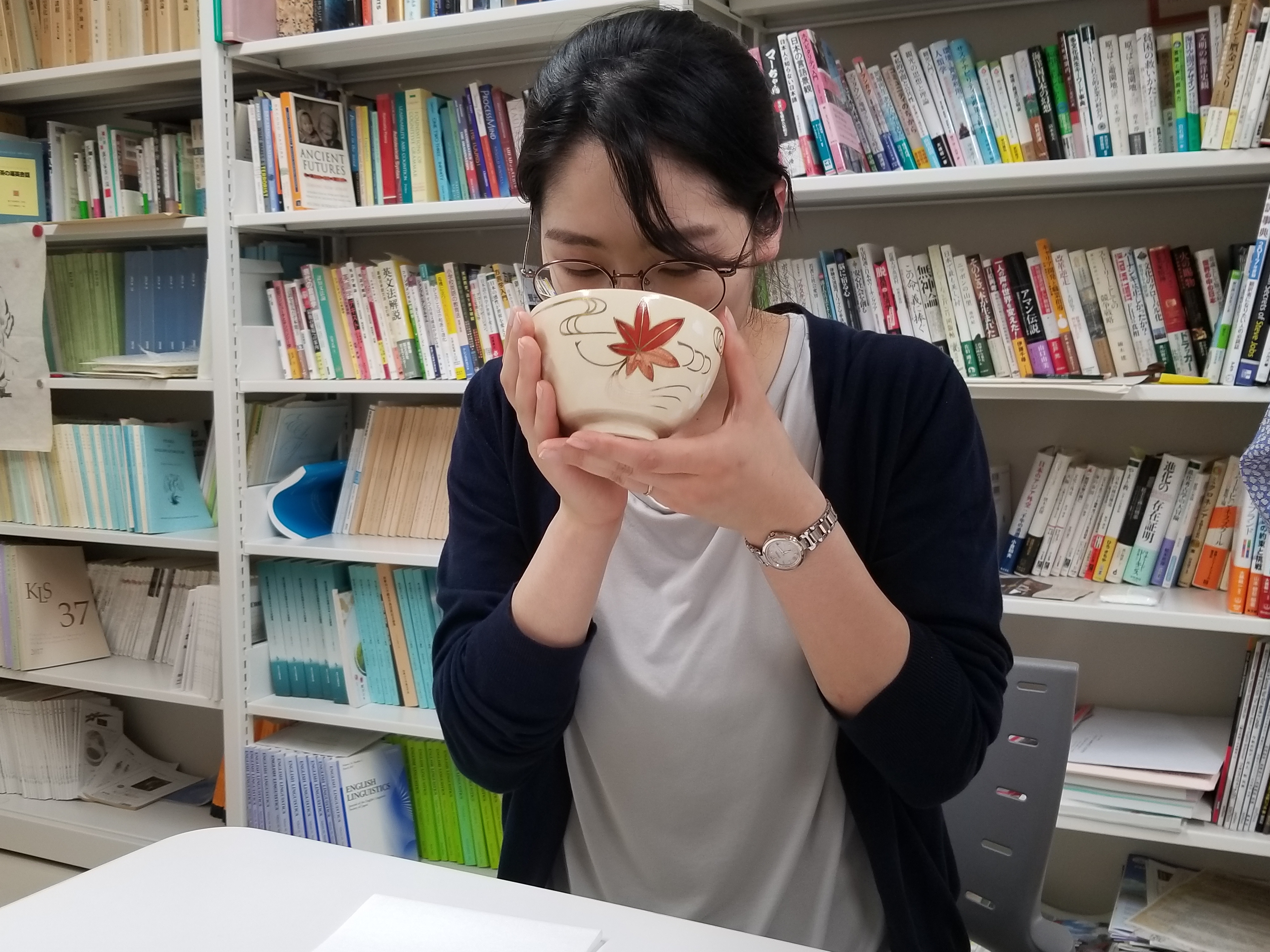
An hour later, I’m sitting down with the professor and one of the grad students, Kaori Yanata, who is researching spiritual and religious tourism in Japan. Dr. Takehana asks us each to choose a bowl for our tea and offers marble-sized rice cracker balls drizzled in caramelized sugar “because the tea can be a little bitter.” She spoons a little lime-green powdered tea into each bowl, adds hot water and whisks until the water foams. Then she hands us our bowls and invites us to drink.

Although my first taste is a little bitter, the flavor soon smooths out to become faintly sweet. We intersperse sipping and nibbling on rice balls with conversation about tea. I tell them about people paying $75 to have afternoon tea at the Empress Hotel in Victoria, Canada, a price which shocks all 3 of us. It seems even more excessive to me now, having enjoyed the hospitality of this simple but meaningful ceremony in the heart of Wakayama University with two fascinating Japanese women.

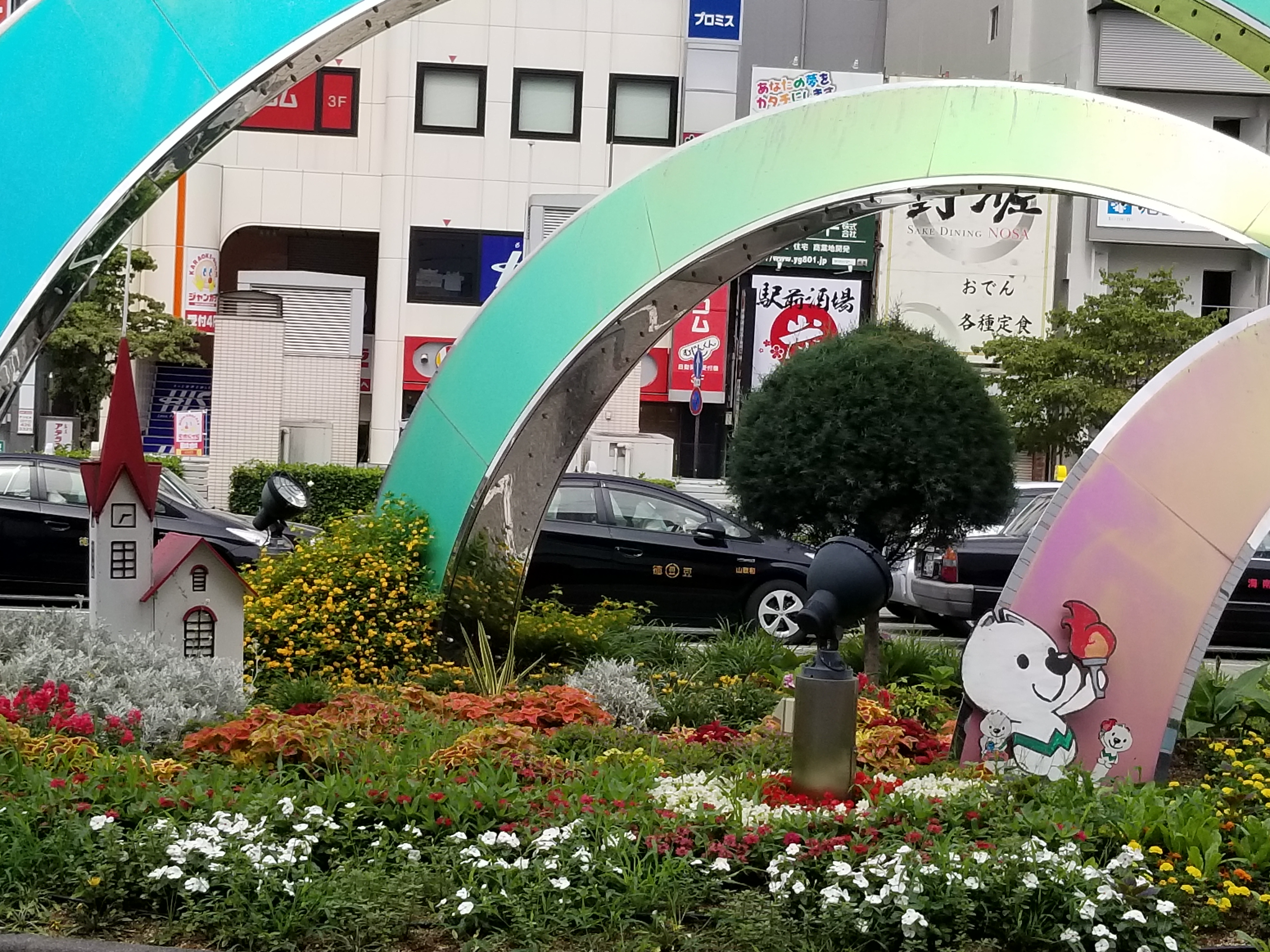
I step out onto the almost deserted street outside the Hotel Granvia and start to walk. The morning warmth is the only jacket I need, the quiet and humidity settling comfortably around my bare shoulders.

In spite  of my best efforts to fool my jet lag by getting onto Japan time this morning,  I was wide awake by 4 am. The breakfast room at the hotel wouldn’t be open until 6:30 so I  read a few chapters of Memoirs of a Geisha, showered, dressed, and then decided to see who else might be around this early on a Wakayama  Sunday morning.


My hotel is located in a faintly worn-looking business district of lowrise shops and restaurants, and somewhat higher rise hotels and apartments.  None of the businesses  have opened their shuttered eyes yet. The young woman in business clothes hustling along the street towards me, her hair slightly tousled and her sunglasses firmly in place in spite of the overcast skies, looks as though she wishes the night had been longer. So does the young father up ahead, holding a plastic bag with a few groceries while his two preschool children skip along beside him. A robust senior, pumping his arms during his morning constitutional, wishes me good morning in English, and thanks me for my return greeting.


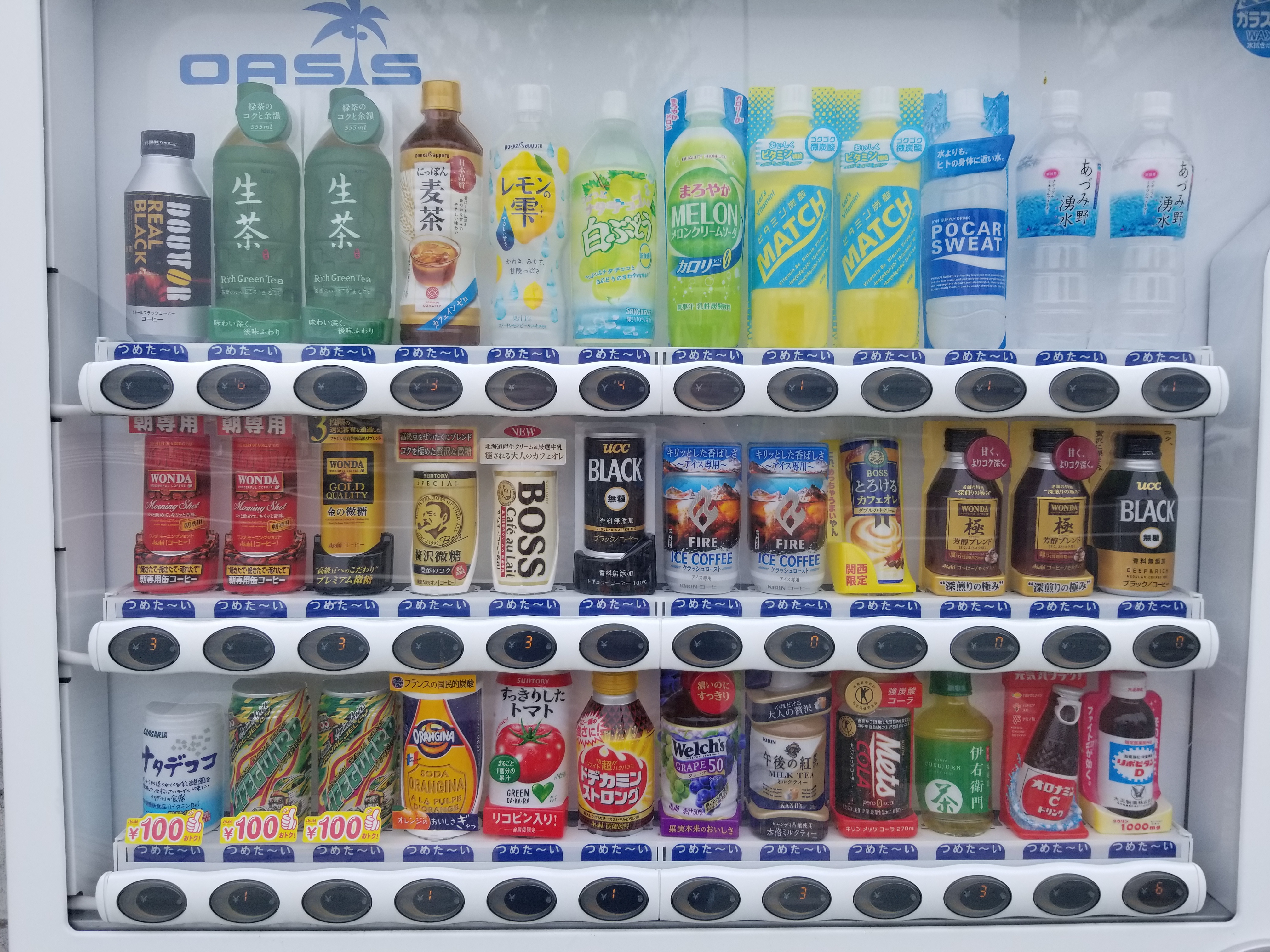
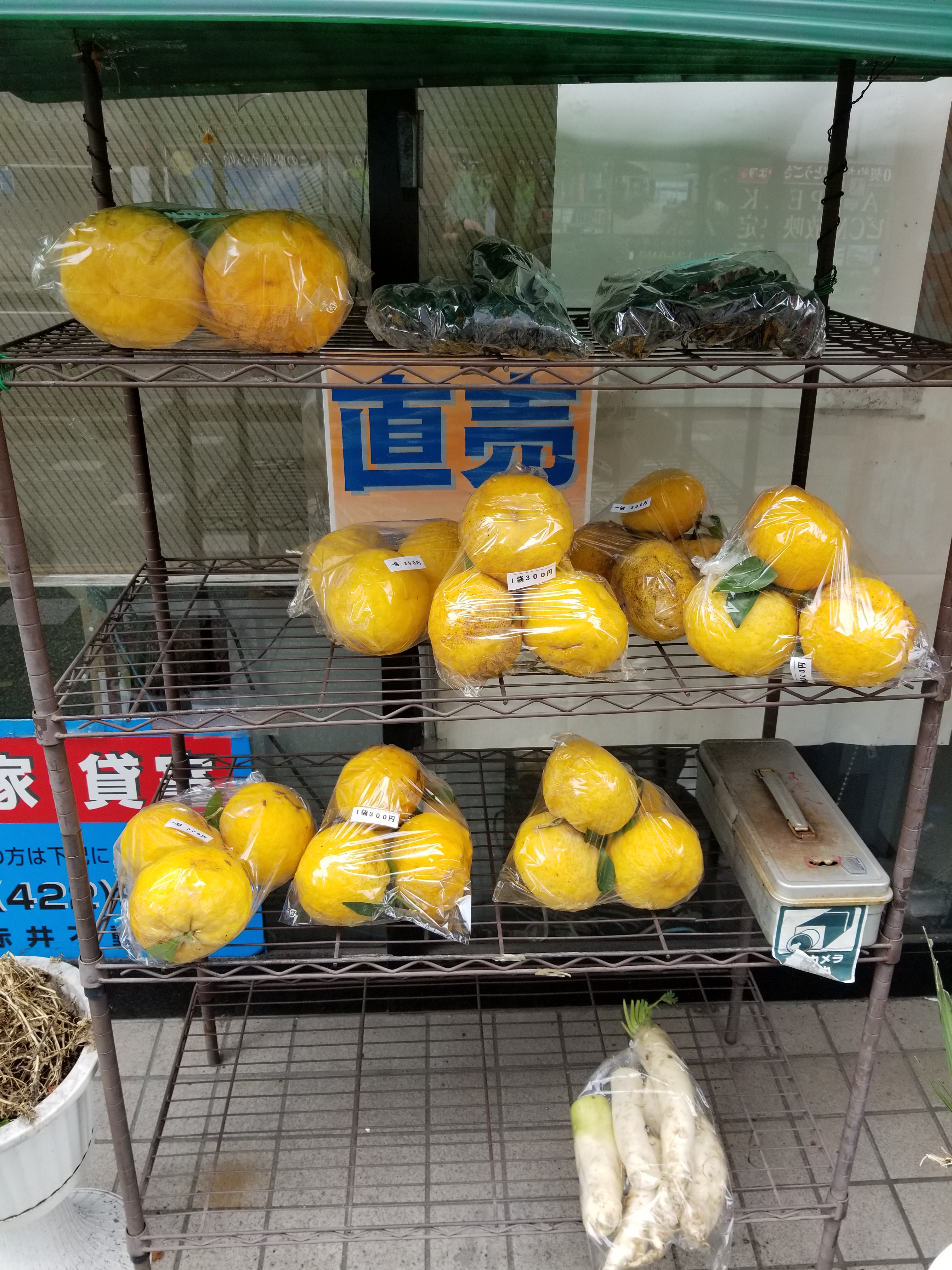
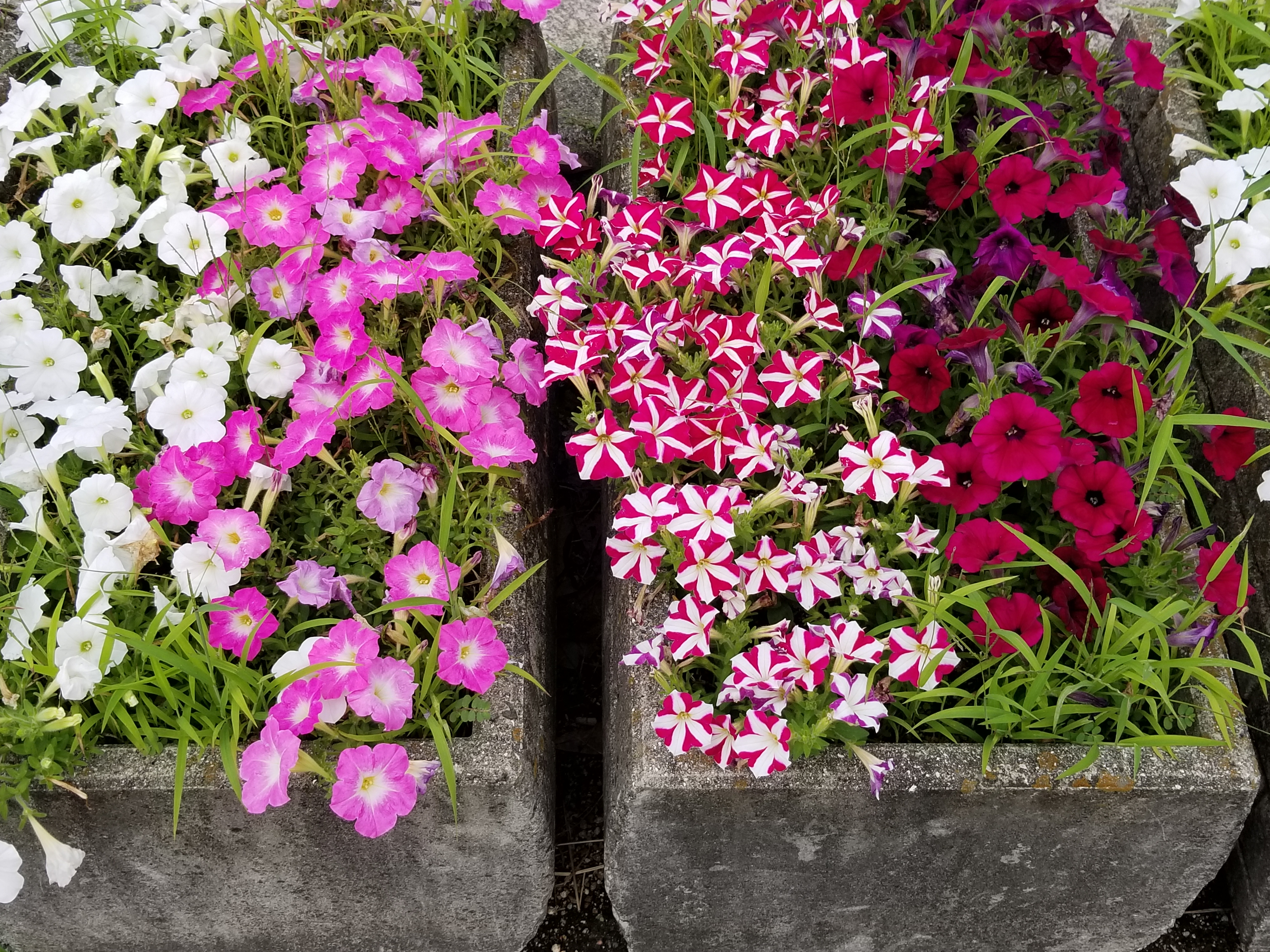
I soon run out of sidewalk in one direction so double back towards the hotel, peering  at the contents of curbside vending machines and appreciating the trust of a grocery owner who left out a few bags of produce overnight. I feel strangely comforted by boxes of petunias, so similar to the ones I watered at home in my garden right before I left Edmonton yesterday.


It’s still not time for breakfast yet so I continue past the hotel and circle the bus and taxi roundabout in front of it. Last night, a mostly in tune boy band were hawking their new CD, a few middle-aged women filming them on their phones while teenage girls in short skirts, ruffled ankle socks and wedged sandals stood  prominently in front. This morning, the only people around are two or three cabbies leaning together on one of their cars and a few people standing in a tidy queue waiting for a bus.

By this time, my stomach is starting to growl so I figure if I walk slowly for one more block, I should just about  arrive back at the hotel for breakfast room openimg. A young man, enjoying the lack of traffic, rounds the corner too fast on a motor scooter that buzzes like an angry hornet. A grey haired woman wearing a white broadbrimmed hat and elbow-length white gloves pedals her bicycle slowly past. A group of adolescents in green and white school uniforms with matching bike helmets stream by in pairs and disappear.